
Grands Boulevards Paris: A Walk through Theatres and Cinema
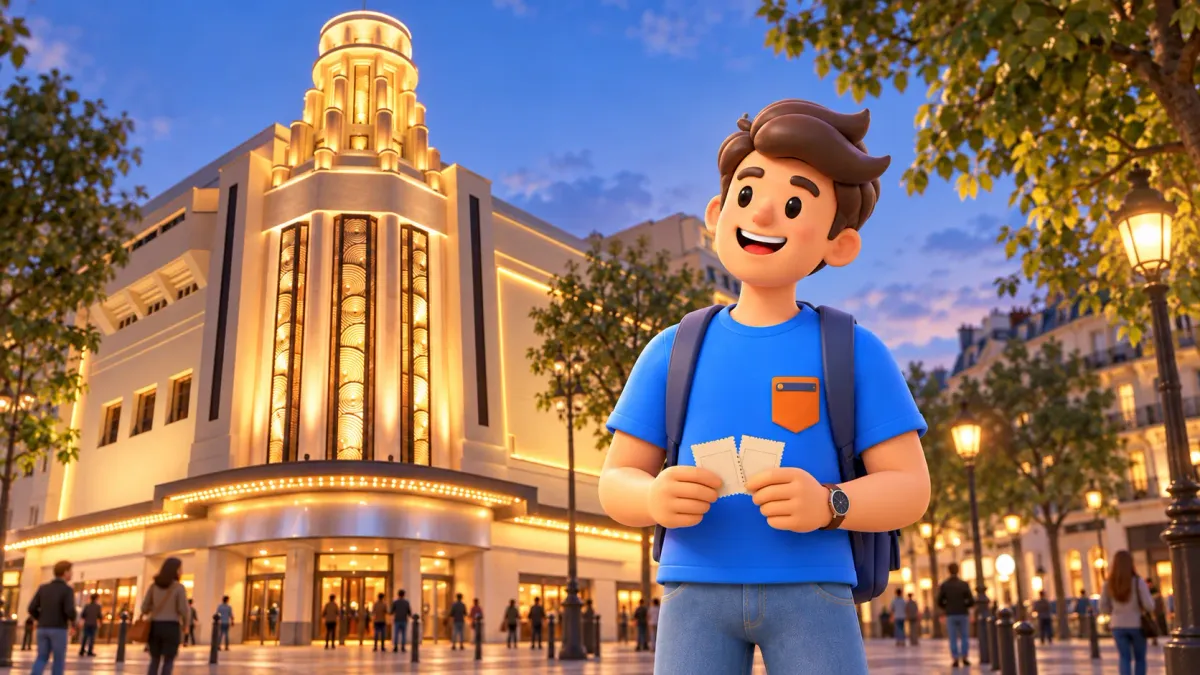
The Grands Boulevards reveal Paris through its habit of going to performances. A theatre portico, an ornate museum entrance, a cinema tower and a poster worth reading become the landmarks. This is a city of audiences: people gather before a show, discuss a film afterwards and decide how to spend another evening.
Connect the Opéra-Comique, Théâtre des Variétés, Musée Grévin, Grand Rex and Théâtre du Gymnase Marie-Bell. Allow approximately two hours for their exteriors, observations and pauses. Start at Place Boieldieu and finish on Boulevard de Bonne-Nouvelle. A performance, film, museum visit or guided cinema tour is a separate addition. Several complete visits would need substantially more time than the walk described here.
A practical two-hour route
Begin facing the Opéra-Comique on Place Boieldieu. Follow Rue Favart north to Boulevard des Italiens, then turn east along the boulevard as it continues into Boulevard Montmartre. The Théâtre des Variétés stands at number 7, on the south side. Pause to look at its façade while leaving the entrance clear, especially if an audience is already arriving for a performance.
Grévin is opposite, at number 10 on the north side of Boulevard Montmartre. Use a marked crossing to reach its entrance. Continue east along Boulevard Montmartre and Boulevard Poissonnière. Grand Rex occupies the corner at 1 Boulevard Poissonnière, on the south side. Afterwards, cross towards the Gymnase, at 38 Boulevard de Bonne-Nouvelle on the north side, where the route ends.
Use 120 minutes as a planning estimate: roughly 30 for walking and 90 for architecture, posters, comparisons and short breaks. Getting to the start, having dinner, passing entry checks and attending an event require additional time. If you stop at many windows or take photographs frequently, increase the allowance so the walk does not become a race against your booking.
To connect this walk with the rest of your Paris stay, try RoadMe. The app develops a personal trip plan around your dates, interests, pace and budget, making it easier to organise cultural outings and neighbourhood walks while keeping time for rest.
The core route follows public pavements. Looking at buildings from the street requires no museum or theatre ticket; indoor activities have their own admission arrangements. The boulevards carry traffic, so use crossings when changing sides. If you need a route without steps or have specific access requirements, check the approaches in advance: the complete walk has not been independently verified as barrier-free, and conditions inside individual venues differ.
Why entertainment belongs on the boulevards
Historically, the Grands Boulevards brought together strolling, cafés, commerce and entertainment. Theatres benefited from being where people already spent their leisure time. Cinema later added another form of spectacle, while a wax museum offered its own encounter with famous faces. Even this compact section shows how entertainment changed while retaining the pleasure of spending an evening among other spectators.
Read the façades as invitations. Classical columns suggest one atmosphere, a richly decorated entrance another, and a large corner tower catches attention before you reach the doors. Architectural vocabulary is optional: choose the first detail that interests you, then compare it with the next building. That simple approach gives the stops a common theme without requiring a complete history of every venue.
Daylight makes stonework, ornament and overall shapes easier to study. Towards evening, attention shifts to lighting, posters and arriving audiences. Choose your time according to your purpose and the actual schedule of any event you plan to attend. A poster does not guarantee a performance today, and an attractive doorway does not promise free auditorium access. The exterior walk is a complete outing in itself.
Opéra-Comique: a name that needs explaining
On Place Boieldieu, start with the overall composition of the Opéra-Comique. Look at its large arched windows, sculptural decoration and entrance level. The square offers a pause before the busier boulevard. For a first encounter, select one figure or decorative feature and consider how it contributes to the building’s theatrical character.
“Comique” does not mean that every story is funny. The historical genre of opéra-comique combines musical numbers with spoken scenes; its subjects can be serious. This small distinction changes the name’s meaning before you attend anything. It also helps when choosing a production: consult the description of the particular work and its performance language rather than assuming that the institution presents only comedy.
The present, third Salle Favart opened in 1898. Architect Louis Bernier designed it after a fire destroyed the previous building. The institution is older than the façade you see, so dates referring to the theatre’s history and its surviving building are different. For this walk, that relationship matters: the architecture continues a theatrical tradition even though the physical space used by earlier generations changed more than once.
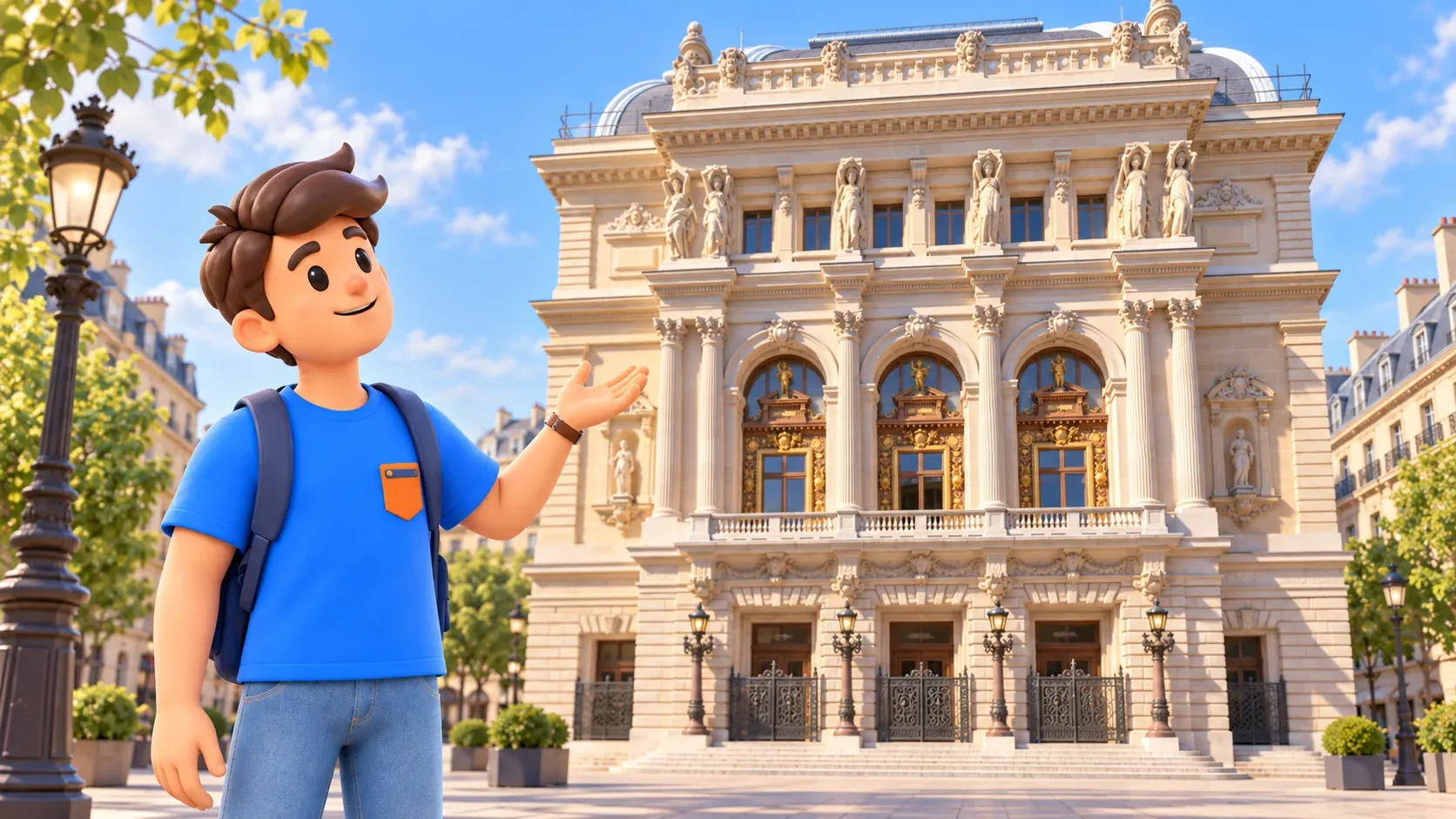
During the 2026–2027 season, Salle Favart is closed for modernisation of its stage equipment, with reopening expected in autumn 2027. The Opéra-Comique continues its activity, and opera productions take place at other venues. Check the actual address of a chosen event before including it in your trip. View the exterior from available public approaches and respect temporary barriers; do not plan an ordinary performance inside Salle Favart at present.
Théâtre des Variétés: a compact classical invitation
Once on the boulevard, find the Variétés at number 7. Its columned portico and triangular pediment stand apart from the surrounding urban façades. Notice the scale: a theatre need not occupy an enormous site to become an identifiable part of a street. Compare its more restrained arrangement with the Opéra-Comique’s decoration and remember the difference between their silhouettes rather than collecting every architectural detail.
The theatre opened in 1807 through the efforts of Marguerite Brunet, known as Mademoiselle Montansier. Its history includes vaudeville and operetta, genres that fit the idea of an animated boulevard. One thought is enough for this outing: the building created a place where people came for stage action and a shared evening atmosphere.
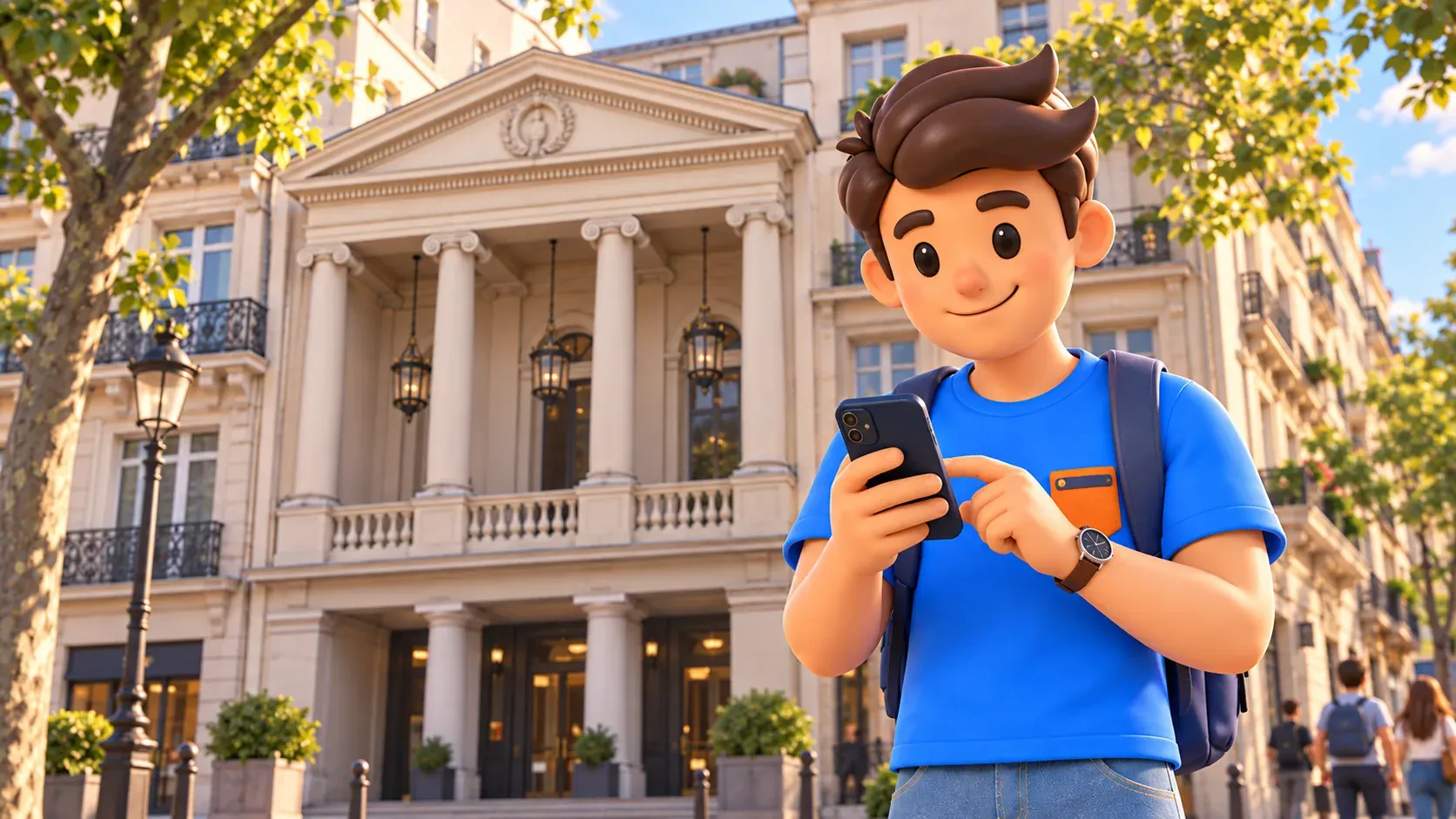
Today’s posters show that this remains a working theatre. Read the genre, start time and description if a production interests you. An open box office or doorway does not imply a free visit to the auditorium. No ticket is needed for the exterior stop; a performance requires choosing a particular date and seat, with admission conditions checked when making the booking.
If your French is limited, consider how much a selected production depends on dialogue. A short plot description can help, but it cannot replace understanding the words spoken on stage. A musical programme, a visually driven show and a conversational comedy ask for different preparation. Decide which experience appeals to you rather than choosing solely because a building is famous or its poster is striking.
Grévin: famous faces before everyday press photographs
Across Boulevard Montmartre, pause at Grévin’s entrance. Its decoration participates in the same history of entertainment, inviting visitors to leave the ordinary street for a deliberately arranged spectacle. An exterior stop takes only a small part of the route. Compare this doorway with the theatre portico opposite: both attract a passer-by, while promising different ways to encounter characters and stories.
The museum opened in 1882. Journalist Arthur Meyer wanted the public to see three-dimensional likenesses of people whose names appeared in newspapers, before photographs became a familiar feature of the press. Artist and caricaturist Alfred Grévin helped create the museum and gave it his name. A wax figure brought a recognisable face closer to the spectator, turning that encounter into entertainment.
This brief context explains why the museum fits on the boulevard. Understanding the idea does not require a list of its current figures or a search for one particular celebrity. If staged scenes and wax portraits interest you, allocate separate time for a ticketed visit and check current conditions. Entering the neighbouring passage does not include museum admission, and the indoor experience adds to the walk’s duration.
Nearby, covered shopping passages introduce another strand of neighbourhood history. For a separate outing, consider our walk through the covered passages of Paris. Do not automatically combine its full route with a museum, a theatre and today’s itinerary: each has its own duration.
Grand Rex: cinema becomes a city spectacle
Continue east to Grand Rex on the Boulevard Poissonnière corner. Its silhouette changes the architectural mood: a tall corner section and Art Deco treatment address the passer-by from a distance. Stop where you leave the pavement and entrance clear. Look first at the whole volume, then at the vertical lines and the relationship between the tower and the lower entrance section.
Grand Rex opened in 1932. It represents a period when going to the cinema could include the experience of the building and viewing space themselves. The main auditorium’s history is associated with atmospheric decoration, creating a distinctive setting for a screening. Outdoors, the useful connection is between nineteenth-century theatre and twentieth-century cinema: the technology changes, while architecture still prepares an audience for an event.
If your priority is seeing the Grande Salle, check which auditorium hosts the selected screening or event. A ticket to the cinema does not automatically include its main historic hall. Rex Studios is a separate interactive experience about cinema and an imagined backstage world. It is not equivalent to a tour of the Grande Salle; choose the actual format and date from the description of the individual offer.
For a film, confirm its language, version and running time, then allow for arriving before it begins. Concerts and tours have their own arrangements. Access conditions also differ between spaces, so check the format you need rather than relying only on the complex’s name. The exterior is sufficient for this walk; a full screening can become the day’s main cultural activity, with fewer other plans around it.
Gymnase Marie-Bell: finish with another theatrical tradition
The last stop is the Théâtre du Gymnase Marie-Bell at 38 Boulevard de Bonne-Nouvelle. Use a marked crossing to reach the north side. Compare its façade and entrance with the Variétés: which elements suggest a theatre before you read a poster? This small question ends the walk with an observation rather than another tick on a list. You have now seen several ways of inviting a city audience inside.
The theatre opened in 1820 and initially had links to actor training and short stage works. Its name recalls dramatic education rather than a sports gym. It later developed its own theatrical life. For a first encounter, the relationship between name and original purpose gives this small building a clearer meaning and adds one more variation to the history of Parisian entertainment.
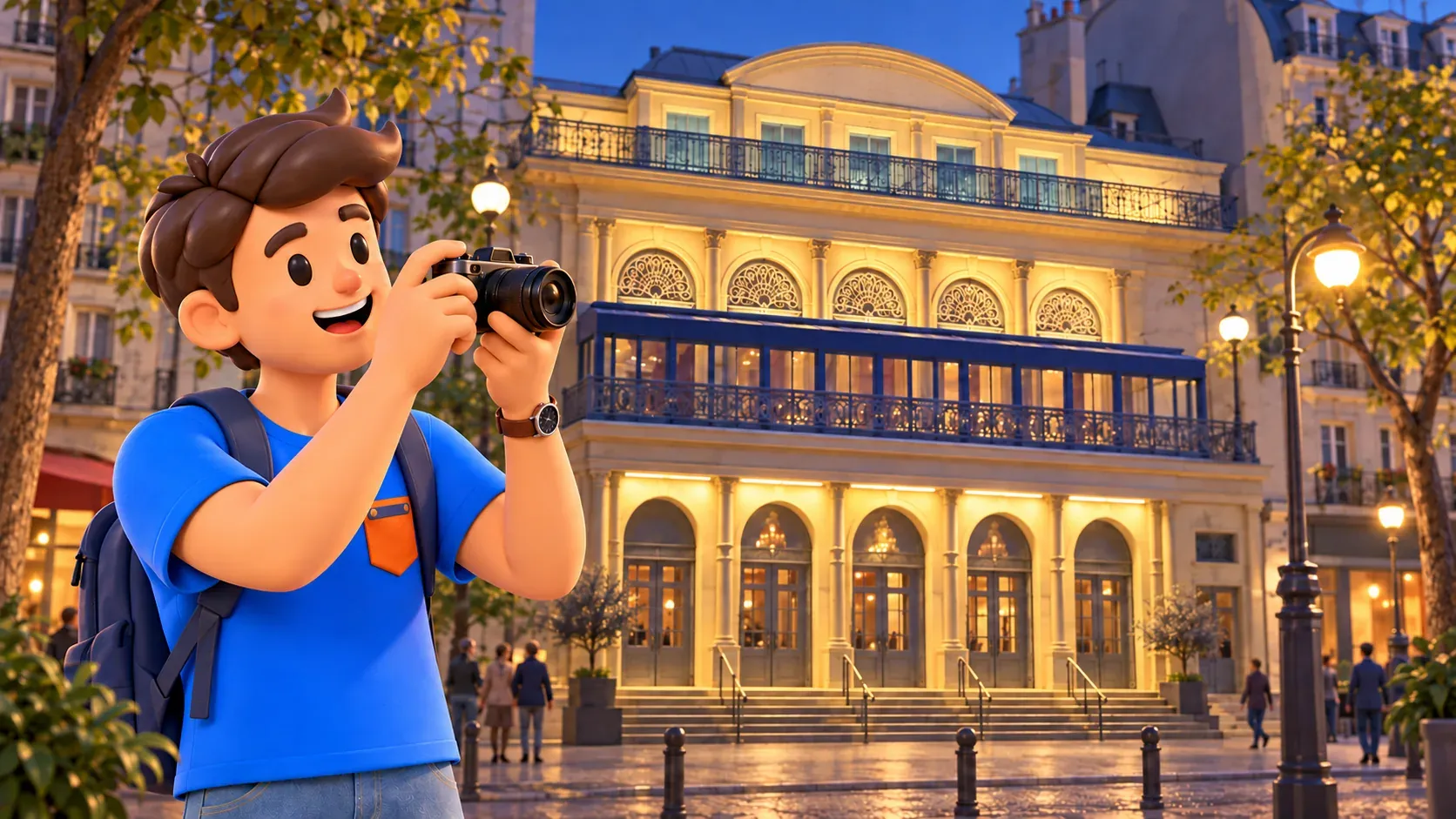
If cinema, theatre or architecture stood out for you, prepare your stay in RoadMe. Its personal plan reflects your preferences and pace, making it easier to give favourite activities more time and distribute cultural outings across different days.
Finish here or retain time for one event chosen beforehand. A meal and a pause before it can help, with travel to the actual entrance included in your plans. You do not need to visit all five places indoors to appreciate the walk. Remembering the differences between theatre columns, a decorative museum doorway and a cinema tower can be enough—and can help you choose how to spend your next evening.


