
Gran Vía in two hours: a Madrid architecture walk worth looking up for
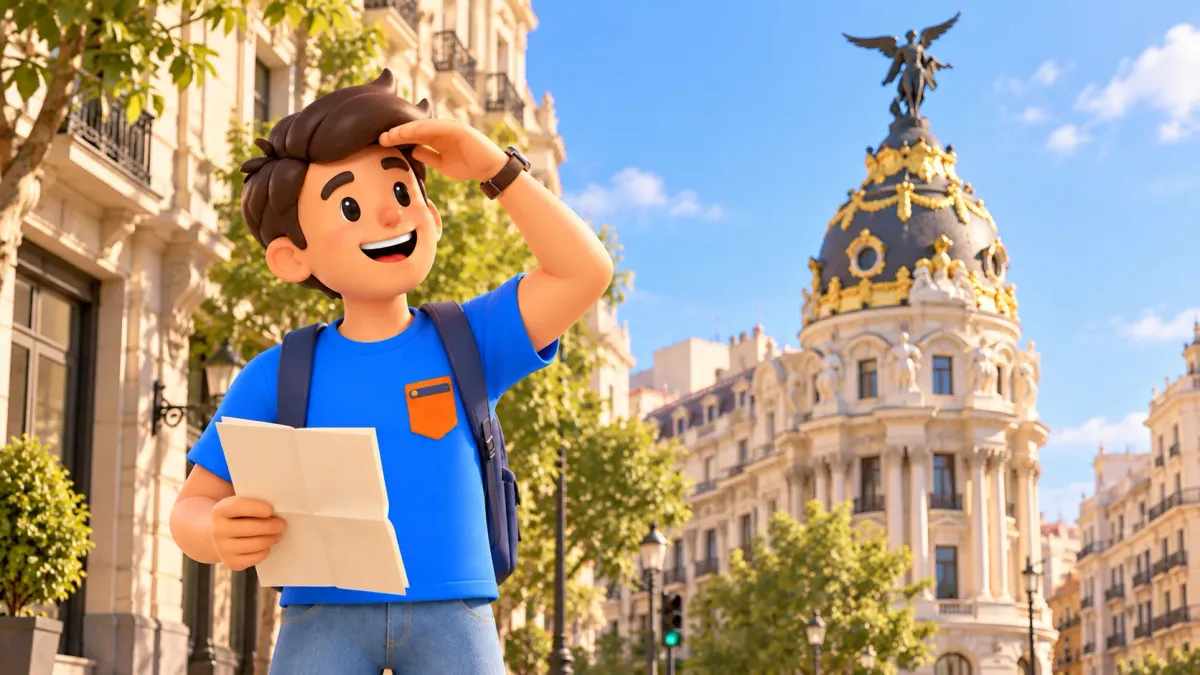
On Gran Vía, it is easy to look straight ahead at shops, people, crossings and posters. Pause and look up, and another avenue appears: domes, the Telefónica tower and Capitol’s rounded corner. A first architecture walk can connect the junction with Calle de Alcalá to Plaza de España. The aim is to notice changing forms, rather than collect every address along the street.
Allow around two hours for walking, outdoor observations and short pauses. These are editorial estimates, not times measured on the ground. Start near Metrópolis and finish at Plaza de España. Rooftops, exhibitions, shopping, a show and a substantial meal are additional activities. Choose one afterwards if the walk reveals an interest you want to develop, instead of assuming every possibility fits between the exterior stops.
Read the avenue as a story of a modern city
Gran Vía developed as a major early twentieth-century urban project. Its route took shape in sections from Alcalá through Red de San Luis and Callao to Plaza de España. You therefore encounter changing ideas of a modern capital rather than one architectural composition created at a single moment. That context explains variety without requiring you to memorise a style label and architect for every façade.
Try RoadMe to prepare this outing more conveniently and efficiently: the app develops a personal route around your interests, available time and pace. Give architecture, city stories or culture the emphasis you prefer so that Gran Vía finds the right place in your trip.
Use three questions: how does the building finish at the top, how is its corner shaped, and what happens at street level? Metrópolis draws attention to a dome, Telefónica to height, and Capitol to a curve. Shops and signs add a present-day layer. A few stops considered this way can offer more understanding than a lengthy list of façades photographed almost without looking.
With companions, ask everyone to choose a silhouette they remember. Discuss it at the end rather than holding a long explanation outside every shop. One person may prefer ornament at the top, another the simple line of a large volume. Different answers make the outing personal and draw attention to details that an individual might otherwise have left in the background during the walk.
How to divide the two hours
- Twenty minutes: Metrópolis and the avenue’s beginning. Look at the corner, dome and direction of the street.
- Twenty-five minutes: the first section and Telefónica. Walking connections and the exterior stop share this block.
- Twenty-five minutes: Callao and Capitol. Include the approach, building form and relationship to urban advertising.
- Thirty minutes: the western section. Continue towards Plaza de España, noticing the changing sense of scale.
- Twenty minutes: Plaza de España and a pause. Finish the basic line here before choosing what follows.
The blocks total 120 minutes, including movement between stops. Pedestrian traffic, signals and viewpoints affect the actual time. You do not need to cross the road for every building; some façades can be appreciated from your existing side. Where more distance helps, use normal crossings. Pause towards the edge of a broad pavement so that looking at architecture remains comfortable for people continuing along the avenue.
If your next activity is near Alcalá or Cibeles, start at Plaza de España and reverse the order. The comparisons still work. With only an hour, choose Metrópolis, Telefónica and Callao, changing the finish accordingly. This gives a coherent shorter subject rather than the same long programme with every stop squeezed. An exterior walk offers freedom to choose its length and the attention each section receives.
Metrópolis: how a corner becomes a symbol
Metrópolis stands where Alcalá meets Gran Vía, at Calle de Alcalá, 39. Notice how the rounded part and its dome mark the meeting of directions. They make the place recognisable even within a tight photograph. Then look down towards the columns and modelling of the façade. The effect comes from a sequence of parts beneath the summit, rather than only from the figure at the very top.
The building was created for the insurance company La Unión y el Fénix and opened in 1911. This supplies a useful perspective: the grand appearance belonged to a business rather than a monarch’s palace. Companies also wanted a visible urban presence. The representative silhouette and commercial purpose together offer an accessible way to understand the capital’s modern image, without reducing impressive architecture to a story of royal residences.
The dome now carries a winged Victory, while the original insurance symbol was a phoenix. Remembering that change is enough for this introduction. The figure should not automatically be assumed unchanged since the first day. A city symbol can remain recognisable while the history of individual parts differs from the familiar photograph. That is a good reason to look at what is actually there before attaching a complete historical story to it.
Choose one broad view and one detail. Compare the dome with the lower level or notice how light picks out relief. There is no single correct photograph you must spend the morning finding. Metrópolis begins a discussion of the avenue rather than functioning as an entire photo session. Once the idea of a corner accent is clear, continue along Gran Vía towards a different kind of building.
Telefónica: noticing a vertical presence
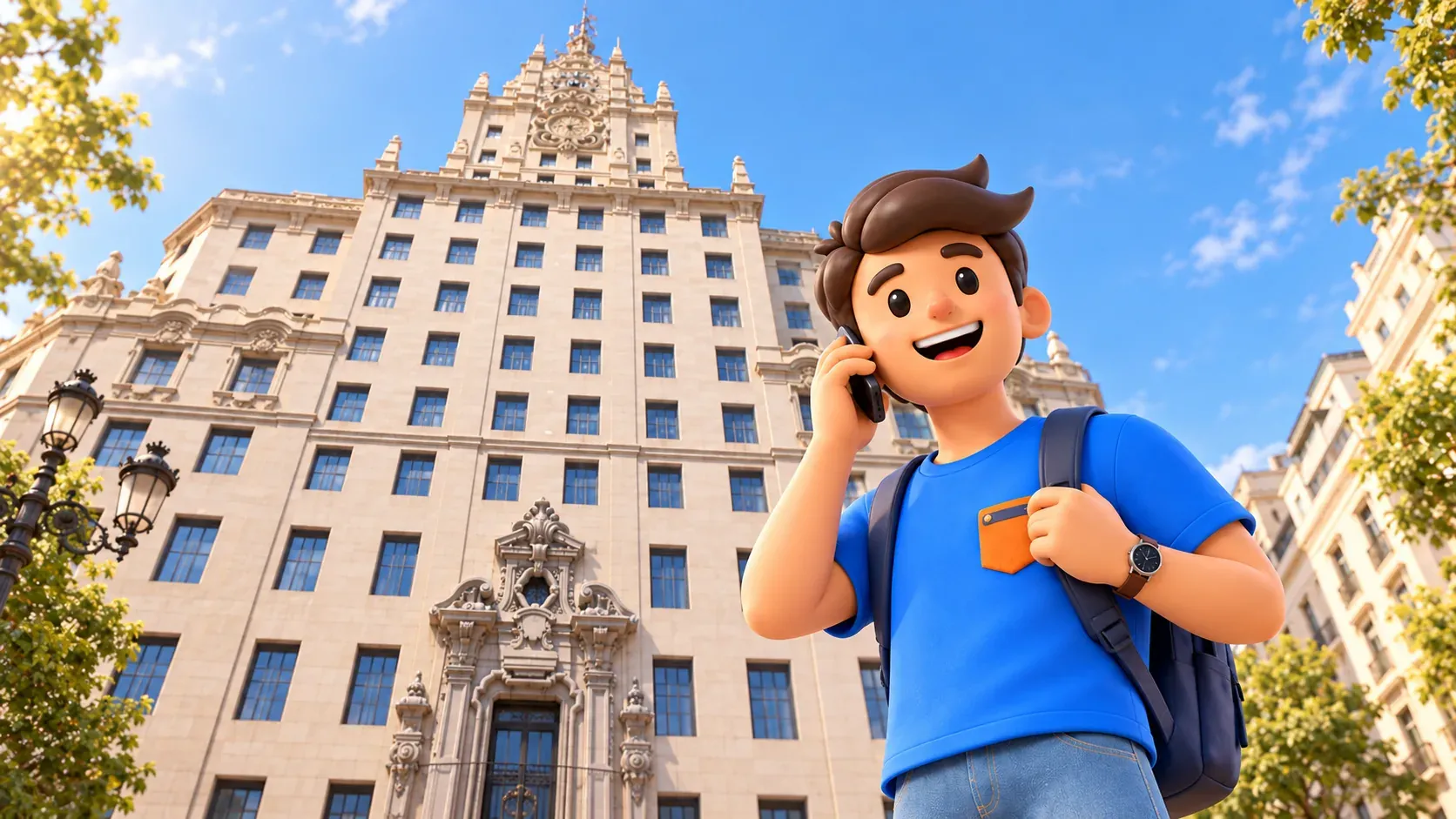
At Telefónica, Gran Vía, 28, attention moves from a dome to a tower-like silhouette. Look at the whole volume first and then its relationship with its neighbours. Metrópolis marked a corner and the beginning of a direction; here height gives a different presence above the street. You can understand that distinction without searching for a record or settling which European building deserves the title of first skyscraper.
The building’s history is connected with telephone communication. It adds another dimension to a capital familiar through palaces and squares: the city of technology, business and working systems. Architecture becomes more interesting when there are people and functions behind its shape. For a short pavement stop, choose that connection between form and purpose rather than trying to cover the entire development of telecommunications before continuing to the next junction.
The building is also associated with the Fundación Telefónica cultural space. This can be a separate continuation for visitors interested in art and technology. The basic walk stays outside. For an exhibition, establish its own programme, visiting time and specific entrance. Interest in one façade need not turn into an unplanned obligation to walk through every available room on the way to another outdoor stop.
Try a simple exercise: identify the lower part, the middle volume and the top, then look at the whole building again. Details become a silhouette, while neighbouring buildings give it scale. That makes an architecture walk accessible without specialist training. You do not need to name every form correctly to see how this building differs from the previous one or understand why it remains in your memory.
Callao and Capitol: a curve, cinema and city screens
Continue towards Plaza del Callao. Here the interaction between architecture and advertising becomes particularly noticeable. The Carrión building, also known as Capitol, has a rounded corner that creates its own character. Compare it with the dome at the start and the Telefónica tower. Three approaches already turn the outing into a sequence of forms rather than a row of similar-looking buildings accompanied by unfamiliar names.
Carrión was built between 1931 and 1933 to designs by Luis Martínez-Feduchi and Vicente Eced. The city’s tourism source describes its style as Art Deco. More useful than merely remembering that label is looking at the curved line, overall volume and combination of urban functions. Its history included a hotel, cinema and other spaces, explaining why the building’s image feels connected with entertainment and everyday city life.
The familiar Schweppes sign is part of Capitol’s recognisable appearance. The building remains interesting without reading every advertisement around it. Mentally remove the signs for a moment and find the underlying shape; then look again at the contemporary screens. There are two layers in one scene, a relatively permanent volume and rapidly changing images. Their relationship helps explain why Gran Vía can feel historical and current at the same time.
Callao also offers a chance to pause and look beyond an individual façade. Choose a place outside the main flow and notice how people use the square. Culture is visible in the urban setting, but a screening or show takes separate time. If an evening event appeals, finish the short walk first, then consult the relevant programme and admission conditions with room to make a considered choice.
To combine architecture with museums, parks and evening interests, let RoadMe develop a personal trip plan around your dates, preferences and rhythm. The app makes it easier to distribute experiences across your days while leaving suitable time for each visit you choose.
Towards Plaza de España: a change of scale
After Callao, follow the western part of Gran Vía. Instead of stopping in detail at every building, choose one observation for the whole section: how does the street open as you approach the square? Compare the perceived width, distant silhouettes and position of pedestrians. This maintains attention to architecture even where you are not identifying a particular property or adding another compulsory attraction to a list.
At Plaza de España, taller buildings can be seen with more space in front of them. Finish with a pause and recall the beginning: dome at a corner, tower above a street, curve near Callao, then open space. You now have a personal sequence of images. It is more useful than trying to recite every address passed along the way. Your next direction depends on your remaining energy and actual plans.
To connect Gran Vía with the historic centre, consult our one-day Madrid itinerary. Select a relevant block and reorganise the day around real available time. Do not add the entire larger programme automatically to these two hours. The square can be a satisfying finish in its own right, especially if the walk has already provided plenty to notice and you would prefer to rest.

Daylight or evening: choose the impression
Daylight helps a first look at relief, materials and the upper parts of façades. In the evening, attention moves more towards lighting and screens. This is another version of the experience, not a requirement to repeat the full route on the same day. Choose the time for your purpose; visibility and illumination of particular details vary with the season and hour rather than following a single guaranteed photographic arrangement.
A rooftop also changes the subject. From the street, you see façades in relation to people; from above, the city’s broader pattern becomes more important. Going up requires separate access conditions and time. It is neither promised nor needed here. The two-hour walk already serves its purpose when you begin distinguishing silhouettes and noticing how buildings direct your eye along a large avenue, even while remaining at pavement level.
Gran Vía then becomes more than a connection between shops. Business ambitions, communication, cinema and several ways of shaping a city image appear along the route. You can return to one building, choose an exhibition or plan a show with a clearer sense of what interests you. The short walk supports that first personal choice; it does not need to replace a detailed directory of every place on the avenue.


