
Gorky Park to Neskuchny Garden: a green walk beside the river

The walk from Gorky Park towards Neskuchny Garden works through a change of atmosphere. You begin around an open pond and riverfront, then give more attention to trees and the quieter scale of garden paths. It is a useful choice when you want time outdoors without turning the afternoon into a journey to every viewpoint along the Moskva River.
The core is Golitsyn Pond, a section of Pushkinskaya Embankment and a continuation into Neskuchny Garden. The historic Green Theatre area can serve as a cultural reference on the way where public access permits, rather than an assumed indoor stop. The Main Entrance is an optional exterior landmark, not the gate through which this plan requires you to pass.
Plan the walk around the open approaches
Allow roughly two to three hours for a selective outing, including pauses and a practical finish towards onward transport. This is an editorial range, not a measured walking time. A long meal, museum or performance needs additional time. The useful limit is to choose a section of Neskuchny Garden that you can enjoy, rather than treating its entire area as the final compulsory stop.
With RoadMe, your interests, dates and pace become a personal route or trip plan. Whether you want more river views, a quieter garden section or a cultural stop, the app makes the day easier and more efficient to use on the ground, with the walk, breaks and finish connected instead of assembled again from separate places.
- Reach Golitsyn Pond by a currently open pedestrian approach.
- Move to Pushkinskaya Embankment for a selected river section.
- Continue towards Neskuchny Garden using public paths and current signs.
- Choose a manageable garden section and the exit before extending further.
At the check on 23 October 2026, the park announced partial Parterre closures including the Main Entrance, while the pond area and Pushkinskaya Embankment remained open. Check the latest approach before travelling. Do not turn an old photograph of the entrance into a promise of a usable passage today. The rest of the walk does not depend on entering through that arch.
The Main Entrance is an exterior option
The Main Entrance can help you recognise Gorky Park, but recognition and access are different questions. If you want an exterior look, make it only where the current public approach allows. It should not require walking around barriers or repeatedly searching for a way through a closed area. You can begin the actual green route at the pond without losing its main purpose.
The park opened in 1928. This short historical anchor explains that the familiar public leisure space belongs to a different chapter from the older estates associated with Neskuchny Garden. You do not need a full timeline to enjoy the contrast. It is enough to notice how a large urban park and an inherited garden landscape can form different parts of one continuous outing.
If meeting companions, choose a specific accessible spot rather than simply naming the Main Entrance. A closed passage can place two people on opposite sides of a barrier even when both think they have reached the meeting place. Share the approach you actually intend to use and keep a little time for the initial walk from your station or street arrival.
Golitsyn Pond gives the first pause a clear focus
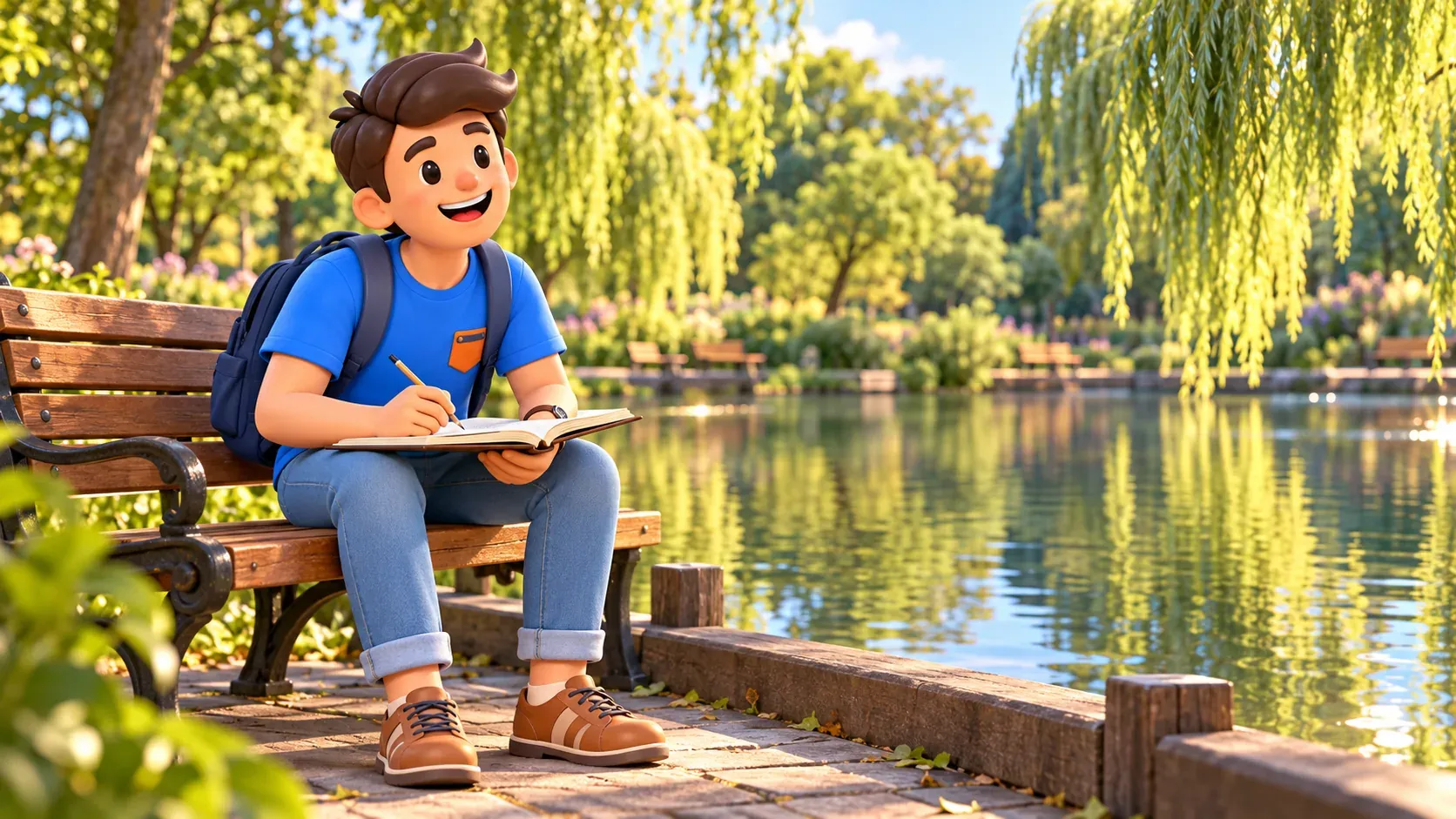
Begin around Golitsyn Pond with a look across the water before moving on. The park describes it as a connected pair of larger and smaller ponds. For this route, the value is the contained view: unlike the river, it lets you understand the immediate landscape at a glance. Choose a permitted place to pause and notice how water, trees and paths frame one another.
You do not have to make a complete circuit to enjoy the stop. A short section is enough if the purpose is a relaxed introduction before the riverfront. Take a photograph, compare reflections or simply sit for a moment. This gives the afternoon a slower beginning and makes the move towards the larger river view feel like a change rather than a continuation of the same scene.
Avoid planning around guaranteed wildlife, boat hire or a particular waterside service. Those depend on the season and the day's arrangements. The pond itself remains the subject, while any available extra can be chosen separately. If you are travelling with children, one observation such as a repeated shape in the reflection is more useful than promising an encounter that may not happen.
Pushkinskaya Embankment changes the scale
Move from the pond towards the accessible riverfront, using current signs and permitted paths. The broader water view opens the walk out. Choose a direction towards Neskuchny Garden and let the river provide continuity, without making every building on the opposite bank into a new destination. You are following a green corridor on this side, not creating a crossing of the city centre.
The park currently prohibits bicycles, scooters and similar devices on the specified Pushkinskaya section between Krymsky and Andreyevsky bridges. Treat this as a walking plan and check current visitor rules for your circumstances. Do not assume that a broad paved embankment is therefore a cycling route. An old travel description can be wrong about permitted use even when its scenery is recognisable.
At a comfortable stopping place, take the view before looking at the screen. A small pause is often enough to appreciate the river's scale. You do not need to book a boat simply because a pier is nearby. A cruise has its own schedule, boarding point and duration, and can turn the outing into a different afternoon that needs to be planned on its own terms.
Keep the weather in mind. An open riverside can feel different from the protected paths among trees. If conditions become unpleasant, shorten the exposed part and choose an appropriate return rather than forcing the full river sequence. The value of this walk lies in the contrast between settings, not in remaining beside the water for a prescribed amount of time in every season.

A theatre reference does not mean a performance is included
The historic Green Theatre belongs to the park's cultural history and can provide context as you continue, where the public route permits. The operator's place listing connects it with the mid-1930s. For a brief walk, that is enough to remember that park life has included organised entertainment as well as water, trees and everyday recreation, without needing a catalogue of famous programmes.
Seeing a venue marked on a map does not promise access to seating, a stage or a building interior. Do not make your route depend on walking through performance grounds. Follow the open public connection instead, and treat an exterior reference as sufficient. If a particular event interests you, check the actual venue, programme and admission separately rather than applying general park information to it.
This is also a useful point to ask what kind of finish you want. If the river has already given you the outdoor time you needed, choose an earlier exit. If you still want a garden atmosphere, continue without adding a concert or museum simply because it appears nearby. One clear extension keeps the outing easier to understand and more enjoyable for everyone.

Neskuchny Garden: let the paths become the subject
Neskuchny Garden brings an older estate landscape into the park experience. Its history is associated with several eighteenth-century noble properties. You do not need to follow every family name to appreciate the difference in atmosphere. Shift your attention from long river views to the relationship between paths, mature trees and changes of level. That is the reason to continue rather than only another name to reach.
Choose a public section that suits the time and energy left. The garden's name on a map is not a single point where the walk is suddenly complete. Decide what you want to do there: a modest loop, a short out-and-back or a route towards a particular open exit. Then check the actual paths instead of improvising a long wandering finish after the main outing.
RoadMe can develop a personal trip plan around how you like to travel, from relaxed green walks to a day with more cultural interest. Using the app while exploring makes the whole sequence more convenient: your available time and pace shape the route, and the finish remains part of the plan rather than a problem postponed until you are tired.
Allow the walk itself to count. Listen to the changing sound of the surroundings, notice where light falls through the canopy and pause without needing a named monument. A garden is not a collection of objects that must all be visited. The experience can be complete through one enjoyable section, provided you leave enough time for the practical way out and the rest of the day.
Choose the terrain that actually suits your group
A riverfront and an interior garden path can require different effort. Changes of level, surfaces and weather affect the route you should choose. Do not take a shortcut solely because a line on the map looks shorter. Check whether the actual connection includes steps or a slope that matters to your group, and be willing to use a longer but more suitable public path.
For a wheelchair, pushchair or limited stamina, verify the chosen approach, transitions and exit in advance. This article does not certify the whole outing as step-free. The first broad path you see cannot prove the conditions of every later section. If your visit needs assistance or particular facilities, use the park's current visitor information for those specific requirements rather than relying on a general description of greenery.
With children, change the focus between sections: water reflection at the pond, a wide view at the river, then a shape or patch of light beneath the trees. Keep rests real, not just promises to stop later. A slower group may enjoy a shorter version more, while a longer extension can be left for another visit when walking itself is the day's main purpose.
Finish deliberately instead of drifting towards another district
Decide on an exit while you still have a comfortable reserve of energy. An attractive path continuing ahead is not a reason to keep extending towards Sparrow Hills or further along the river. Those directions can form another route. Check the actual distance to your chosen transport connection and remember that leaving the named garden area is not the same as reaching a metro platform.
A meal or cultural visit afterwards should receive its own time allowance. Do not arrange it as though the garden finish places you immediately at the restaurant or museum door. This small distinction prevents the relaxed part of the day ending with a hurried transfer. If you have a fixed evening booking, work backwards from that commitment before choosing how far into the garden to continue.
For a different central-city introduction, our one-day Moscow plan offers a broader landmark sequence. This green route can remain focused on pond, river and garden. Leave with a sense of the transition between them, rather than a list of places you barely saw. A comfortable finish is part of the experience, and it leaves you ready to enjoy the next part of Moscow.


