
Around the Giant Swing: a Short Walk through Old Bangkok
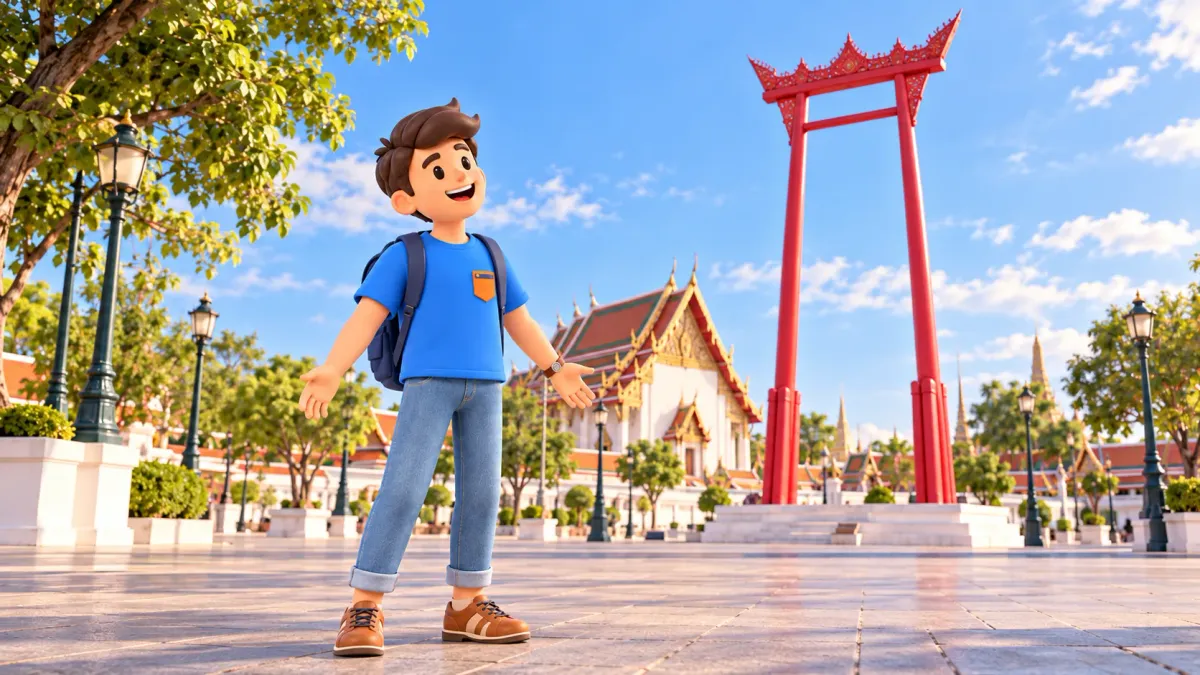
The Giant Swing is an easy landmark to recognise and a useful place to begin a small old Bangkok outing. Its red frame gives you a first view; Wat Suthat provides the main visit. Nearby Devasathan adds another layer to the area’s religious history, and Rommaninat Park gives the walk a green ending. You can connect these places without trying to cover the whole historic centre or adding another major temple simply because it appears close on a map.
Allow around two and a half hours from arrival near the Swing, with travel there and onward separate. This is an estimated daylight plan for someone who wants one substantial temple visit and time outside. It includes a short look at Devasathan from permitted areas, not a promised interior visit or ceremony. Exact paths, crossings and entrances need a current map and local signs. Choose the pace that lets the temple remain the heart of the outing.
A compact route with one main visit
The route suits a first stay when you want to understand one part of old Bangkok rather than keep collecting names. It also works on a return visit when you have already seen the better-known palace and riverside temples. The aim is a sequence of different experiences: a landmark in the street, a detailed religious space, another tradition nearby and a public park. Give Wat Suthat most of your visiting attention and let the other stops support it.
RoadMe can turn this outline into a personal Bangkok trip plan based on your interests, time and preferred pace. Planning in the app makes it much easier to organise the whole journey, with the right balance of cultural visits, neighbourhood time and rest for you.
The table is an allocation, not a timetable to obey. Its ranges include time to settle into a place; the movement and pause section has room for ordinary transitions. If you want longer inside Wat Suthat, extend the outing or make the exterior stops brief. Keep the park as a real ending if you can. Without that space, a walk intended to feel compact can become several visits followed by an abrupt departure.
| Part of the outing | Suggested allowance |
|---|---|
| Giant Swing and orientation | Around 15 minutes |
| Wat Suthat, the principal visit | Around 45–60 minutes |
| Devasathan, depending on access | Around 10–15 minutes for an exterior stop |
| Neighbourhood movement and a short pause | Around 25–35 minutes |
| Rommaninat Park | Around 20–30 minutes |
The Giant Swing: understand what you are looking at
The red structure known as Sao Chingcha stands in front of Wat Suthat. Its name can make it sound like a piece of recreational equipment, but its history belongs to Brahman ceremonial practice. The swinging ceremonies associated with it were discontinued long ago. That distinction changes the first impression: the open frame is a marker of ritual history within a working city. You are looking at a landmark from outside, rather than arriving to use a swing.
Start with the overall shape and the relationship to the temple beyond. The outline is recognisable, so you do not need a long photo session to establish the place. Find a suitable pedestrian viewpoint and choose your frame without stepping into traffic or treating the surrounding streets as an empty stage. After one wider view, notice how the structure sits beside ordinary movement. The contrast gives the opening more substance than a photograph cropped free of the city around it.
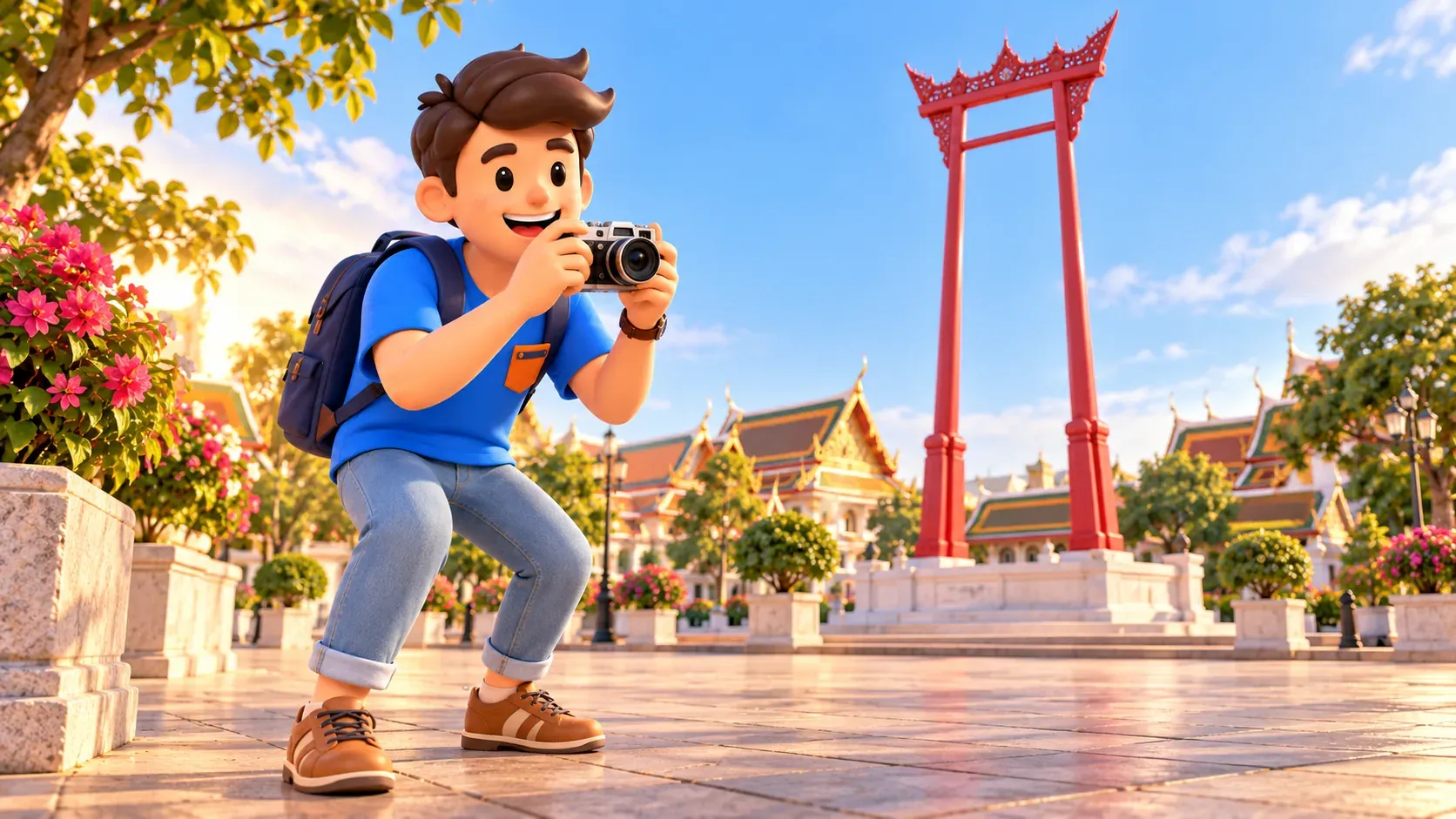
Use this stop to orient yourself, then put the map away before walking. The Swing and Wat Suthat belong together visually, but viewing the street landmark and entering the temple are separate activities. Check the temple’s current admission arrangements at the appropriate entrance. Seeing the Swing does not establish which parts of the religious complex are available. Making that small distinction at the start keeps the main visit clear and saves you from spending its time circling outside with the wrong assumption.
Wat Suthat: look slowly enough for details to matter
Wat Suthat is a royal Buddhist temple whose nineteenth-century murals give a strong reason to look beyond the exterior. You do not need to identify every painted scene for the visit to feel worthwhile. Where viewing is allowed, begin by taking in the space, then choose one area to examine more closely. The shift from the open red frame outside to the richer visual setting inside is one of the useful contrasts that makes this small route work.
Keep the main hall, any other accessible areas and the overall temple visit distinct in your planning. A door being open does not mean every part of the complex is on the same visitor circuit. Follow current signs, dress appropriately and observe any photography instructions. Leave religious activity room. If you find yourself interested in a particular detail, spend your time there rather than trying to prove that you covered all the buildings. Attention is a better use of a limited window than a rapid circuit.
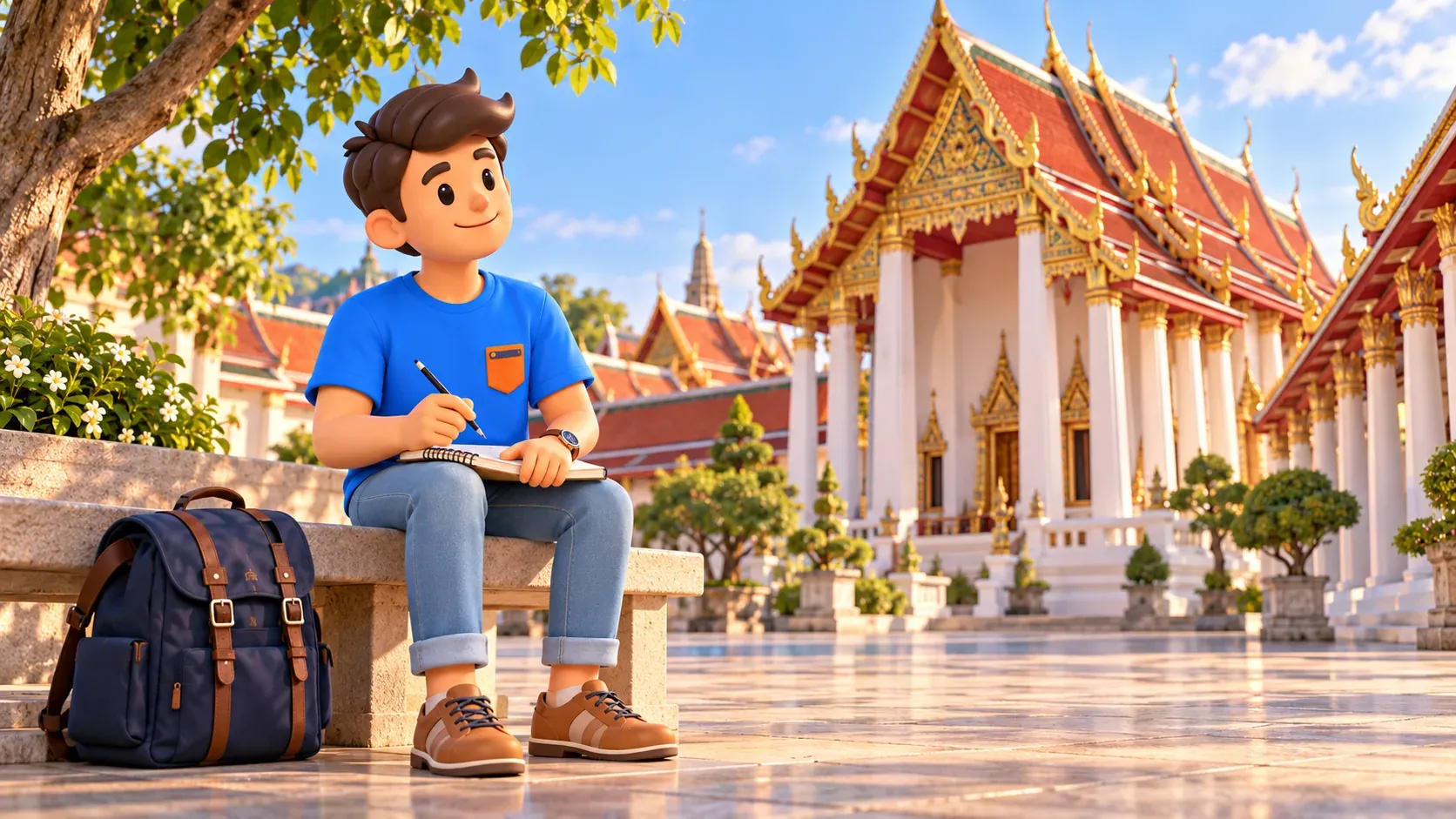
Three ways to give the temple a personal focus
For an art-focused visit, compare your first impression of the whole interior with one permitted closer view of the murals. For an architecture-focused visit, notice how rooflines, supports and open spaces change as you move through accessible areas. For a quieter visit, choose a place where you can stop appropriately and simply look for a few minutes. These are different ways to use the same main stop, so companions do not need identical interests to enjoy it.
Allow roughly three quarters of an hour to an hour as a planning estimate, then respond to the actual conditions. This is not a claim that every visitor needs the same duration. If you stay longer, give that time honestly to the temple and shorten the next street section. If an important area is unavailable, continue with the parts that are permitted or make the visit shorter. The rest of the route remains useful without pretending that a closed space has been experienced.
Devasathan: another tradition beside the landmark
After the main visit, return towards the area near the Swing for Devasathan, the Brahman temple. Founded in 1784 under Rama I, it helps explain why the district cannot be understood only through its Buddhist monuments. You do not need to unfold the full history of court ritual to see the value of this short connection. The proximity of different religious settings is itself a reason to slow down and recognise that the neighbourhood contains more than one story.
Make the basic stop an exterior look from permitted public areas. If a visit inside is important to you, check the current arrangements before choosing the day and allow more time where necessary. Do not assume an ordinary walk includes access to halls or a chance to watch a ceremony. Keeping the stop modest is also respectful of its purpose. You can appreciate its place in the quarter without making someone else’s religious activity a promised feature of your afternoon.
The short return towards this area is deliberate, even though the park lies in another direction. You are adding a nearby layer of context before moving on, not following a perfectly straight line. If you want the simplest possible outing, make this a brief exterior stop and continue. If the Brahman setting is your main interest, organise a separate, better-timed visit instead of taking most of the allowance from the temple you originally planned to see.
With RoadMe, your own interests can shape a complete personal itinerary, whether you prefer art, religious heritage or time in ordinary neighbourhoods. The app is a more convenient way to work out the trip as a whole than assembling separate lists and trying to fit them together later.
Between the temple and park: leave a small street chapter
The surrounding area includes shops selling Buddhist religious supplies, a useful connection between the temple visit and the life outside it. Observe from public space and remember that these are working businesses. You can look at the relationship between objects, shopfronts and the religious setting without treating every shop as an exhibition. Ask before close photographs or entering a space that is not clearly meant for casual browsing. A little consideration lets the street remain part of the visit rather than a performance for it.
Continue towards Rommaninat Park using the actual available paths and crossings. Keep room for a drink or snack if you want one, choosing somewhere convenient rather than detouring for another destination. Check the menu and price before ordering. A full lunch needs a longer allowance; it is an excellent reason to expand the outing, but it cannot disappear between the time blocks. If the temple has taken longer than expected, a short seated pause can replace wandering rather than being cut automatically.
Rommaninat Park: a green ending with an unexpected past
Rommaninat occupies a former prison site, with parts of the old prison buildings and a guard tower preserved. That is enough history to give the ending another layer, without turning the park into a dark-tourism excursion. Its present role is a public place for walking, exercise and rest. Notice the difference between the site’s former purpose and the ordinary activity around you. The route has moved from ceremonial landmark and religious space to a piece of the city used for everyday recreation.

Choose a comfortable public spot or an easy stretch of path and let the outing slow down. You do not need to cover every corner or seek a museum visit inside the surviving structures. This plan promises a park finish, not access to a former prison exhibition. Follow the current park rules and leave space for people exercising. A few quiet minutes can give the earlier impressions room to settle, especially after looking closely at a visually rich temple.
Think about your next journey before using the whole remaining margin. Sam Yot is a useful MRT station to look up for onward travel from this part of the city, but choose the actual park exit and route for your destination on the day. Do not count leaving the park as arriving at a platform. The walk ends more pleasantly when it has a small transition into the next part of your day, rather than a sudden rush after an extra circuit.
Keep this walk small within a larger stay
This is a compact alternative to an afternoon of several major admissions. To build a broader stay, our three-day Bangkok itinerary gives different kinds of days their own space. For another short outing, the Banglamphu walk finishes by the river. Treat it as another choice or another day rather than automatically joining the two into a longer checklist.
You can leave this part of old Bangkok with a few clear connections: the Swing’s ceremonial past, the detail of Wat Suthat, the nearby Brahman tradition and a park made from a very different urban site. That is a full small experience. If one part makes you want to return, let it guide a future outing. The best measure of the walk is what you noticed and enjoyed, with enough room left to remember it.


