
Banglamphu in Two Hours: a Temple, Old Streets and the River

Banglamphu rewards a smaller plan than its long list of places suggests. Begin with Wat Bowonniwet, give the streets between the landmarks some attention, then finish by the Chao Phraya at Santichaiprakan Park. The walk moves from a monastery to neighbourhood life and a river view. That change of setting gives two hours a clear shape, without needing a succession of major admissions or a long excursion across Bangkok.
This is a daylight outing, timed from arrival near the temple. Getting there and leaving the riverside need additional time. The basic version uses one short temple visit where access permits, public streets, a seated break and exterior views near Pipit Banglamphu Museum and Phra Sumen Fort. A full museum visit is a longer alternative. The time blocks below are planning estimates, not measured walking intervals or a promise that every interior will be available.
Choose the two-hour walk or a museum-led outing
Choose the short version if you want a coherent introduction to the quarter, particularly when you have already spent part of the day inside temples or museums. You will have one main religious stop, a little street life and an unhurried finish. If local history is your principal interest, let the museum become the centre of a longer outing instead. Decide this before starting, because a museum visit has its own arrangements and deserves more than a hurried gap.
RoadMe can develop this outline into a personal Bangkok itinerary around your interests, available time and preferred pace. Planning the whole trip in the app makes it easier to give heritage, neighbourhood walks and rest the place they deserve in your own days.
The suggested allocation protects a final stretch by the water. It includes movement between the named areas, so the street section is part of the experience rather than empty time. If a visit runs longer, shorten the next section or accept a later finish. Keep your onward connection separate from the two hours. That simple distinction helps a small walk stay enjoyable, especially when another booking or meal is already fixed.
| Time from the start | Focus |
|---|---|
| First 25 minutes | Wat Bowonniwet, depending on access |
| 25–60 minutes | Neighbourhood streets and a seated drink pause |
| 60–85 minutes | Continue towards Pipit Banglamphu; exterior in the short version |
| 85–120 minutes | Phra Sumen Fort exterior and Santichaiprakan Park |
Wat Bowonniwet: give the beginning one clear subject
Wat Bowonniwet is a royal Buddhist monastery with a strong connection to Thailand’s religious history. Prince Mongkut became its abbot in 1836 before later becoming King Rama IV. That short piece of context gives the first stop substance without turning your walk into a lesson in dynastic chronology. You are entering the setting of a working monastery, where the present use of the place matters alongside its royal associations.
Start with what is visible and accessible on the day. Notice the relationship between an entrance, the temple buildings and the ordinary street outside. Choose one architectural feature to look at closely instead of trying to cover the whole complex. Follow current signs and the directions of people responsible for the site; some areas serve monastic life rather than visitors. Clothing appropriate for a religious visit and a quiet manner make this a more comfortable beginning.
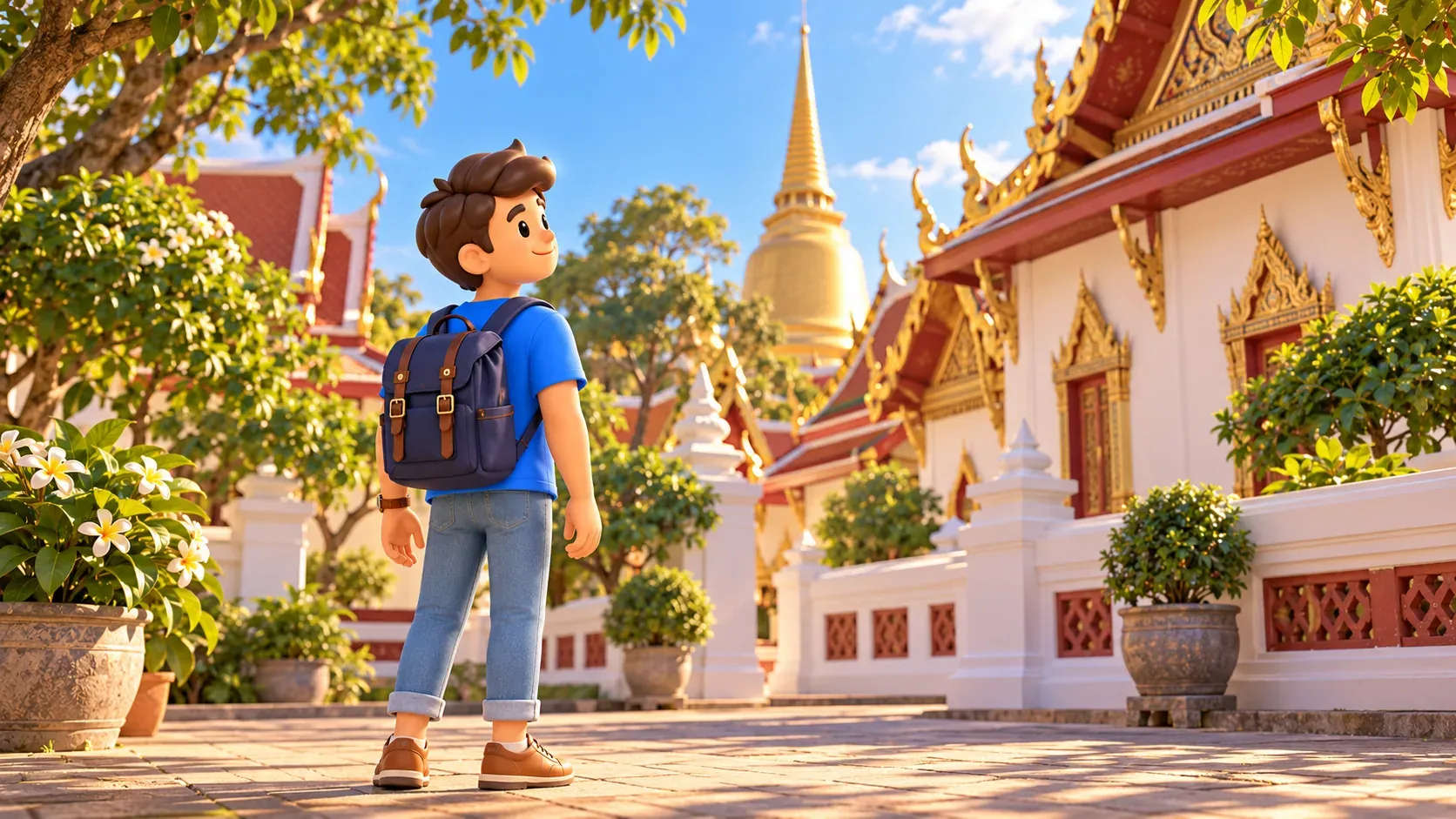
If an interior is open and interests you, use it as the principal visit of the outing. Spend attention there and reduce later wandering if necessary. If access is limited, the permitted exterior views can still provide a meaningful opening. A small route becomes much less fragile when its purpose is to understand the quarter through several settings, rather than to obtain proof of entry at every address on a list.
Old streets: make the walk between places count
From the temple area, continue through public streets towards the museum and riverside part of Banglamphu. Use a live map for the actual path and crossings. This article provides a sequence, not turn-by-turn navigation or a guarantee of a continuous pedestrian lane. You do not need to follow every interesting side street: one comfortable line with a short pause gives more attention to the buildings and activity already around you.
Look for changes of scale. A temple boundary gives way to ordinary frontages, an open junction to a narrower street, a bright stretch to shade. A doorway, a row of windows or a small working shop can provide the detail you remember. Let that be enough. The quarter is not a display arranged for visitors, and its everyday uses are part of what makes the route worth taking outside the major sightseeing circuit.
Choose a place to stop that leaves the pavement and entrances clear. For photographs of people or work at close range, ask first. For buildings, look once without the screen before deciding on a frame. This keeps photography from consuming the whole middle section. It also leaves room to notice how a landmark sits beside ordinary life, a more useful question here than whether every façade deserves another image.
A drink break that keeps the route small
A simple seated pause fits naturally into this section. Choose somewhere convenient along your line, check the menu and prices, and order what suits you. You do not need a named café or a particular famous dish to make the walk successful. The value is a change of rhythm: a few minutes to sit, drink and decide how much energy you want to give the river end.

If you are hungry, a meal changes the budget. Either make the outing longer or reduce the street wandering and park time. Avoid treating lunch as something that somehow happens outside the clock. For companions with different interests, the pause is also a useful point to agree on the next priority: a museum-focused extension, a quieter finish outdoors, or simply ending after the river view.
Pipit Banglamphu: a useful choice, not a rushed extra
Pipit Banglamphu occupies a site associated with a printing school and the former Khurusapha printing house. Its subject includes the history and culture of the neighbourhood. This gives the building a different role from a temple: it can help connect what you have seen in the streets to stories about the community. You need only that basic connection to understand why it belongs along this route.
The short version pauses around the exterior where permitted and then continues towards the park. It does not claim to include the exhibition. For a visit inside, check the museum’s current visiting day, round and admission arrangements before setting out. Do not assume you can enter at any moment simply because the building is near your next stop. A scheduled visit may require organising the rest of the outing around it.

If the museum is your priority, allow a longer overall window and consider starting there at the arranged time. Then keep the temple brief or save it for another day, and retain a short river finish. You can think in terms of roughly three hours rather than two, with the actual duration determined by the available visit and your pace. That is a planning allowance, not a guaranteed tour duration or a reservation.
Use RoadMe to shape a personal trip around the Bangkok experiences you value most, whether that means more local history or more time outdoors. Keeping the overall plan in the app is more convenient than piecing together separate lists, with your interests guiding the route.
Phra Sumen Fort: read the shape before seeking an entrance
Near the river, Phra Sumen Fort gives the walk a compact historical marker. Built in 1783 during the reign of Rama I, it belonged to the capital’s defensive system. Its pale walls and compact form create a different impression from the temple buildings at the beginning. Looking at the outside is enough to make that comparison. This itinerary does not depend on access inside the fort or to an upper level.
Choose a permitted viewpoint, take time to see the building as a whole and then move towards the park. There is no need to build a separate architectural checklist around a short stop. One useful thought is how the city’s edge has changed in meaning: a defensive structure is now part of a setting where you can pause beside the river. The view lets a small amount of history remain attached to a visible place.
Santichaiprakan Park: leave time to watch the river
Santichaiprakan Park is the intended finish, not a point to pass through while looking for another attraction. The Chao Phraya opens the view after the more enclosed streets. Watch the water and boat traffic from a safe public spot, find somewhere comfortable if available, and allow a few minutes without looking at the next part of your day. The contrast with the monastery and neighbourhood is the completion of the route.
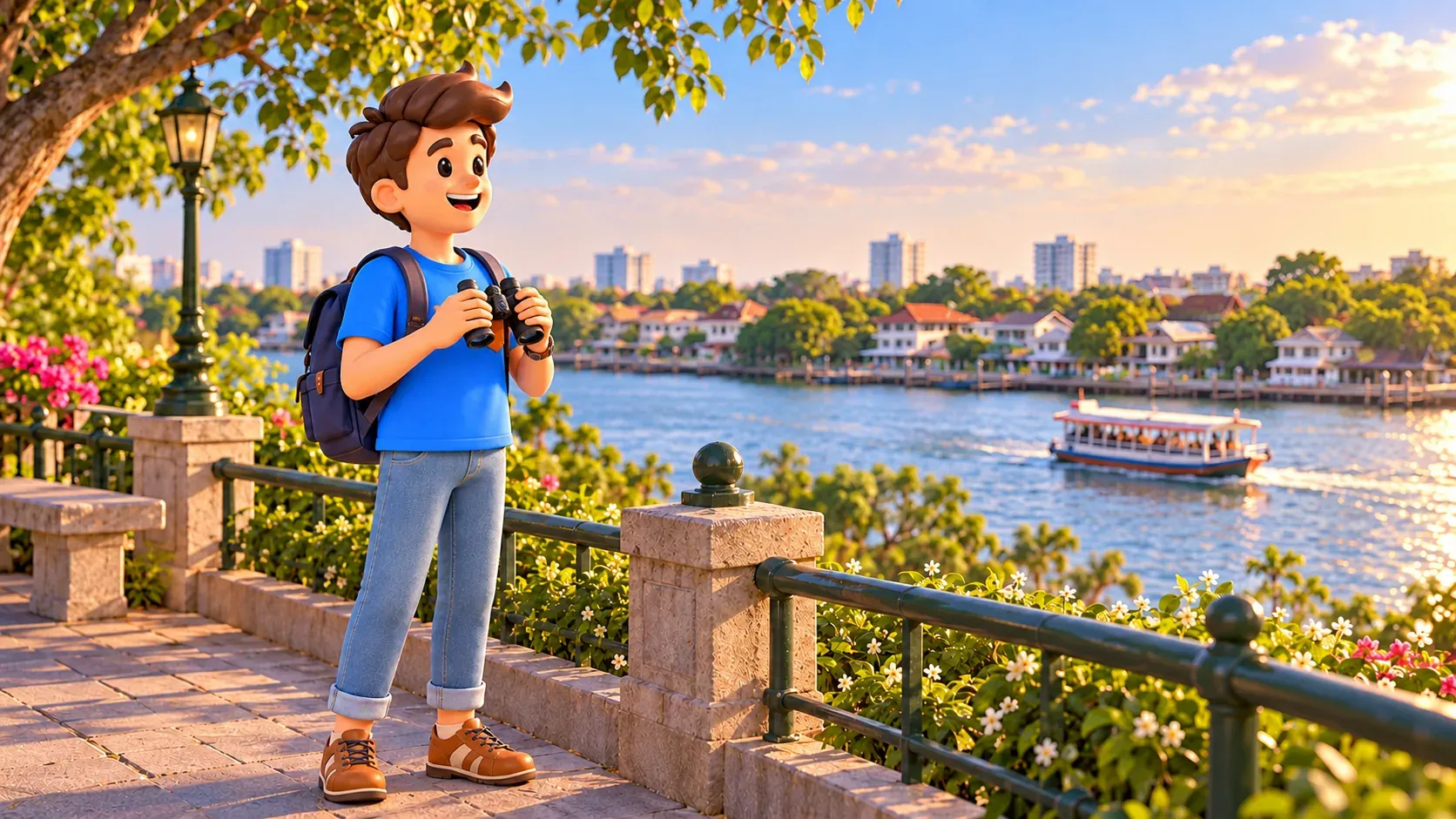
A late-day visit can be pleasant if it fits the current access conditions, weather and your onward plans, but sunset is not required. Nor should you assume every stretch has shade or a vacant seat. Choose the conditions that suit you, particularly if heat has already affected the walk. The park works as a pause because you have deliberately kept time for it, not because it guarantees an empty waterfront scene.
Check your departure plan from a suitable place before you are ready to leave. A river view does not mean an immediate boat connection to wherever you are staying. Look up the actual boarding point and service if you intend to use one, or choose another way onward. Keep that practical decision outside the final moments of watching the water. It helps the outing end calmly rather than in a search for an assumed connection.
Where Banglamphu fits in a longer Bangkok stay
This compact outing can stand alone after a demanding morning or become one part of a gentler city break. Our three-day Bangkok plan shows how different kinds of days can sit together. If this is a return visit, the ideas beyond the main sights suggest other neighbourhood choices. Adding them all to the same afternoon would change the scale of this walk.
Keep the ending you have chosen. You can leave with one temple impression, a detail from the streets and a river view, or devote more time to the museum and return for the rest. Both are coherent ways to enjoy Banglamphu. A good short route makes those choices visible and gives you a reason to remember the quarter, rather than measuring success by the number of places squeezed into two hours.


