
Watchmaking Geneva: public clocks and traces of old workshops
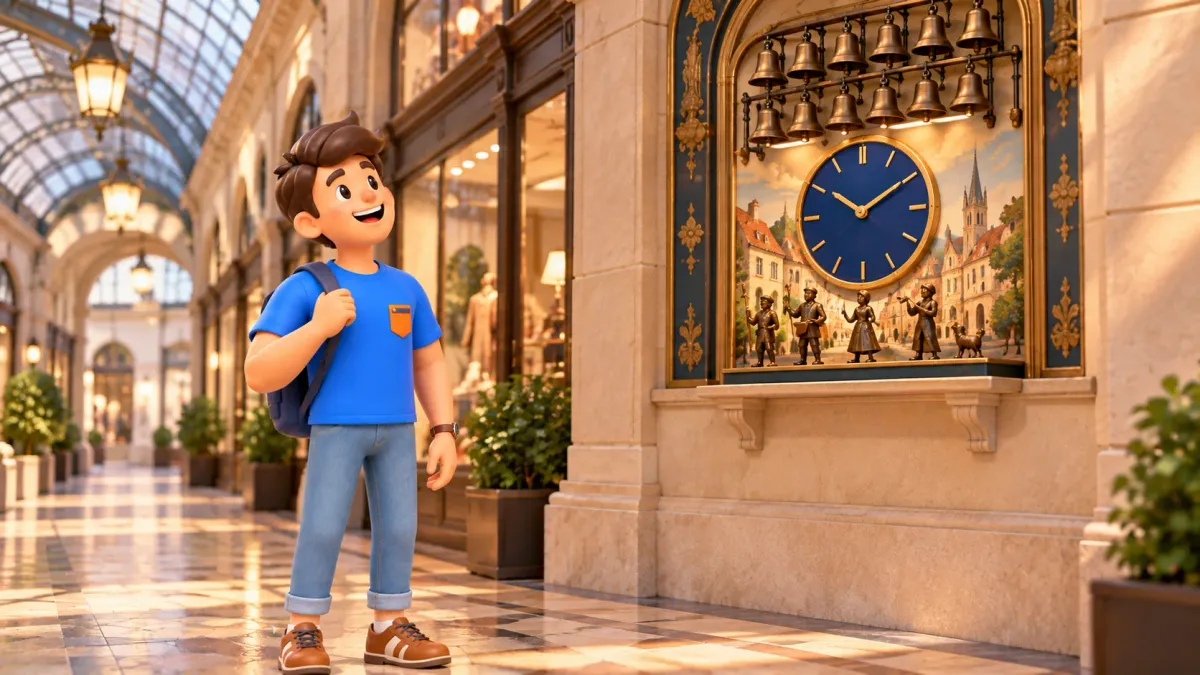
You do not have to begin Geneva's watchmaking story in a luxury shop. In the lower town, a public clock turns timekeeping into a small performance. Beside the Rhône, a former factory gives the subject an architectural setting. Malbuisson and the historic Vacheron & Constantin building make a complete short exterior walk. The Patek Philippe Museum offers a separate continuation for anyone wanting to explore the objects themselves.
This route also suits visitors who cannot name watch complications and have no intention of buying anything. Its subject is the city's relationship with time: a shared dial, moving figures, places of work and the preservation of older objects. Those strands connect without becoming a single brand's story. Let ordinary streets remain part of the experience between the more focused stops.
Plan two exterior stops and one optional museum
Start at Galerie Jean-Malbuisson, the covered passage connecting Rue du Rhône and Rue du Marché. Continue on public streets towards Bel-Air and the Rhône's island district. The historic Usine Vacheron & Constantin stands at Rue des Moulins 1. You can finish the exterior version around here. The Patek Philippe Museum requires a separate connection south and west to Rue des Vieux-Grenadiers 7 in the Bains district.
Try RoadMe to work out a complete personal trip plan around your interests and preferred pace. The application makes it more convenient to organise themed walks, museum visits and genuine rest throughout your Geneva stay.
These are not three neighbouring doors in one shopping arcade. The first two stops concern the lower town and river island; the museum belongs to another district. If the collection is your priority, choose a suitable visiting day first and arrange the exterior walk around it. If you want a shorter outing, the first pair already gives the subject a satisfying shape.
Waiting for the Malbuisson figures may account for part of your visit. Overall time therefore depends on more than walking. Avoid forcing the outing into a narrow gap, particularly when a substantial museum visit follows. A brief public stop and time spent looking carefully at collections ask for different kinds of attention.
Malbuisson makes timekeeping a public performance
The Horloge du Malbuisson occupies a covered passage between shopping streets. First look up and consider the arrangement: dial, bells, small figures and painted backdrop. Even before anything moves, the installation reads as more than an instrument telling the hour. It is a modest urban stage intended to catch a passer-by's eye.
Installed in 1962, the clock is associated with watchmaker Édouard Wirth. Its mechanical procession draws on the memory of the Escalade, a familiar subject in Geneva's civic history. For this walk, notice how a historical story becomes sound and movement. A fuller account of the celebration can belong to another outing rather than crowding out the clock itself.
The normal presentation rhythm is hourly, but check actual operation on the day. A published frequency does not guarantee that maintenance or a technical interruption cannot occur. If the figures are still, the composition remains worth observing. Waiting should not become an obligation that drains everyone else's interest in the rest of the walk.
Stand where you leave the passage clear. Look at the whole arrangement before choosing one detail: the position of the bells, the relationship between dial and lower scene, or the character of the figures. Movement becomes easier to appreciate when you have first recognised the stationary setting. You do not need to inspect the hidden mechanism to enjoy the effect.
With children, choose one observation: what changes between the beginning and end? A simple answer about movement, sound or a new group of figures is enough. This encourages watching an event rather than only lifting a phone. Adults can benefit from looking directly for a few moments before deciding which photograph to take.
The clock stop is not a visit to every business in the arcade. Shop schedules, refreshments and other services have separate arrangements. The route's focus is the public composition. Its scale is most apparent alongside ordinary city movement: people continue their errands while the mechanism offers a brief shared moment of attention.
A public clock also suggests a different relationship with time from a personal watch. Several strangers can look at the same dial without sharing a destination. At Malbuisson, that common reference briefly becomes something to watch together. You need not turn this into a lesson in horological technology; noticing the social setting already gives the stop a distinct character.
Walk towards the Rhône and the setting of work
Leave the passage towards Bel-Air and the island area using available public streets. The connection changes the story. Malbuisson presents clockwork to an audience; the next stop points towards production in the city. No special watchmaking trail is necessary. Ordinary streets help explain that the craft operated within a living neighbourhood.
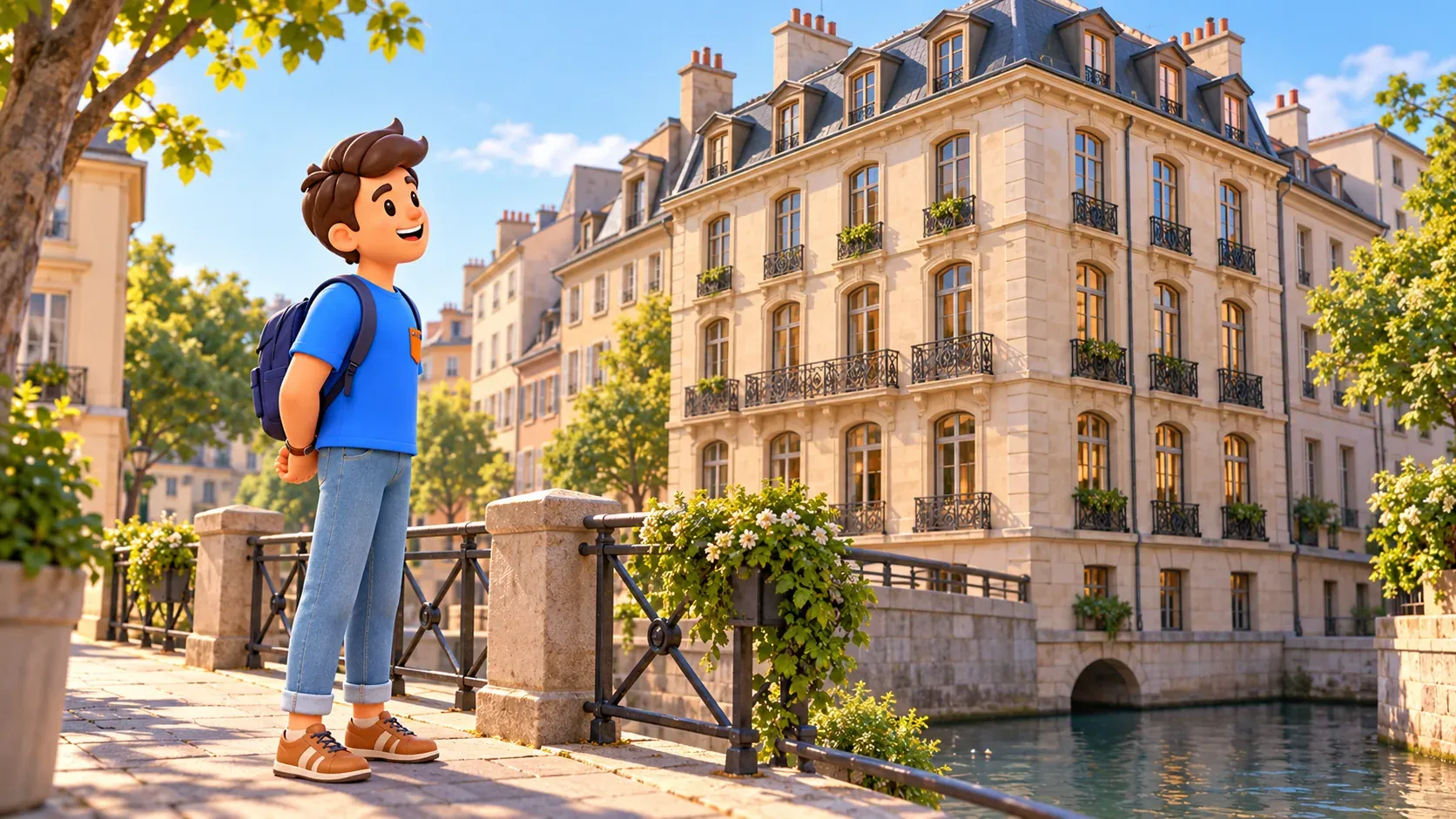
River views and bridges can easily take over your attention. If you would like a pause, enjoy one before focusing on the building. The precise anchor for this theme is the former Usine Vacheron & Constantin at Rue des Moulins 1. The brand's name occurs at different Geneva locations, which should not be treated as one interchangeable visitor destination.
The former factory is an exterior heritage stop
The Usine Vacheron & Constantin appears in Switzerland's cultural property inventory. On this route, it is primarily an exterior architectural stop. It gives watchmaking a material setting: a building, an address, repeated windows and a relationship with the Rhône, rather than a reputation alone. That is enough for a worthwhile view without inventing access to workshops.
Do not substitute the Tour de l'Île, a current boutique or the modern production site in Plan-les-Ouates for this historical building. Each has its own history and conditions. The nearby tower and familiar name can encourage confusion, so check the chosen address rather than connecting every clock in sight with the same facade.
From public space, consider the building as a whole. Which parts suggest a place of work, and which belong to a presentable urban frontage? A professional answer is unnecessary. The question gives the theme physical substance: watchmaking requires rooms, light, organised work and connections with a city, as well as a beautiful finished object.
Looking at a facade does not establish interior entry. Working premises, archives and workshops are outside this walk unless an owner confirms a particular public programme. A recognisable name is not an invitation into production. The exterior route keeps its interest while maintaining a respectful distance from spaces with their own working purpose.
The Patek Philippe Museum deserves a separate visit
If you want to move from urban traces to the objects, continue to the Patek Philippe Museum on Rue des Vieux-Grenadiers. This brings you into Bains and another mode of attention. The collection should not become a hurried addition between errands. Decide how much of the day to give it and how deeply you want to explore horological art.
The museum opened to the public in 2001. Its collections extend beyond one company's history to European timekeeping and decorative craftsmanship. That is the value of the continuation: after a shared civic clock and a production building, you can encounter the variety of objects through which people have measured and presented time.
Choose a few themes instead of a complete survey of every room. One visitor may prefer movement and construction, another case design and artistic detail, another changes in the personal meaning of watches. This gives a nonspecialist a practical way through many small details. Professional vocabulary is not a prerequisite for noticing the relationship between technique and visual intention.
Check your chosen date before planning the visit. The ordinary schedule does not include Monday, many visiting days begin in the afternoon, and exceptional closures have their own dates. Advance ticket purchase is recommended, while the operator also provides for same-day tickets at reception. Avoid treating advance booking as universally mandatory or promising effortless entry at any time.
Exact prices and a full annual calendar are unnecessary for this overview. The important choice is whether the museum will be today's principal interior visit. Otherwise, finishing beside the Rhône remains a complete option, and the collection can accompany another Bains outing. A museum benefits from receiving real time rather than merely appearing on an itinerary.
Give a walk about time some breathing room
After the final selected stop, find somewhere suitable for a short break. Compare three possible impressions: a clock as public performance, a building as evidence of work, and a museum object as an encounter between mechanics and art. The exterior version retains the first two. A conscious decision to leave the museum for another day does not make the outing incomplete.
You can give photographs different roles. At Malbuisson, show the overall composition; at the old factory, the facade's relationship with its street. After the museum, keep a personal observation about an object while following its photography rules. That selection tells more than several similar close-ups of dials. Without photographs, remembering one feature from each stop works just as well.

With RoadMe, developing a complete personal plan for the whole trip around your interests and pace is more convenient and efficient. It helps give museums, urban walks and proper rest their place in an itinerary suited to you.
For a broader introduction to this part of Geneva, consider the Rhône walk through bridges and Rousseau Island. It approaches the riverside from another angle. The two themes need not be combined in full. Choose whether today's priority is water and urban history or watchmaking heritage with a possible museum continuation.
Before leaving, decide how far to go, whether you want to wait for the mechanical scene and which museum day suits you if needed. Geneva's horological side is interesting without shopping or becoming an expert in one afternoon. Notice how precise craft enters shared city experience, and leave enough time for an impression rather than only the next address.


