
Geneva’s Rhône: Rousseau Island, bridges and the island tower
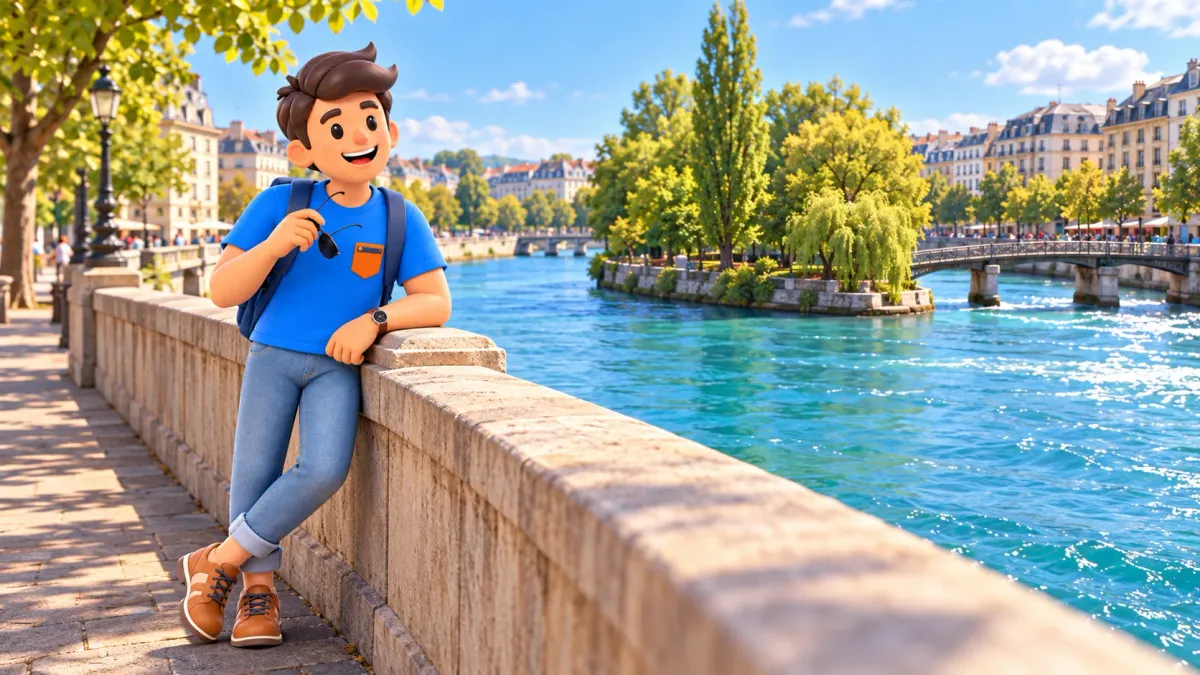
A short walk along the Rhône gives you an easy way to explore central Geneva without organising museum tickets. Begin at Pont des Bergues, make a return detour to Rousseau Island, then continue downstream to Pont de la Machine, Tour de l’Île and the historic Halles de l’Île. The sequence moves from a green island to water infrastructure, a surviving castle tower and a former working building.
Allow roughly an hour to an hour and a half with pauses as a planning estimate, rather than a measured walking time. A bench stop, photographs or an exhibition can change the duration. The essential geographical point is that Rousseau Island is an out-and-back branch. It does not provide a through-route to the tower and Halles, which belong to a different island area further downstream.
Follow the river, with one deliberate island detour
The Quai des Bergues side makes a useful starting point, with views of the bridge, water and small green island. Take in the scene from the bank before walking onto Pont des Bergues and finding the connecting path to Île Rousseau. After your island stop, return along that connection to the bridge, then follow available public waterfront paths towards Pont de la Machine. Tour de l’Île and Halles de l’Île come later in the walk.
Try RoadMe to work out a complete personal trip plan around your interests and preferred pace. It makes it more convenient to give this riverside walk a sensible place in a day that also includes the Old Town or another Geneva district.
You do not need to cross every bridge fully and return to the original bank just to complete a checklist. The bridges help you understand the city and river; they do not require an elaborate sequence of crossings. Use the public pedestrian approaches available on the day and follow local signs. A short permitted detour is preferable to following a straight line on a screen through a barrier or traffic lane.
Decide on your finish before setting out. Halles makes a natural final architectural stop, while Bel-Air is a useful transport reference. With less time, finish after Pont de la Machine. The island and former technical building already form a coherent outing. Continue to the other stops because their architecture interests you, rather than because a short walk seems obliged to become a longer one.
Pont des Bergues and Rousseau Island: look from the bank first
From the waterfront, notice the difference in scale between the surrounding buildings and Rousseau Island. Its small patch of greenery sits within a distinctly urban setting. That view explains the island’s position better than simply approaching a map pin. Keep it separate from the larger island area downstream: Île Rousseau and Tour de l’Île share the word “island”, but refer to different places along this route.
Pont des Bergues connects the banks and provides access to the island branch. Its history belongs to the reshaping of Geneva in the nineteenth century, although the present bridge should not be described as an unchanged structure from that period. For this walk, its current setting matters most. Look towards the broad lake water, then downstream into a more enclosed river scene, stopping where pedestrian and cycle movements remain clear.
Take the connecting path onto Rousseau Island without expecting another exit to carry you further down the Rhône. Treat it as a destination in its own right: arrive, look around, pause and return. That makes it easier to appreciate the place at its actual scale. There is little reason to hurry around a small garden in search of an imaginary onward passage.
The island became a public space commemorating Jean-Jacques Rousseau in the nineteenth century. James Pradier’s statue adds a human figure to the greenery and water. Consider it with its surroundings: the seated philosopher, trees and buildings across the river form a more intimate scene than the open lake panorama. A little context is enough here; a detailed Rousseau biography belongs to a separate visit if that is your particular interest.
If a bench is free, make this your first proper pause. Look across the water without immediately searching for the next sight. Buildings remain close, but the river creates a different relationship with the streets. This is central Geneva, so an empty island or complete quiet cannot be guaranteed. You can still enjoy a slower moment while leaving the paths available for other people.
For children, explain the return to the bridge beforehand. The next attraction is not hidden behind the trees at the far end of the island. Stay on visitor paths and within accessible public areas rather than approaching the water for a photograph. In rain or wind, shorten the pause. A brief look at the overall setting and statue still gives the detour a clear purpose.

Pont de la Machine: water infrastructure in a new role
Return to Pont des Bergues, then continue downstream towards Pont de la Machine. As you move, broad water views become more closely framed by the city. Notice how buildings meet the river and where pedestrian space remains between them. The transition is part of the interest: within a short walk, Geneva begins to feel less like a city beside a lake and more like a city organised around a river.
The building at Pont de la Machine recalls the Rhône’s practical role in urban life. Its water was used and regulated for the city’s needs, with some technical functions later passing to other infrastructure. The exterior is worth a stop independently of access inside. Look at the building’s relationship with the current, crossing and banks. Avoid imagining an accessible machinery hall or working equipment that the visit does not actually offer.
The building now houses the Quartier Libre SIG exhibition space. This is an optional addition to the walk. The operator publishes a current exhibition programme and opening arrangements, which you should match to your travel date. If the subject appeals and the venue is open, give the exhibition its own allowance of time. Otherwise, the building and riverside setting remain a worthwhile outdoor stop.
Do not expect a permanent display covering the entire history of the Rhône. Exhibitions change, and the programme determines what you will see. It is also a conditional choice in wet weather: a roof nearby on the map does not guarantee admission outside opening hours. The core itinerary remains an outdoor walk, so it works without waiting for doors to open or committing to an exhibition you did not intend to visit.
Tour de l’Île: a surviving tower within the modern city
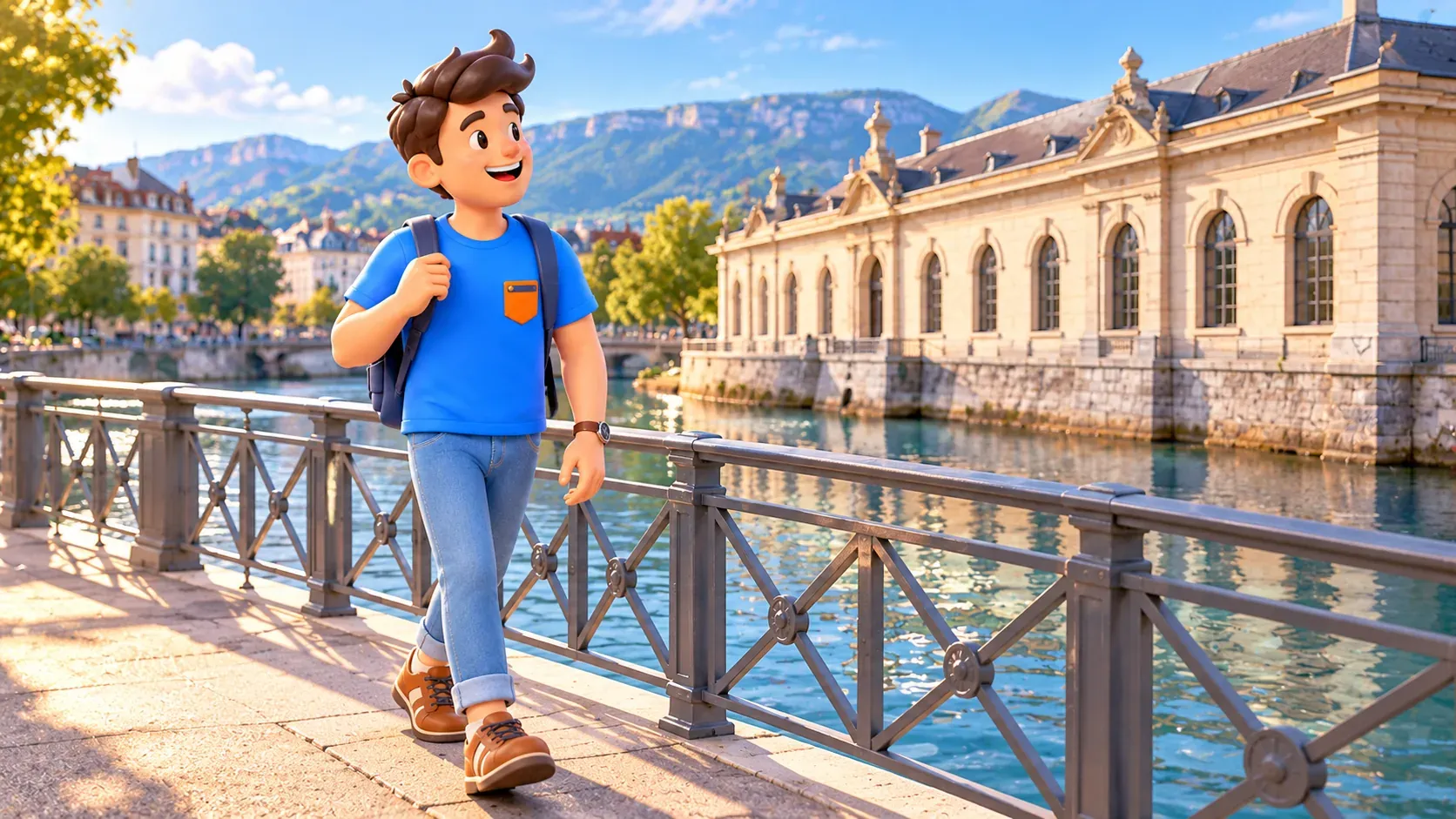
The next landmark is Tour de l’Île, around Place de l’Île and Bel-Air. Approach along public pedestrian routes, taking care around traffic areas. The setting is different again: the small island garden has given way to dense buildings and movement around the crossings. Find a suitable place to stand before studying the tower so that your pause does not obstruct people using the area.
The tower survives from an early thirteenth-century episcopal castle built to control the Rhône crossing and defend Geneva. The surrounding buildings should not be read as a complete surviving medieval complex. The fragment is interesting precisely because of its distinct presence within later city life. Compare its outline and materials with its neighbours and with the everyday movement around the river crossing.
Its present appearance developed over time. Later changes, including the clock and alterations to the upper section, mean that every visible detail is not untouched medieval work. For a short stop, that layered history is more useful than memorising a long chronology. You are looking at an old defensive structure preserved through subsequent urban life. This itinerary includes an exterior view; it does not promise a tower climb or access to rooms inside.
Continue from the tower towards Halles de l’Île. There is no need to return to Rousseau Island, which is now behind you, nearer the river’s emergence from the lake. Briefly reviewing the sequence on a map can help: green island branch, former technical site, tower, then the old working building. Similar names become easier to separate when the river provides the organising line.
Finish at the historic Halles de l’Île
Halles de l’Île makes a useful final stop for architecture. The long pale building with its rounded downstream end represents a practical side of historic Geneva. It began as a municipal slaughterhouse, became a covered market and later accommodated other uses. That history explains its name without establishing that you will find a daily food market there today. The basic visit is an exterior stop.
Look at the length of the building and its place within the island setting. Its shape and connection with the water suggest a city that needed workplaces as well as ceremonial facades. You do not need to find evidence of every former activity behind the present doors. A historic market name does not establish unrestricted access through the interior, open food stalls or a free museum.
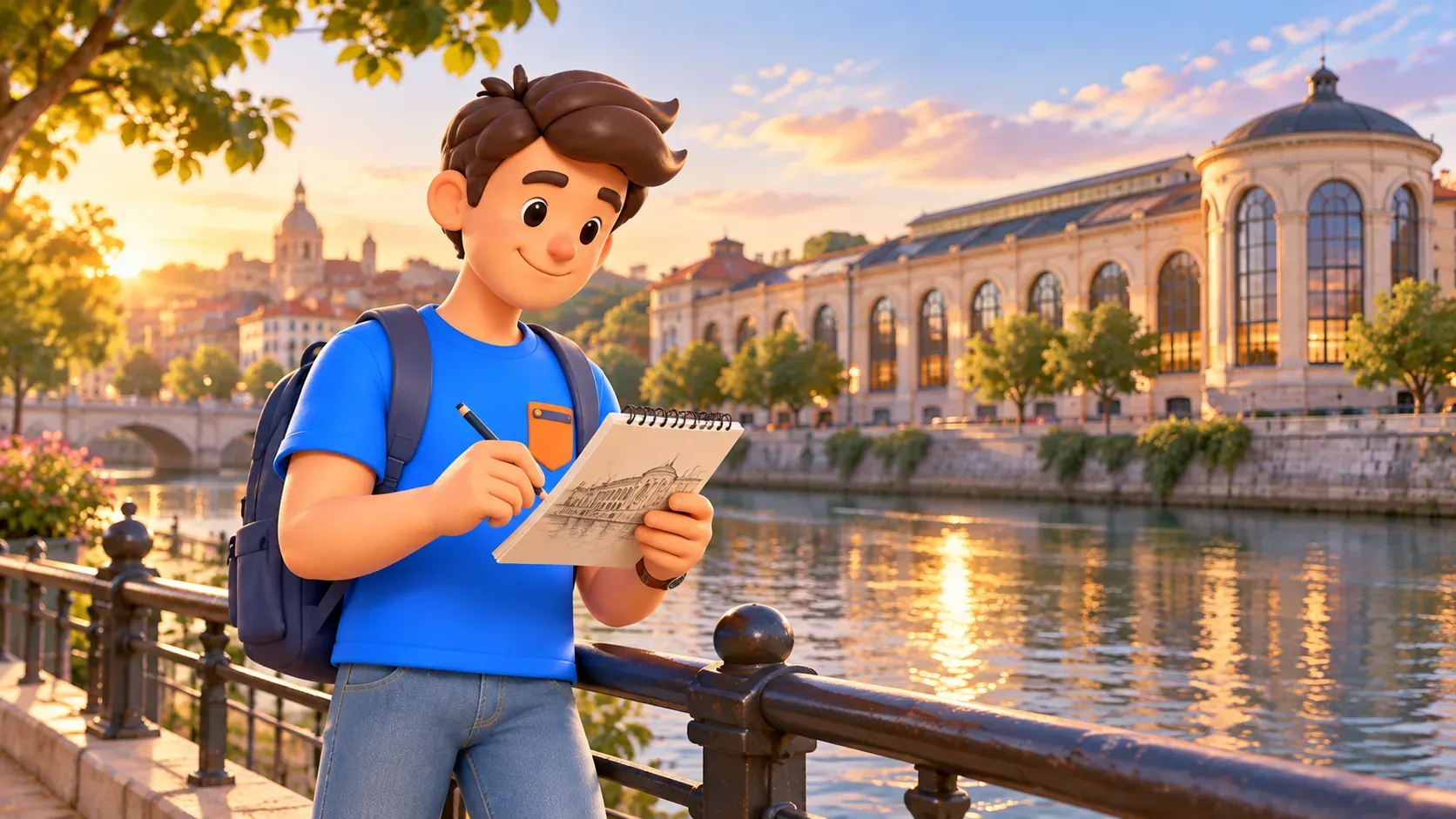
This is a good place for a short note or sketch. Which part stayed with you: island greenery, the technical building, the tower or the long Halles facade? The question turns the outing into a sequence of distinct encounters rather than five interchangeable map pins. For photographs, use a public position that leaves entrances and narrow routes clear for the people working in or passing through the area.
With RoadMe, it is more convenient to develop a complete personal plan for the whole trip around your interests and pace. You can give this gentle riverside stretch its own place in the day and coordinate it with a more substantial visit elsewhere.
If this is your first visit, consider the river walk alongside the one-day Geneva itinerary. There is no need to carry out two full programmes consecutively. This stretch of the Rhône can be your chosen part of the day, rather than an extra demand after a long circuit of the lake and Old Town. Finishing with energy left for the evening is a reasonable outcome.
Keep the walk short enough to enjoy
Before leaving, check the available approaches and your onward direction. Wear shoes suited to urban surfaces and account for weather beside open water: most stops are outdoors. Accessibility at one exhibition venue does not establish a step-free route along every waterfront approach and island connection. If you have particular mobility requirements, check the specific path rather than relying on the apparent closeness of the locations.
Shorten according to interest. For water and greenery, choose Bergues, Rousseau Island and the approach to Pont de la Machine. For architecture, retain the tower and Halles. Plan food and exhibitions separately around the actual arrangements of the place you choose. The walk is complete without a purchase, café stop or interior visit: the Rhône itself connects the changing scales, uses and character of central Geneva.


