
One day in Geneva: the Old Town and the lake
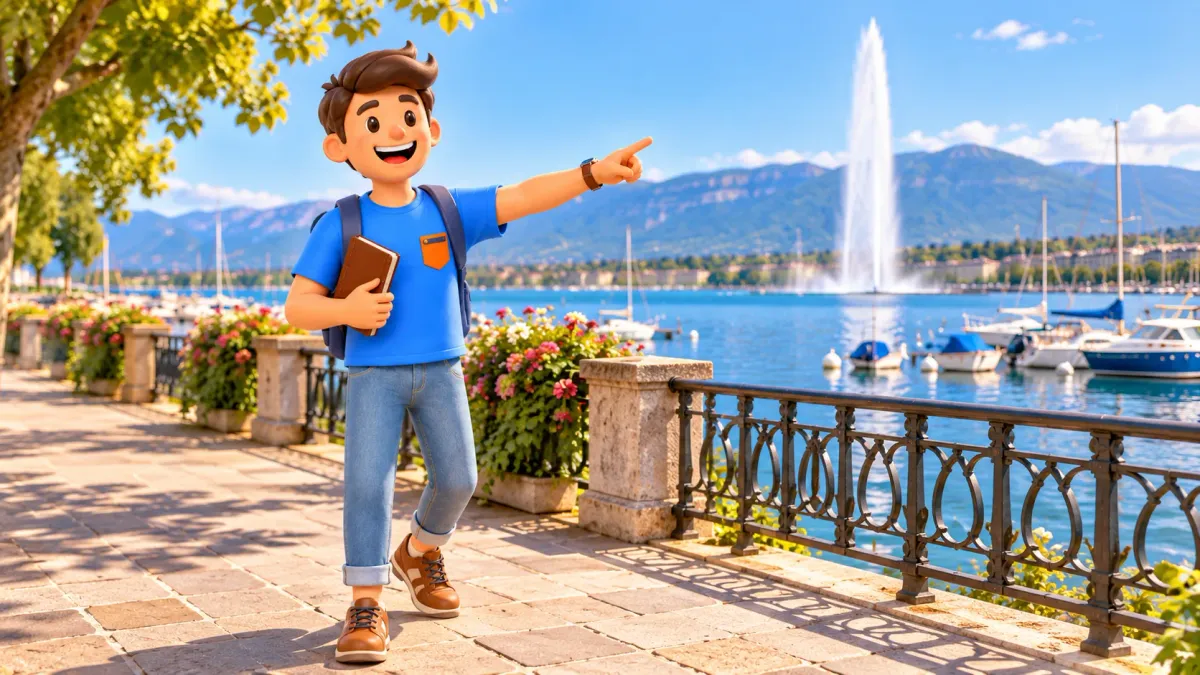
One day in Geneva can bring together the Old Town, a proper break in Parc des Bastions and a finish beside the lake with a view towards the Jet d’Eau. This plan gives the day a clear change of atmosphere: historic squares and buildings first, open water afterwards. Keep the international district for a separate outing rather than adding a journey across the city between central stops.
Start at Place du Bourg-de-Four and finish by the Jardin Anglais or on the waterfront towards the Jet d’Eau. Allow approximately six to eight hours including lunch, rests and one optional interior visit. This is a planning estimate for a relaxed day, not a measured timetable. If you have less time, use the shorter versions below instead of speeding through every stop.
Give the day a simple shape
The aim is to avoid crossing the city repeatedly for individual famous names. Treat the historic centre as one connected section, then descend towards the park before moving on to the lake. Keep some choice within that structure. An exterior may be enough at one stop, while an interesting interior deserves its own time. A substantial museum should never quietly become a five-minute pause between walks.
To shape this day around what interests you, try RoadMe: the app works out a personal route according to your interests and pace. It is a much more convenient way to arrange a coherent day than manually fitting separate places together.
| Part of the day | Main places | Keep time for |
|---|---|---|
| Morning | Bourg-de-Four and Saint-Pierre | Streets, the cathedral exterior and one optional visit |
| Late morning | Town Hall, Treille, Parc des Bastions | Short walks and a longer green pause |
| Middle of the day | Lunch and rest | About an hour without new compulsory stops |
| Afternoon | Molard, Jardin Anglais, Jet d’Eau | Waterfront walking and a return allowance |
Choose two personal priorities before leaving. You might want to understand the Old Town and see the lake, or visit Maison Tavel and enjoy an easy waterfront finish. Everything else becomes an addition that can be shortened. This is particularly useful with companions who enjoy stopping for different things: a shared idea of the day avoids repeated negotiations at every corner.
Begin at Place du Bourg-de-Four
Bourg-de-Four makes an approachable starting point because its scale is manageable. You do not immediately have to choose between distant directions. Look at the square as a whole before moving closer to the fountain and individual façades. Its history is connected with trade and city life, so the relationship between the buildings matters as much as any one architectural detail.
Spend the first few minutes noticing rather than trying to photograph every angle. Look at the changing heights of the houses, the streets leaving the square and the way a few steps alter the view. For a first encounter, this can be more useful than a long list of dates. The historic centre begins to make sense through its spaces and changes of level.
Continue uphill towards Saint-Pierre Cathedral and Cour Saint-Pierre. This short connection does not need to become a separate large excursion. Its value is the transition from a lively square to the more concentrated space around the cathedral. If you began the day late, remove the optional museum section now. Trying to regain time by rushing through the first streets usually makes the whole visit less enjoyable.
Saint-Pierre: choose one experience rather than three
Saint-Pierre is associated with the Reformation and preserves several architectural periods. Its medieval fabric and later portico show how a historic building continued to change with the city. For this day, begin with the exterior and surrounding square. Then decide whether you want to take the encounter further inside, rather than entering simply because it is the next apparent step.
The cathedral interior, towers and archaeological site are distinct visits. A climb for a panorama, time in a place of worship and an exploration below ground require different attention and allowances. If you choose the towers, consider the stairs and weather. If the earlier city interests you most, the archaeological visit could become the main indoor experience. Check arrangements for the particular part you want to enter.
Keep roughly one and a half to two hours for the initial section through Bourg-de-Four, nearby streets and the cathedral exterior, including pauses. This is not a required minimum. Some visitors will need less, while others will linger over details. An interior visit expands this section, so shorten the later walk accordingly. One satisfying encounter is better than constantly worrying about the next place.
Maison Tavel as an optional deeper visit
If you want one museum, consider Maison Tavel near the cathedral. It connects the Old Town’s exterior appearance with the history of everyday urban life. The historic house itself contributes to that encounter, while its museum context can change the way you see streets you have just walked through. This is a particularly natural addition when the city’s own history is your main interest.
Choose it instead of another substantial interior, rather than adding it after both the towers and archaeology. Give the museum a separate window, perhaps around an hour to an hour and a half depending on the available displays and your pace. Check the accessible collection areas and admission arrangements for your dates. In the outdoor version of the day, look at the house and continue.
The difference between the two versions should be clear. With a museum, the afternoon waterfront section will be shorter. Without one, there is more room for the park, lunch and the lake. Both make complete days. They simply respond to different interests and do not need to compensate for every omitted room with another attraction somewhere else.
From the Town Hall to the Treille and Bastions
Continue through the Town Hall and Old Arsenal area towards the Promenade de la Treille. The theme moves from the religious centre towards the city’s civic life. You do not need to identify every façade to notice the difference between the cathedral square, the passages around the Town Hall and the more open promenade. The route itself helps make those contrasts visible.
The Treille is a place for a real pause. Sit down, look towards the greener part of the centre and assess your energy before descending. The long bench is useful as an invitation to stay, as well as being a visitor attraction. After cobbles and slopes, let your feet rest and stop thinking about the sequence of the itinerary for a while.
Continue down to Parc des Bastions. The Reformation Wall reconnects with the morning’s cathedral theme in a different form: a monumental composition in a city park. Look from a distance first, so you can take in the extent of the wall, then approach the central figures. Reading every inscription and interpreting every scene is not the purpose of this short introductory day.
Give the Treille and park around an hour, or longer when you want a rest. If you are tired, let Bastions become the main green experience of the day. Recovering before the second half of the walk matters more than moving on immediately after a brief look at the monument. A pause works best when it is treated as part of the plan.
Lunch and the transition towards the lake
Allow a separate lunch break of about an hour rather than eating while walking between compulsory points. Choose a place according to where the morning section actually ends, what you want to eat and what is available. A restaurant is not intended as a distant destination in this itinerary. Travelling elsewhere specifically for a meal changes the shape and timing of the day.
After resting, head towards the lower centre and Place du Molard, then continue to the Jardin Anglais. Molard helps mark the transition from the hill of the Old Town to a more open, busy part of Geneva. You can make a short stop around the tower without beginning another long historical tour. The main afternoon theme is already the lake.
If little time remains after lunch, go directly towards the Jardin Anglais and reduce intermediate stops. If you started early and skipped the museum, slow down in the lower streets instead. Keep a clear finishing point, especially when leaving Geneva that evening. Knowing when the sightseeing part ends is as useful as choosing where it begins.
Jardin Anglais and the Jet d’Eau: finish beside the water
Find the Flower Clock in the Jardin Anglais. Its planted face brings together Geneva’s interest in watchmaking and its garden work. Pause to look at the arrangement of plants, then turn towards the water. This is the beginning of the lakefront conclusion, rather than a reason to collect every feature of the garden in a few hurried minutes.
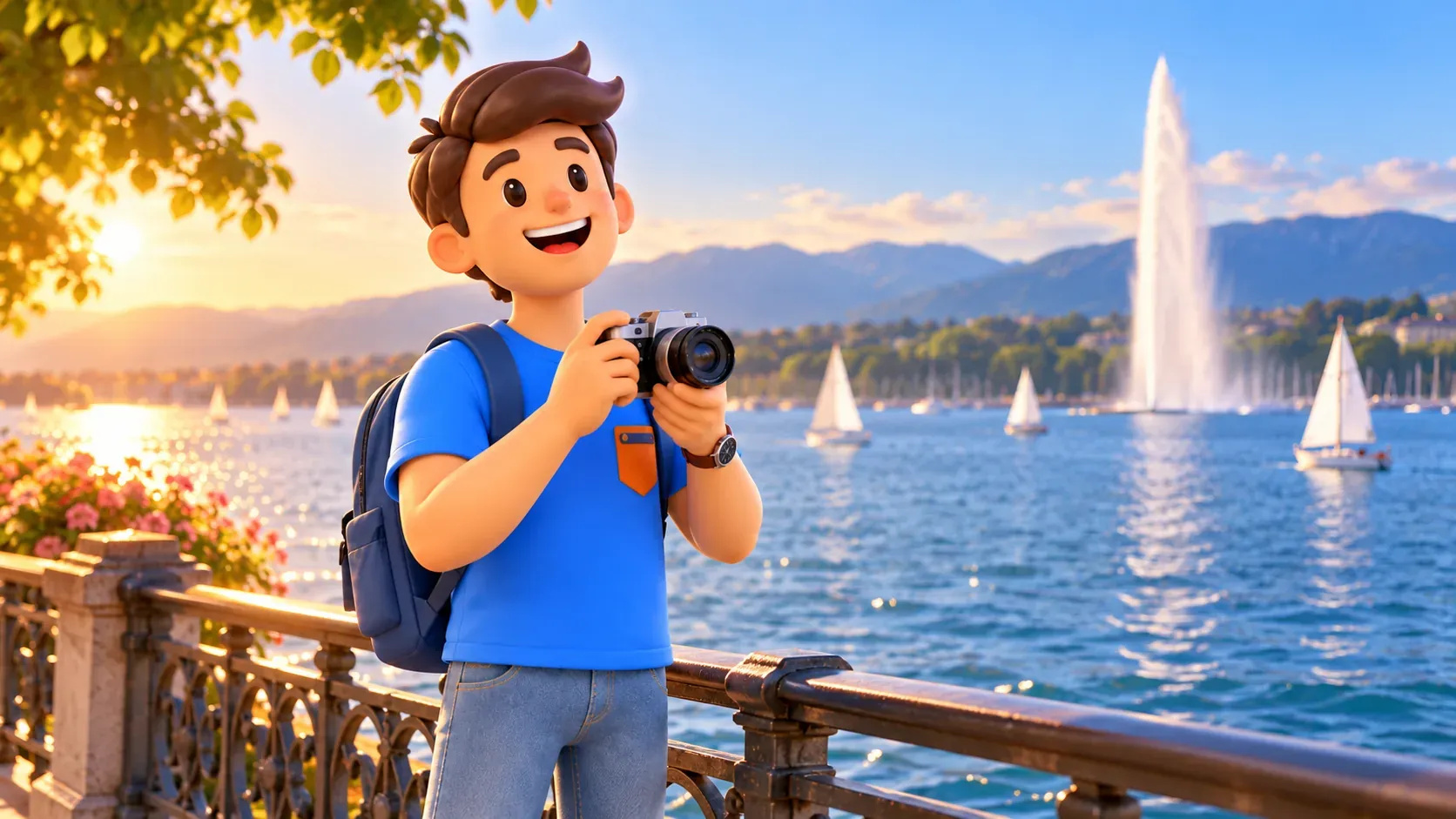
Follow Quai Gustave-Ador towards the view of the Jet d’Eau. Its story began with engineering associated with a hydraulic system, before the water plume became one of the city’s defining symbols. After the close streets of the morning, the open shoreline offers a very different Geneva. This contrast is what makes the Old Town and lake a rewarding combination for a first day.
Do not make the day’s success depend on the fountain operating. In wind or during a stoppage, the lake, harbour and promenade still remain. Enter the jetty only when the approach is open and conditions are suitable. There is no requirement to approach the spray for a compulsory photograph. For an earlier finish, return to the Jardin Anglais and regard the walk as complete.
Allow roughly one and a half to two hours for the lakeside section with pauses. After a long museum morning, reduce it to the garden and one convenient view. If you have spare time, sitting beside the water may be better than automatically adding a distant park. Remember the return journey: the day already includes several different experiences.
Adapt the day to your interests
For a short visit, keep Bourg-de-Four, Saint-Pierre’s exterior, the Treille and Jardin Anglais. History enthusiasts can make one interior the main addition. For a slower walk, reduce the number of stops and spend longer in Bastions and by the lake. In rain, give more time to the chosen museum and keep the waterfront outing brief and dependent on conditions.
Preparing this kind of personal trip is much easier in RoadMe: the app builds an itinerary around your interests and pace, connecting your chosen places into a route. It gives the day a clear structure so you can spend more attention on Geneva itself and less on manually assembling the programme.
Before setting out, check three things: which interior you actually want to visit, where the walk will end and how long you need after finishing to reach the next commitment. Choose footwear comfortable for a day of walking, including slopes and cobbles. At the water, account for sun and wind. These small decisions make the programme more reliable than a last-minute extra stop.
Wanting to return to one of the morning’s places is a good outcome. The day has helped reveal which Geneva appeals to you most: historic, green or lakeside. You do not need to leave with the feeling that everything has been seen. A clear idea of what you would like to explore next is a satisfying result of a first visit.


