
Geneva Old Town in two hours: squares and courtyards around St Pierre

Geneva's Old Town reveals itself through short transitions: a square gives way to a lane, an open space leads under arcades, and a civic building sits close to the cathedral. You can spend a rewarding couple of hours here without booking a succession of interiors. The purpose is to see how the city's trading, political and religious histories occupy the same small neighbourhood.
Begin at Place du Bourg-de-Four, walk to the Old Arsenal and Town Hall, then continue through the upper streets to Cour Saint-Pierre and St Pierre Cathedral. Finish by returning to Bourg-de-Four. Allow roughly ninety minutes to two hours with short stops and, if suitable, a brief cathedral visit. Towers, the archaeological site and a museum are not included in that estimate: choose one extension if you have extra time.
Give the walk three distinct scenes
RoadMe makes these squares and courtyards easier to bring together as a personal itinerary, working out a plan around your interests and pace. You can give architecture, history or relaxed pauses more attention while keeping the visit coherent.
This itinerary starts once you are already in the Old Town. Add the climb from the lake, or the journey from your hotel or station, separately. Short distances do not remove the hill: older surfaces and gradients can change your normal walking pace. The effort of reaching the starting point should not quietly use up the time you intended for a comfortable pause later.
Remember the sequence as three scenes. First comes the sociable square of Bourg-de-Four; next, the civic ensemble of arsenal and Town Hall; finally, the cathedral square and church. No transport is required between them. Yet the short connections are a reason to look closely, not a challenge to finish as quickly as possible.
The basic version works outdoors. Add the Town Hall courtyard and cathedral interior when they are open to visitors and your presence fits the building's work or worship. A closed door does not spoil the route. You still have three different urban settings without urgently needing another museum to replace an unavailable room.
Choose a small question to guide your attention. You might compare public spaces: where people met, where goods were stored and where decisions were made. Or follow materials, from stone and wood to coloured mosaics. One thread makes the walk more memorable without requiring you to read a long history at every stopping point.
Bourg-de-Four: start with the square itself
At Place du Bourg-de-Four, first find somewhere to stand where you can see the space without blocking movement. Its irregular shape, fountain and facades from different periods create a lived-in setting rather than a grand geometric composition. Watch for a moment: ordinary pedestrian movement shows why the square still matters to the city.
The site's history is linked to trade and older urban routes. That is the useful idea for this walk: exchange and meetings belonged here long before the present terraces. You do not need to identify an intact ancient market in every feature. Historical purpose and contemporary daily life simply overlap in the same place.
Choose two opposite facades and compare their height, windows and rhythm. Then notice how the fountain affects the way people move around the square. Perhaps ten to fifteen minutes is enough for this first look if you are not sitting down. That is a suggested planning allowance, not a required length of stay.
You can leave coffee until your return, making the square a clear finishing point rather than the place where all your spare time disappears at the start. If the climb has already tired you, pause now and shorten a later interior visit. The starting point should help you settle into a rhythm, not launch a race.
The Old Arsenal: look beyond the cannons
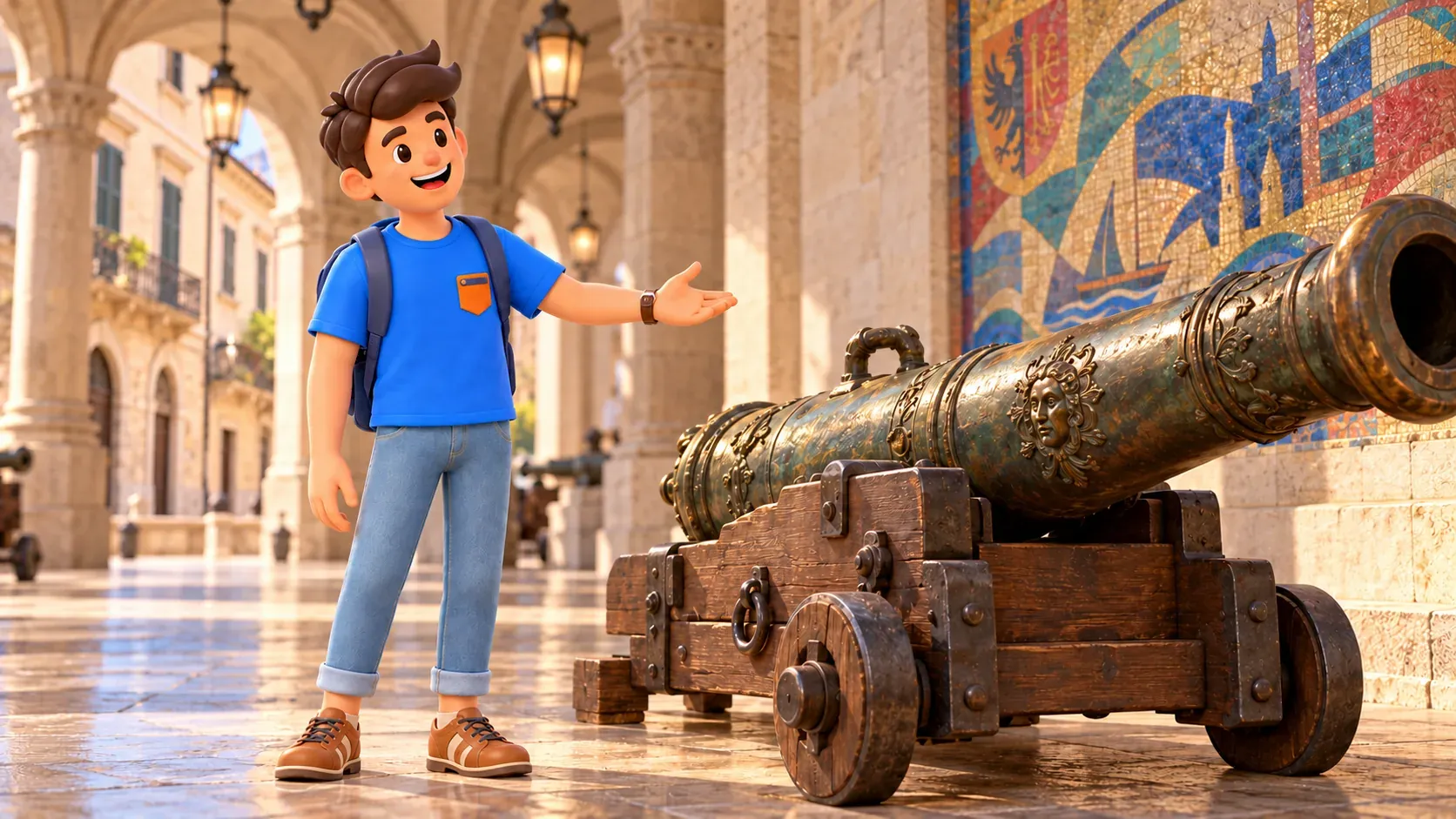
From Bourg-de-Four, take Rue de l'Hôtel-de-Ville towards the Old Arsenal. A short stretch of street changes the setting from an open square to a covered gallery with substantial supports and historic cannons. Give the structure as much attention as the objects beneath it.
The name tells only part of the building's story. Before its use for weapons, this place served trade and grain storage. Changing functions are a useful theme in the Old Town: a durable architectural shell could answer different needs as the community changed. Exchange, supply, defence and later remembrance all belong to the history of this small stop.
Look at the relationship between the cannons and the broad arches, then turn to Alexandre Cingria's colourful mosaics with scenes from Geneva's past. They are an artistic account of history, not a literal view into the events they depict. Choose one scene and notice how the bright image changes your experience of the otherwise restrained stone gallery.
There is no need to climb on a gun for a photograph or treat the display as play equipment. Take a wider view from a respectful distance and leave the passage clear. In a small group, agree to meet at the end of the gallery: people examine details at different speeds, and this compact space does not need everyone gathering around every feature at once.
The Town Hall and courtyard: a change of scale
The Hôtel de Ville stands close to the arsenal. The French name means town hall, not a hotel. Geneva's building is associated with the cantonal government, so it should not be imagined simply as a former municipal office converted into a visitor attraction. You are approaching a place with an ongoing civic role.
The first Geneva Convention and the nineteenth-century Alabama arbitration are part of its history. These connections show how the political life of a relatively small city became involved in international events. For a short walk, the important point is that change of scale: from neighbourhood streets to negotiations and decisions with consequences far beyond Geneva.
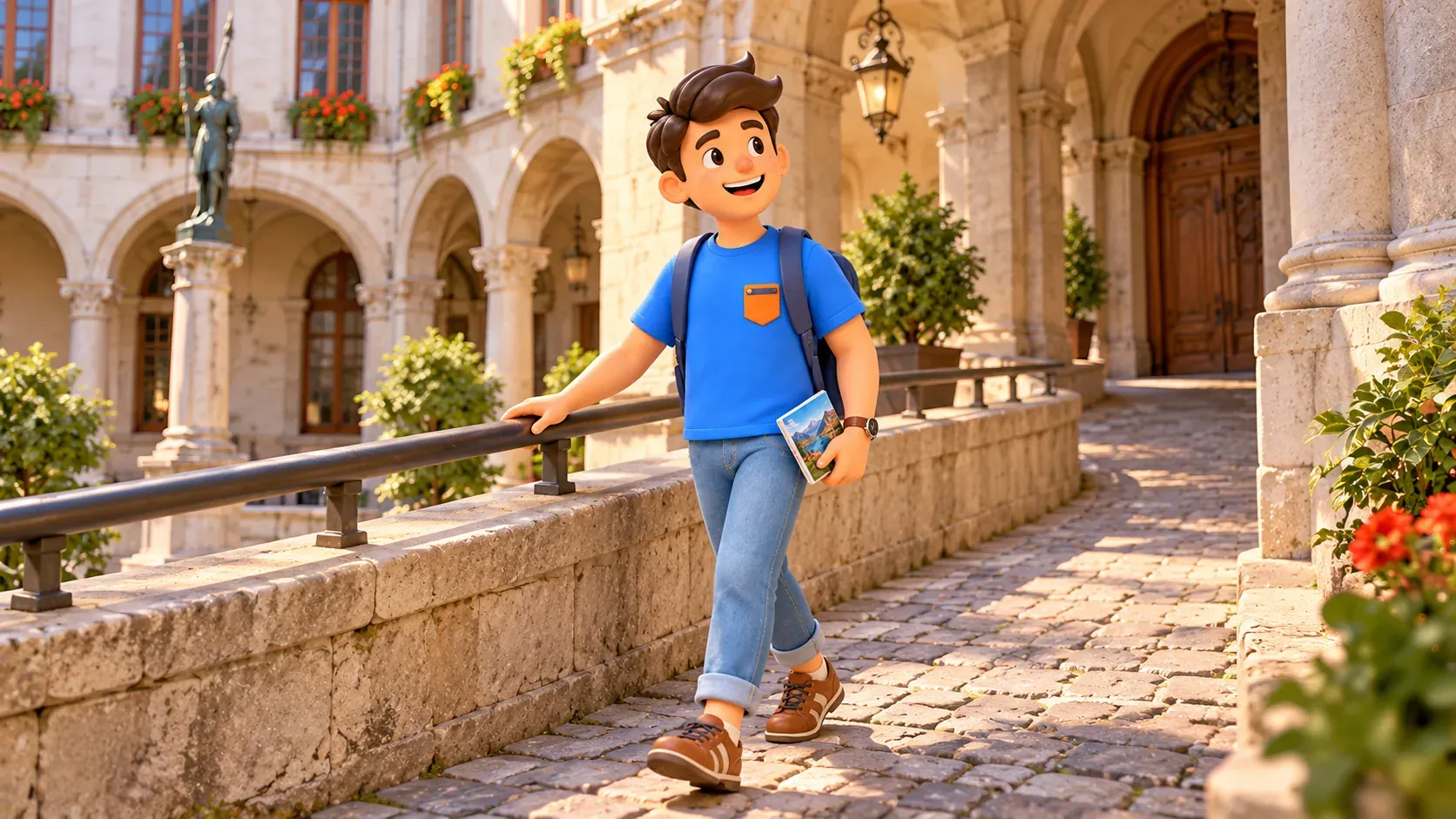
If courtyard access is permitted, step in to observe the monumental ramp. It connects levels differently from the familiar sequence of a staircase. Begin by looking from the accessible lower area instead of immediately trying to go higher. The existence of a historic ramp does not establish that the whole building is suitable for a wheelchair or pushchair.
Do not assume you can walk into historic rooms along the way. Courtyard access, movement on the ramp and visits to interior rooms are separate matters. Follow the signs and restrictions in force. If the courtyard is closed, the exterior comparison with the arsenal still makes a worthwhile stop: neighbouring buildings express government and the provision of the city.
For architectural photographs, a single considered angle is often more useful than recording every doorway. Find an appealing relationship between arch, stone and light, then continue. The walk's interest comes from linking spaces, so keep some attention and time for the cathedral ensemble ahead.
Cour Saint-Pierre: see the cathedral from outside first
From the Town Hall, continue towards Rue du Puits-Saint-Pierre and Cour Saint-Pierre in front of the cathedral. Street and square names are better guides than walking straight towards a visible tower. In a tightly built neighbourhood, the apparent direction of a landmark is not always the most convenient passage.
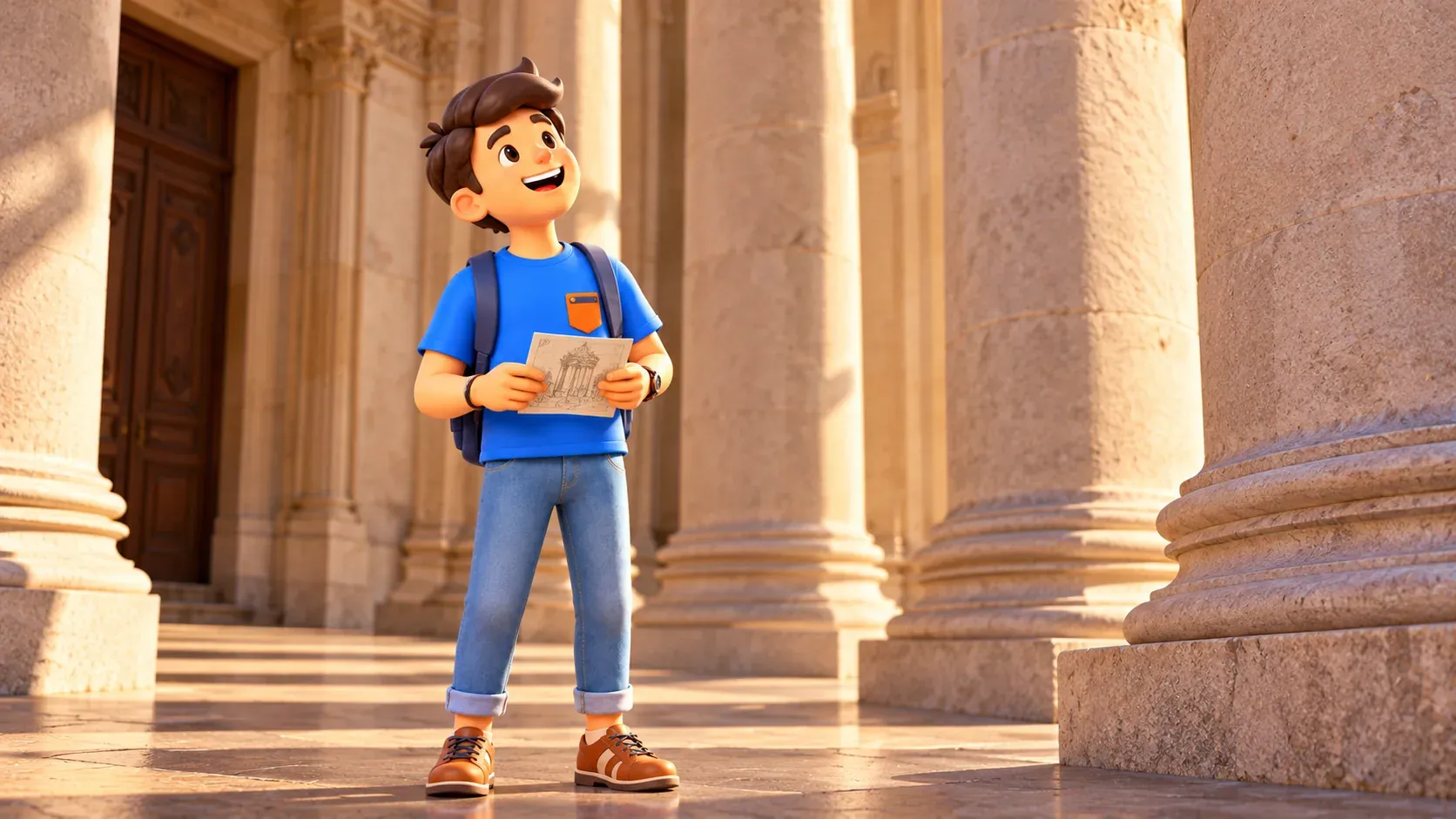
Stop before the portico and compare it with the earlier parts of the church. Classical columns may not resemble the medieval cathedral you expected. That difference is the central observation: St Pierre developed over different periods rather than appearing complete as a single project.
Look at the square as part of the ensemble too. Notice how close neighbouring buildings stand, where space opens and from what distance the entrance becomes readable. Cour Saint-Pierre places the cathedral within the scale of the city. Sometimes that attentive exterior view is more revealing than a hurried entry between other appointments.
If the church is open for visits, step inside briefly to compare its public exterior with the restraint of a Reformed interior. The cathedral is linked to the Reformation and John Calvin. Its space helps explain how religious change affected buildings as well as ideas. During a service, worship takes priority over sightseeing.
A church visit, tower climb and underground archaeological site should not be bundled into one promised short stop. They involve different visiting rhythms and access arrangements. Exterior viewing and a brief look inside are enough for the basic walk; select anything further separately after checking the current conditions.
Choose one extension, rather than three obligations
If one subject catches your attention, RoadMe can work out a personal walking or trip plan around that interest. It is a more convenient way to fit your chosen visit into the rest of the day and retain time to relax.
A cathedral tower climb may suit you if you enjoy panoramas and the current access and physical effort work for you. It is a stair-based extension that needs its own time and energy. Do not choose it simply because you have reached the doorway. A view is more enjoyable when the climb was a deliberate decision.
For early urban history, consider the archaeological site beneath the cathedral; for the Reformation, consider the separate museum near the St Pierre ensemble. Choose one direction and check its calendar, ticket and entrance. Several attractions in one area do not make a single visit or imply identical opening hours.
If you prefer to remain in walking mode, return through the streets near the cathedral to Bourg-de-Four and finish with a pause. For a broader day taking in the centre and lake, our one-day Geneva itinerary provides a framework. It keeps a more distant continuation from swallowing this compact Old Town visit.
Shorten the route and set a comfortable pace
With about an hour, keep the three exterior episodes: Bourg-de-Four, the arsenal with the Town Hall facade, and the cathedral square. Leave towers and museums out. With two hours, you can look more carefully, enter an available courtyard or church and pause. A queue or lengthy interior adds to the plan; it cannot be absorbed invisibly by walking faster between nearby buildings.
Comfortable shoes matter more than readiness for a long distance. Uneven surfaces, slopes and thresholds can be tiring, and wet stone deserves attention. Families and travellers with mobility requirements should check specific entrances and approaches separately. The Old Town's compactness does not mean every courtyard and interior offers the same access.
With children, try one observation at each stop: find the fountain, count visible arches or compare the portico columns with the gallery supports. You do not need a lecture for every building. In a pair or group, allow people to examine a detail independently and meet at a clear landmark, keeping doorways free for residents, staff and visitors.
Use squares and wider sections of street for photographs rather than stepping backwards into a narrow passage to fit an entire facade. A window or arch can convey the neighbourhood's scale better than a strained wide shot. If photography is restricted inside, observing without a camera still gives you the experience.
Finish before attention turns into fatigue. You will have encountered three forms of city life: meeting and exchange on the square, civic functions at the arsenal and Town Hall, and religious history around St Pierre. That small circuit offers a connected understanding of the Old Town and a reason to return for one subject that particularly interests you.


