
From Jet d’Eau to La Grange: a walk through the Eaux-Vives parks
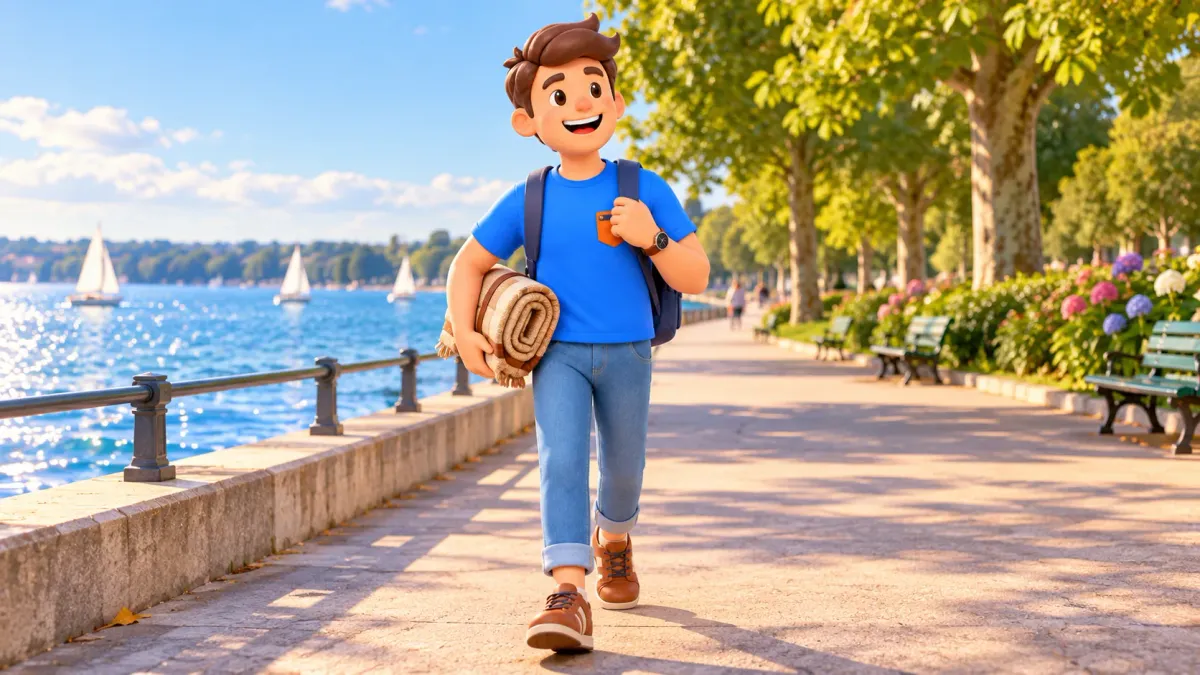
Jet d'Eau does not have to be the end of a Geneva walk. Continue along the left bank and the mood changes: open waterfront leads towards Parc La Grange, its rose garden and neighbouring Parc des Eaux-Vives. This is a route for choosing shade, seeing the lake from different levels and leaving time without another compulsory stop.
The main sequence is the waterfront near the Jet d'Eau approach, Quai Gustave-Ador towards the parks, La Grange and its rose garden, Parc des Eaux-Vives, then a return to the water. The Eaux-Vives beach is an optional finish. Allow roughly two and a half to three hours for both parks and a pause. This is a planning estimate, not a timed measurement; a long picnic, swimming and visits inside buildings need additional time.
Choose a park outing rather than a list of obligations
RoadMe makes these parks easier to shape into a personal itinerary, working out a plan around your interests and pace. Give flowers, landscapes or a proper rest more time while connecting the walk with the rest of your trip.
Start on the left-bank waterfront near the Jet d'Eau jetty approach. Going onto the jetty is unnecessary. Add the journey from your hotel or station separately. If you want to begin earlier at the Flower Clock, use our short walk to Jet d'Eau and combine the sections only when you have enough time.
The fountain is a starting landmark, not a condition for this route. Its operation depends on calendar and weather. In the SIG calendar checked on 23 October 2026, maintenance is scheduled from 2 November to 3 December 2026; recheck the dates before travelling. The direction towards the parks remains the same without a jet.
Decide your emphasis before setting off. Garden enthusiasts can focus on the roses, landscape lovers on mature trees and water views, and visitors tired after the centre on a real lawn-side pause. You do not need equally long stops everywhere. Two neighbouring parks offer choice rather than doubling the compulsory programme.
A shorter version of roughly ninety minutes to two hours takes you along the shore, into La Grange and back to the water, leaving the second park for another day. With only an hour, choose a waterfront section or a single park. A comfortable pace matters more than completing every place in the headline.
From Jet d'Eau, let the centre recede
Begin on the broad public waterfront, rather than the narrow passage onto the jetty. Follow the left bank towards La Grange and Eaux-Vives along Quai Gustave-Ador. The lake provides orientation, but use marked pedestrian crossings when moving from the waterfront towards park gates.
You do not need another celebrated attraction on the first stretch. Notice how boats, open water, trees and stopping places gradually replace the denser centre. Choose one comfortable backward view over the harbour, then continue instead of making almost the same photograph every few steps.
If Jet d'Eau is running, moving away changes its scale from a separate spectacle to an element of a larger landscape. If it is off, the water and shoreline still make that transition clear. Do not use the time intended for the parks in an indefinite wait for the fountain to start.
Check how you feel after the earlier part of your day. The exposed waterfront may be windier than the streets. In unpleasant weather, move towards the more sheltered tree-lined areas; if you are already tired, choose one park. This outing is intended as a break, so changing its length is a sensible decision.
La Grange: a former estate becomes a public landscape
Enter La Grange through an open, marked entrance from the waterfront side. The park rises from the lake, so decide how much climbing you want. Lower and middle paths with a few stops are enough for a relaxed version. There is no need to complete the entire perimeter.
The park grew from the Favre family's private estate and retains a relationship between house, large trees, open lawns and views of the water. The historic villa helps explain the composition, but this walk does not promise access inside. Entry to the building and entry to the park are different matters.
Compare two views: from a lower path towards the house, then from a suitable higher point back to the lake. The slope becomes part of the landscape's arrangement rather than merely a climb. You do not need the highest point; a comfortable stop halfway up can give a better experience.
Mature trees are a reason to come in their own right. Look at the shape of a crown, its distance from neighbouring planting and the shadow on the lawn. Not knowing a species name does not prevent observation. One old tree, properly noticed, can stay in the memory longer than a hurried circuit of the entire park.
If you want a break, use a permitted place, keep paths clear and take rubbish away. A lawn does not automatically authorise fires or every kind of picnic equipment: the rules of the particular area apply. For a short walk, a simple pause usually offers enough without complicated preparation.
The rose garden: structure as well as flowers
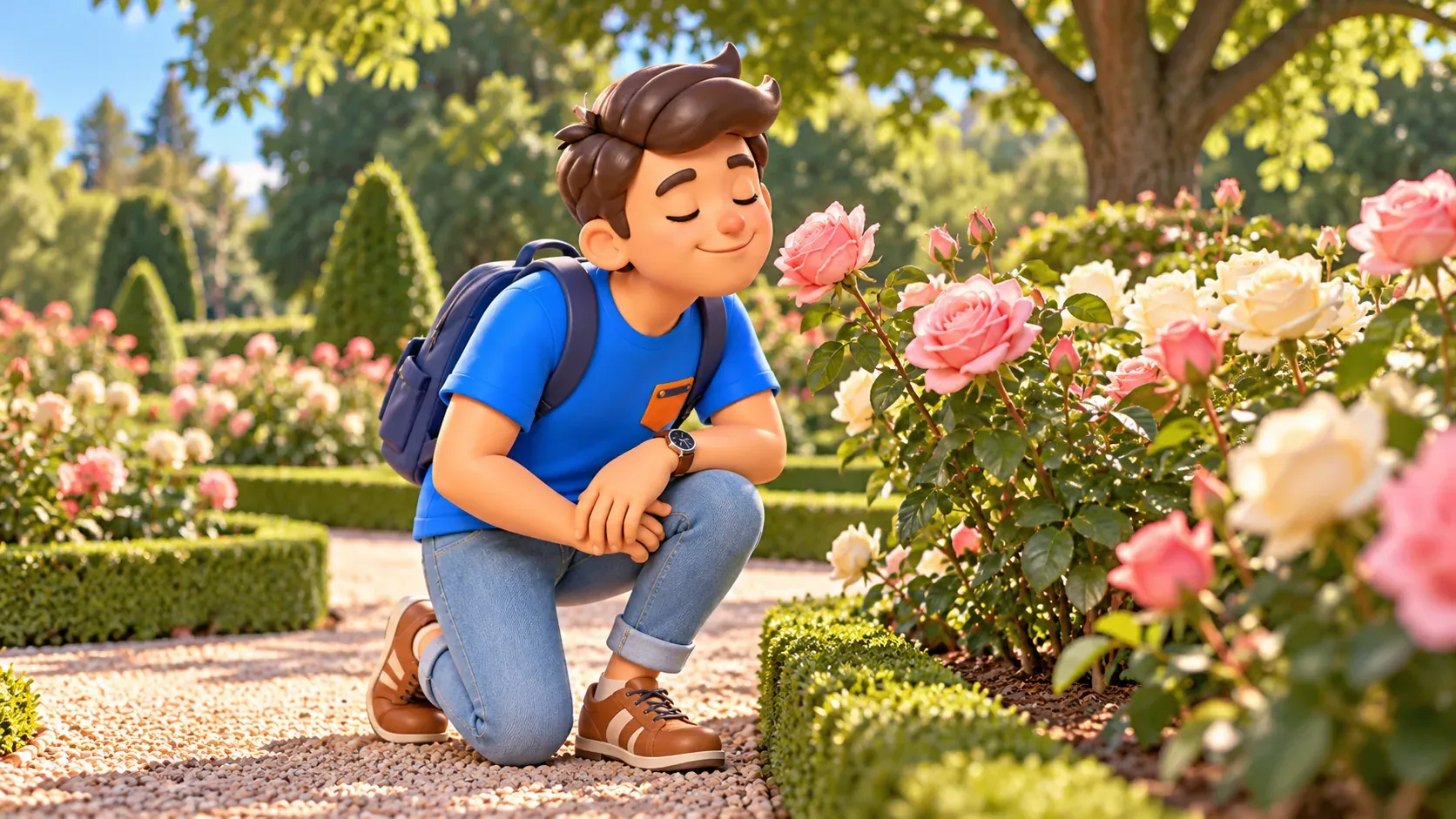
La Grange's rose garden is a separate composition within a larger landscape park, with a history reaching back to the mid-twentieth century. Its organised planting and paths create a different rhythm from the freer lawns and large trees around it. Notice the transition rather than treating the roses as an isolated checklist item.
When flowers are out, choose a few contrasting bushes and compare flower shape, shades and the plant's overall silhouette. Do not expect the whole garden to look like a promotional postcard simultaneously. Blooming depends on season, weather and care, and individual plants develop at different speeds.
Outside peak flowering, look at the arrangement: where paths run, how planting height and density change, and how the garden connects with the surrounding park. A historic garden remains a living space that is renewed. Its value is not reducible to a particular number of open flowers on your visiting day.
Keep to paths rather than picking blooms or entering beds for a close-up. Choose flowers reachable for observation from the path. If an area is busy, one quiet section is sufficient. A small, concentrated stop is more rewarding than a long search across the entire garden for the perfect rose.
Make your next decision here. Continue to the neighbouring park if your energy and interest remain; stay in La Grange if this is already the right setting for your afternoon. Skipping the second park does not create a gap that needs filling with another attraction.
Parc des Eaux-Vives: change the view, not the pace
Use marked, accessible paths between the neighbouring park areas. If a direct connection is closed or unclear, use open entrances from the surrounding streets. A gap in a boundary should not be assumed to be an authorised passage. Choose the clear route rather than trying to force the shortest line on a map.
Eaux-Vives also has an estate history. Its old house, lawns and trees recall private properties that later became public green spaces. Being next to La Grange does not remove its own character. Look for another view and a different balance of enclosure and openness rather than repeating the photographs you have just taken.
Choose a short curve along the slope with a comfortable lake view. Compare the proportions of water, grass and trees with the earlier park. That is enough for a meaningful visit; walking every path and approaching every building is unnecessary. The change of setting matters more than completeness.
This can be your main pause. If you bring a snack, choose a permitted spot and leave it clean. A restaurant in a historic building, its tables and service are not part of the walking estimate. A long lunch needs its own allowance, just as any separately chosen visit would.

Eaux-Vives beach: an optional ending beside the water
To bring parks, waterfront and unhurried time together, RoadMe can work out a personal plan around your interests. The app offers a more convenient way to combine your chosen places in one trip and retain enough time to rest.
After the parks, return towards Quai Gustave-Ador and the public area of Plage des Eaux-Vives. This is a different kind of shore, made for stopping as well as moving along the lake. In suitable weather, a short rest works perfectly without swimming being part of the plan.
The area brings recreation close to a natural lagoon. They serve different purposes: protected natural sections do not become swimming areas simply because they are beside a beach. Remain on permitted paths and areas and follow the current local signs. The distinction is part of the design, not an inconvenience to bypass.
Swimming is a separate decision based on water conditions, weather, local instructions and your own abilities. A walking article cannot promise suitable conditions on every date. Finishing by the water in ordinary clothes can be equally satisfying, especially outside the summer season.
You do not have to settle at the immediate waterline. Choose a comfortable dry place and let the outing end. If the parks already gave you the break you wanted, omit the beach. There is no compulsory final photograph and no need to add a shore section when you have run out of energy.

Season, return journey and sensible shortcuts
Check the parks' opening times for your date and read the signs at entrances. Sources may present general or seasonal schedules, so do not rely on an assumption of round-the-clock access. Daylight with a margin before closing is the straightforward choice for a first visit.
Spring and summer put more emphasis on planting, autumn on trees and light, and cooler periods on a shorter visit with less time exposed at the lake. Do not expect the same rose garden or beach experience in every month. Rain can also make older paths and slopes worth taking more carefully.
Plan the return separately from time inside the parks. You can retrace the shore or check suitable public transport from your chosen endpoint. This itinerary does not depend on an unverified service number or waiting time. If you have a train or appointment, set a turnaround time before the walk expands.
With children or mobility requirements, choose less climbing and check specific entrances. Being visibly close to the water does not mean every path gives an equally easy way down. A clear part of one park with a proper pause is better than a full circuit that becomes tiring at the end.
Let the three scales define the outing: open lake, large estate landscape and a small garden detail. If you have noticed those differences and rested comfortably, you have already achieved the purpose. Everything further is a choice that can fit your own version of Geneva.


