
From the Flower Clock to Jet d’Eau: a short Geneva lake walk
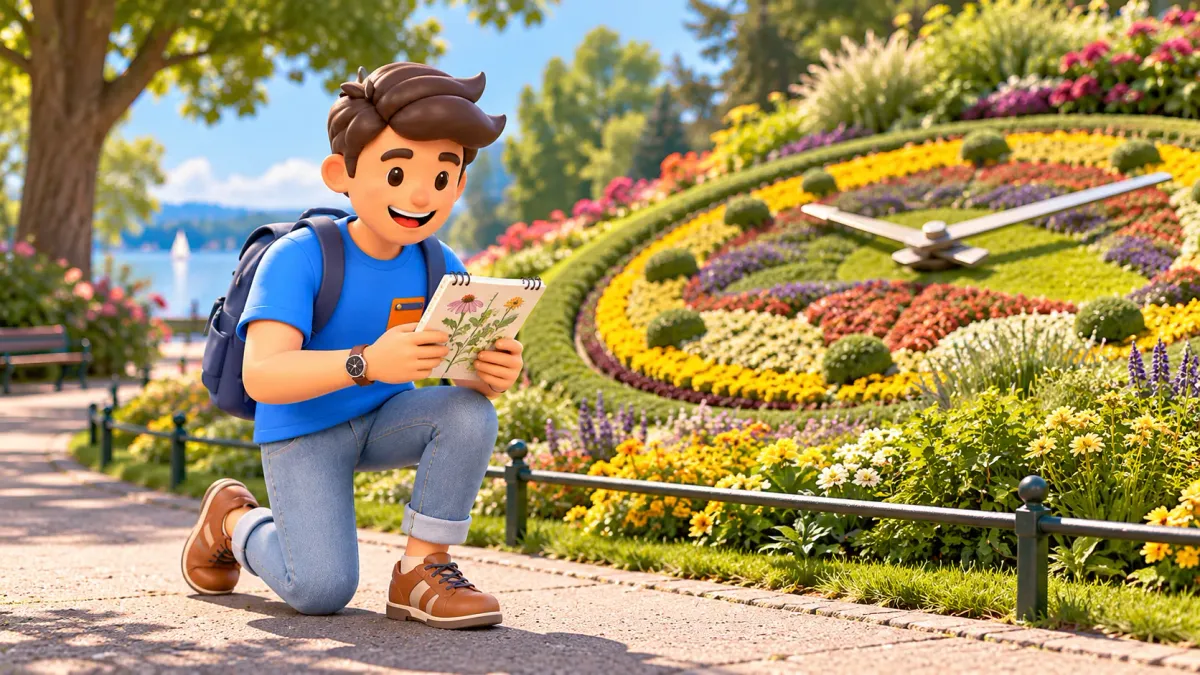
The Flower Clock and Jet d'Eau make a natural short walk beside Lake Geneva. Between them lie a garden, a monument with a clear visual story and two modest rocks connected to Switzerland's height measurements. The famous sights provide a framework, while the smaller discoveries keep the walk from becoming a dash between photographs.
Begin at the Flower Clock in the Jardin Anglais, walk through the garden to the National Monument, then follow the left-bank waterfront towards the Pierres du Niton and the approach to the Jet d'Eau jetty. Allow roughly ninety minutes to two hours with pauses. This is an estimate for a relaxed outing, not a measured walking time; entering the jetty or waiting for the fountain is not a compulsory part of it.
Plan a walk that works with or without the fountain
RoadMe makes it easier to turn this lakeside outing into a personal plan, working out a route around your interests and pace. Give gardens, city stories or time beside the water more space while keeping the visit coherent.
This plan starts once you are already at the lake. Add your journey from the station, hotel or Old Town separately. The main direction stays on the left bank, without a required crossing of Pont du Mont-Blanc or a climb to the cathedral. Different parts of Geneva therefore do not compete for the same short walking window.
Do not make an operating water jet the only condition for a good outing. Jet d'Eau depends on its calendar, weather and maintenance, with wind or cold sometimes causing a stop. Check the operator SIG's current information for your date rather than treating normal operating hours as a promise.
There is a specific near-term notice: in the SIG calendar checked on 23 October 2026, maintenance is scheduled from 2 November to 3 December 2026. This is dated information to recheck for a future visit. During that period, choose the garden and waterfront version without waiting for a jet.
Before setting off, decide how much time you want on your feet. A short version ends after the garden and a comfortable harbour view. The fuller version continues to the rocks and a shoreline viewpoint for the fountain when it is running. An accessible, permitted jetty visit is an optional addition, not the definition of a successful walk.
The Flower Clock: look beyond the dial
At the Horloge fleurie, begin with a few minutes of observation. It is a timepiece and a living planted composition, so its appearance changes with seasonal gardening. Do not expect the flower pattern to match a photograph taken in another month or year.
Created in 1955 as a tribute to Geneva's watchmaking, the clock brings together two kinds of work that are often considered separately: a precise mechanism and the gardeners' changing design. One measures passing time while the other continually alters its floral setting. That connection gives the stop more substance than a quick landmark photograph.
Look at the overall shape first, then select one planted section and notice how plants create edges and transitions of colour. A short stop is enough. You do not need to wait for a frame without a single person in it: this is a popular urban sight, and movement around it is part of its setting.
Take photographs from the path and keep out of the flowerbed. If the immediate viewing area is busy, step back to a suitable place and look at the composition as a whole. There are quieter opportunities later on the route, so a queue for one picture should not consume your entire free hour.
Give the Jardin Anglais time of its own
Do not rush from the clock straight towards the distant jet. Follow the garden paths and allow the scale to change, from one floral object to trees, places to pause and the city beside the lake. It is worth walking for a little while without hunting for the next essential attraction.
The garden took shape in the nineteenth century as Geneva changed its relationship with its waterfront. Its position helps explain the idea: water becomes part of everyday public space. Garden and harbour work together, even if you only spend twenty minutes moving between them.
If the journey here has tired you, take a short break in shade or on an available bench. A garden pause can be more comfortable than a long sit on an exposed, windy quay. Seating should not be assumed, however; this central area is lively when the weather is good.
With children, compare the garden's smaller water feature with the huge expanse of the lake. Keep the park fountain and Jet d'Eau distinct: they are different sights. In an adult group, consider a different question: what does this open space give the city that a continuously built-up waterfront would not?
The National Monument: two figures tell the main story
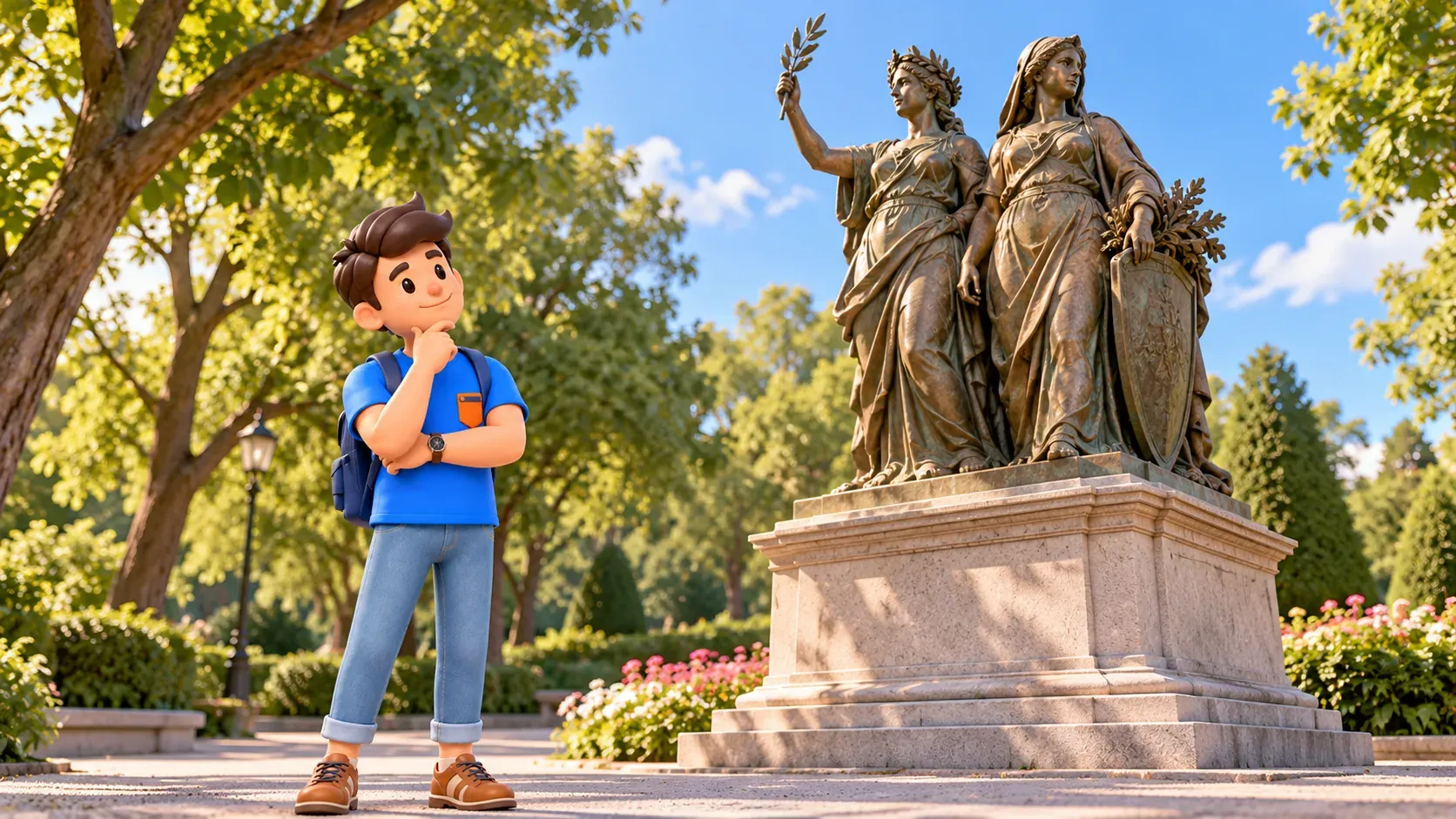
Find the Monument national within the garden. Two bronze female figures personify Geneva and Switzerland, commemorating Geneva's entry into the Confederation. That key makes the broad idea immediately readable without requiring a detailed account of nineteenth-century political symbolism.
Notice the relationship between the figures and the way they stand within an open public setting. Material is only part of the story; gesture expresses the connection between the city and a wider political community. One attentive look communicates more here than trying to memorise every associated event.
Compare this stop with the Flower Clock. One celebrates craft and a living design, the other identity and civic memory. Being close together does not make them interchangeable photo spots. Keeping that distinction gives even a small garden several different layers of interest.
After the monument, emerge onto the waterfront and turn towards Jet d'Eau on the left bank, in the direction of Quai Gustave-Ador. Do not cross Pont du Mont-Blanc in search of the next point; the basic route stays on this side of the harbour. When checking a map, stop outside the main pedestrian flow.
The Pierres du Niton: a small discovery beside the route
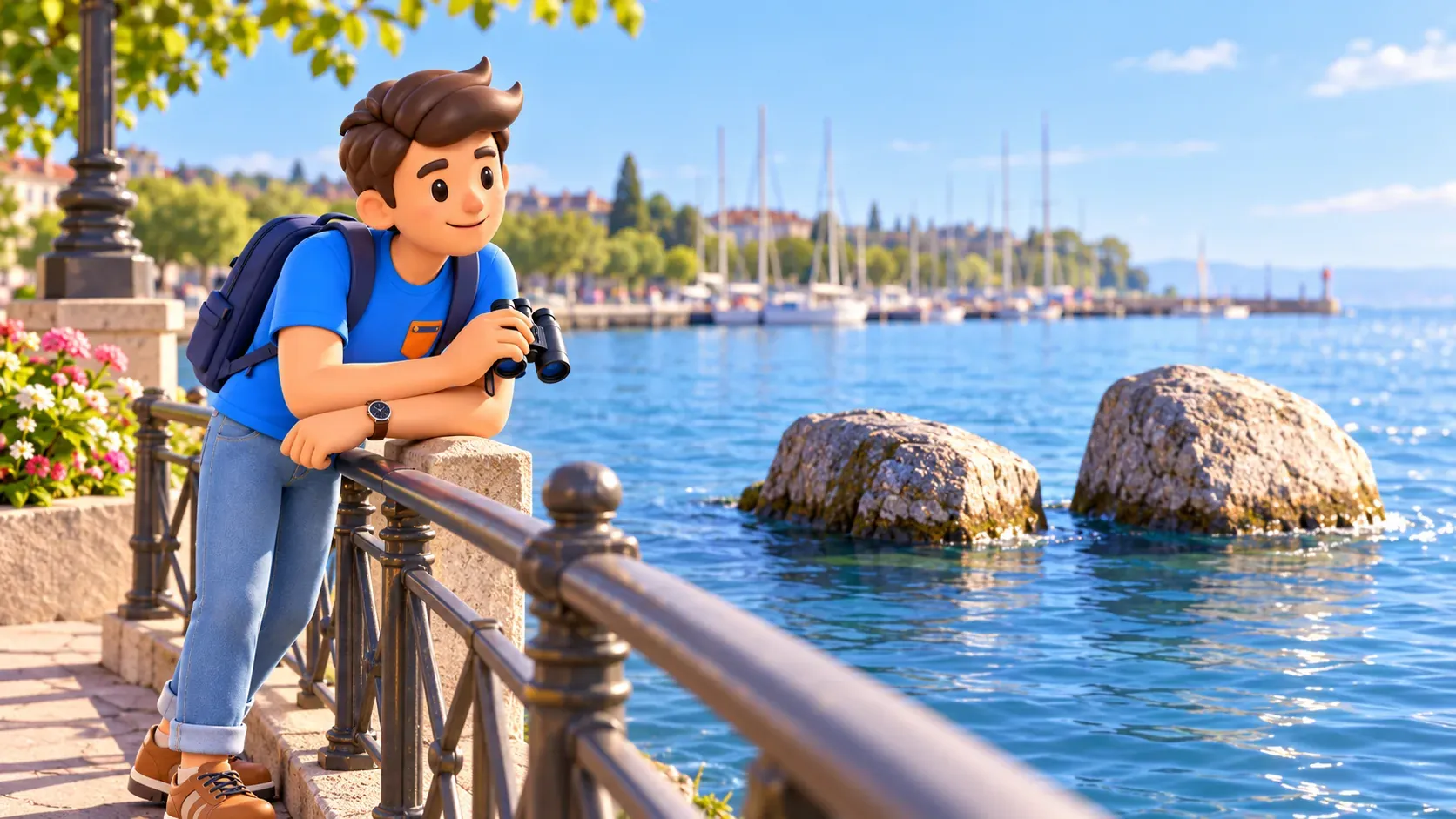
As you continue along the harbour, look for the Pierres du Niton: two glacial boulders in the lake near the shore. They can look modest compared with the great water jet. That is exactly why they are easy to overlook, although the story behind this stop has an entirely different scale.
One rock is linked to Switzerland's height reference. In a country of mountain passes and peaks, a small boulder near a city quay became an important point of measurement. You do not need to retain a precise elevation or the history of survey recalculations to appreciate the connection. Familiar numbers on maps depend on real reference points.
Observe the rocks from the public shore. They are not a destination to reach by entering the water or climbing onto them for a photograph. If glare, boats or conditions make the view awkward, do not spend all your spare time searching for a perfect angle. The value lies in noticing, not in obtaining a close-up.
Try a simple shift of perspective: first see the lake as a landscape, then as a place of measurement, boat movements and urban infrastructure. The same waterfront becomes more interesting. A short walk acquires a scientific detail without requiring a separate museum hour.
Jet d'Eau: choose a comfortable view over an obligatory jetty
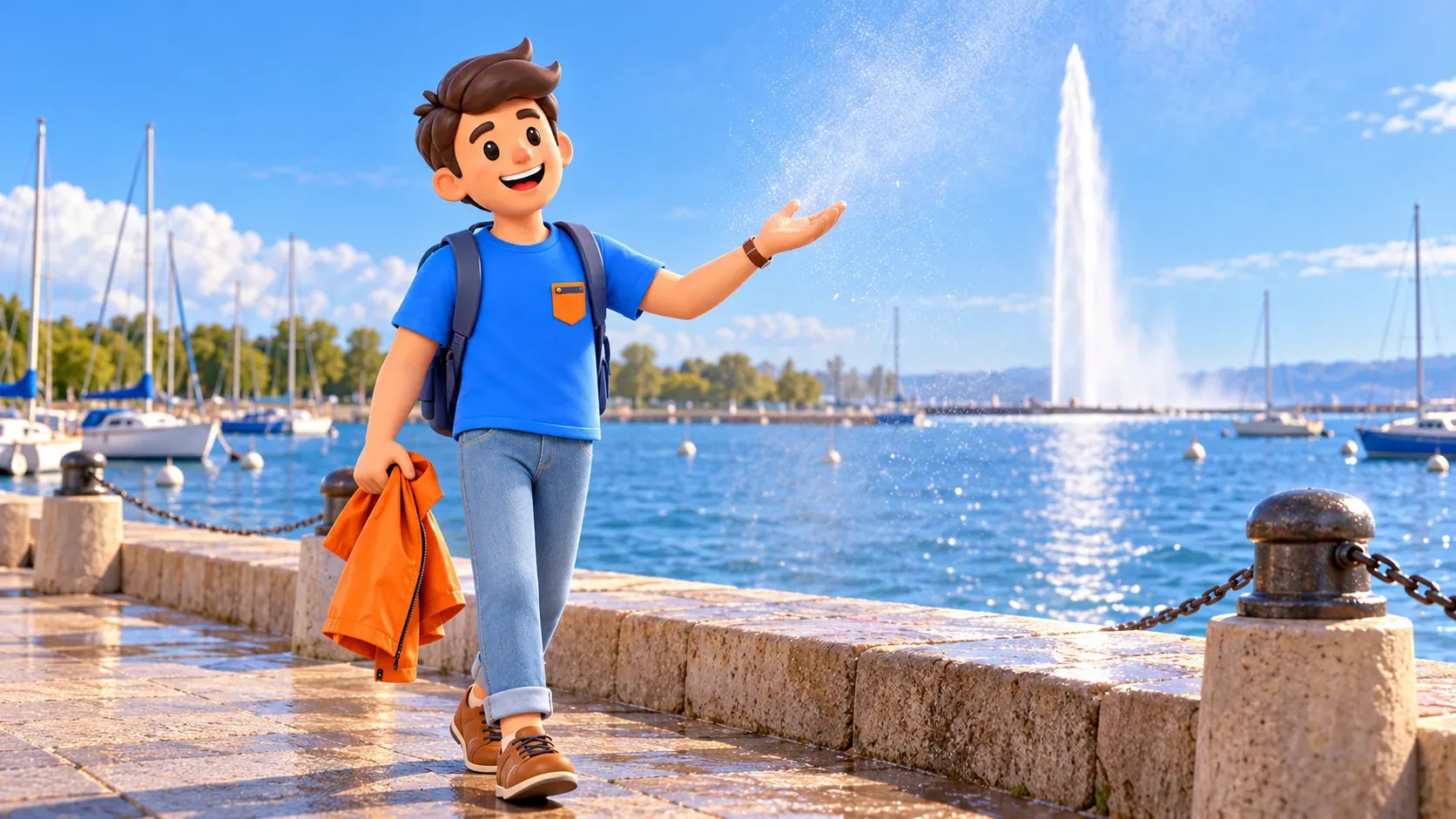
Continue to the shoreline near the jetty approach. If the fountain is running, first enjoy it from the ordinary waterfront. At a distance, its scale within the harbour is easier to understand, and you can choose a comfortable position without depending on a narrower passage close to the water.
The city's emblem had an engineering beginning: an earlier jet helped release pressure in a hydraulic system. The display later became an independent part of Geneva's lakeside identity. That move from practical function to city symbol connects nicely with the other stops, where useful work and public appearance also meet.
Consider the jetty only when access is permitted and conditions suit you. Exposed ground may be wet and drifting spray changes direction. Closure or an unpleasant wind is enough reason to remain ashore. This walk does not require you to reach the base of the jet; a dry, wider view is a complete experience in its own right.
When taking a photograph, choose your position before raising the camera. Avoid stepping backwards towards an edge or blocking others for repeated attempts. Wind, water and pedestrians continue moving while you frame the picture. One comfortable viewpoint is more useful than a long effort to reproduce someone else's image.
A ready alternative when the fountain is off
Everyone's ideal lake day is different, and RoadMe can work out a personal itinerary around your interests for the whole trip. The app makes it more convenient to connect this walk, selected visits and time to rest in one plan.
If there is no jet, do not begin an indefinite wait at the approach. Keep the Flower Clock, garden and monument, give the Pierres du Niton more attention and finish on a comfortable stretch of waterfront. Returning along the same shore offers another direction of light and perspective, so it need not feel like empty repetition.
Choose your break in the garden or beside the water according to the weather. For a broader exploration of the centre, use our one-day Geneva itinerary and give the Old Town a separate part of the day. Do not compensate for an inactive fountain by suddenly adding several distant sights.
Before heading back, assess comfort rather than the number of stops completed. Shade and drinking water matter in heat, wind protection in cooler weather, and a shorter shore section when you are tired. This is an outdoor route without continuous shelter. Travellers with mobility requirements should check particular approaches and sections separately.
For an early outing, begin with the garden's details, then continue along the shore if you still want to. Do not arrange a meeting beside a visible running jet without checking the calendar. Give companions a specific waterfront landmark instead of relying on the fountain to be visible from afar.
With children, choose one observation per stop: find the hands among the flowers, compare the two bronze figures and spot the rocks in the water. In a group, agree on the emphasis too. Some people want photographs and others enjoy simply walking. Meet at a clear point on a wider path rather than using the jetty approach for a long gathering.
The finishing point does not oblige you to continue further along the lake. Once your chosen section is complete, check your energy and the rest of the day. Returning to the garden can be better than another half-hour of walking without a new purpose. The floral dial, the garden's city stories and the lake's openness already make three distinct memories; a running Jet d'Eau adds a strong final image.


