
Free Geneva: a day of squares, waterfront and parks
Geneva’s character can be explored without making admission tickets the basis of a day. A park below the Old Town, a historic square, a waterfront garden and a small island form a worthwhile sequence. Architecture, history, seasonal details and time simply to look at the city remain available.
This walk runs from Bastions through Bourg-de-Four to the Jardin anglais and then Île Rousseau. Free refers to the chosen public spaces and exterior viewing. Food, transport, accommodation and optional paid visits belong to separate planning; the walk itself has no compulsory ticketed component.
Arranging a day without admission tickets
Begin in Parc des Bastions and see the Reformation Wall within the same park. Take public streets uphill towards Place du Bourg-de-Four, then descend towards the Jardin anglais and Flower Clock. The last section follows the water towards Pont des Bergues and the branch to Île Rousseau.
RoadMe makes it much easier to turn this idea into a complete personal walking or trip plan around your interests and pace. Let the app work out a clear sequence, comfortable connections and time for the city details you enjoy.
This is a compact central selection for a relaxed day with pauses, not a measured route lasting a fixed number of hours. Walking quickly takes less time; rest, photographs and close observation expand it. Additional sights are not needed to fill every available hour.
Choose a personal emphasis beforehand. One person may prefer history, another architectural detail and another greenery and water. The sequence stays shared while the time within it changes. The day gains a personal purpose without requiring equal attention at every stop or a continual search for another activity.
Terrain matters. Bastions lies at the foot of the Old Town, Bourg-de-Four is higher and the lakeside garden requires another descent. A flat map cannot show every effort involved. Choose real permitted streets and approaches, especially if slopes or steps affect your comfort.
Temporary events, barriers or maintenance may change available passage. Public space does not guarantee unrestricted access at every hour. Use open sections according to circumstances and preserve the main story: park, old streets and water offer enough even in a shorter version.
Bastions: begin with greenery and city history
Consider Parc des Bastions as a complete first stop. Notice avenues, trees and the way the space sits below the historic centre. It recalls former fortifications and later urban change: the area acquired a public life that continues today.
Bastions is connected with Geneva’s first botanical garden, established here in 1817. That detail adds a sense of changing purpose to pleasant greenery. For this walk, simply recognise the combination of nature, urban memory and everyday recreation.
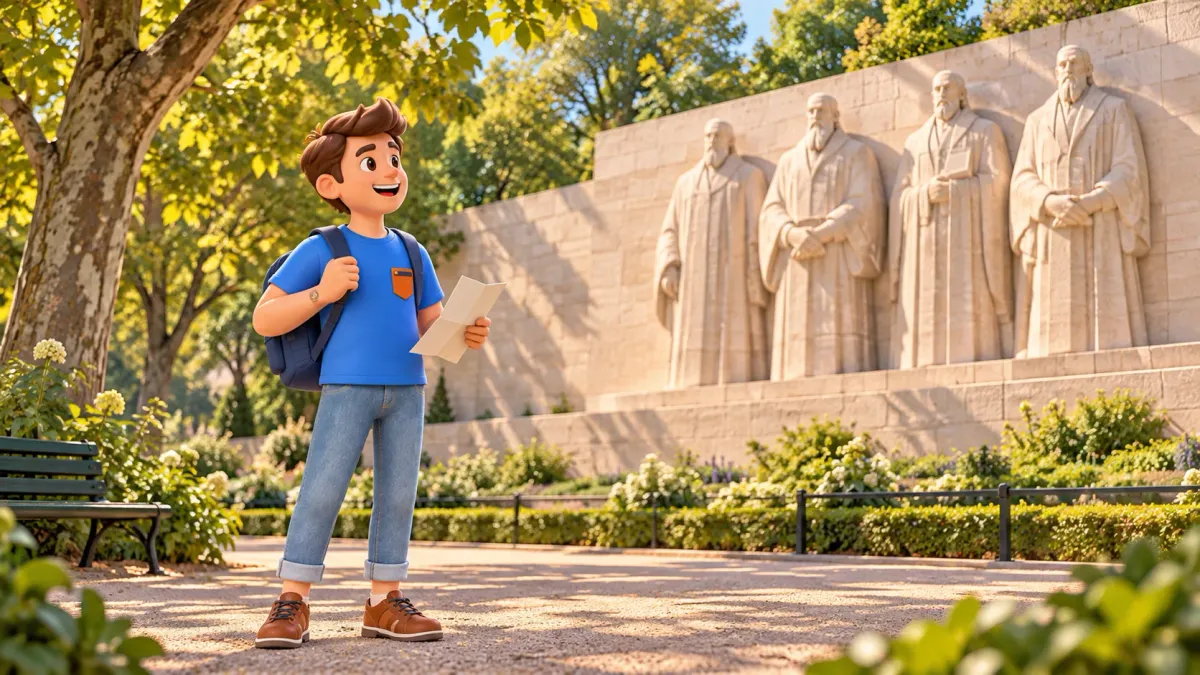
The Reformation Wall, inaugurated in 1917, occupies the same park. Its central figures of Farel, Calvin, Beza and Knox connect Geneva’s story with the spread of Protestantism in Europe. The outdoor monument provides a clear historical emphasis without museum admission.
Begin with the overall scale of the wall, then choose one part to inspect more closely. Reading everything or memorising every name is unnecessary. Notice how a long monument works among trees and how the impression changes as you approach.
Afterwards, allow a few minutes for the ordinary park. Walk an available avenue, watch activity or pause on a free bench. This is part of a complete city day without needing a purchased drink or another paid activity.
For a short note, choose one contrast: pale stone and dark foliage, a long horizontal line and tall figures, moving passers-by and still carving. These observations let you look independently. They complement the history by connecting it to what is actually visible in front of you on this particular day.
If a shorter programme appeals, decide here whether to climb into the Old Town. Park and historic streets form one option; lakeside garden and island another. Make the choice according to energy and interest while free time remains ahead.
Bourg-de-Four: a historic square without an obligatory terrace
Climb towards Place du Bourg-de-Four using suitable public streets. The change in height helps explain the old centre. After the open park come closer façades, turns and another sense of scale. The connection itself becomes part of discovering the city.
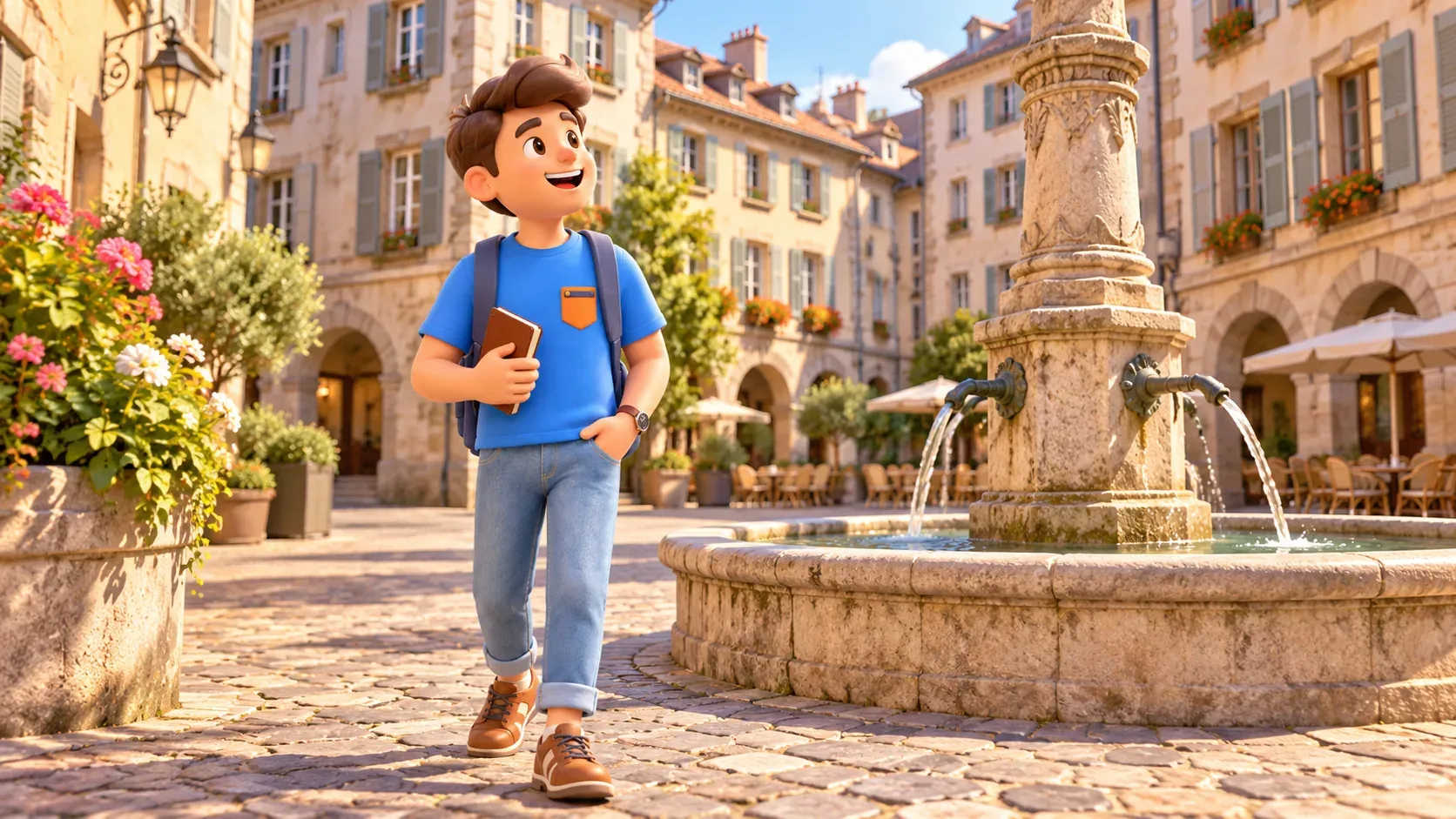
The square grew from a historic trading crossroads. Its irregular shape, fountain and buildings from different periods preserve the character of a place formed gradually. Look at how streets arrive and where space appears for people to pause.
Careful exterior observation already provides content. Choose the fountain, a line of windows or contrasting neighbouring façades. Then look from another available public position. One comparison can make the square more memorable than a quick picture beside a familiar name.
Cafés and terraces add life, but an order is not a condition of joining the walk. Stay within public space, leave passage clear and respect the limits of served terraces. If you sit at a table, treat that as a separate choice and expense.
For photographs, keep part of the square with the detail that interests you. It helps recall the fountain’s position or a building’s setting later. A perfect frame need not inconvenience others; ordinary city life already makes the place expressive.
Jardin anglais and the Flower Clock: one lakeside stop
The next stage goes downhill towards the Jardin anglais. The setting changes from dense old streets to a more open space by the harbour. Choose a descent using actual streets and crossings. A short line on a map should not automatically be assumed the most comfortable option.
The garden developed in the nineteenth century as part of the public lakeside setting. Combine paths, a water view and a short look at its familiar features. For this plan, the garden and Flower Clock are one connected section rather than two separate lengthy visits.
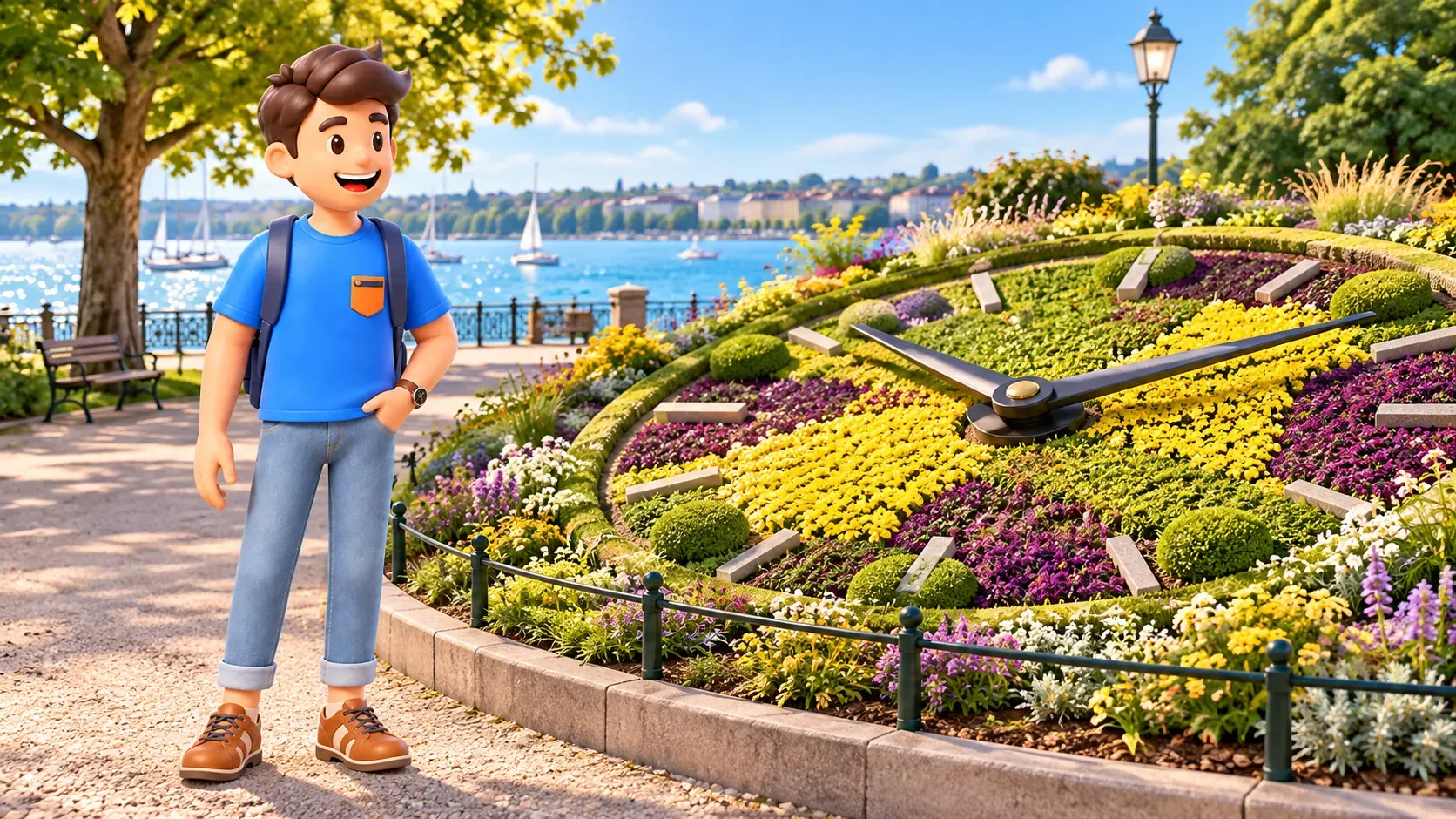
The Horloge fleurie was created in 1955 as a reference to Geneva’s watchmaking. Its living dial combines a mechanism with the work of city gardeners. Notice how an object usually associated with metal and glass acquires a planted appearance.
Planting changes seasonally, while maintenance and crowds influence a particular visit. Do not expect an exact copy of an online photograph. Approach along the available path, view from the intended public space and preserve room for plants and other visitors.
Choose one colour or leaf shape and see how it repeats around the dial. This works for adults and children alike. If the clock is crowded, spend time elsewhere in the garden first, then decide whether you want to return to the detail.
The water view is an experience of its own. A boat ride is not required to appreciate Geneva’s lakeside position. A few minutes on a public waterfront can bring garden, shoreline and urban movement into one picture.
Île Rousseau: a small branch at the end
From the lakeside section, follow available public routes towards Pont des Bergues. Île Rousseau connects with this bridge and enters the plan as a short out-and-back branch. There is no through-route via the island towards the downstream Halles or Tour de l’Île.
The island previously had defensive and working functions, becoming a public garden associated with Jean-Jacques Rousseau in the nineteenth century. Changing use makes the small area more meaningful than a patch of greenery beside water. Urban history appears through the role a place acquired.
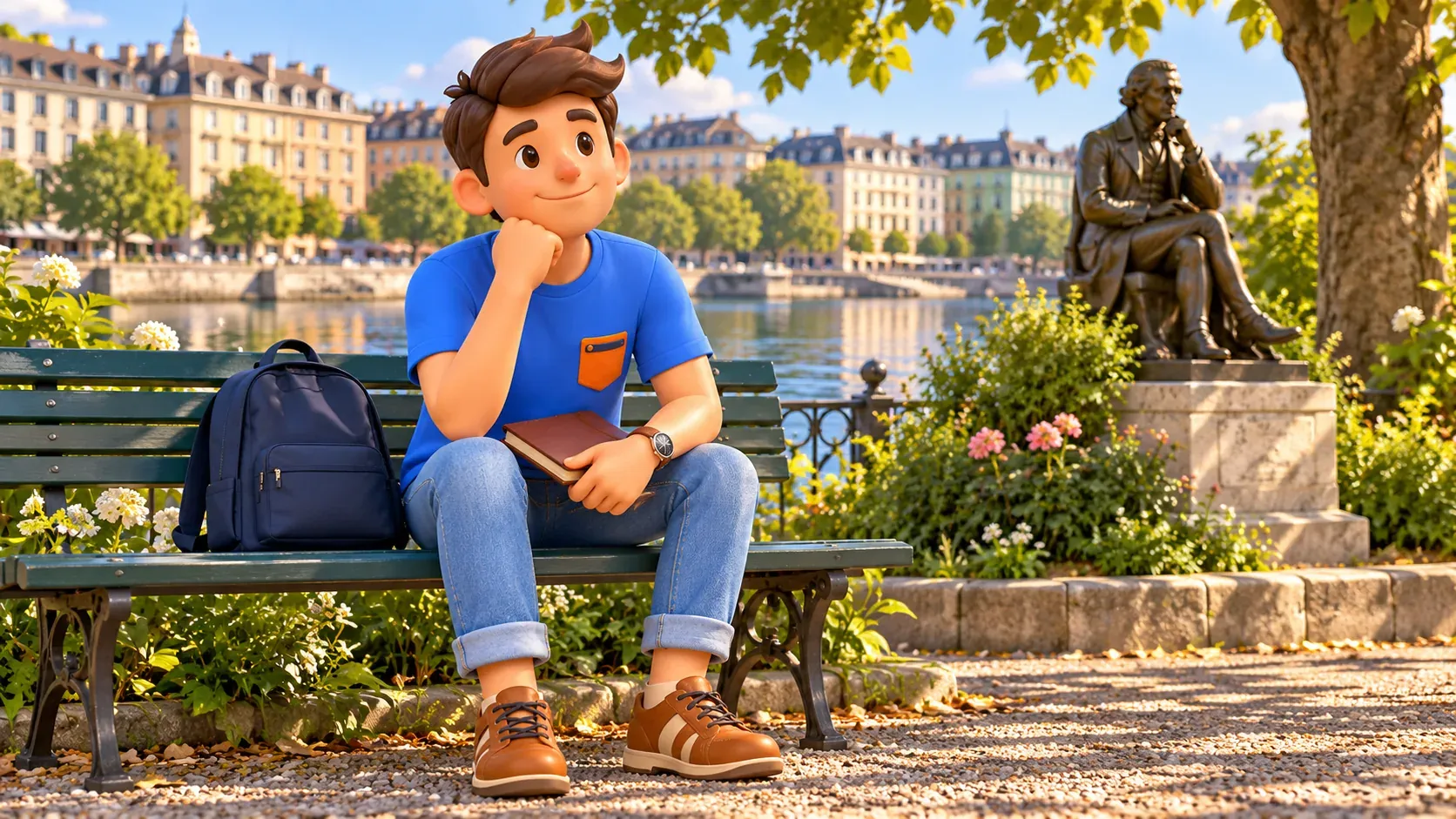
If access suits, pause by the monument, look towards the banks and find an available place to rest. A detailed biography is unnecessary for the ending. Compare this intimate space with the long wall at the beginning: the city arranges memory and recreation in different ways.
To connect these discoveries with the rest of your trip, let RoadMe work out a personal plan around your interests and available time. The app makes a coherent route with room for calm pauses much more convenient and effective than assembling the day from scattered notes.
Return along the same branch to Pont des Bergues and choose your onward direction there. This keeps the finish clear. If transport, a meeting or accommodation follows, allow that connection its own time and check the approach from where you actually finish.
What sits outside the free exterior visit
This itinerary requires no museum, paid tower ascent, boat or restaurant stop. Such additions are available by choice, with their own conditions and budget. The exterior introduction is complete without them.
Public transport also needs separate planning. Do not assume free city travel is automatically available to every visitor. If your accommodation provides a transport card, confirm its current conditions and applicability to your stay; being in Geneva alone does not establish eligibility.
For food, bring an appropriate snack if you wish and use a permitted resting place, taking waste away. If you prefer a café, leave that expense in the budget. Choice preserves a pleasant pace without turning the walk into a promise of an entire cost-free trip.
Shortening the day for weather and energy
For less walking, choose Bastions with the Old Town or Jardin anglais with Île Rousseau. The full connection includes ascent and descent, and suitability depends on actual paths. This has not been surveyed as a guaranteed step-free itinerary.
In rain, shorten the outdoor section. A museum substitute requires separate calendar and payment checks; the word museum does not itself guarantee free entry. For a calmer decision, consider the rainy-day options for Geneva.
Finish when you have enough impressions. Bastions, the old square, planted clock and small island offer four different ways of seeing the city. A day without compulsory admission tickets feels complete through attention to those differences and the time between stops.


