
Geneva Botanical Garden in half a day: greenhouses, rockeries and a sensory detour
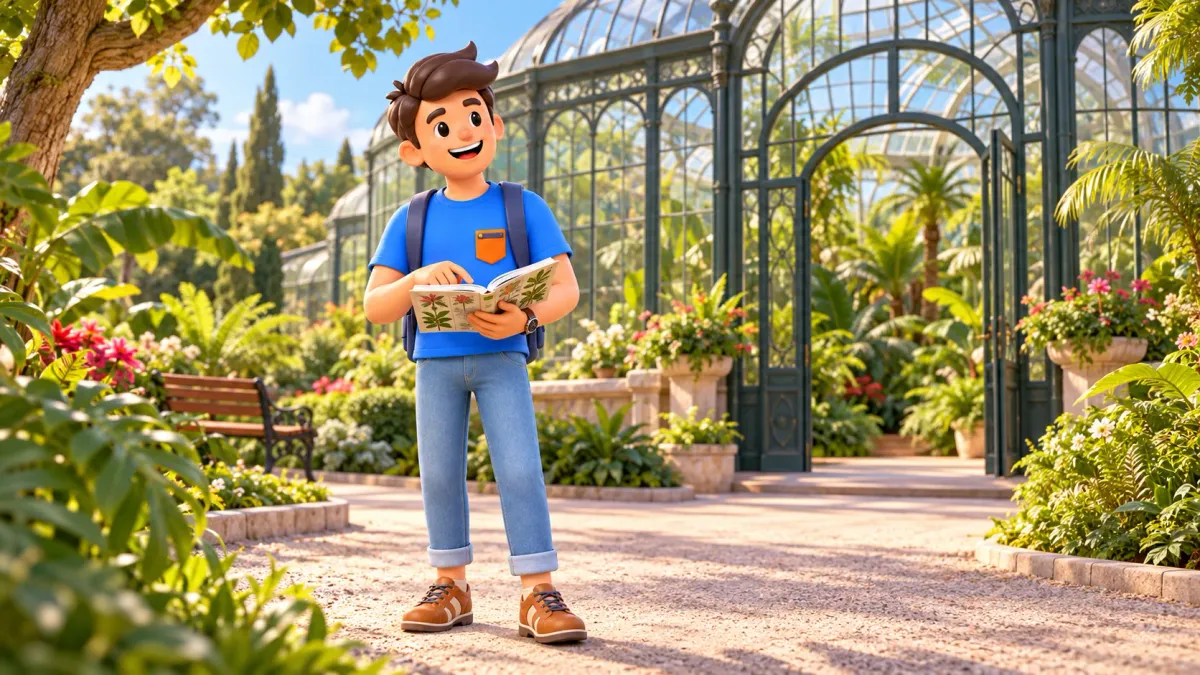
A rewarding half day at Geneva Botanical Garden needs only a few contrasting stops: a greenhouse, the rockeries, and time to sit down between them. If you still feel curious, add the scent and touch garden in the northern Terre de Pregny section. Treat that last part as a deliberate extension rather than the next flower bed on a continuous circuit.
Allow roughly three to four hours for this selective visit, including pauses and reading labels. That is a planning estimate, not a measured walking time. You will leave plenty of collections unexplored, which is entirely reasonable: looking closely at a handful of plants can be more satisfying than trying to cover every path. The route below explains where to begin, what each area offers, and when to shorten the walk.
Build your visit around two main stops
Start with an open public greenhouse, then explore the rockeries on the main garden grounds. Take a break before deciding whether to continue north past Villa Le Chêne towards the sensory garden. La Console, the historic scientific building on the lake side, is another possible exterior stop. It works best as an alternative extension when architecture interests you more than another collection of living plants.
RoadMe can help work out a personal walking or trip plan around your interests and pace. The app makes it much more convenient to bring greenhouses, garden collections and rest into one day.
From Cornavin station, Léman Express trains provide a connection to Genève-Sécheron, convenient for approaching the garden from the station side. Arriving at the Jardin botanique bus stop or walking from the lake gives you a different starting point. Choose a suitable entrance rather than navigating to a general map pin, which may identify the garden without marking an actual gate.
Check the garden plan when you arrive. Find the greenhouse you want to visit, locate the rockeries, and identify an exit that suits your onward journey. The northern sensory garden and lake-side La Console should be separate decisions on that plan. Do not assume that nearby pins mean you can walk directly between them across roads or through the grounds of scientific buildings.
Visit the greenhouse early in your outing. Greenhouse access ends earlier than a long summer evening in the grounds, and published summer closing times for the overall garden differ between official information pages. A morning or midday arrival, with a comfortable margin before 5pm, is a sensible approach. Confirm access to your chosen pavilion at the entrance before spending time in a more distant section.
Choose a greenhouse and let the details set the pace
The historic Jardin d’hiver is worth looking at from outside before you enter. Its iron and glass structure makes the relationship between plants and architecture easy to appreciate: the building creates an environment in which a living collection can grow. Look at the overall outline first, then at the framework and the way the planting fills the space. Its name does not mean that it is relevant only in winter.
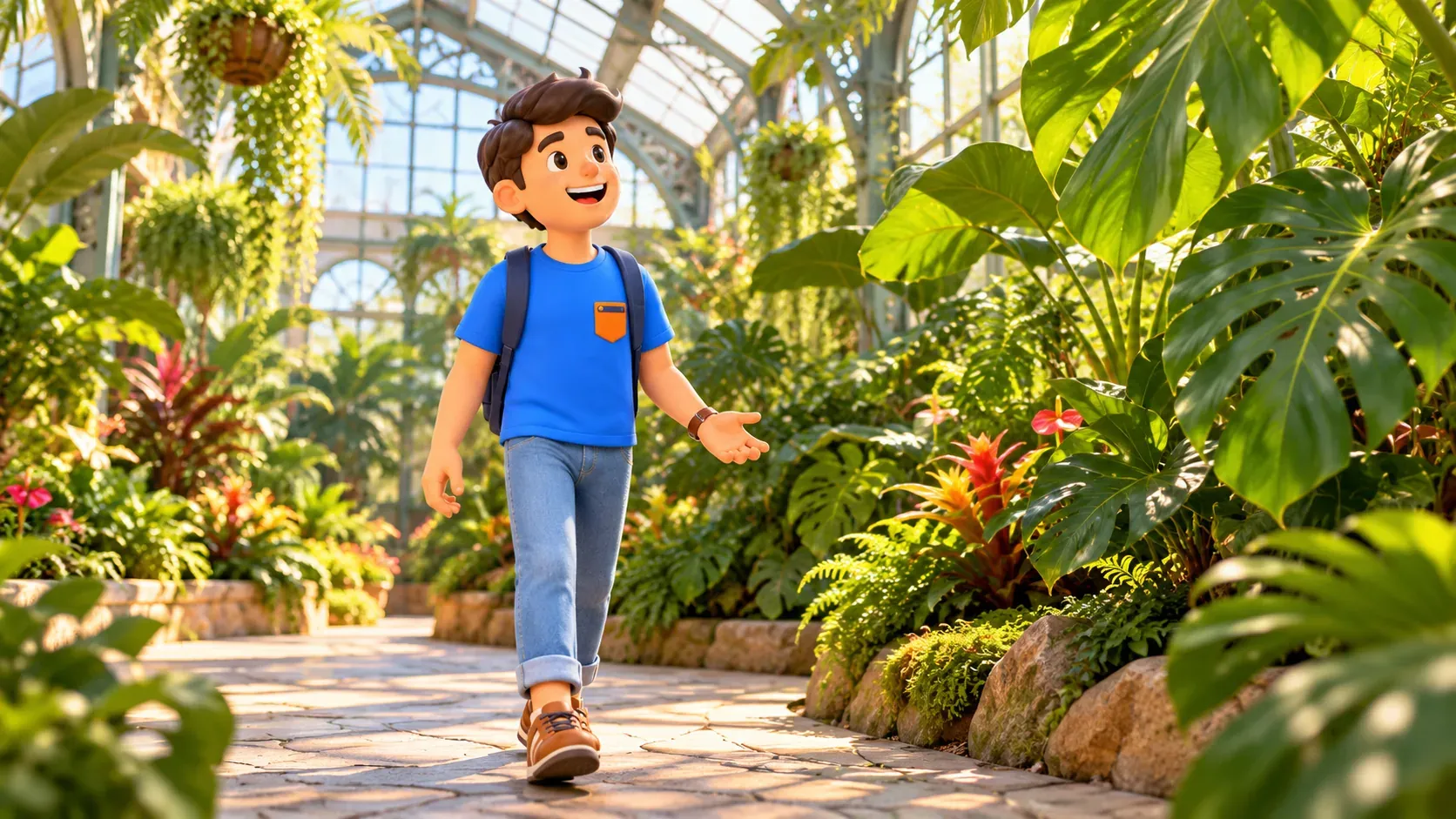
The garden's greenhouses accommodate plants associated with tropical and Mediterranean conditions. You do not need to inspect every open pavilion to understand that range. Choose one according to your interests, whether that means broad leaves and dense greenery or an opportunity to compare unfamiliar forms.
Try following a simple theme through the room. Leaf shapes are a good starting point: compare one large, uninterrupted surface with a plant made up of many small leaves. Then look at how stems branch and how each plant occupies the space around it.
Read a few labels rather than every label. Names and origins connect the display to places and growing conditions beyond Geneva. You might choose plants that seem familiar from daily life, or concentrate on a form you have never noticed before.
Keep to the visitor paths and leave room for people to pass in narrow areas. Touching plants is not a general part of greenhouse access, so follow the instructions for each display. If an area feels crowded, move to a quieter section rather than squeezing between visitors or leaning into a bed for a photograph.
If your preferred greenhouse is closed, enjoy the exterior and move on to the open-air collections. Do not use your whole visit waiting for an opening that staff have not confirmed. The rockeries offer a different kind of experience, and the contrast between the two settings can still be appreciated from the outside.
Explore the rockeries at plant level
The rockeries shift your attention from the scale of a glasshouse to low plants, stone and changes in ground level. They represent mountain plants from different parts of the world, so avoid reading the entire area as a miniature version of the Swiss Alps. Labels provide the more specific context. The pleasure here comes from noticing how plants use small spaces and how different forms sit within the stone setting.
Follow the paths and select comfortable viewpoints instead of trying to reach every specimen. Look for compact cushions, small leaves and growth that stays close to the ground. These shapes invite a slower style of looking than an avenue of tall trees or a large greenhouse display. Stone is part of the planting environment as well as the composition, creating a variety of positions and sheltered spaces.
Flowering changes through the seasons. A visit outside a colourful peak can still reveal leaf textures, the arrangement of plants and the relationship between growing surfaces and rock. Rather than expecting the entire area to be in bloom, set yourself a different task: find three contrasting growth forms, or compare plants that look similar from a distance but differ when viewed from the path.
Children can join in without turning the collection into a treasure hunt that requires picking things. Look for a particularly low plant, a repeated leaf colour, or a shape that resembles a cushion. Keep observations within the boundaries of the beds. After this close looking, take a break somewhere suitable beyond the planted area; you will then be better placed to decide whether the northern extension still appeals.

Pause near Villa Le Chêne before heading north
Villa Le Chêne gives the walk a brief architectural interlude. The building relates to the garden's earlier estate landscape and now serves institutional functions, including reception. On this route, consider it an exterior stop and an orientation point. Do not expect a furnished house museum or unrestricted access to rooms inside, and do not interpret reception hours as a schedule for touring the building.
This is a useful moment to assess energy as well as time. If the greenhouse and rockeries have provided enough interest, end your visit after a rest. Continuing north to Terre de Pregny brings another type of encounter with plants, but it also adds a separate part of the grounds. Choose it because scent and texture interest you, rather than because the word “garden” makes it sound like a tiny final corner.
If the botanical garden is one part of your trip, RoadMe can help shape a complete personal itinerary. Planning visits and pauses around your interests is more convenient in the app than bringing each decision together separately.
For a family, make this decision after the break, when you can judge whether another section will be enjoyable. Visitors with mobility needs should assess the approach separately from the destination: rockery paths, greenhouse entrances and the route north need not share the same surfaces or gradients. Ask staff about a suitable way through. The presence of a sensory garden does not establish that the entire circuit meets every access requirement.
Make the scent and touch garden an optional finale
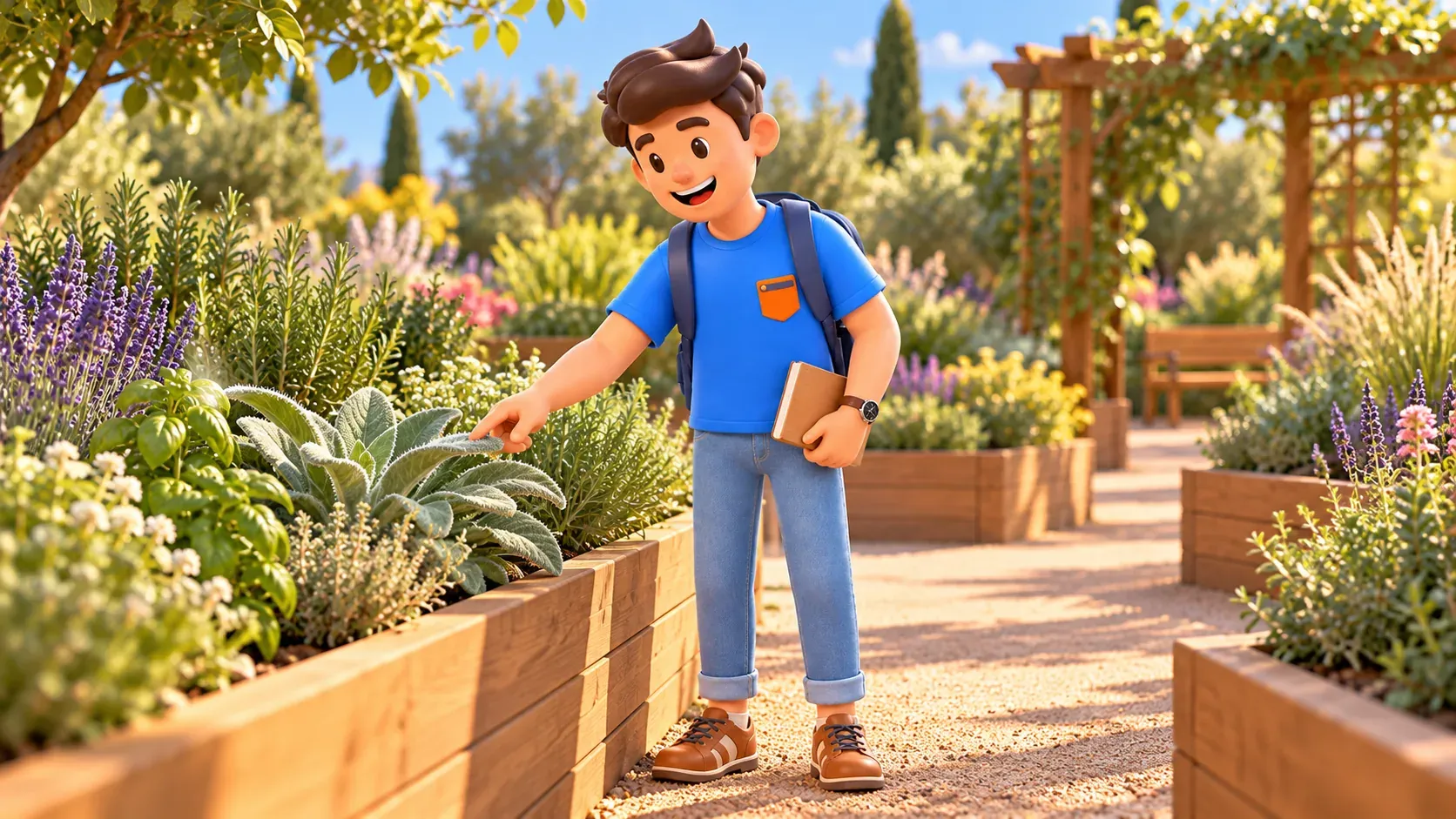
The Jardin des senteurs et du toucher in Terre de Pregny invites a different way of noticing plants. Instead of standing back to appreciate a large display, you focus on individual leaves, textures and aromas. Raised planting helps bring some of the collection closer, but read the instructions on site before interacting. Permission to touch in a designated sensory display does not extend to plants elsewhere in the garden.
Begin with your eyes. Notice which leaves appear soft, firm, smooth or covered with fine hairs. Where touching is permitted, gently compare one or two examples without removing leaves. Do not taste plants or damage them to release a scent. Follow the method suggested by the display and leave space for other visitors to approach the same planting. A careful, brief encounter is enough to make the stop worthwhile.
There is no need to turn this into an identification test. Choose something that interests you through its surface or aroma and spend a little time with it. For adults accustomed to moving quickly between sights, this can be the most effective pause of the visit. If fragrances are uncomfortable for you, remain at a distance and enjoy the arrangement visually instead of feeling obliged to sample every scent.
Seasonal changes influence what is available to experience. Do not build the outing around one particular aroma or expect every display feature to remain unchanged. The point of the northern extension is the opportunity to use another sense and slow your attention. If the weather deteriorates before you leave the main garden, save this area for another visit rather than forcing an extra walk simply to complete the plan.
Consider La Console only if the lake side suits your finish
La Console represents the scientific side of the botanical institution and its preserved collections. Its position towards the lake makes it a separate exterior option, rather than a natural final stop on a straight walk from the northern sensory garden. Choose it if the history and architecture of a research institution appeal to you. Ordinary access to the garden does not establish permission to enter the herbarium or working scientific spaces.
Use designated entrances and crossings when moving between the garden and the lake side. A short-looking line on a phone screen can conceal a road or the boundary of a separate area. If you want a longer waterfront finish, consult the quiet walk through Mon Repos and Perle du Lac and select a manageable continuation. After several hours in the botanical collections, a complete additional park itinerary may be better saved for another day.
Practical choices that keep the outing comfortable
Ordinary garden admission is free. This walk does not require choosing a separate entry tariff for the rockeries and greenhouse collections; special events have their own conditions. Bring shoes suitable for an unhurried walk over different surfaces and a layer that is easy to remove before entering a warm pavilion. Even a visit centred on greenhouses includes outdoor approaches, so plan for the weather between buildings.
Bicycles are prohibited within the garden, so a cycling arrival should not turn into riding through the collections. Published rules also prohibit dogs; check any specific conditions for assistance animals directly with the institution. Before leaving, identify the exit and onward stop you actually need. You can finish after the two main collections, after the sensory extension, or towards the lake: each makes a complete outing when you have allowed time to look closely.


