
Villa Strozzi and the Boschetto: a green Florence walk across the river
Villa Strozzi al Boschetto offers a different green Florence from the famous gardens beside Pitti. On the western side of the southern city, an older grove and a later landscape garden reveal two ways of shaping a country property. The limonaia adds a third story: a building once used for citrus plants became a setting for modern cultural architecture.
Allow roughly ninety minutes to two hours after reaching a confirmed public entrance for a selected park walk, one architectural observation and a short rest. This is an editorial allowance, not a measured circuit or an assurance that every path is suitable. Your actual arrival and onward journey are separate. An event, interior visit or long meal needs additional time. Begin with one manageable area and a return you understand; a larger exploration of both landscapes can be a different version when you have the energy and current access information.
Choose the right Strozzi before setting out
The park at Villa Strozzi al Boschetto is not Palazzo Strozzi in the central city. A shared family name does not create one visitor site or a short connection between identical experiences. Here, the subject is a hillside estate landscape and the limonaia, with public park life around them. Check the entrance you actually intend to use, including the conditions appropriate to your date. The Via Pisana and Via di Soffiano sides relate to different parts of the terrain, so do not treat every map gate as interchangeable.
RoadMe makes planning the complete trip much more convenient: the app develops a personal itinerary around your interests, dates and preferred pace. A neighbourhood park, architecture and time to rest can fit into one coherent day, instead of leaving you to connect places yourself simply because their names or locations seem related.
Use a current map for the public approach and paths suitable to your mobility. This article suggests a structure, not turn-by-turn navigation from every hotel or a certification of step-free access. If travelling from the centre, count that connection honestly before judging whether a short park visit fits. You do not need to walk all the way from a famous central bridge just to justify the phrase across the river. Start from the practical arrival that suits your day and give the park its own clear beginning.
Understand the grove and the later garden
The older part grew around the Strozzi property, with a natural grove preserved on the slopes and winding paths laid out in the sixteenth century. Boschetto means a small grove, a useful clue to the atmosphere. In the nineteenth century, Ferdinando Strozzi commissioned Giuseppe Poggi to expand and renew the estate. The work connected the older wooded setting with a landscape garden, formal approach and limonaia.
Two landscape languages remain useful to look for. The steeper wooded area towards Via Pisana differs from the more open landscape garden towards Via di Soffiano. One emphasises the grove and changes of level; the other gives more space to lawns and a curving carriage approach. These are broad characteristics, not a promise of identical conditions on every path. Choose the actual area that suits your energy. You can understand the contrast through a limited walk without making the entire estate a compulsory circuit.
The municipality acquired the property in 1972 and later opened the park to the city. That transition adds a public chapter to an estate associated with a family. The place is now interesting as more than preserved private taste: ordinary use continues around its historical landscape. You can notice trees, movement and the relationship to nearby streets without expecting residents to perform a picturesque scene.

Begin with a small orientation rather than every path
At the confirmed public entrance, spend around ten to fifteen minutes understanding the terrain, the paths available and your intended return. If you enter near the wooded slopes, do not assume that every visible stair is a convenient connection. If you begin from the more open side, account for the change before moving into the grove. A simple main direction is enough. Identify a sensible turnaround or loop from the actual visitor situation rather than following every attractive branch and discovering the finish only after climbing.
For a focused first area, allow roughly twenty-five to thirty-five minutes of unhurried walking and observation. This is time to look, not a target distance. Notice how the trees and path shape the space, how a view opens or closes and how the terrain changes your pace. You do not need a monument at each stopping point.
If your energy or the conditions suggest a smaller visit, keep the scope modest. Choosing less does not require an emergency replacement attraction. A grove, one architectural feature and a comfortable pause can already provide the contrast you wanted after the centre. This is particularly useful if members of the group walk at different speeds. Keep the return reserve intact before adding anything that makes the route longer or the climbing more demanding.
Notice how the older wooded area handles the slope
The grove’s winding paths make height part of the experience. The double spiral stair with its small stone bridge is one of the distinctive historical details associated with this part of the park. If the actual public approach is available and suitable, it can be a selected observation. Do not make finding or climbing it mandatory for every visitor. The important idea is how a garden uses a slope to create movement and surprise. An architectural detail can explain that principle without needing a long technical description or a promised close-up.
Follow the paths actually open, keep clear of planted areas and respect any barriers or local guidance. A feature mentioned in a historical account is not evidence that every part is currently accessible or comfortable. The article does not promise a functioning shortcut, a private garden door or a particular view from a stair. Your map, conditions and mobility should determine what to include. A safe public position from which to see the relationship between path and height can be enough, especially in a short visit with another part of the day still ahead.
The wooded section can feel quite different from a sunny formal terrace elsewhere in Florence, but do not assume continuous shade or equal comfort in every season. Leaves, light and weather change the character. A little patience helps you recognise the design beneath the ordinary park setting. Look at the sequence rather than collecting isolated details: a bend, a change of height, a more enclosed patch and the return to openness.
Give the limonaia one focused architectural stop
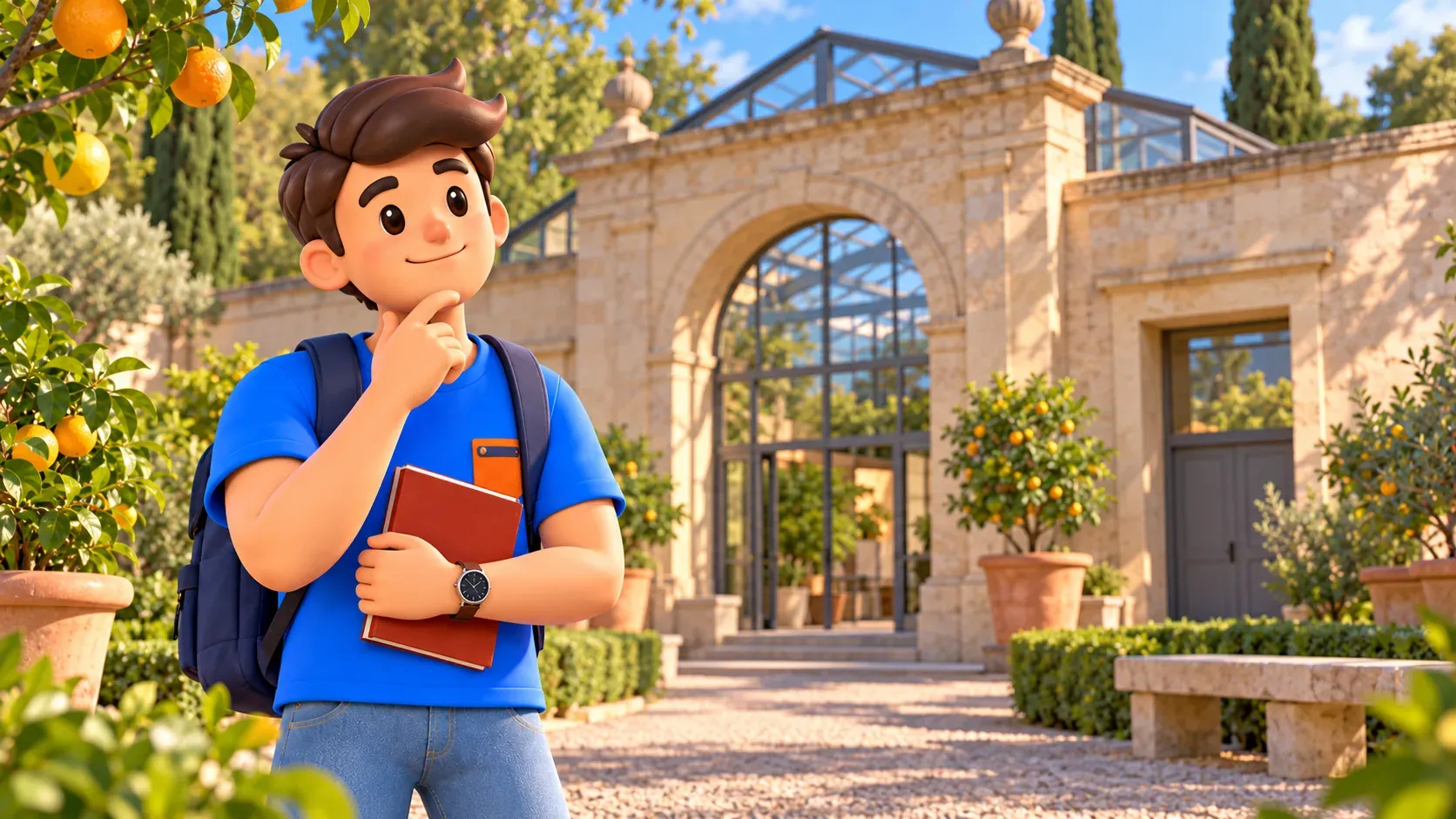
If the selected public route brings you to the limonaia, allow roughly fifteen to twenty-five minutes for a chosen external observation. Its older purpose was practical: protecting citrus trees. Under Poggi’s nineteenth-century estate renewal, that function received a representative architectural form. The facade’s rhythmic openings connect arched and rectangular elements. You can understand the building as a link between parts of the garden, rather than treating it as an isolated decorative object or assuming that a citrus-related name promises a display of plants inside today.
After public ownership, a project associated with Giovanni Michelucci and Bruno Sacchi rethought the structure for cultural use. Beginning in the 1970s and realised later, it preserved the historical envelope while introducing a different construction logic in metal and glass. This gives the place a useful twentieth-century layer. The important contrast is between inherited walls and a new public purpose.
The building’s cultural role does not guarantee a performance, open interior or access to every stepped area. Check the current programme if a particular event is your reason for coming and allow its own time. The basic park version is an outdoor plan. It can remain worthwhile when the limonaia is seen only from an allowed public position. A name or photograph should not silently add entry to the itinerary.
Compare the open landscape if it suits your scope
A selected look towards the more open garden can add around twenty to thirty minutes with connections, depending on your entrance and path. Reduce another element or enlarge the visit if necessary. The curving landscape approach offers a different rhythm from the older grove, allowing you to think about nineteenth-century taste rather than simply describing one side as natural and the other as artificial. Both involve choices about movement and setting. You can compare enough to understand that difference without walking every possible line across the property.
Do not automatically add a villa interior, another park or a long cross-city return. The full ninety-minute to two-hour range already combines orientation, selected walking, one architectural stop, rest and a return. Taking the upper end of every possible section or exploring both areas extensively will exceed it. The value is in choosing a coherent amount. If the limonaia or the slope is your main interest, let that choice set the balance rather than trying to make all the landscape equally complete in one visit.
RoadMe is more useful than a list of nearby parks when you need a complete personalised trip: your interests and pace determine how green time, architecture, museums and rest fit together. Prepare the itinerary beforehand and download the useful content for offline access, so less effort goes into arranging the day while you are walking.
Leave time for rest and the actual return
Reserve roughly fifteen to twenty minutes for a modest rest and twenty to thirty for returning to the confirmed public exit or suitable onward connection. These are editorial allowances, not promises of seats or a measured path. Choose appropriate rest opportunities as they exist and follow local rules. A nearby patch of shade, lawn or step is not automatically an authorised place to sit or eat. Carry what you need for the conditions and plan any purchase through real availability rather than assuming a service at the exact point where the schedule suggests a pause.

A loop is useful only if the actual open paths make it comfortable. Returning along a familiar route is a valid choice, especially when it keeps the exit clear. Your onward journey to accommodation, a meal or a next appointment needs separate time. If you use transport for either direction, check the current service and real boarding point rather than relying on an assumed connection at the park boundary.
Choose the version the day can support
After rain, consider sloping paths and stairs; in heat, reduce exposed movement and put water and rest first. Villa Strozzi’s park should not be sold as an entirely flat or certified step-free outing. Check an approach suitable for your mobility and current visitor information. If conditions make the wooded part uncomfortable, choose a smaller allowed area or another outing. A park visit is useful because it fits the person and the day, not because a green label makes every route automatically easy.
For a larger landscape with a different character, the Cascine Park walk gives the western river setting its own plan. It is an alternative, not an extra automatically attached to this one. Boschetto’s subject is the relationship between an older grove, a later landscape garden and a limonaia adapted for cultural life. Choose enough to see those layers, keep the finish practical and let the rest of Florence retain its own place in your trip.


