
Florence in two days: the historic centre and the other side of the Arno
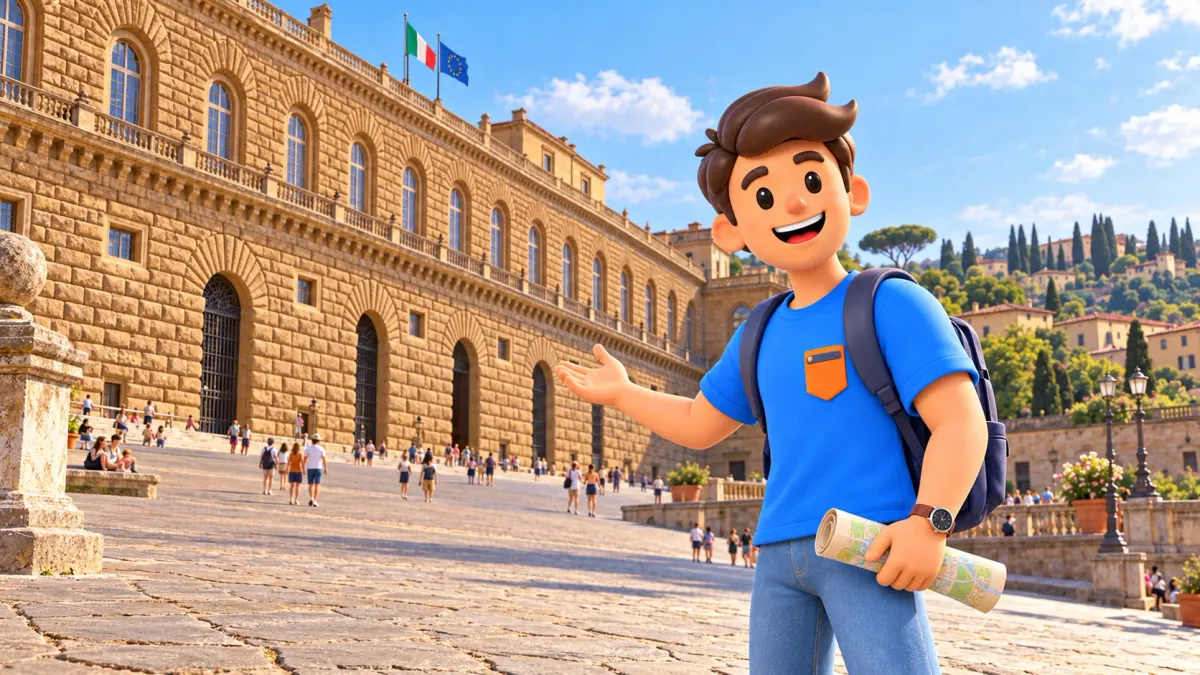
Give the first day in Florence to the cathedral and the northern part of the centre. Use the second for Piazza della Signoria, your chosen southern cultural visit, the Arno and a manageable part of Oltrarno. Each day has its own geographical shape and one main indoor experience.
The outline assumes two substantial days available for sightseeing. Arrival and departure days may need a smaller programme. It can accommodate the Accademia on the first day and the Uffizi on the second if art is the priority; equally, you can choose one collection and give the other day more street or garden time. The suggested durations are editorial allowances, not measured journeys or promises of available bookings.
Build two connected days around two decisions
Choose the experience that deserves close attention on each day. For the first, this might be David at the Accademia, a different northern museum or a particular cathedral visit. For the second, decide between a substantial art collection and a greener afternoon. The museum names are options within the plan, not a requirement to book every familiar attraction before you have considered your interests.
Make these decisions before filling the spaces between. Actual opening days and reserved entries determine the final sequence. Around them, group nearby streets and squares. This is especially useful for a short stay: a few clear geographical clusters leave less of the trip dependent on repeated crossings of the centre. Your accommodation and transport arrangements may change the most comfortable starting point without changing the basic division.
Putting the whole two-day trip together is much more convenient in RoadMe: the app develops a complete personal programme around your interests, dates and pace. The main visits and the walking between them become one coherent itinerary that is easy to keep with you during the stay.
If you have only one full day after travelling, the one-museum Florence day is a more suitable starting point. Two calendar dates do not automatically provide two complete sightseeing days. Begin with the time you really have, including the journey back to your accommodation or departure point, then decide how much depth each day can comfortably contain.
Day one: begin with your northern cultural visit
If seeing David is important, start the cultural part around the Accademia and San Marco, using the actual entry you have booked. Give the visit enough room to look rather than treating the original as a quick photograph. Around an hour to an hour and a half can be a starting allowance for planning, adjusted to your interests and the current visiting arrangements. Entry procedures and any waiting need their own margin.
The point of this first appointment is a clear encounter. Notice how sculpture occupies space and how a work changes when you move around it where permitted. You do not need a specialist vocabulary to look attentively. Choose one detail that makes the original different from its familiar reproduction and let that be a meaningful beginning before the day expands into streets and architecture.
If the Accademia do not match your interests, the San Marco area offers other possible cultural directions. You might prefer painting in a historic religious setting or an architectural walk near Santissima Annunziata and the Innocenti. Choose an alternative rather than adding all of them to the same morning. A northern starting area is useful because the surrounding places can stay together in your plan, whatever your chosen theme.
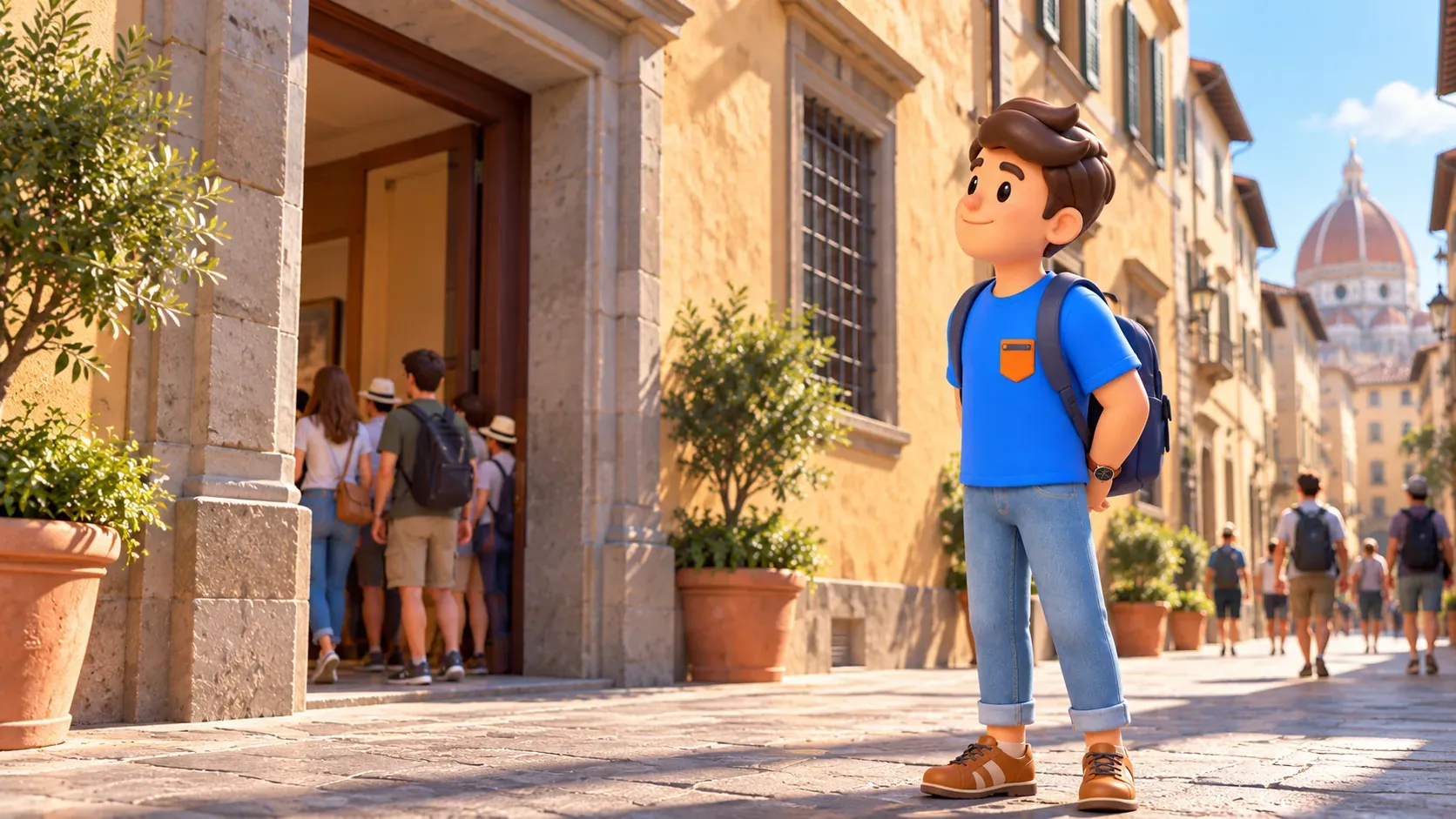
Give the cathedral district a separate moment
Continue towards Piazza del Duomo when it fits your fixed visit. The ensemble brings together Santa Maria del Fiore, Brunelleschi’s dome, Giotto’s bell tower and the Baptistery. Begin by seeing their different volumes and their relationship with the square. The cathedral represents several periods of construction and decoration; the dome gives a distinct Renaissance engineering focus. A few historical anchors help without requiring an entire chronology.
An exterior stop can take roughly half an hour as a planning allowance. If you want a cathedral interior, museum or climb, decide exactly which experience matters and assign it a separate, realistic period. These are not interchangeable forms of one visit. A dome climb also changes the amount of physical effort in the day. The first morning’s art visit does not make every further component a casual addition.
Take lunch before turning the afternoon into another full set of obligations. Choose something on the practical route towards your next area, leaving time to sit. A proper meal can be the point at which your attention returns to ordinary streets after the intensity of sculpture and monumental architecture. The day benefits from that difference in rhythm, especially if the morning began with a timed appointment.
Spend the first afternoon on one nearby direction
San Lorenzo provides a useful continuation if the Medici story interests you. The basilica area and Palazzo Medici Riccardi show how a family’s presence took shape in religious and domestic architecture. You can look at the surrounding streets and exterior forms without combining every chapel, library and palace collection. Choose one thread that helps you understand the neighbourhood instead of treating all the related names as one necessary visit.
Alternatively, stay with Santissima Annunziata and the Innocenti if public space and early Renaissance architecture appeal more. Look at the relationship between the square and its regular architectural edges. The experience differs from entering another major collection: proportions, repetition and the space people cross become the main subject. Giving the afternoon one direction keeps it clear and prevents a small geographical area from turning into a long sequence of appointments.
End the first day with enough room for your evening and the return to your accommodation. A gentle walk through the western centre or a pause near Santa Maria Novella can suit some starting points; it is not compulsory for every visitor. Resist adding the hill viewpoints only because there are hours left on the clock. Attention, energy and the next morning’s plan are also resources worth considering.
Day two: change the subject at Piazza della Signoria
Start the second day around Piazza della Signoria if it suits your chosen museum slot. Palazzo Vecchio gives the square its civic focus; the Loggia dei Lanzi and outdoor sculpture make art part of a public setting. This is a different story from the cathedral district, even though the two areas are close. The contrast between religious and civic spaces gives the second day a clear new theme.
Allow time to look at the palace against the open square, then choose one sculpture or architectural detail. A gesture, a pose or the depth of the loggia can offer a small viewing task. You do not need to identify every figure before moving on. The square can provide a meaningful exterior visit without an additional palace entry, particularly when a substantial collection will follow.
If you have chosen the Uffizi, continue towards its entrance according to your reservation instructions. The building originated as administrative offices near the centre of government, which helps explain its place between the civic square and the river. This short connection gives useful context before the paintings. Keep some margin for the actual entry process instead of treating a familiar façade as a guarantee that you already know the right access.
Choose the Uffizi or reserve more time for a garden
For the Uffizi version, allow roughly two to three hours to explore according to your interests. Select a theme or a few works before the visit rather than making the collection a test of endurance. Botticelli, the treatment of space or the changing human figure can each provide a thread. Leave room for a picture you did not expect to like; that discovery can become as memorable as a celebrated work.
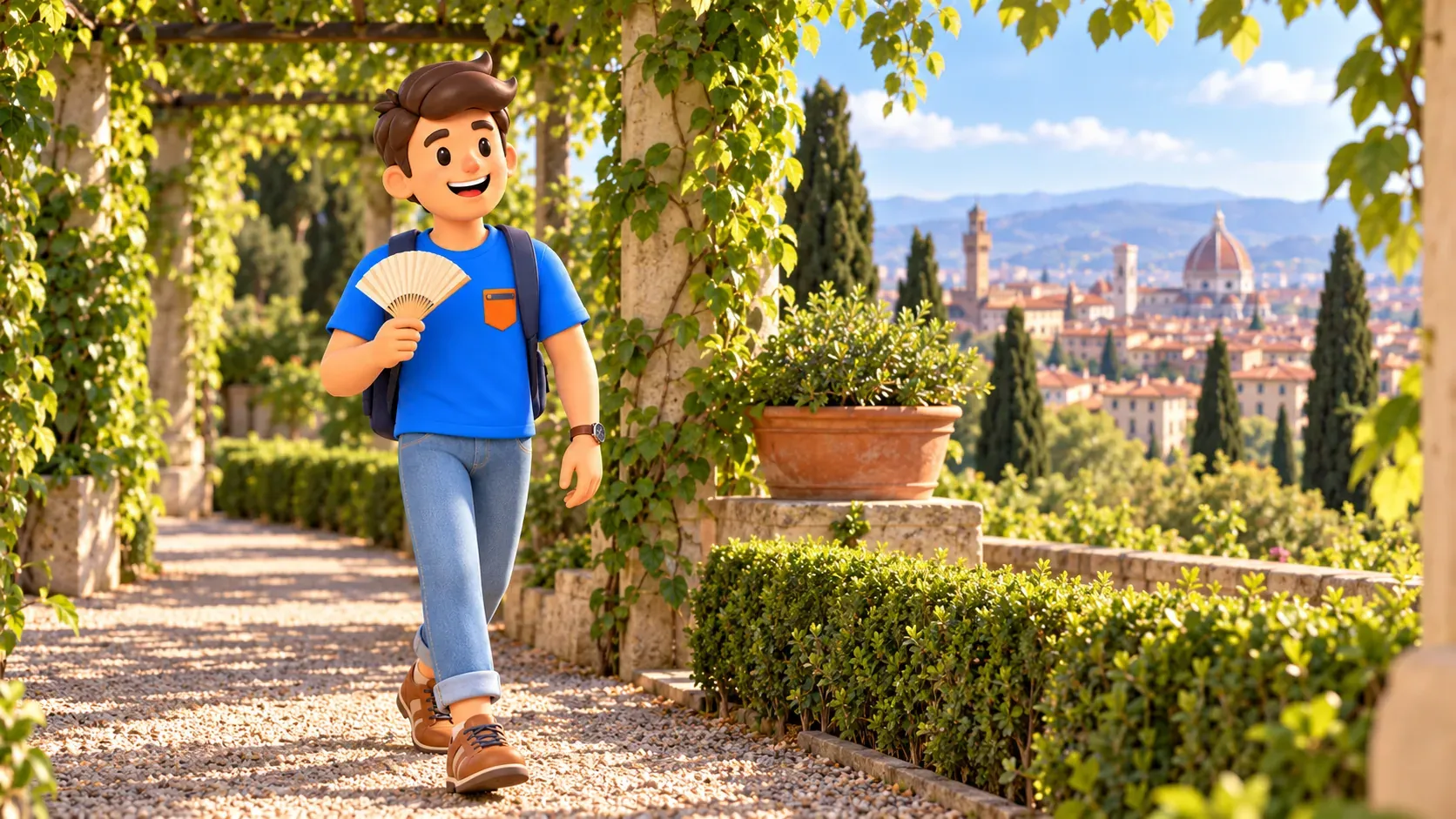
If one museum on the first day already satisfies your main art interest, give the second a different character. An exterior Signoria stop, a river crossing and time in a garden can form a substantial programme. Boboli and Bardini are separate choices, with paths and changes in level that deserve their own allowance. Select a garden rather than placing both automatically after a major museum and a neighbourhood walk.
Lunch belongs visibly in either version. Choose an available place that suits your actual route and time, check the menu and take a proper break. The afternoon will be easier to enjoy when the morning has a clear ending. It is reasonable to decide over lunch whether the rest of the day should be a shorter neighbourhood stroll or the garden experience you selected earlier.
Cross the Arno into a small part of Oltrarno
Ponte Vecchio connects the central spaces with the opposite bank and offers a change of scale. Look at the bridge as a built fragment above the water before concentrating on its shops. An available riverside viewing point may show the overall structure more clearly than standing in the busiest part of the crossing. If you stop for photographs, leave the pedestrian route clear for people continuing across.
For a neighbourhood finish, continue towards Piazza della Passera and Santo Spirito. Allow perhaps an hour to an hour and a half with pauses, treating that as an estimate. The value is in moving from major institutions to streets and a square where you can linger without another entry time. Pitti Palace may fit as an exterior stop; its collections are a separate visit and need a new decision.
San Frediano and San Niccolò offer other directions for a different visit or a changed afternoon. Do not assume that the whole of Oltrarno is one compact stop. Choose the section that agrees with your interests and onward journey. If the garden is your main afternoon experience, shorten the neighbourhood part so that both the paths and the streets receive attention rather than being connected only by hurried walking.
Keep an ending that fits the trip
You can finish by the river or with a pause near your chosen Oltrarno square. Piazzale Michelangelo is an optional separate outing, with an approach, gradients and a return that should be visible in the plan. It is not an automatic sunset requirement for the second day. Choose the hill if the view genuinely matters and the remaining time and energy make the outing comfortable.
In rain or heat, change the balance between outdoor time and rest. For children, mixed-pace groups or limited mobility, consider actual surfaces, entrances and stairs individually; this outline does not certify step-free access. Avoid placing the last optional activity against a train departure with no margin. Ending early enough to enjoy the final moments can give a better memory than using every available minute for one more landmark.
Using the full trip is easier and more effective in RoadMe, where your interests and preferred pace become a personal day-by-day programme. Download Florence in advance while connected to the internet if you want maps and navigation available offline afterwards.
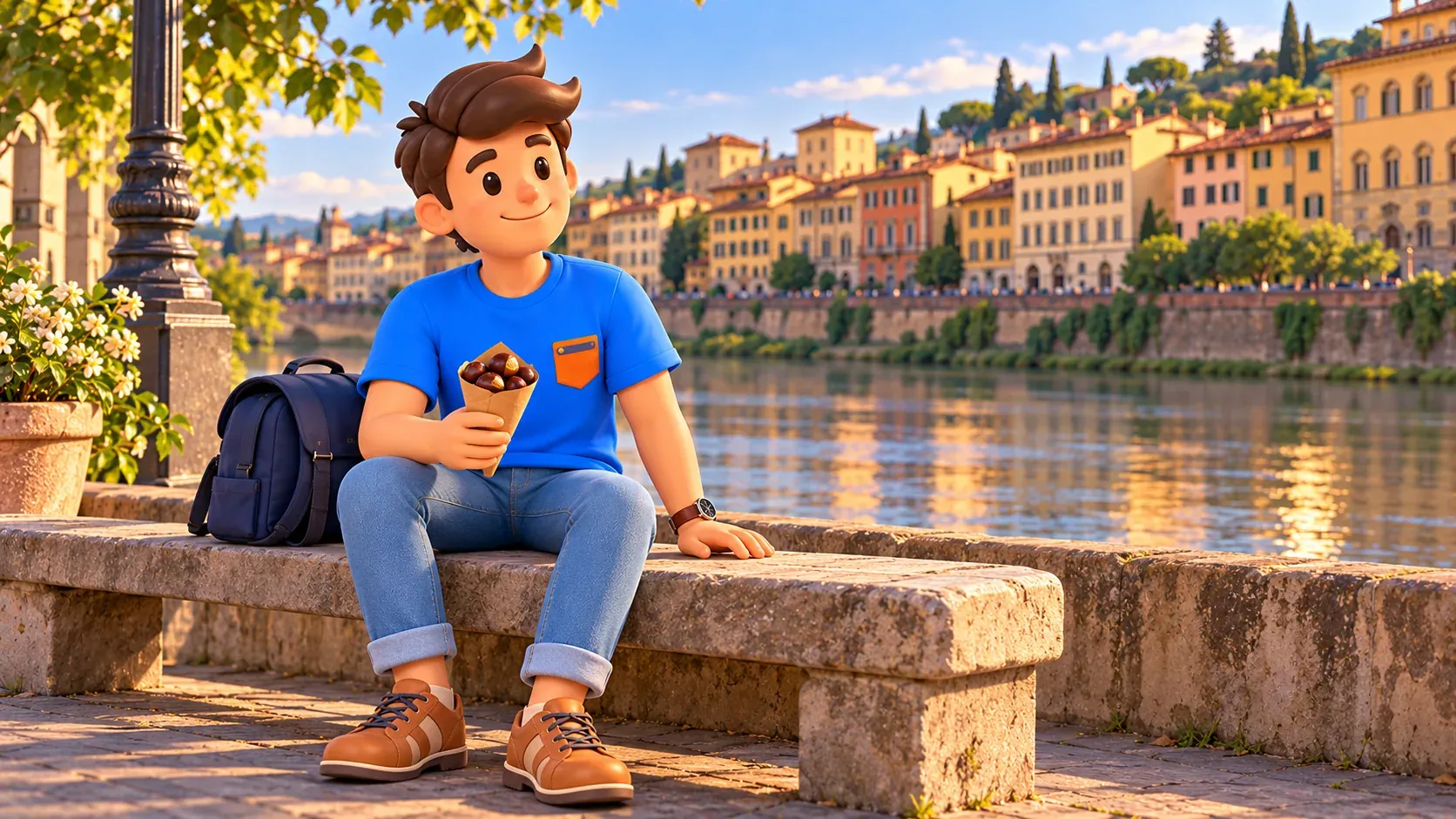
Before leaving, think about what the two days have connected: a northern cultural encounter, the cathedral’s architecture, civic space, art, the river and another neighbourhood. Your version may contain fewer museums or more garden time than someone else’s. That difference is the purpose of choosing deliberately. Two clear days give Florence several ways to stay in memory, without asking a short visit to explain every corner of the city.


