
Florence in one day: one museum and a walk through the city
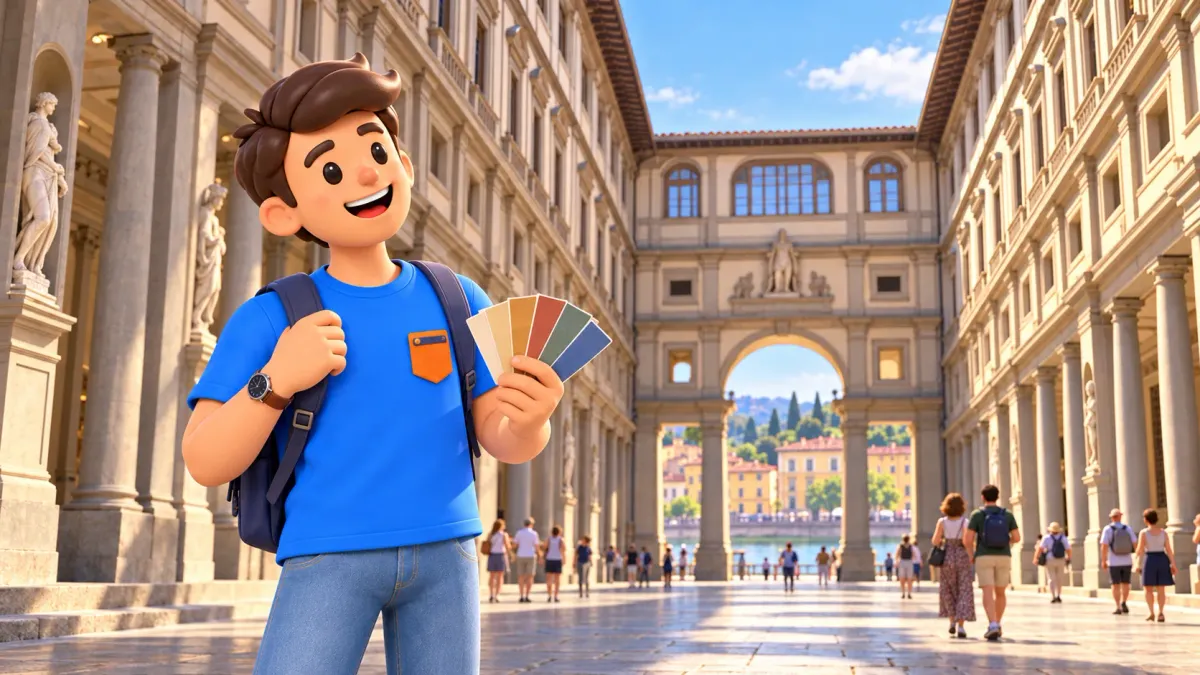
One day in Florence can combine a rewarding museum visit with a real impression of the city outside. Choose one collection as the centre of the day, then connect it with the cathedral district, Piazza della Signoria, the Arno and a small part of Oltrarno. The museum gives the day depth; the walking gives those works a setting in the streets and buildings around them.
This outline is intended for a substantial day in the city, with time from morning into the late afternoon. Your actual arrival, departure and reserved entry determine what fits. It uses the Uffizi as the main version and explains how to adapt the sequence if the Accademia matter more to you. All suggested visit lengths are editorial planning allowances, not measured experiences or guarantees about entry conditions.
Give the day one fixed cultural centre
Begin by choosing what you want to see closely. For painting, the Uffizi offer a broad encounter with Renaissance art. For a personal meeting with Michelangelo’s David, choose the Accademia. Either can provide the main experience without requiring the other museum to be added automatically. One attentive visit leaves room for Florence to be a city as well as a collection of famous works.
Treat your chosen museum’s actual opening and booked slot as the fixed point. Put walking and lunch around that appointment. For the Uffizi version, a useful sequence is the cathedral area first, then the civic centre, the museum, a proper lunch break and the opposite bank. If your available slot changes that order, keep nearby places grouped rather than crossing the centre repeatedly to preserve an imagined ideal timetable.
Organising the whole day is much more convenient in RoadMe: the app works out a complete personal itinerary around your interests, dates and comfortable pace. Your main museum and the surrounding walks can become one considered programme instead of separate pieces you have to fit together yourself.
If you discover that you have only a small part of the day after travelling, reduce the scale. The two-hour Duomo to Ponte Vecchio walk offers an exterior introduction with a different purpose. A short first encounter can be enjoyable without pretending that a major collection and a complete afternoon fit into the remaining hours.
Start around the cathedral with a clear viewing aim
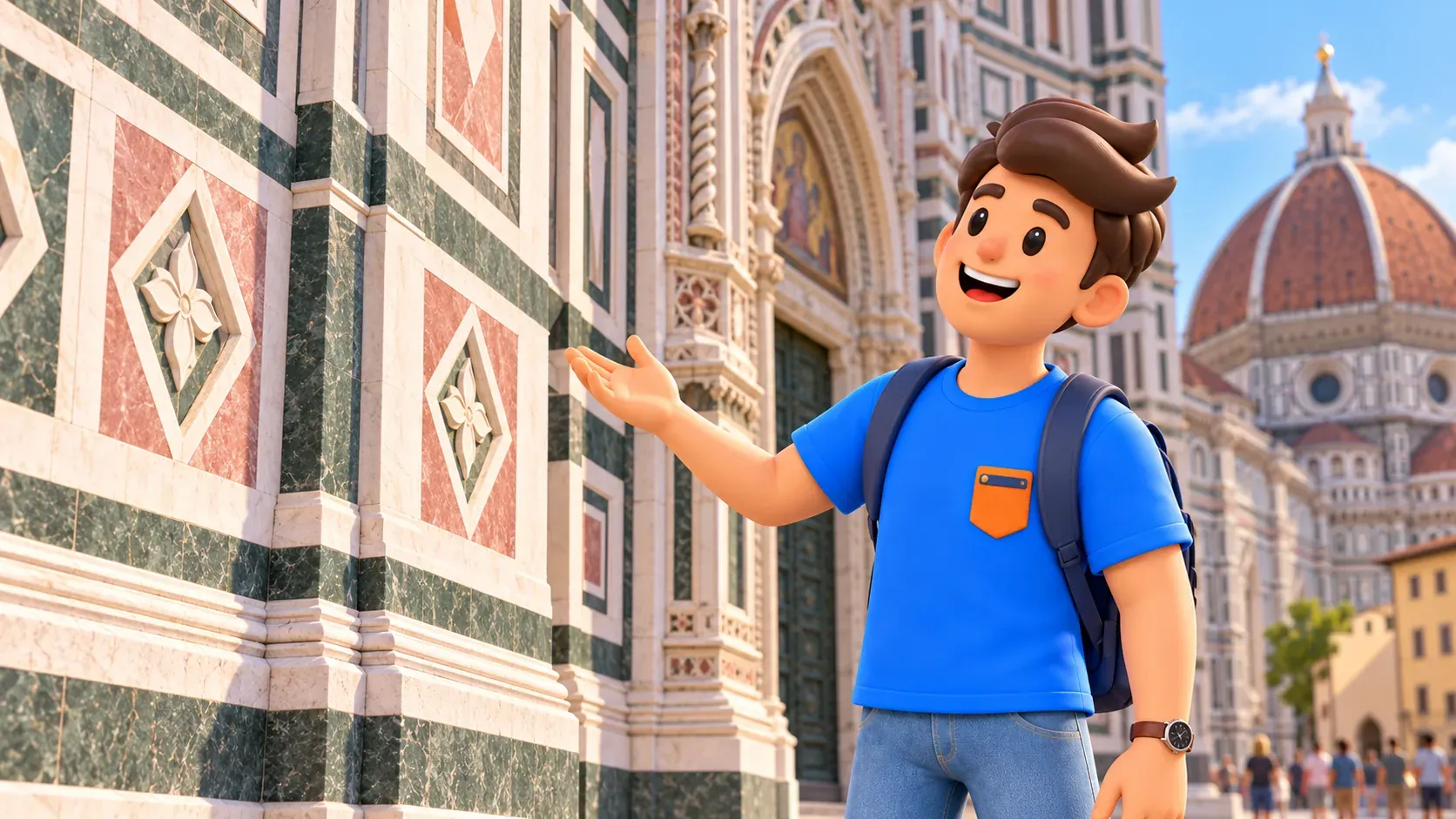
Use the first part of the morning to understand Piazza del Duomo. Santa Maria del Fiore, Brunelleschi’s dome, Giotto’s bell tower and the Baptistery are separate elements of one ensemble. Looking at their relationship gives the start a clear subject. Allow roughly half an hour for an exterior introduction, adjusting for your actual museum appointment and the time you reach the square.
Notice the contrast between the long church body and the vertical elements above and beside it. Then choose a detail in the marble patterns rather than trying to record every surface. The cathedral grew through several historical periods; the dome brings in the story of Renaissance engineering. These brief anchors make the view more meaningful without turning the first stop into a full architectural lesson.
A dome climb would become another major event in the same day. If that is your personal priority, make it the fixed visit and reconsider the museum plan. For this museum-led outline, the outside of the ensemble is enough. You can appreciate a building’s presence in the city while leaving its interiors, construction history and separate collections for a longer visit.
Connect the cathedral with the civic centre
Walk towards Orsanmichele and Piazza della Signoria through the central streets. Keep this transition compact before a timed museum entry. Orsanmichele’s history combines a grain market, religion and the guilds of Florence, which gives the exterior a different character from the cathedral. A brief look at its mass and sculpture niches can add another layer without creating a second interior appointment.
At Piazza della Signoria, notice how Palazzo Vecchio and the open square present civic power. The loggia and sculpture create a public artistic setting that differs from the quiet attention you will need inside a gallery. Choose one visual comparison: the palace against the open space, the covered loggia beside the piazza or a figure’s gesture against the surrounding architecture. Keep the rest for another walk.
Allow a little room before your museum slot for finding the correct entrance and following the current entry procedure. The Uffizi’s exterior spaces lead towards the Arno, but their public architectural relationship is not the same thing as a ticketed entrance arrangement. Check the instructions for your actual reservation instead of assuming that the building’s familiar name makes every doorway equally useful.
Give the Uffizi your attention, not just your steps
For the main version, allow roughly two to three hours for the Uffizi, adapting the visit to your own attention and interests. This is a suggested visit length, not an admission promise. Choose a small set of works or themes before entering: perhaps Botticelli, the treatment of landscape, the changing human figure or the way painters organise a story. A viewing aim makes the large collection easier to approach.
The museum building also helps explain Florence. The complex originated as administrative offices close to the centre of government, and its architecture links the civic square with the river. That relationship adds context to the collection rather than competing with it. You can carry a sense of the city’s power and patronage into your encounter with the pictures without learning every date associated with the site.
Inside, give yourself permission to linger and to pass other rooms more lightly. Trying to see every work at the same speed can turn a museum into a sequence of labels. A few moments of close looking often stay clearer in memory. Notice a face, the direction of light or a small narrative detail, then let another picture answer it. The experience can be personal without becoming an examination.
When attention starts to fade, conclude deliberately rather than waiting until tiredness decides for you. The afternoon still contains walking and another part of the city. Keep any additional collection, special visit or corridor experience separate from the basic plan. It needs its own confirmed access and time, and should not appear invisibly within an allowance intended for your chosen museum visit.
Make lunch a real change of rhythm
After concentrated looking, give lunch its own place. Around forty-five minutes to an hour can provide a useful planning allowance, depending on how you want to eat and the service you choose. The important point is allowing a seated break rather than assuming that the whole day will run on food eaten while walking between appointments. You will enjoy the streets more when you have genuinely paused.
Choose an operating place along your practical onward route, look at the menu and decide what suits your time and budget. A particular celebrated table is not necessary for this programme to work. Avoid using the break to add another distant destination unless food is becoming the main afternoon interest. It is reasonable for the museum and the meal to be the two most substantial parts of the day so far.
This is also the moment to reassess the afternoon. Would you prefer a neighbourhood, a garden or a river walk? Choose one main direction and keep it comfortable. You do not have to preserve a plan made before you knew how the morning would feel. The rest of the day becomes easier when the change is deliberate instead of an accumulation of small detours.

Cross into a manageable part of Oltrarno
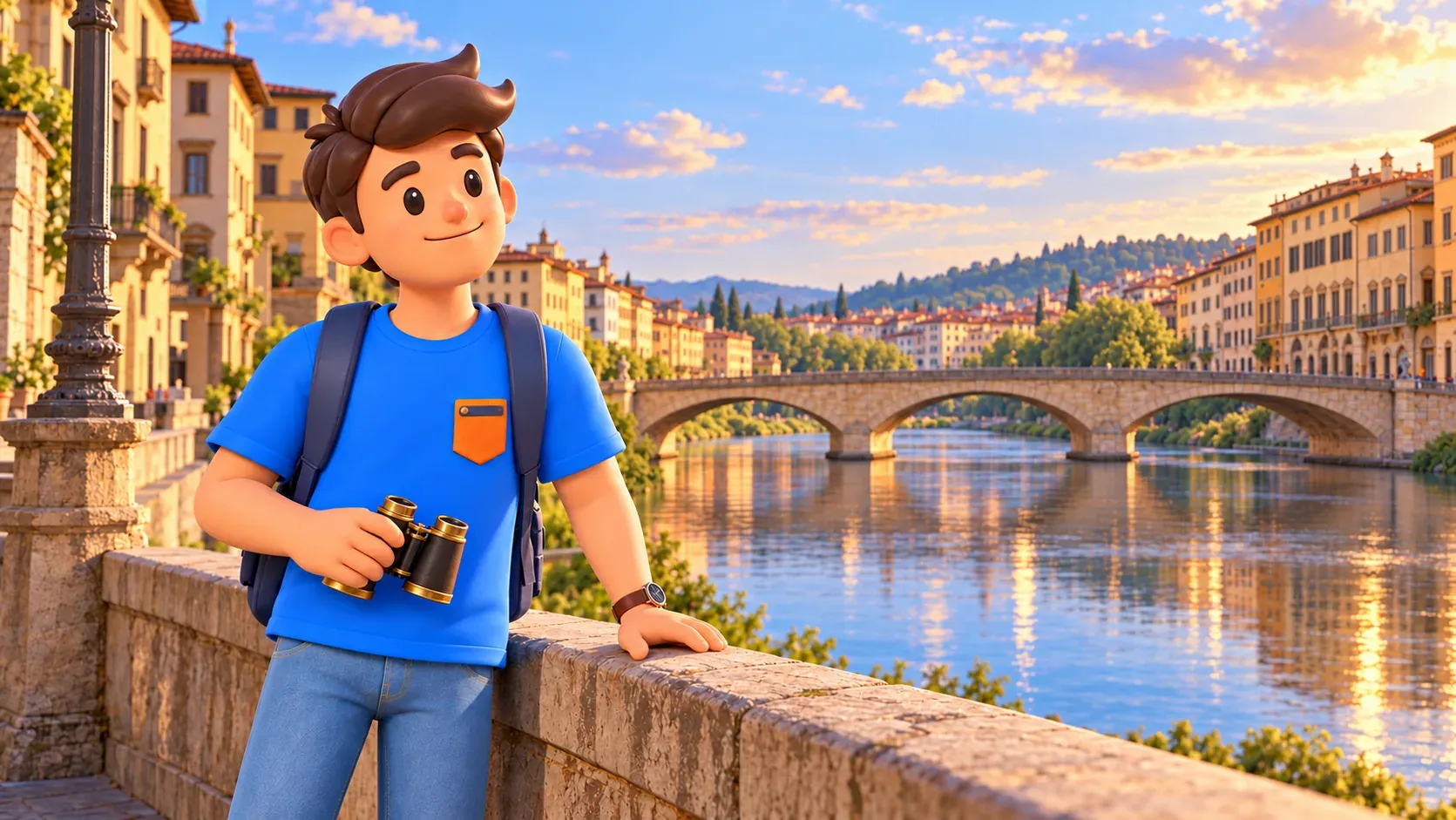
Ponte Vecchio offers a natural connection to the opposite bank. Look at it as a built piece of the city above the Arno before concentrating on individual shops. A suitable riverside position can reveal the overall shape, while crossing gives a different sense of its narrow public space. Use whichever view is comfortable and allow other pedestrians to pass when you stop for a photograph.
Continue towards Piazza della Passera and Santo Spirito if you want a neighbourhood afternoon. The interest lies in the change from large cultural institutions to streets, façades and a square where you can spend a little unstructured time. Give the area perhaps an hour to an hour and a half including pauses, rather than trying to attach every Oltrarno attraction to one short crossing of the river.
Pitti Palace can fit as an exterior architectural stop. Entering its collections or the Boboli Gardens would be another substantial choice. If a garden matters more than a neighbourhood walk, select that instead and assign it proper time. The purpose is a balanced day with a few connected experiences, not the maximum number of named places reached before evening.
Choose a comfortable ending rather than a last rush
A river view or a final pause around Santo Spirito gives the day a natural finish. If you still want more walking, choose a short continuation that agrees with your onward journey. The hill around Piazzale Michelangelo is a separate option, with an approach, changes in level and a return. It should not become an automatic sunset obligation after every museum-led day.
In hot weather, rain or simple fatigue, shorten the outdoor programme before enjoyment disappears. With children or a mixed-pace group, agree on the next comfortable pause rather than asking everyone to maintain one person’s speed. This outline does not certify step-free access; surfaces, kerbs, stairs and the actual entrances of your chosen visits need individual assessment. Comfort is part of selecting the right scale for the day.
Using the complete trip is easier and more effective in RoadMe, where your interests and preferred pace become a personal programme for the time available. Download Florence beforehand while online to keep maps and navigation available offline during the visit.
If the Accademia are your main priority
Start the cultural part near the Accademia instead of adding that museum to the Uffizi version. After your chosen visit, move towards the cathedral and continue south through the centre to Piazza della Signoria and the river. The streets around San Marco can provide the beginning of this version, while the same Oltrarno afternoon remains optional according to time and energy.
The key change is the day’s centre of gravity. One version gives painting a longer main visit; the other places the encounter with David first. Neither needs to prove that it is the only correct introduction to Florence. Keep the main experience, the connecting streets, lunch and the way back visible. A day you can enjoy attentively is a stronger beginning than an impressive list you can only complete by hurrying.


