
Santo Spirito in two hours: squares, lanes and Pitti Palace from outside
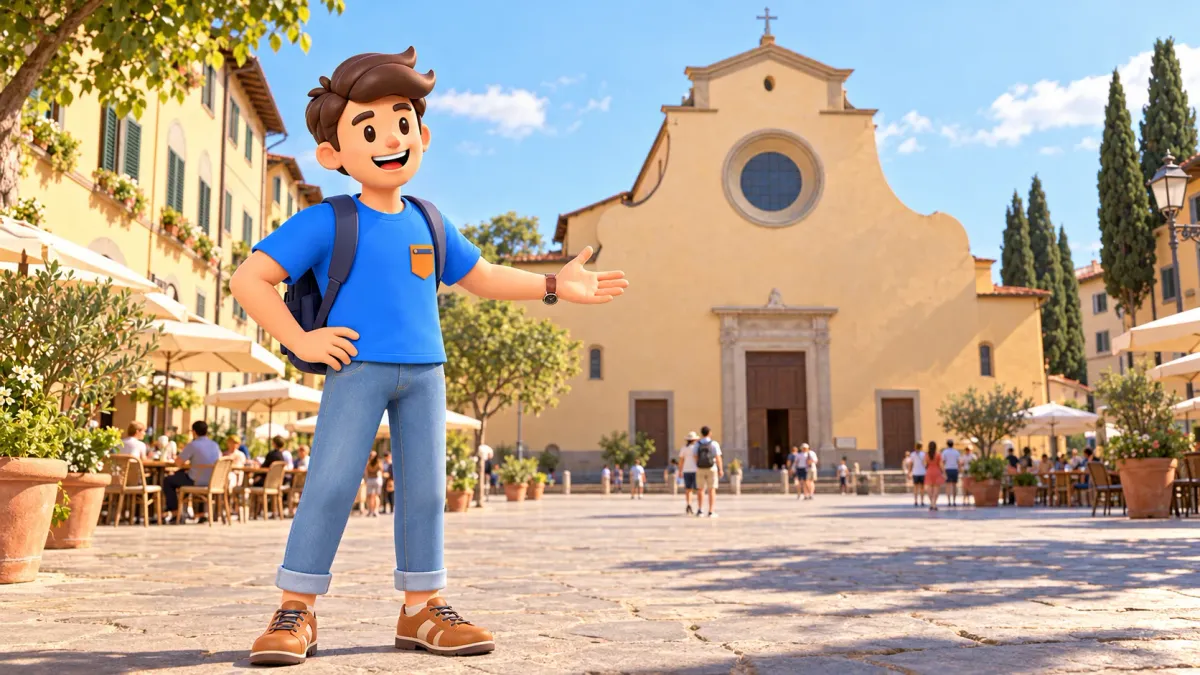
Two hours around Santo Spirito can introduce a compact part of Florence’s south bank without becoming a tour of all Oltrarno. Start at the southern end of Ponte Santa Trinita, move towards Piazza Santo Spirito, see Pitti Palace from outside and return towards Piazza della Passera and Ponte Vecchio. The sequence changes scale several times: river, neighbourhood square, large palace front, then smaller streets and another bridge. It is an outdoor walk with room for a short seated pause.
The two-hour allowance is an editorial planning estimate, not a measured route. It includes looking and a small refreshment stop, but not a full meal, palace museum, garden or substantial church visit. Begin after reaching the south-bank start; your journey there and onward travel after the finish are separate. If you want one interior to become the main event, reduce the rest and calculate that visit on its own conditions rather than adding it automatically to these two hours.
Keep one small part of Oltrarno as the whole subject
Oltrarno is a broad area with several different directions. Santo Spirito, San Frediano, San Niccolò and the gardens do not have to fit into the same short walk. This version follows a small part of the area around Santo Spirito and Pitti. Its appeal comes from changes between ordinary streets and larger public spaces. You can see something coherent without claiming to have found every craft workshop, café, historic doorway and quiet corner on the other side of the Arno.
Give the outline a clear beginning and end. The south end of Santa Trinita introduces the bank; the north end of Ponte Vecchio can finish it after your final crossing, if that fits the next destination. You can also end on the south bank before crossing. Decide which makes sense for the actual day. A route does not become more complete merely because it returns to its starting point, and unnecessary backtracking uses time that could belong to looking or rest.
Planning the full trip is much more convenient in RoadMe: the app develops a personal itinerary around your interests, dates and preferred pace. A Santo Spirito walk can become the neighbourhood part of a coherent day, with cultural visits and pauses arranged for you rather than assembled from several separate lists.
If you are coming directly from the gallery, the walk after the Uffizi offers a gentler choice of shorter or longer versions. This article is for giving Santo Spirito and its surroundings their own two-hour subject. You can use it independently of a major museum morning, perhaps when you want architecture, a little walking and time to notice a square before moving on.
At Santa Trinita, begin with the river
Start at the southern end of Ponte Santa Trinita once you have reached it safely by a suitable public route. Allow around ten minutes for the bridge setting and a first look towards the river. The open form provides a contrast with the more densely built Ponte Vecchio nearby. Notice the low arches and the relationship between water, banks and palace facades. This can be a compact introduction, without requiring a full account of every building visible from the bridge.
Santa Trinita’s story includes Renaissance design and later reconstruction after twentieth-century destruction. That context adds a second layer to the view: the present bridge is also a decision to recover a lost urban form. Keep the history brief and let the setting remain the main experience. There is no promise of an empty parapet, a particular light or a perfect photograph. Choose a public position that allows other people to pass, and follow the actual arrangements at crossings and on pavements.
Move towards Santo Spirito without collecting every doorway
Allow roughly fifteen minutes for the connection towards Piazza Santo Spirito and a little observation along the way. Use the public route that suits actual crossings, surfaces and your mobility. The point is to notice a smaller street scale after the river, not to make every turn a named attraction. Upper windows, stone surrounds and the way building fronts define a street can provide enough interest. Keep walking and stopping comfortable for the people who use those spaces daily.
The area’s craft associations can be part of the atmosphere, but this outline does not promise an open workshop or a demonstration. A shop and an artisan’s working space have their own conditions. Look from public areas and ask before entering or photographing people at work where appropriate. You do not need to purchase an object to justify the walk. Equally, a real interest in a business may deserve more time, in which case shorten a later stop instead of assuming that every unplanned encounter fits for free.
Piazza Santo Spirito: give the square twenty-five minutes
Piazza Santo Spirito deserves the main pause of the walk. Around twenty-five minutes can allow an exterior architectural look and time to understand the space. The square developed around the Augustinian community and the basilica associated with Brunelleschi’s design. That connection joins public life with a major chapter of architecture. Instead of beginning with a long list of interior works, look at how the church and surrounding fronts give the square its particular shape and scale.
The basilica’s restrained exterior offers a marked change from the cathedral’s marble front. You can appreciate that difference without turning one into a better or more authentic Florence. Different buildings answer different histories and purposes. Notice the silhouette, the central opening and the relationship between the facade and the open area before it. Move to another suitable position if it helps, while leaving church access and other people’s activity clear. A few comparisons can be enough to make this stop memorable.
The square’s daily life changes. A particular market, event, quiet atmosphere or available table is not guaranteed by the name of the place. Look at what is happening on your day. If you want to enter the basilica, check actual access and give it separate time. A substantial interior visit changes the two-hour calculation. For the core outdoor version, the exterior and the square are already the main experience, and there is no need to add an entrance simply because the door is nearby.
From a neighbourhood square to the scale of Pitti
Allow around fifteen minutes for the connection towards Piazza Pitti, including small pauses and orientation. The shift in scale matters. The broad palace front and the open space before it feel different from Santo Spirito’s neighbourhood setting. Stop in a suitable public position and let the building’s mass become apparent. You can look at repeated openings, the treatment of stone and the long horizontal spread without approaching the museum entrance or deciding that you must now go inside.
Pitti began with a family name and later became a residence of the Medici and subsequent ruling dynasties. That short context explains why this is more than a large private house. Architecture can express the position and ambitions of a court, just as civic buildings across the river express other forms of authority. About fifteen minutes outside can support a clear first encounter with that difference. You do not need to reproduce the palace’s complete ownership history to find the facade interesting.
Keep the palace museums and Boboli separate from this walk. They are substantial experiences with their own time, access and interests. Being outside Pitti does not mean you are already halfway through visiting its collections, and a garden is not a small shortcut attached to the square. If either becomes the real priority, let it replace part of the programme. Otherwise, keep the exterior stop complete in itself and continue towards smaller streets with the two-hour aim still realistic.

Piazza della Passera: let a small place stay small
Move towards Piazza della Passera, allowing roughly ten minutes for the transition and around fifteen for the place itself. Its compact scale contrasts with Pitti. The interest lies in the meeting of streets and the close relationship between surrounding fronts. The square’s present form belongs to a later reshaping of the dense historic fabric, a reminder that small atmospheric places are not necessarily unchanged fragments from a single ancient period. Keep that as a brief observation rather than a full urban chronology.
Choose a position that does not obstruct doors, tables or the ordinary movement of people. A small place can become crowded quickly, and its scale is part of both its appeal and its practical limits. You do not have to photograph every facade or attach a compulsory gelato stop. If refreshments appeal, choose an operating place and read its menu and service conditions. The short seated pause planned for this route can happen here or at another suitable point, depending on what you actually find.
Take a short seated refreshment pause within the time at Santo Spirito or Passera, rather than adding it after both squares. This is a small break, not a full restaurant meal. For a longer lunch, extend the programme or remove another section. Sitting, ordering and paying belong to the visit and need real time.
Finish towards Ponte Vecchio and leave a little flexibility
Allow roughly ten minutes for moving towards Ponte Vecchio and your chosen finish, adapting the exact connection to the public streets you use. Seeing the bridge after the palace and smaller square gives the sequence another scale change. Its trading buildings make it a street over water as well as a crossing. If you cross, do so with awareness of other pedestrians and end where it fits your next journey. Business opening is not required for the structure to remain an interesting part of the walk.
The suggested outdoor blocks total about an hour and fifty-five minutes, leaving a small margin within two hours. Include the seated pause within one square stop. These estimates depend on actual pace, crossings and attention; use them as a scale for the programme, not a stopwatch instruction. Longer meals and interiors remain additional.
If delays build, shorten a look or finish on the south bank. In rain or heat, adjust the outdoor time and keep rest available. With different walking speeds, choose the shared comfortable rhythm. This outline does not certify step-free access or guarantee quiet streets. A good small route stays usable when conditions change, without forcing you to hurry simply because an earlier pause was more enjoyable or a crossing took longer than expected.
Using the whole programme is easier and more effective in RoadMe, where your interests and pace shape a complete personal itinerary for the available days. Download Florence beforehand while connected if you want maps and navigation available offline, and give your preferred neighbourhood time to become an experience rather than a hurried list.

You can finish with three clear memories: a square around a church, a palace whose scale changes the street, and a smaller meeting of lanes before the river. That is a satisfying introduction to this part of Oltrarno. It leaves other quarters, gardens and interiors available for a future choice, while giving these two hours a definite character of their own.


