
After the Uffizi: a Florence walk for a change of scene
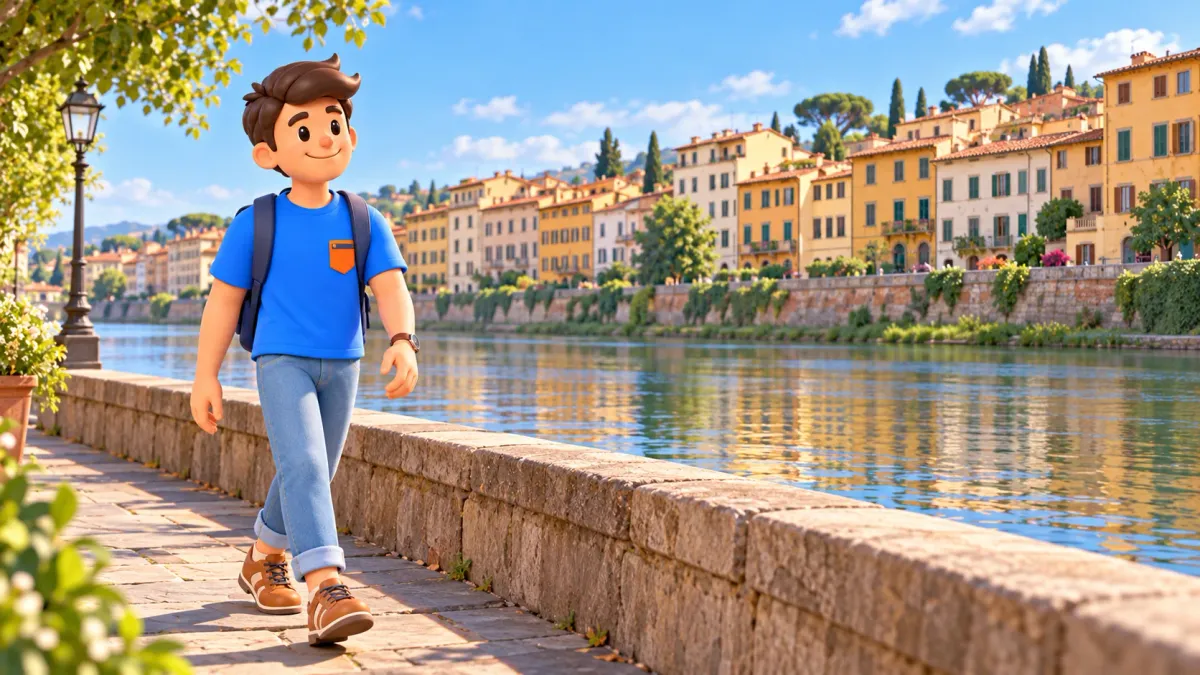
After the Uffizi, the best next experience may be something that asks less of your attention. A river view, a seated meal and a small part of Oltrarno provide a different scale after rooms of paintings. You do not need to follow a major collection immediately with another major collection. This walk starts from the museum’s surrounding area once you have actually finished your visit and offers two versions, depending on energy and available time.
The short version stays near the Arno and can take roughly half an hour to forty-five minutes outside. The longer version crosses Ponte Vecchio and continues towards Piazza della Passera and Santo Spirito, allowing around an hour to an hour and a half before any meal. All durations are editorial estimates, not measured journeys. You may finish sooner, remain on one bank or go directly to food if that is what the museum visit has left you wanting.
Decide what kind of break you need
Before adding another stop, notice whether you need food, water, sitting down or simply a wider view. These needs can point in different directions. If you are hungry, choose a meal before extending the walk. If your legs need rest, do not mistake an attractive riverside route for a seated break. If your attention is tired but walking still feels pleasant, a small outdoor sequence can change the rhythm without adding much new information to absorb.
Check where you have actually emerged from the museum and orientate yourself on the surrounding public streets. Follow current visitor arrangements rather than assuming a particular exit will always place you at the same starting position. Your next destination can be a suitable part of the north-bank riverside. Keep any later reservation visible in the plan. The free time after an Uffizi booking depends on the real length of your visit, not only its starting time.
Planning the full day is much more convenient in RoadMe: the app develops a personal itinerary around your interests, dates and preferred pace. A substantial Uffizi visit can sit beside a meal, river views and the neighbourhood you actually want, giving the whole day a useful rhythm rather than adding attractions simply because they are nearby.
If you are still deciding how much to put around a main collection, the one-day Florence plan with one museum provides the broader outline. Here the focus is the transition afterwards. A good next step should make the first visit easier to remember, instead of covering it with another dense set of names and rooms before you have had time to think.
Let the Arno widen the view
Start with a comfortable public position near the river, without blocking a pavement, crossing or passage. Look at the water, the opposite bank and the way buildings line the river. After indoor viewing, this change of distance can be enough. You can let your eyes move without identifying every palace. The purpose is a different kind of attention, not an additional lesson to complete before earning permission to stop for lunch.
The Uffizi’s location gives this transition meaning. The complex began as administrative offices close to the civic centre; its architecture also connects that centre with the river. You have just spent time with the collection, but outside you can notice how the building belongs to the city. The long perspectives and the opening towards the Arno offer a short architectural afterthought. Keep it brief if the paintings have already used most of your concentration.
Allow perhaps ten to fifteen minutes for this first riverside pause, adjusting freely. Do not promise yourself a particular sunset, an empty embankment or a bench exactly where you need one. Look for the conditions actually present. If standing is uncomfortable, make finding a suitable seated place the next task. A beautiful view does not replace rest, and this route should remain responsive to how the museum has affected your energy.

Short version: see Ponte Vecchio from the north bank
For a small continuation, move towards a suitable view of Ponte Vecchio without committing to a crossing. From the bank, the bridge’s built structure is easier to understand as a whole. Its rows of shops make it different from an open bridge whose arches and parapet dominate the impression. The river setting supplies the space needed to see that difference. You can appreciate the form without entering a shop or deciding where to go across the water.
Notice one simple feature: the relationship between the low arches and the buildings above, or the contrast between the enclosed street and its river openings. The bridge’s trading history gives it a character beyond the familiar photograph. There is no need to turn the pause into a full chronology or identify every later alteration. A few minutes of looking can leave an impression as distinct as a museum detail, because the object now sits in its larger setting.
The short version can finish here, followed by a meal or the journey back to your accommodation. Roughly half an hour to forty-five minutes covers an initial river pause, a small movement and a bridge view for many outlines, but your actual location and speed matter. It does not include eating or a long shopping stop. Finishing early is a valid choice after a demanding museum visit; the walk has already changed both scale and subject.
A different short view: towards Santa Trinita
If you prefer more river and less bridge-street activity, choose a continuation along the north bank towards Ponte Santa Trinita instead of crossing Ponte Vecchio. The point is another perspective, not accumulating crossings. From an appropriate public position, the distance gives Ponte Vecchio a different presence. Santa Trinita itself has a lighter, open form, with low arches that contrast with the densely built bridge nearby. Let that comparison be the entire subject if it appeals to you.
Santa Trinita’s history includes Renaissance design and twentieth-century destruction and reconstruction. That brief context gives the present bridge more depth without requiring a detailed stop at every feature. Look from the bank or cross only if it fits your onward direction. Add actual walking and return time to your chosen endpoint. If you intended only a short pause, there is no requirement to make this a loop across both bridges before you can leave the river.
Choose this version particularly when you want the view more than another neighbourhood. It remains an outdoor walk, with the conditions that implies. Heat, wind, rain and traffic at crossings can affect comfort. There is no promise that the route is shaded, quiet or suitable for every mobility need. Assess surfaces and crossings yourself, and shorten the distance or change to an indoor meal when that better answers what you need after the collection.
Longer version: cross into one small part of Oltrarno
If you still want to walk, cross Ponte Vecchio as the beginning of a different experience. The bridge is now a moving street, not the object seen from the bank. Keep a manageable pace and avoid stopping in the middle of other people’s route. Shops may or may not match your visit time; this walk does not depend on their opening. Once across, choose the small area towards Piazza della Passera and Santo Spirito rather than treating all Oltrarno as one afternoon task.
The change should be noticeable. Instead of a collection’s sequence of rooms, you follow ordinary streets, corners and small public spaces. Look at upper windows, doorways and the proportions between buildings. Avoid the expectation that the other bank will be empty or untouched by visitors. Its interest does not depend on a claim to secrecy. A real neighbourhood can contain residents, businesses and many travellers at once, and still offer a different kind of experience from the museum.
Piazza della Passera can provide a small intermediate stop. Its value is the close scale of the space and the way several streets meet, rather than a monumental facade that demands another long explanation. Pause where it is appropriate and do not obstruct entrances or tables. You can enjoy the setting without assigning a compulsory café or gelato purchase. If food or a seat is now the priority, choose an operating place deliberately and let the walk wait.

At Santo Spirito, leave room for the square
Continue towards Piazza Santo Spirito if it fits your energy. The square developed around the Augustinian community and the basilica associated with Brunelleschi’s design. That context connects its everyday public life with an important architectural history. You can notice the church exterior and the surrounding space without automatically entering. After the Uffizi, the square may be precisely what you wanted: a place whose activity and scale matter as much as any single artwork inside a building.
Spend time noticing how the square works rather than searching for a full list of features. People arrive, pass through, sit and meet, while business activity changes with the day. No particular market, event or atmosphere is guaranteed by this outline. If the church interior interests you, treat it as a separate decision based on actual access and your remaining attention. A short architectural look can be enough, especially when the main artistic encounter of the day has already happened.
For the longer version, allow roughly an hour to an hour and a half from the museum surroundings through the chosen outdoor stops, before meals and the final return. Count the actual route to your next destination separately. You may finish at Santo Spirito, turn towards your accommodation or consider a suitable return via Santa Trinita if that genuinely helps. Do not assume a circular route is required to make the experience complete, and avoid adding Pitti collections and a garden automatically.
A meal is part of the change of pace
Give food its own place in the programme. A seated lunch after a long museum can be more valuable than several extra exterior stops. Choose an open restaurant or café on your real route, look at the menu and stated charges and allow the time you want. This article recommends a neighbourhood sequence, not a guaranteed table or a specific kitchen schedule. A busy service or a slower meal may reasonably become the main part of the afternoon.
With children or companions who enjoyed the museum differently, ask what everyone needs next. One person may want to discuss a painting; another may want ordinary conversation and something to eat. There is room for both without adding an educational task to every corner. If rain or heat makes walking unappealing, shorten the outside programme. The useful change is whatever improves the rest of your day, not adherence to a route after its original purpose has disappeared.
Using the whole day is easier and more effective in RoadMe, where your interests and preferred pace shape a complete personal sightseeing plan. Download Florence in advance while connected if you want maps and navigation available offline, and let your energy determine how much of the afternoon you use outside.
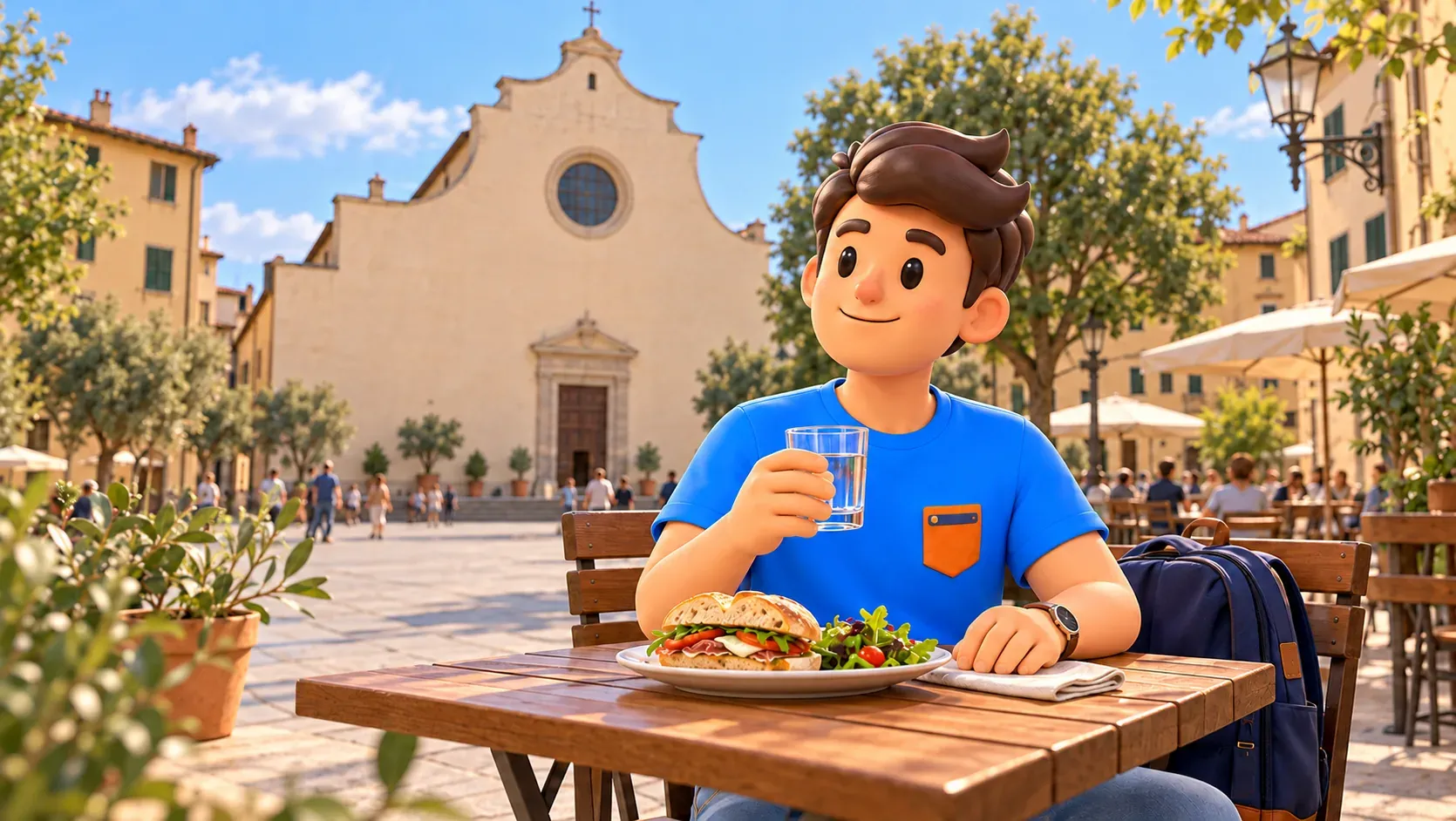
The walk can end with a river view, a neighbourhood square or a meal. You have already changed from close looking at paintings to the wider experience of a city. After the Uffizi, a satisfying Florence afternoon does not need another masterpiece at every step; it needs enough room for the first encounter to settle.


