
Santa Croce to Sant’Ambrogio: squares, a market and everyday Florence
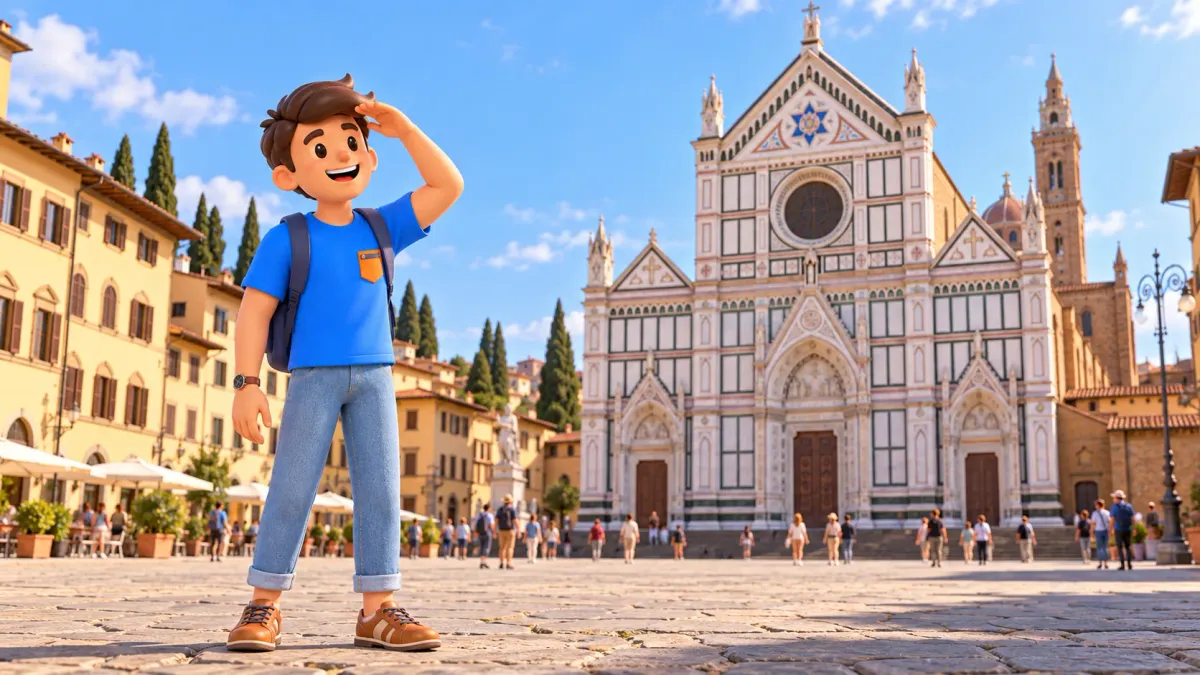
East of Florence’s busiest cathedral streets, a short walk can connect a monumental church square, a relocated trading loggia and a neighbourhood food market. Start at Piazza Santa Croce, continue to Piazza dei Ciompi and finish around Mercato di Sant’Ambrogio on Piazza Lorenzo Ghiberti. The change from a ceremonial square to food shopping gives the morning its rhythm.
Allow around ninety minutes to two hours after reaching Santa Croce for an outdoor walk, a short market look when trading and one modest refreshment pause. These are editorial estimates, not measured journey times. A full visit inside Santa Croce is a separate cultural commitment; a long lunch also needs more time. The basic route works without a museum, while a morning chosen for the market should follow its actual trading day rather than a general assumption that everything opens together.
Choose the morning you want
This is a good walk when you want some history without spending another whole session in a gallery. Its three anchors are easy to understand before you leave: Santa Croce for religious art and public memory, Ciompi for the layered history of work and trade, Sant’Ambrogio for the practical life of a food market. None needs to become a complete checklist. Give the route a purpose, then let a handful of details hold your attention.
Building the whole trip is much more convenient in RoadMe: the app develops a personal itinerary around your interests, travel dates and preferred pace. A market morning, an art visit and time to eat can fit into one useful plan, instead of leaving you to assemble separate lists into a workable day.
Choose between two versions before starting. The lighter version stays outdoors apart from the market if it is open. The deeper version makes Santa Croce the main visit and lets the surrounding walk remain short. If both the basilica and a lively food market matter, check whether their actual visiting and trading conditions fit your day; proximity does not guarantee compatible opening times. You can also walk in reverse when a confirmed commitment makes that more sensible.
Begin on Piazza Santa Croce
Give the square around twenty minutes, including a little unhurried looking. Step back far enough to see the basilica’s facade in relation to the open space, then turn towards the buildings that frame it. This is a place where Florence feels like a city with room for gathering, rather than only narrow connections between famous objects. Avoid judging the whole church from one photograph of its front: the exterior and the spaces inside tell stories from different periods.
Santa Croce belongs to the Franciscan history of Florence. Its large Gothic interior was shaped for preaching and communal religious life, while chapels, paintings and memorials accumulated around it. The decorative marble facade is much later than the medieval body of the church. That simple distinction is enough to make the building more interesting on a short outdoor stop: what looks unified today was formed through successive decisions across centuries.
Inside, the tombs and monuments associated with figures such as Michelangelo, Galileo and Machiavelli connect the church with the city’s wider cultural memory. The painted chapels offer another reason to visit, with Giotto central to its artistic identity. Ask whether you are most interested in painting, architecture or the way a city remembers people, then choose a visit that gives that interest proper attention.
If you enter, let Santa Croce be the main event
A substantial visit changes the morning. Add a separate allowance for the complex, actual entry and any waiting; do not hide it inside the outdoor route’s ninety minutes. The Pazzi Chapel belongs to this broader cultural setting, with a compact Renaissance language of proportion and grey stone against pale surfaces. It is a different visual experience from the scale of the Gothic church. Treat access to specific spaces as something to check for your date, not an automatic promise attached to the name.
Choose a limited focus once inside. You might spend longer understanding the church’s open volume and one group of paintings, or compare the memorial function with the quieter architecture of the cloister setting. The point is to leave with a few connected impressions. Attempting every chapel, inscription and famous name can turn a rewarding interior into an exhausting reading exercise, especially if the market and lunch remain ahead.
When you come out, take a brief pause before continuing. An interior visit can leave you ready for daylight and everyday movement rather than another set of detailed explanations. This is where the route works particularly well: the next stage asks you to look at ordinary streets and a smaller square. If you have already chosen a major museum elsewhere that day, the exterior version may provide a better balance from the outset.
Walk towards Piazza dei Ciompi
Allow roughly fifteen to twenty minutes for a relaxed connection with a few street observations, using the actual public route and crossings that suit you. The streets around Via de’ Macci offer a useful thread towards the neighbourhood, but this article is an orientation rather than turn-by-turn navigation. Consult a map for your exact position and avoid a detour merely because a doorway or private courtyard looks inviting. A small walk benefits from a clear direction and modest curiosity.
Notice what changes between the two squares. Shopfronts, deliveries, doorbells and the sound of conversation belong to a functioning neighbourhood. They are worth noticing without treating residents as performers in a travel scene. Keep entrances and pavements clear, ask before photographing someone closely and step aside when checking directions. These small habits make it easier to enjoy the atmosphere while allowing the street to keep doing its everyday work.
At Piazza dei Ciompi, give yourself another fifteen to twenty minutes. The name recalls the poorly paid workers of the wool industry and their revolt in 1378. The present square is not a preserved stage set of that medieval event. Keeping that distinction in mind makes the place more legible: a name can carry historical memory even when the visible urban space took shape much later.
Look closely at the Loggia del Pesce
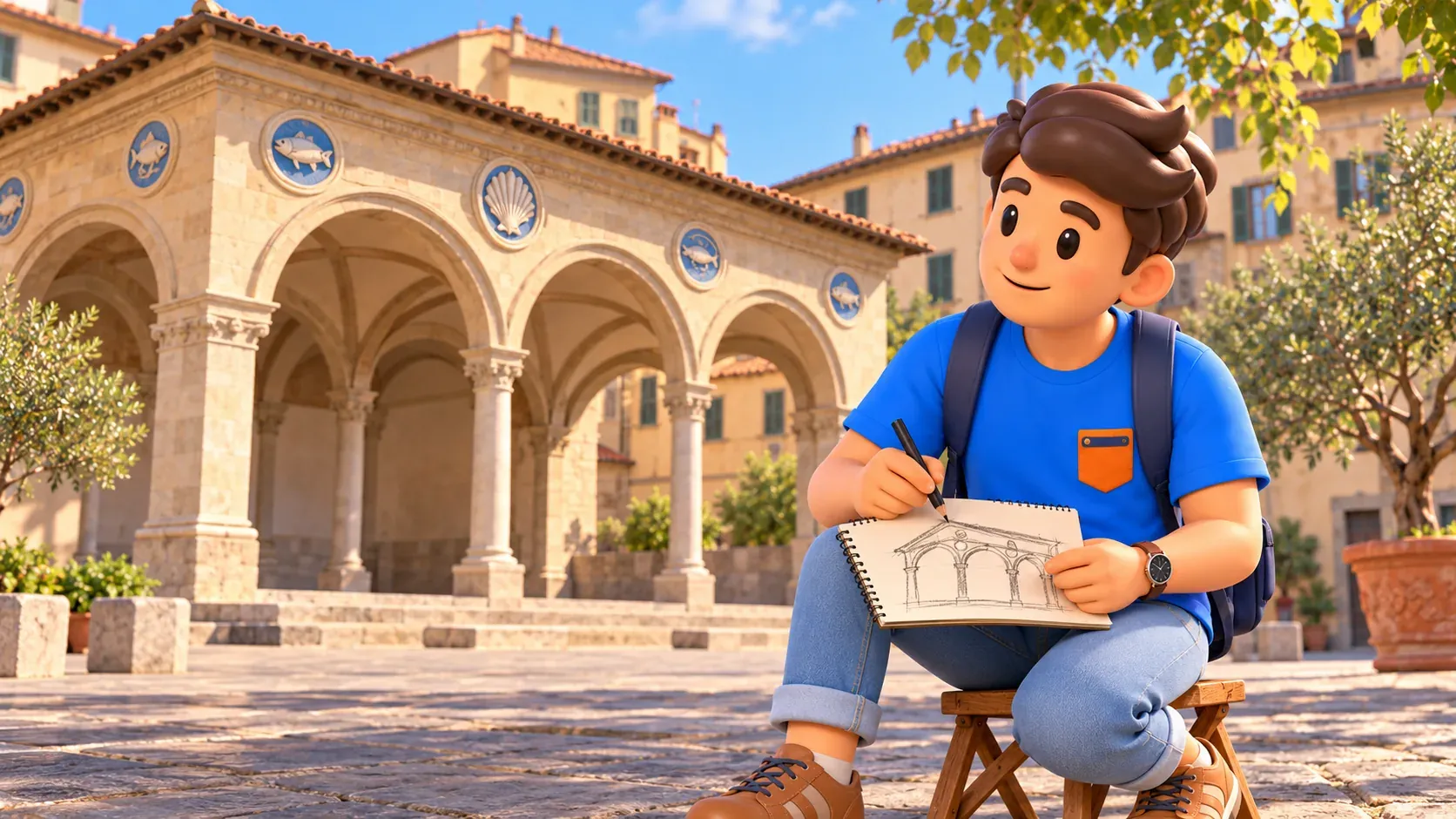
The Loggia del Pesce brings the history of food trading into the route before the market itself. Commissioned under Cosimo I in the sixteenth century, it was made for the fish trade elsewhere in the city, then dismantled during changes to the old centre and later reconstructed here using surviving material. The important idea is movement: a monument can outlive its original purpose and acquire a new role in another urban setting.
Look at the rhythm of the arches and, where visible from the public space, the fish and marine motifs in the medallions. You do not need to memorise every decorative detail. Compare the loggia’s open sides with the enclosed fronts around it: it was a structure meant to accommodate activity and exchange. That makes it a useful counterpart to the monumental church square you have just left, and a bridge towards the practical architecture of Sant’Ambrogio.
Do not come expecting a permanent antique market beneath every arch. The history of the square and its current events are different questions, and occasional trading should not be promised as an everyday feature. An empty or quiet loggia still makes sense as part of this walk. Its architecture and relocation tell a story even when there is nothing to browse and no special event taking place.

Finish around the Sant’Ambrogio market
From Ciompi, allow another short connection of around five to ten minutes towards Piazza Lorenzo Ghiberti, adjusting for your exact route. Then give the market roughly twenty to thirty minutes when it is trading. This is time to look, perhaps buy something small and understand the relationship between the covered hall and its surrounding square. A seated meal is a different choice and may easily extend the outing beyond the basic plan.
Sant’Ambrogio’s covered market opened in 1873, during Florence’s nineteenth-century transformation. Its metal and glass construction belongs to a practical history of urban modernisation: bringing food trading into purpose-built infrastructure with light and shelter. That history is less spectacular than a palace dynasty, but it helps explain how Florence became a working modern city as well as a place of celebrated monuments. Look up occasionally from the counters to see the structure doing its job.
Different stalls, outdoor traders and places serving food may keep different hours. Verify the market’s current arrangements if shopping is the main reason for coming, especially around holidays. A quiet afternoon square can still be pleasant, but it does not deliver the same experience as a trading morning. If the hall is closed, enjoy the neighbourhood honestly as a short walk rather than trying to reconstruct a market visit from shuttered entrances.
RoadMe makes this kind of morning easier to use within a complete personalised trip: your interests and pace shape the itinerary, with cultural stops and everyday experiences connected sensibly. Prepare your plan before setting out and download what you need for offline use, so the useful part of the day stays close at hand while you explore.
Give the food pause a clear place
Reserve around twenty minutes for a modest refreshment within the two-hour version, with flexibility for ordering and finding a suitable place. This is a planning allowance, not a promise about service speed or a particular business. Look at displayed prices and what is actually being served before committing. If you want a leisurely meal, choose that deliberately and let it become the finish rather than racing afterwards to recover a timetable.
Buy with the rest of the day in mind. Fresh food may need refrigeration, a convenient place to eat or protection during transport. A small purchase you can enjoy appropriately is more useful than carrying an awkward collection through the next museum. Ask before handling produce, follow the vendor’s way of serving and avoid blocking a counter for photographs. The market is most interesting when you can see its activity without interrupting it.

Keep the ending flexible
Finish around Sant’Ambrogio rather than automatically returning to Santa Croce. Your actual onward walk, hotel journey or next appointment needs its own time. If continuing east or north suits your day, check that connection separately. If the morning has included the basilica and lunch, you may already have a satisfying complete outing. Adding another major interior simply because it is nearby often weakens the balance that made the route appealing.
In hot weather, shorten exposed pauses and choose water and rest before attention fades. In rain, the covered market is useful only when genuinely open; arcades and doorways should not be treated as guaranteed shelter or public sitting rooms. Uneven paving, thresholds and the market’s busy passages can also affect comfort, so check a suitable approach for your mobility. This walk is not a certification of step-free access.
For a different kind of open-air pause elsewhere in the trip, the walk after the Uffizi follows the river towards Oltrarno. Here, the eastern-centre sequence offers another balance: a church square, the memory of workers and traders, then a market built for everyday needs. Choose the version that gives those contrasts time to register, and let the rest of Florence wait for its own part of the journey.


