
San Niccolò: Florence between the river and the hills
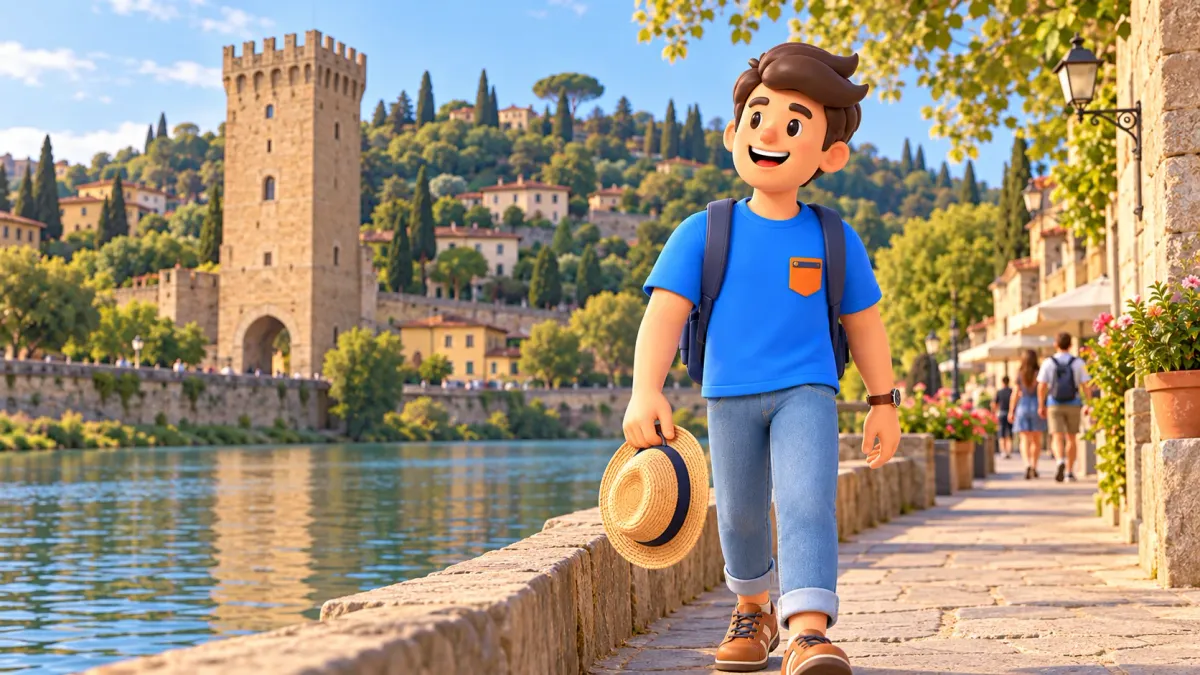
San Niccolò is a useful place to experience Florence as a city shaped by terrain. The Arno runs along one side, while streets and old gates point towards the hills on the other. You can enjoy the lower neighbourhood, its church and its surviving gate tower without turning the walk into a compulsory climb to a famous panorama. The appeal is the relationship between river, inhabited streets and rising land, with an optional hill experience chosen deliberately afterwards.
Start from the south-bank area near Ponte alle Grazie, then use the streets around Via San Niccolò as the main thread. The church, Porta San Miniato and the San Niccolò tower provide different subjects within a small area. An outside neighbourhood programme can take roughly an hour to an hour and a half, depending on the route, pauses and energy. This is an editorial estimate, not a measured walk, and any hill ascent, interior visit, meal or final journey needs separate time.
Decide whether today belongs to the neighbourhood or the hill
The simplest choice is a lower-area visit with no major hill destination. You can look at the river, follow a small part of the streets and see the old boundary through gates and tower. That does not certify an entirely level or step-free route. Choose actual paths according to your mobility and the surfaces and crossings present. The distinction is that no substantial ascent is being made the necessary conclusion of the visit.
If a garden or panorama is the real aim, give it a clear place in the day rather than attaching it to the last spare minutes. Count approach, slopes, time there and return. The hill beyond the neighbourhood is not a single attraction whose parts all fit into one short extension. Rose Garden, Piazzale Michelangelo and San Miniato al Monte are distinct experiences. Choose one focus first, and let the rest remain optional rather than becoming obligations merely because they appear nearby on a map.
Planning the complete stay is much more convenient in RoadMe: the app develops a personal itinerary around your interests, dates and preferred pace. A river-and-neighbourhood day or a visit with a chosen hill experience can become a coherent plan for you, with time for the things you enjoy rather than a standard list to finish.
For a different part of the south bank, the two-hour Santo Spirito walk follows squares and the exterior of Pitti. San Niccolò has another character, shaped by the meeting of water and slope. Pick the direction that interests you instead of assuming that every Oltrarno route should be joined into one long afternoon. A smaller area can give a stronger impression when its own geography remains the main subject.
Begin with a river view near Ponte alle Grazie
Once you have reached the south bank by a suitable public route, allow around ten to fifteen minutes for a river pause. Find a position that leaves crossings and pavements clear. Look along the water and at the buildings facing it. The broad space sets a useful starting scale before the smaller streets. You do not need a complete panorama or an empty embankment; a modest view can already explain how the neighbourhood belongs to the river rather than sitting apart from the rest of Florence.
Consider the river as orientation, not a promise that every next step will remain level or quiet. The neighbourhood begins close to the water but soon makes the hills perceptible. Street directions, walls and changes in ground tell that story. A short pause helps you notice the transition. If you need a seat or food before walking, deal with that first. A picturesque view is not a substitute for rest, and this route should respond to the day you are actually having.
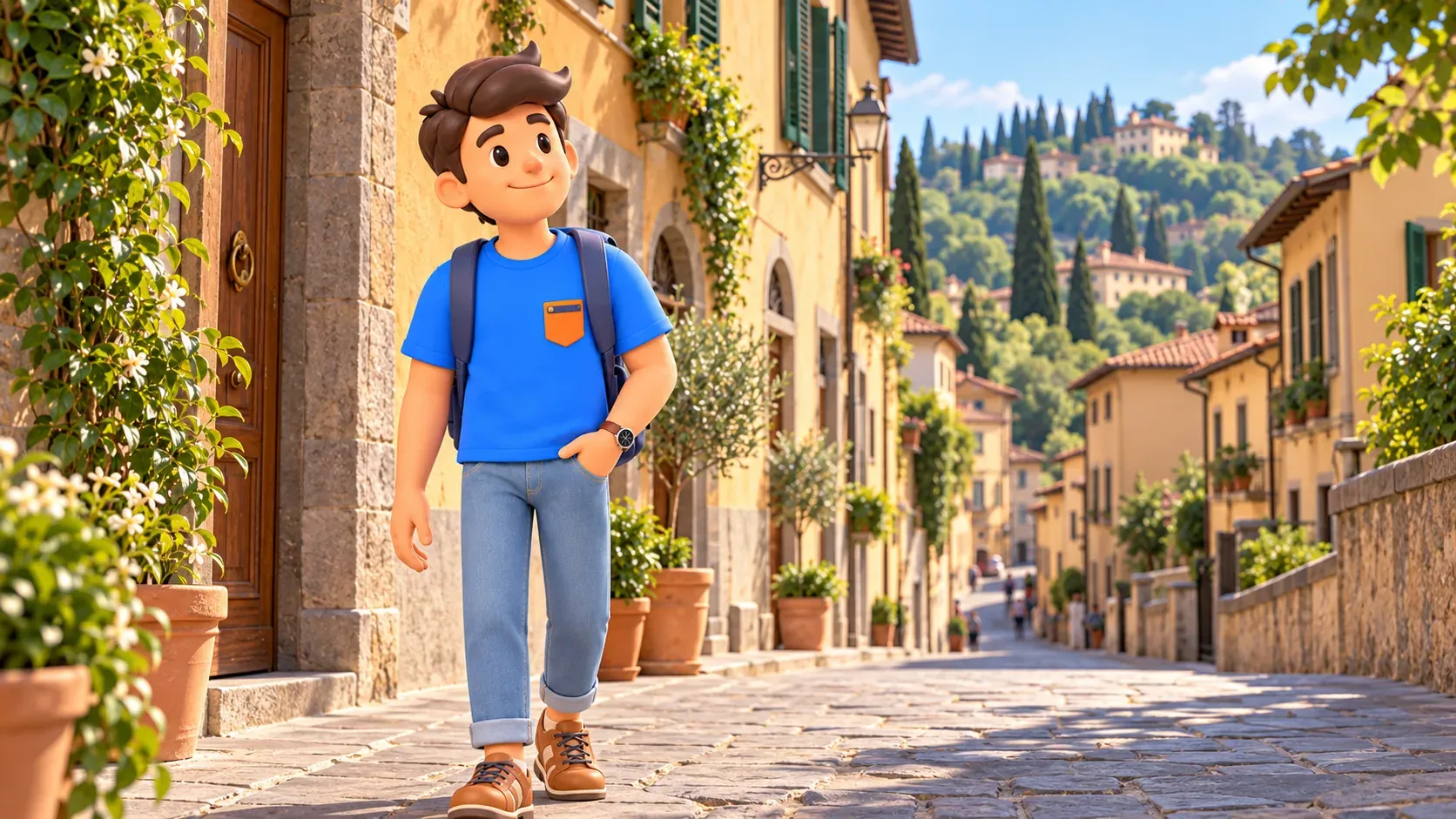
Let Via San Niccolò provide the main thread
Move into the street area at a manageable pace. Allow approximately twenty to thirty minutes across a few selected streets, without trying to find a named attraction on every corner. Doorways, upper windows and the relationship between a narrow street and the rising land can carry the experience. This is a working neighbourhood with residents, businesses and visitors. Its interest does not depend on a claim that it is unknown or separate from the contemporary tourist city.
Shop activity and food options vary. This article does not promise a particular open workshop, demonstration, late kitchen or café seat. Choose an operating place according to the real route and the menu, and respect the conditions you find. A business that attracts your attention may deserve time; count that time instead of assuming it fits invisibly between stops. If the neighbourhood itself is the main interest, there is no need to hurry every ordinary encounter so that a hilltop can still be forced into the end.
At the church, notice the scale of a parish
San Niccolò Oltrarno church supplies a useful anchor within the street. Its history belongs to the local community as well as the broader religious life of Florence. Changes across periods, family patronage and later alterations make it a place of accumulated decisions rather than a single grand artistic commission. That gives the walk another scale: after the river and the buildings, you meet a religious place tied to a parish and the memory of the neighbourhood.
For an exterior stop, perhaps ten minutes can support a look at the building and its setting, adjusted to comfort and activity. If you want to enter, check actual access and worship arrangements and give the visit additional time. The interior is not an automatic feature of every street walk. You can keep the outside encounter complete without listing works you cannot currently see. Respect the entrance and the people using it; your architectural interest belongs within the ordinary life of the place.
Porta San Miniato: the boundary becomes visible
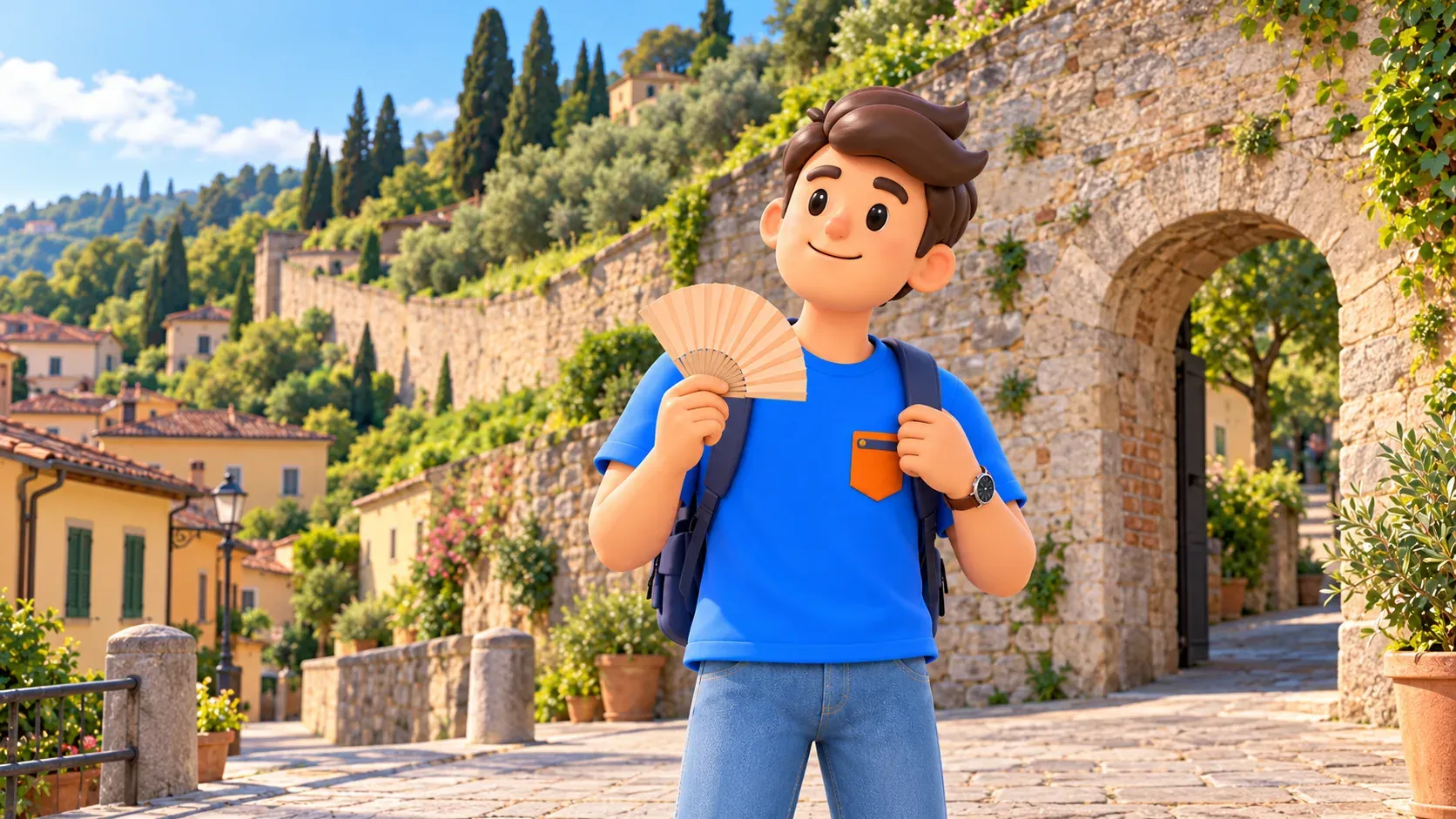
Porta San Miniato offers a compact way to understand the edge between streets and hillside. The gateway is part of the surviving late medieval fortification story on this bank. Its name recalls the route towards San Miniato al Monte above. Unlike a large ceremonial entrance detached from its old surroundings, this small passage still makes the relationship between settlement, wall and changing terrain legible. It can be an architectural subject even when you are not continuing uphill.
Allow around ten to fifteen minutes for a selected view of the gate and the direction of the wall, including the actual short approach you use. Look at how the passage fits between buildings and rising land. Do not interpret the historical connection to the monastery as a claim that the way there is a minor, effortless addition. You can see the threshold and turn back into the lower streets. Choosing not to climb preserves the subject of the boundary; it does not make the stop unfinished.
The San Niccolò tower tells a different gate story
The tall San Niccolò tower, in the area of Piazza Poggi, gives another view of Florence’s former defences. It retains the height that many other gate towers lost when military needs changed. That makes its silhouette useful for imagining the scale of the old fortified edge. Begin with the mass of the base and the long vertical body. The building is not an isolated romantic lookout invented for modern visitors, but a surviving part of a system that controlled approaches and movement.
Any tower ascent is a separate visit with conditions to check for your date. Do not arrive expecting continuous walk-in entry merely because the structure is visible from public space. A climb also adds effort and time. If avoiding major stairs was part of your choice, the tower does not automatically replace the hill. Its exterior remains the relevant experience for the lower programme, and you can let that be enough before choosing food, the river or your next destination.
If you want to go higher, choose one experience
For a greener continuation, the Rose Garden can become the chosen destination. It lies on a slope and combines planted space, views and sculpture. The name does not guarantee roses in bloom at every date, nor does a garden visit imply a universally easy route. Check actual public access and assess the path and gradients for yourself. Give it time as a garden, not as a shortcut to fit between the tower and several higher monuments in one remaining hour.
Piazzale Michelangelo is a different option: a broad panorama associated with the city’s nineteenth-century reshaping under Giuseppe Poggi. Its terrace shows Florence as a larger landscape. Treat the approach and return as real parts of an outing. San Miniato al Monte is another distinct religious and architectural destination farther into the hillside programme, deserving its own attention if chosen. This article does not require all three, and the lower San Niccolò walk is already complete without making a panorama its compulsory reward.
The useful calculation starts with what you want to do there, then adds the real route and pauses. Avoid the assumption that a short map distance equals a short or comfortable walk on a hill. In hot weather, consider water, rest and the conditions actually present. In rain, surfaces can change how a route feels. With companions, choose a shared pace and an end point everyone is happy to reach, rather than making the last decision under pressure at a steep section.
Leave room for the return and a meal
The lower-area estimates provide a scale for a modest visit, not instructions to spend exactly the same minutes everywhere. Connections and your actual start can change the total. A meal is additional, and so is a journey onwards from the last stop. If one church or business interests you more, shorten another exterior look. Keeping that flexibility makes the walk useful without pretending every attractive door and every spontaneous conversation can be added with no effect on time.
For a seated pause, choose a suitable operating place and read the menu and stated service conditions. No restaurant or available table is guaranteed here. If the weather or energy makes the hill unappealing, a meal can be the right ending. You may prefer to return towards the water and let the open space close the visit. There is no need for an obligatory sunset finish, especially if the actual return would make the rest of the day uncomfortable.
Using the whole programme is easier and more effective in RoadMe, where your interests and preferred pace shape a complete personal trip plan. Download Florence in advance while connected if you want maps and navigation available offline, and choose the river, neighbourhood and hill experiences that genuinely suit your available days.
San Niccolò can be remembered through three relationships: streets with their parish church, gates with the former city edge, and the lower area with the hills above. That is more than a route to a viewpoint. Finish when the chosen subject feels clear and the next step remains comfortable. A small walk between river and slope can give this part of Florence a distinct character, while leaving higher places for a visit you actually want and have time to enjoy.


