
From the Rose Garden to San Miniato: a hillside walk above Florence
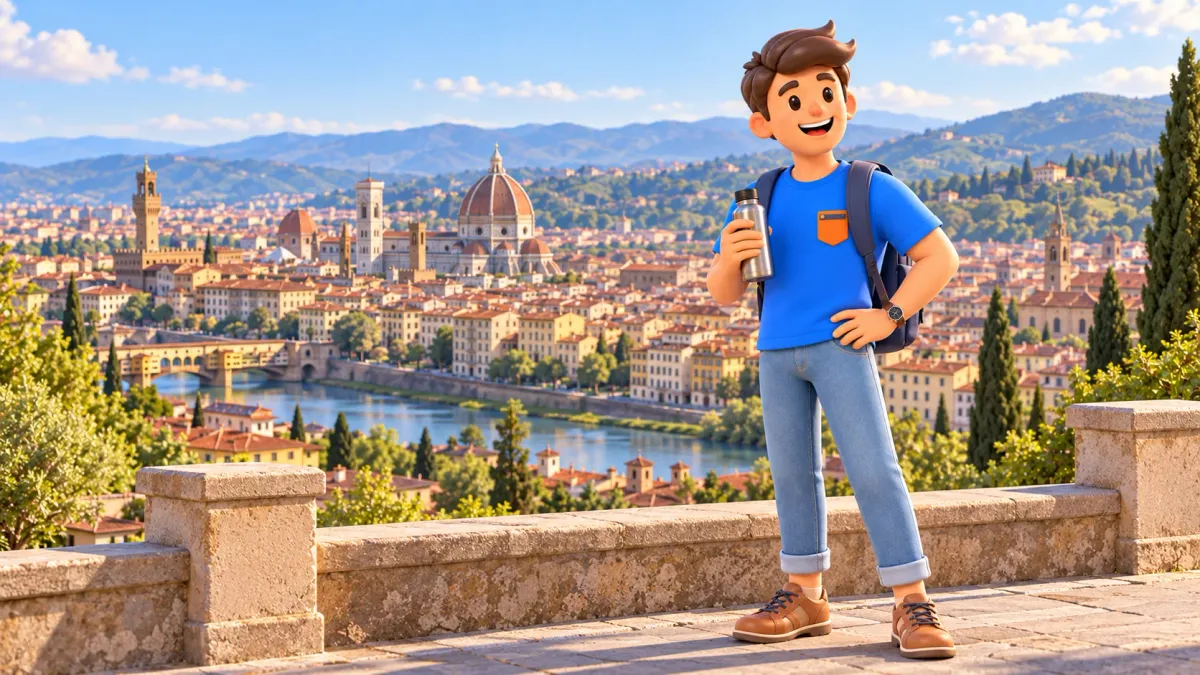
Florence’s southern hill offers a different kind of walk from the level streets around the cathedral. The Rose Garden, Piazzale Michelangelo and San Miniato al Monte connect planting, a broad view of the city and a much older religious landscape. Their appeal is not three interchangeable panoramas. Each gives a different reason to pause: the garden invites close observation, the terrace helps you understand the city as a whole and the abbey rewards attention to architecture as well as its setting.
For a full uphill outing, allow roughly three to three and a half hours from the lower San Niccolò area through the garden, the piazzale and San Miniato, ending back at a lower public connection you have chosen. This is a generous editorial estimate, not a measured or universally suitable walking time. It includes short rests and a focused church visit if available, with a separate allowance for your actual approach and onward travel. A long meal, extended photography or a detailed interior visit needs more time.
Choose the hill because you want the climb
The main decision is whether changing height belongs in your day. Do not add the entire hill automatically after a large museum or a long city walk. Slopes, steps and exposed sections can feel quite different from the distances shown on a flat map. Choose the full version when you have the energy to enjoy the ascent and the return, not only the destination. Check the actual public route and garden access before setting out, and keep a shorter version available.
RoadMe makes the complete trip much more convenient to plan: the app develops a personal itinerary around your interests, dates and preferred pace. A hill walk, cultural visit and time to rest can fit into one coherent day, instead of leaving you to decide on the spot whether every attractive suggestion can realistically be added.
For a lower-level alternative, the San Niccolò walk between the river and the hill gives the neighbourhood its own focus. You can choose that instead of climbing, or keep it as a separate part of a longer stay. This article’s full version does not mean every path, staircase or entrance works equally well for all visitors. A clear choice before the ascent helps preserve the pleasure of the hill rather than turning it into a test of determination.
Begin below the Rose Garden
Start from an actual public approach in the San Niccolò area and allow around twenty to thirty minutes for an unhurried uphill connection towards the garden, with flexibility for rests and your exact starting position. Use a current map to select a route appropriate to your mobility. This is an orientation, not turn-by-turn navigation. If the garden is the main reason for coming, verify its current visiting arrangements before you commit to the climb. A green area visible on a map is not evidence of unrestricted access at every time.
The lower neighbourhood provides a useful contrast with what follows: streets and built edges gradually give way to changing views and planting. You do not need to study every gate or monument along the approach. Keep the first stage simple and save attention for the garden. Comfortable shoes, water and a small amount of practical preparation matter more than adding extra stops. If you already feel tired here, shortening the plan is sensible.
Let the Rose Garden change the pace
Give the Giardino delle Rose roughly thirty to forty minutes if it is open and conditions suit you. Its terraced position means the view changes as you move, while planting and sculpture invite closer attention. Do not treat it only as a corridor to the famous terrace above. Look at a small section of the garden, pause at a suitable public position and notice how the city appears between the plants.
Roses are central to the garden’s identity, including older varieties, but flowering is seasonal and varies with conditions. Do not build the outing around an assumption that every visit will find abundant blooms. Leaves, structure, light and the relationship to the slope still offer interest. If flowers are your priority, check the season and actual conditions close to your visit. A garden is a living place, and the useful plan leaves room for what is there rather than promising the same scene throughout the year.

The sculptures of Jean-Michel Folon add another way to look. Some works engage directly with the distant city, making the view part of their meaning. You can choose one encounter and let it slow you down instead of turning the sculpture collection into a checklist. A Japanese garden area linked to Kyoto adds a further cultural layer. These elements make the Rose Garden more than a flower stop. Their value lies in how art, planting and landscape meet within a relatively small hillside space.
Continue to Piazzale Michelangelo without rushing
Allow about fifteen to twenty minutes for the next connection, adapting to the actual garden exit, public route and your pace. A short line on a map can still involve changes of level. Leave time to regain your breath before choosing a viewing position at the piazzale. You are arriving at a broad urban terrace with roads, visitors and everyday activity, not an isolated natural lookout. Use the real pedestrian routes and do not treat a photographic idea as a reason to step into traffic or block movement.
Piazzale Michelangelo belongs to Florence’s nineteenth-century transformation. Giuseppe Poggi’s project helped present the historic city as a landscape to be seen from a distance, with the terrace completed in 1875. That context matters: the familiar panorama was consciously framed, not simply discovered as a neutral viewpoint. The hill, roads, approaches and public space belong to a larger urban idea.
Give the terrace roughly twenty to thirty minutes, adjusted for crowds and the light. Look at relationships: the cathedral, Palazzo Vecchio, Santa Croce, river and bridges sit within ordinary houses rather than floating as separate monuments. Move between a few comfortable positions instead of assuming one exact spot provides the only worthwhile view. The city becomes legible through changing overlaps. You do not need a detailed skyline quiz; recognising a few connections is enough to understand why Florence looks different from the hill.
Remember what the Michelangelo monument represents
The monument at the piazzale uses bronze reproductions associated with Michelangelo’s works, including David and figures originally belonging to another setting. The original David is in the Accademia; this outdoor monument is part of a later tribute to the artist. Keeping copy, original and memorial programme distinct prevents a common misunderstanding. You can appreciate the square’s dedication without mistaking it for the place to see the original sculpture or assuming the ensemble repeats Michelangelo’s own historical arrangement.
If sunset is your main aim, plan around that decision rather than assuming the full three-stop walk fits neatly before darkness. A popular viewing time can change the atmosphere, and your return still needs attention. There is no promise of an empty terrace or a particular colour of sky. For the basic version, daylight makes the relationship between garden, terrace and church easier to follow. Choose the conditions that suit the outing you actually want, rather than forcing a full cultural sequence into a photographic deadline.
Give San Miniato its own reason for visiting
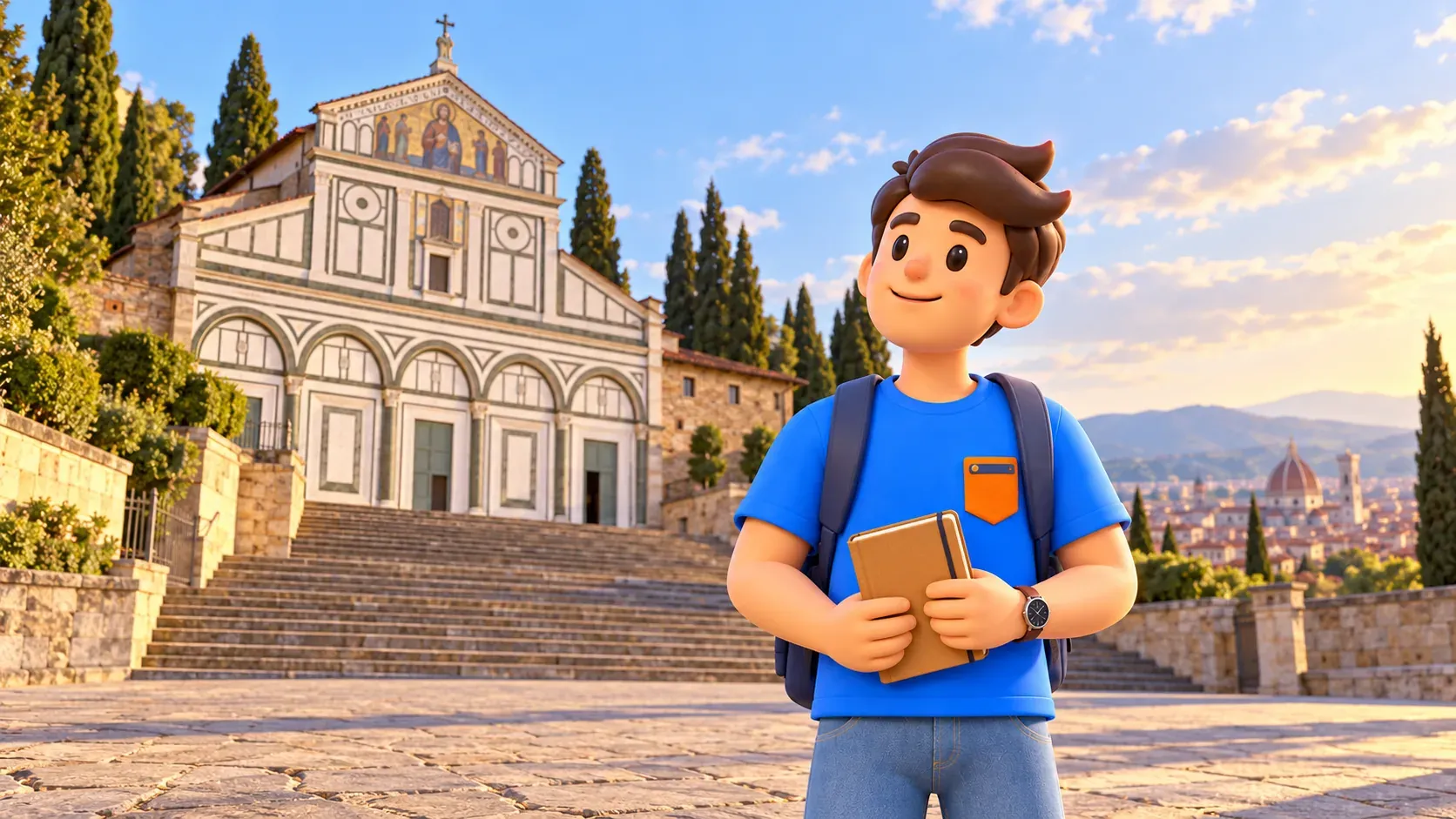
From the piazzale, allow around fifteen to twenty minutes for the continuing uphill connection and approach to San Miniato al Monte, with rests if needed. The church stands higher and should not be treated as a negligible final step. If you have already had enough climbing, the terrace is a valid finish before your planned descent. If you continue, make the abbey more than a second viewing platform. Its Romanesque architecture offers a different period and visual language from the nineteenth-century public space below.
The white and green marble facade creates a clear geometry. Inside, the raised presbytery, lower crypt and mosaic belong to a layered spatial experience that invites slower looking. The basilica’s medieval history reaches back to construction begun in 1018, although the complex developed over time. You do not need to know every chapel to understand the difference from a bright Renaissance interior. Here, levels, light and surfaces shape the encounter. A focused visit can follow that overall relationship rather than searching for an exhaustive list of treasures.
Allow roughly twenty-five to forty minutes for a modest church visit and its immediate setting if access is available, with actual waiting or service restrictions considered separately. San Miniato remains a religious and monastic place. Respect worship, local guidance and any limits on visiting specific areas. Do not assume that every crypt, chapel, room or associated space will be open. Chant or a service is not an automatic extra guaranteed by this walk; if that is your purpose, check the current arrangements and plan for the religious setting appropriately.
RoadMe is more useful than a collection of viewpoints when you need a complete personalised trip: your interests and pace shape how nature, architecture, museums and rest fit together. Prepare your plan in advance and download the useful content for offline access, so the practical side stays close at hand while you enjoy the hill.
Plan the descent before the light changes
The return is part of the outing. Reserve roughly thirty-five to fifty minutes for a descent towards a lower public connection you have chosen, adjusting to your route and comfort. Do not assume that the quickest staircase uphill is the easiest way down. A map, actual paths and your mobility should determine the choice. Add around fifteen to twenty minutes of flexible rest across the full outing. The complete allowance works with modest stops; taking the upper end of every range or waiting longer will extend it.

If you prefer transport for one direction, check the current service and your actual boarding point separately. This article does not promise a bus, taxi availability or a particular fare. A transport-assisted visit is a different version that can make sense, but it needs a real connection rather than an assumed rescue after exhaustion. The same principle applies to a meal: a proper lunch belongs in its own time block. Decide what you will do next while you can still choose calmly, not only after reaching the top.
Keep the three stops distinct and the day manageable
In heat, shorten exposed viewing and use rest and water before you lose energy. In rain or after wet weather, slopes and steps may be less comfortable; choose a smaller plan rather than assuming gardens or church entrances provide continuous shelter. This route does not certify step-free access. Garden paths, changing levels and the church approach need individual consideration. A lower neighbourhood walk or one confirmed viewpoint may be the better choice on a particular day, and it still belongs to a worthwhile Florence trip.
The full sequence works because each place contributes something different: a living garden with sculpture, a deliberately designed panorama and a medieval church above the city. Keep those differences rather than rushing through three versions of the same photograph. The useful plan ends with enough energy and a clear onward connection, not simply with the highest point reached.


