
Florence in two hours: a walk from the Duomo to Ponte Vecchio
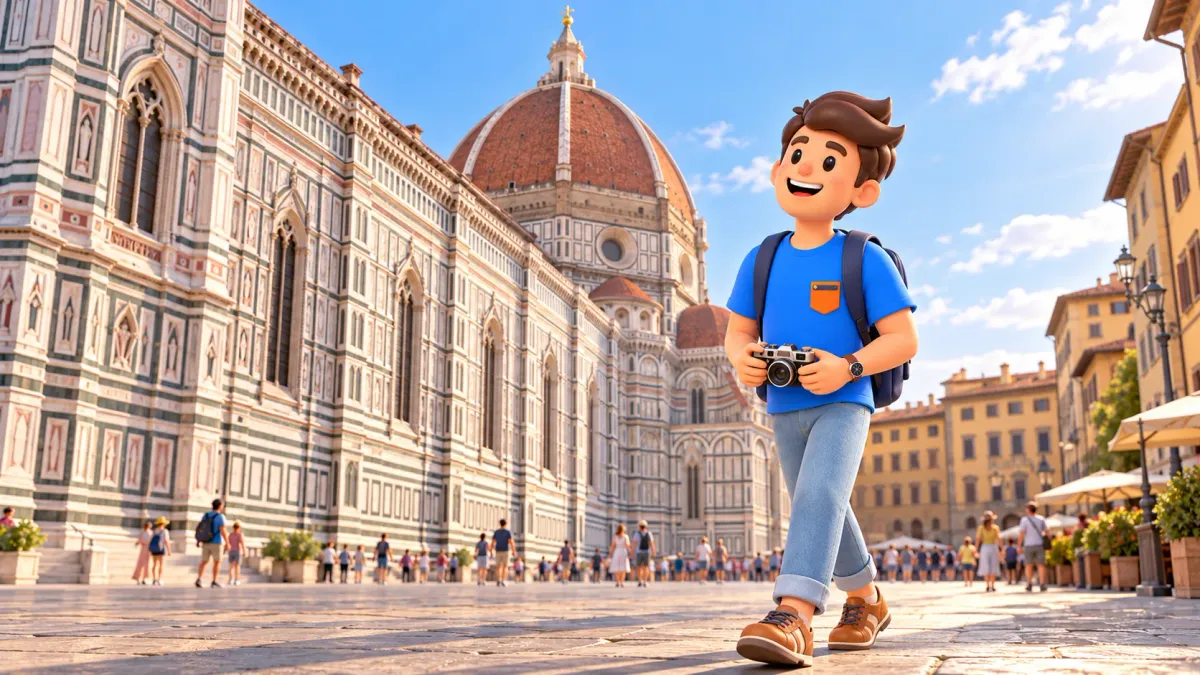
Two hours in central Florence can give you a coherent introduction to the city: a great religious ensemble, a church shaped by commercial life, the square of civic power and a bridge above the Arno. Begin at Piazza del Duomo, continue along Via dei Calzaiuoli towards Orsanmichele, enter Piazza della Signoria and reach the river through the exterior spaces around the Uffizi. Finish at Ponte Vecchio.
The basic walk uses outdoor stops and exterior views. Cathedral entry, a climb, an art gallery or a detailed church visit would create a different programme. Start the two-hour allowance when you reach the cathedral square; travel from your accommodation or the station, and the journey after the finish, need their own time. The walking and viewing intervals below are editorial estimates, not measured conditions on your day.
A two-hour outline with room to look
Allow about twenty-five minutes around the Duomo, ten for the walk towards Orsanmichele, fifteen at its exterior and five to continue to Piazza della Signoria. Give that square around twenty-five minutes, then ten for the passage towards the Arno, fifteen for Ponte Vecchio and its views, ten for a pause and five as a buffer. Together, these allowances make two hours without hiding a museum visit inside a short transfer.
You can use the pause where it makes sense rather than at one compulsory café. The buffer is useful for crowds, crossings and an extra moment of attention. If the square or bridge feels too busy, keep the route’s main sequence and shorten a viewing stop. The point is to notice how the city changes between its religious centre, commercial streets and river, not to reproduce a timetable minute by minute.
Fitting this walk into your whole trip is much more convenient in RoadMe: the app works out a personal itinerary around your interests, dates and preferred pace. A short introduction can become part of a complete day-by-day programme rather than another isolated list of places to arrange yourself.
If you are meeting other people, choose a specific accessible meeting place on arrival before starting the clock. Agree on the finish as well: Ponte Vecchio is the end of this outline, not an assumed return to the train station. That small decision protects the last part of the walk from becoming an unexpected rush.
Begin by seeing the cathedral as an ensemble
At Piazza del Duomo, take a moment to look at relationships rather than individual details. Santa Maria del Fiore is the broad church building; Brunelleschi’s dome rises behind it; Giotto’s bell tower forms a different vertical element. The Baptistery stands separately. Understanding that arrangement makes the square more interesting and prevents several distinct attractions from collapsing into one vague idea of “the Duomo”.
Choose an ordinary public position where you can pause without blocking an entrance or the flow of walkers. First notice the scale of the whole, then look at the coloured marble and repeated geometric patterns. Finally, choose one smaller feature that catches your attention. Moving from the whole to a detail gives the first stop a simple purpose and helps the architecture stay memorable.
The cathedral’s history spans different periods, while the dome is closely associated with Brunelleschi’s Renaissance engineering. Those two ideas are enough for this first encounter. A longer architectural visit can explore the construction, works of art and later changes separately. On this walk, keep the interest visible in front of you rather than trying to absorb an entire chronology beside a crowded doorway.
Entering or climbing is a separate choice. Do not assume that a short queue guarantees a quick interior visit, or that every component of the ensemble shares the same access arrangements. If you decide to enter, recalculate the rest of your available time and treat the two-hour outline as changed. An exterior introduction remains complete without adding a climb.
Follow the street towards Orsanmichele
Continue towards Via dei Calzaiuoli and head south through the central streets to Orsanmichele. Use the open public route and ordinary crossings where required. The ten-minute allowance includes an unhurried transition, not continuous fast walking. Before stopping to check directions or take a photograph, move out of the main pedestrian flow so that looking at the city does not become a repeated obstruction.
This part of the walk changes the scale. After the great volumes of the cathedral square, attention can move to narrower façades, street corners and the way one building appears between others. You do not need a separate attraction at every turn. A short connected street section helps you understand how the monumental spaces belong to an actual city rather than a collection of disconnected photographs.
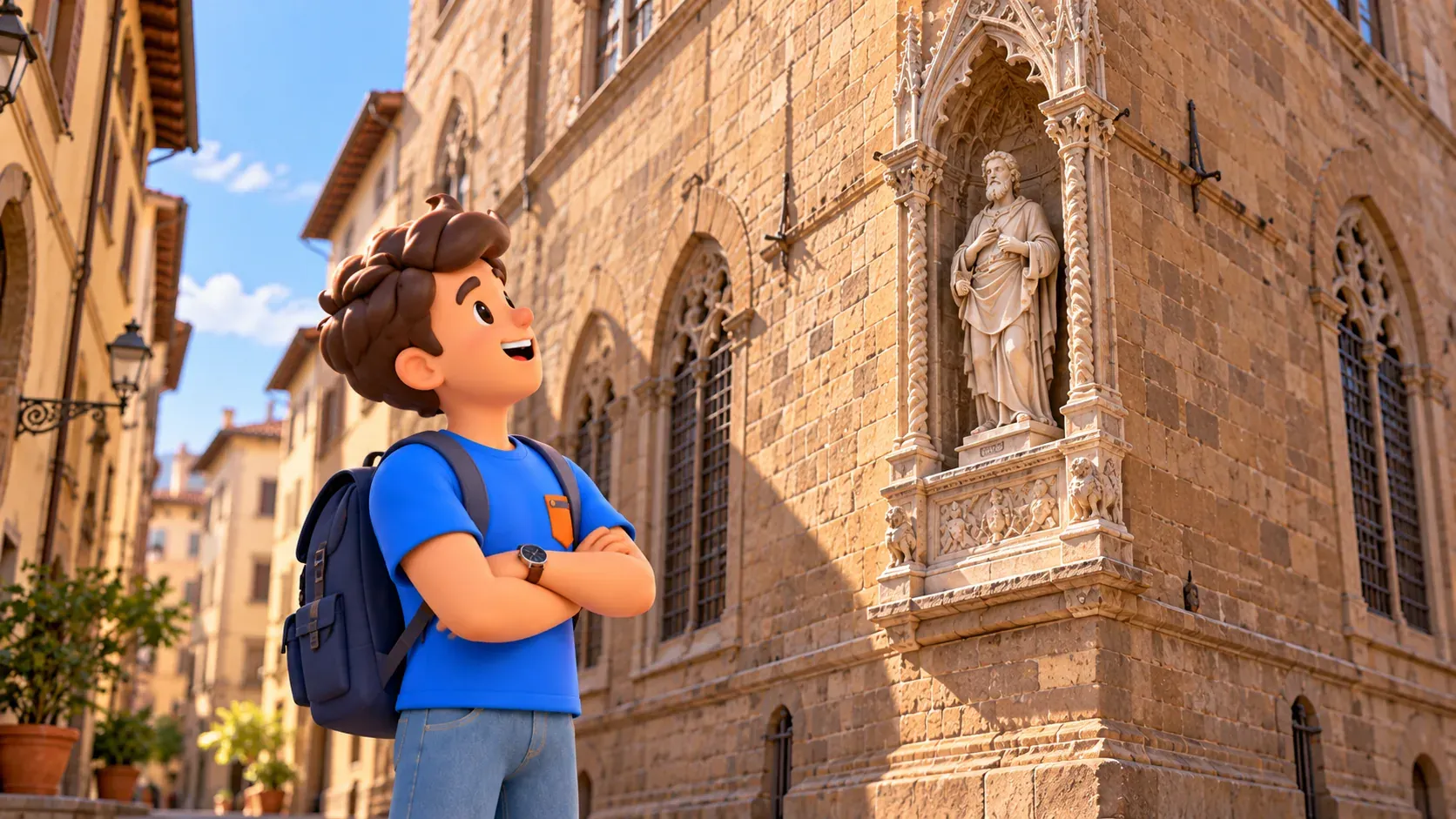
Orsanmichele provides the main pause. Its history links a grain market, religious use and the world of Florence’s guilds. That connection gives a useful question for the exterior: how does a building communicate more than one role? Look at its solid mass and the sculpture niches rather than attempting to identify every figure. One or two observations are enough to make the stop distinctive.
Keep this visit outside in the basic plan. The fifteen minutes are for looking, changing your viewing position and relating the building to its street. If a detailed sculpture or interior visit becomes your priority, make it a separate appointment. Interest is a good reason to change a plan, but the additional time still has to come from somewhere.
Let Piazza della Signoria change the subject
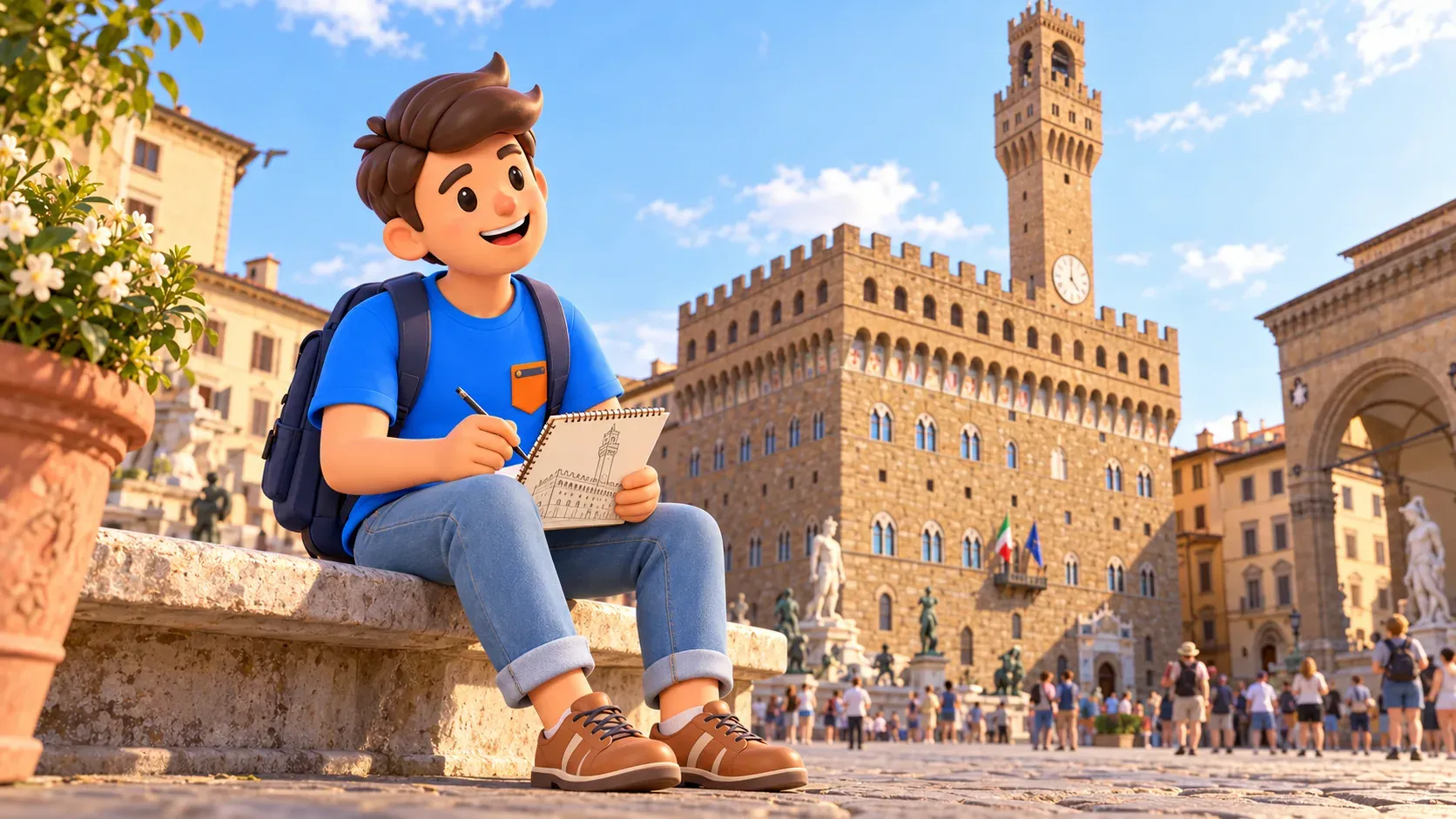
From Orsanmichele, continue to Piazza della Signoria. The space feels different from the cathedral district because its main story is civic power and public representation. Palazzo Vecchio gives the square a strong architectural focus, while the open-air sculpture and Loggia dei Lanzi create several ways to look without entering a museum. Use the first moments simply to register that change.
Begin with the relationship between the palace and the open square. Notice the contrast between its substantial stone body and the tower above. Then move your attention towards the loggia. The covered architectural space creates another rhythm beside the exposed piazza, and the sculptures become part of a public setting rather than separate objects seen against a blank museum wall.
Choose one work or one group of figures to observe. You might consider a pose, the direction of a gesture or how a sculpture uses the space around it. A short viewing task makes better use of these minutes than trying to photograph every object. Leave room for other people and follow any current barriers or instructions around works and entrances.
The palace interior is not included in the twenty-five-minute square stop. Nor does the outline assume that every part of the loggia will be accessible on the day. The outdoor architecture already provides a meaningful contrast with the Duomo. If a particular area is restricted, keep a comfortable public viewing position and continue the sequence without making access the condition for enjoying the whole square.
Approach the river through the Uffizi exterior
Move towards the exterior space of the Uffizi and continue in the direction of the Arno. The long building gives the transition a clear architectural character. Its history as a complex of administrative offices explains something about its position beside the centre of government. Even without entering the galleries, you can see how the building helps connect the square with the river.
The ten-minute allowance is for this passage with a little time to look at the architectural rhythm. It is not a visit to the Uffizi collection. If the museum is on your plans for another day, this first view can help you place it geographically. Avoid adding an entry simply because you have arrived beside a famous institution with a ticket office nearby.
Once you reach the riverside, pause before deciding where to stand. The wider space changes the scale again: the cathedral and palace sections involved looking at nearby surfaces; now the water and bridges draw the eye along the city. Use an available public position away from the road and keep any barriers between you and the river where they belong.
Finish with Ponte Vecchio and the Arno
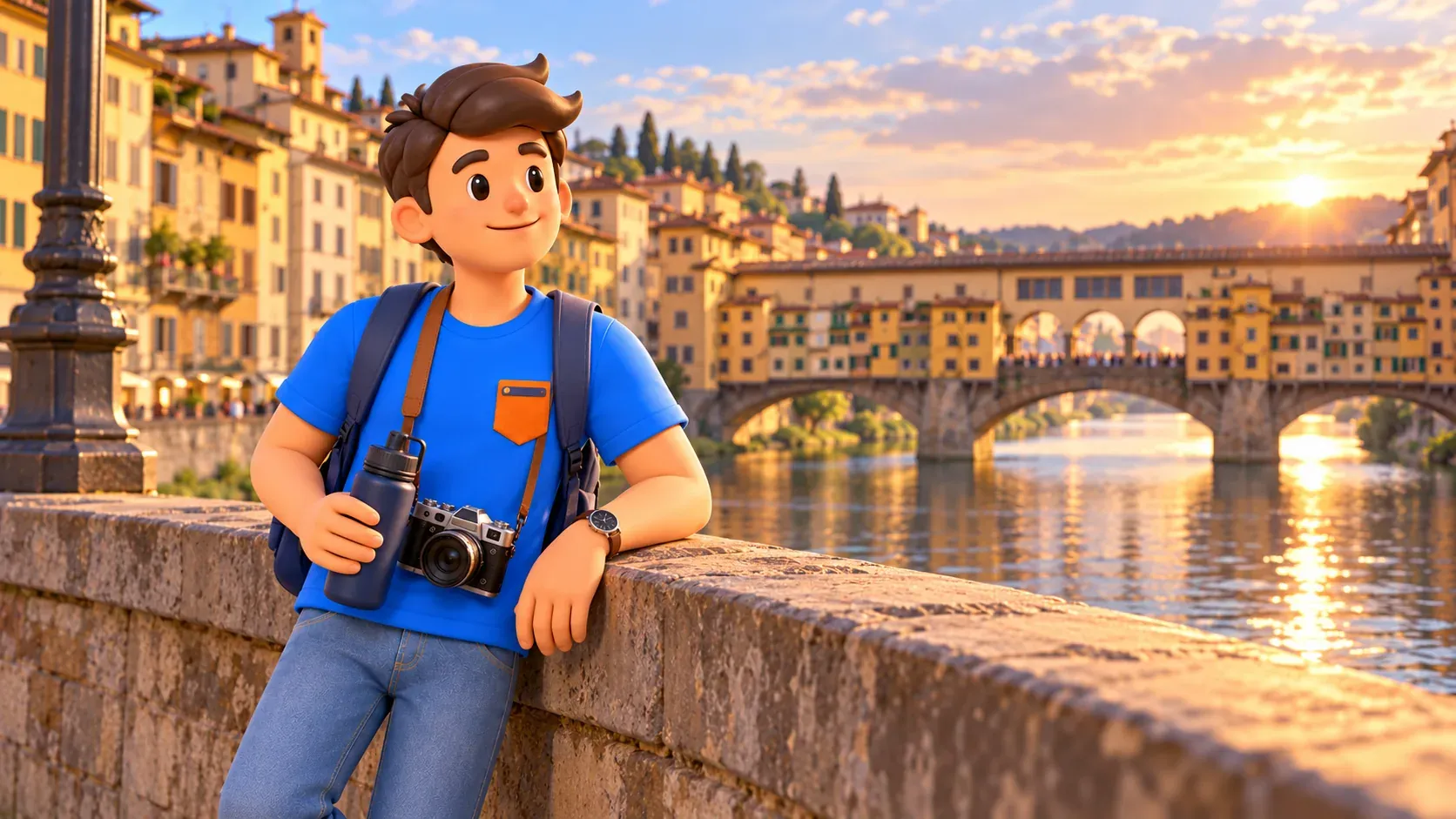
Continue towards Ponte Vecchio. The bridge’s rows of built structures make it immediately different from an open crossing with uninterrupted railings. Rather than beginning with shops, first notice the bridge as a piece of the city above the water. Looking from a suitable riverside position can reveal its overall shape more clearly than standing in the busiest part of the crossing.
If you cross, treat the movement itself as part of the stop. Allow others to pass and avoid remaining in the middle of a narrow stream of pedestrians for a photograph. You can finish on the far side or return to your chosen riverside position, depending on your onward plans. What matters is deciding where this walk ends before another destination quietly extends it.
Fifteen minutes gives a small encounter with the bridge and river, not a complete exploration of Oltrarno. Santo Spirito, Pitti and the hill viewpoints each deserve a separate decision. They should not be added automatically because they appear close on a map. Crossing a bridge is easy to describe; the next visit, the walking and the return all require additional time and energy.
Keep the walk comfortable when plans change
Use your ten-minute pause when you need it. A comfortable available seat or an operating café can make sense, but the route does not depend on a particular table or a promised view. Check the menu before ordering and keep the break within the time you actually have. You can also pause earlier and finish directly at the river if that better suits the day.
In rain, consider shortening the outdoor portion or choosing a different activity rather than expecting each stop to supply shelter. In heat, slow down and give rest more space. For a pushchair or limited mobility, assess the actual surfaces, kerbs, crowding and access on your day: this outline does not certify a step-free route. A shorter enjoyable walk is a valid version of the experience.
Using Florence’s places as one coherent trip is easier and more effective in RoadMe, where the app develops a personal programme around what interests you and the pace you prefer. Download the city beforehand while online if you want maps and navigation available offline during the walk.
Before leaving the finish, check the practical way to your next destination and count that journey separately. You have followed a compact story from religious architecture through commerce and civic space to the river. That is enough for a first two hours: a clear connection between a few places, time to notice them and an understandable ending from which to continue your own Florence visit.


