
Green northern Florence: Orticoltura, Parnaso and Stibbert Park
North of Florence’s best-known centre, a garden outing can connect three very different ideas of green space. Giardino dell’Orticoltura brings the nineteenth-century world of horticulture and iron-and-glass architecture into view. The upper Orti del Parnaso changes the level and introduces a striking dragon-like fountain. Stibbert Park offers a romantic landscape shaped around a collector’s villa. Together they create an alternative to another day of palace rooms, provided you treat the street connections and slopes as real parts of the outing.
Allow roughly three to three and a half hours after reaching the lower Orticoltura entrance area for a selected garden visit, an optional upper section, the public street connection and a focused Stibbert Park walk with short rests. This is an editorial estimate, not a measured route or a guarantee of simultaneous opening. Arrival and onward travel are separate. The Stibbert Museum is not included in that allowance. A shorter version can stay with Orticoltura and Parnaso, leaving the second park for another day.
Choose a northern outing rather than an extra at the end
This route works best when northern Florence is the point of the morning or afternoon. Do not add the whole sequence automatically after a complete centre walk just because several green areas appear close on a map. The connection between them uses ordinary urban streets, and the upper areas involve changes of level. Check the actual public route and the current access arrangements before leaving. You are visiting distinct places, not moving through one continuous park with every gate always available and every path equally comfortable.
RoadMe makes the complete trip much more convenient to plan: the app develops a personal itinerary around your interests, dates and preferred pace. A garden outing, selected cultural visit and time to rest can fit into one coherent day, instead of leaving you to connect separate green spaces and judge their practical compatibility yourself.
Make one early decision: is Stibbert Park essential, or would a smaller visit already give you the change of atmosphere you want? Keeping a shorter option means you can enjoy the first garden without treating it as an obstacle before the next one. If the museum collection is your priority, give it a separate appointment and revise the outdoor plan.
Start with Orticoltura’s horticultural story
Begin at an actual available public entrance to Giardino dell’Orticoltura and allow around thirty to forty-five minutes for a focused look at the lower garden. Use the current visitor information rather than assuming that a gate named on a map is open on your date. Once inside, orient yourself before moving uphill. This is a useful place to notice the relationship between ordinary park life and a more specialised history of plant cultivation.
The garden developed in the nineteenth century as an experimental and exhibition space for the Tuscan horticultural society. Plants came through the work of gardeners, growers and scientific institutions. Its original purpose was therefore more than leisure: it helped develop and present a culture of cultivation. The later public park retains traces of that history. Look at the setting as a place where plants, technical skill and public display met, rather than imagining an unchanged private Renaissance garden transplanted into the northern city.
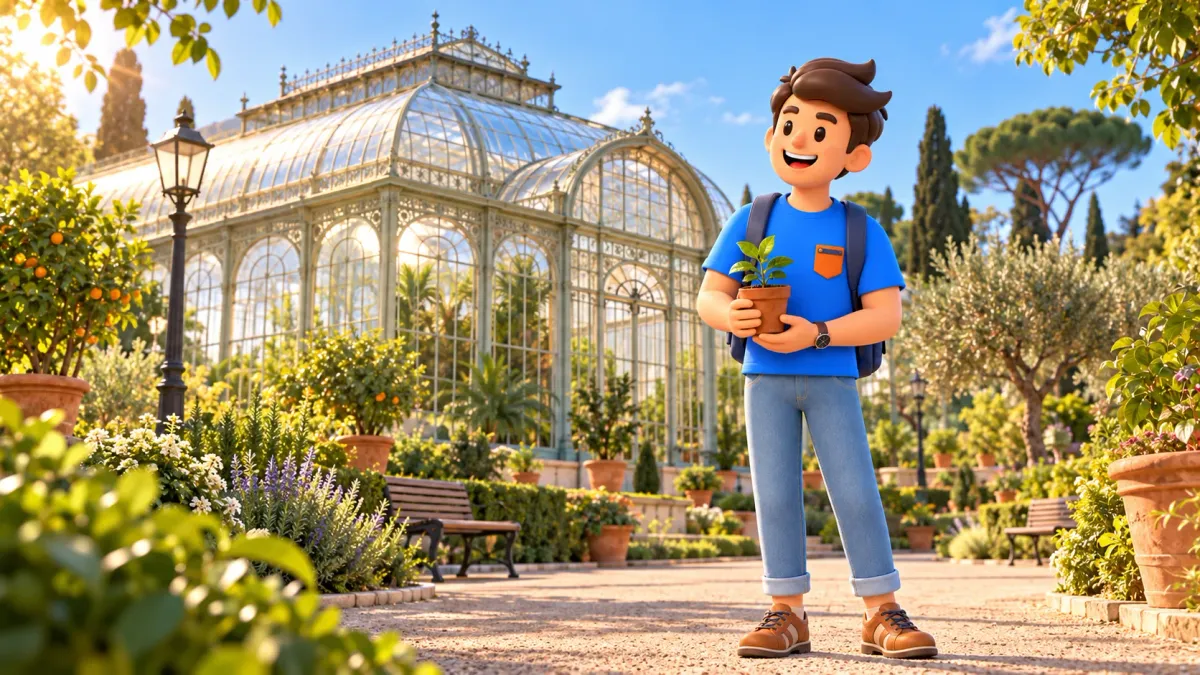
The Roster tepidarium is the clearest architectural anchor. Designed by Giacomo Roster and opened in 1880, it uses iron and glass to create a light structure associated with plants and exhibitions. Its form belongs to the engineering culture of the period as much as to gardening. Look at the rhythm of supports and transparent surfaces from a permitted position. The building’s presence makes Florence’s nineteenth century visible without needing another palace or church interior.
Look at the tepidarium without assuming entry
The tepidarium’s historical function does not guarantee a greenhouse interior visit, a particular event or tropical planting available on your day. Current use and access need separate confirmation. You can appreciate the engineering form from outside when the surrounding public area is available. This distinction protects the outing from an unnecessary disappointment: seeing the building meaningfully is different from being promised entry. If a specific event is your reason for coming, check that event’s own arrangements and make it the main decision rather than an automatic extra.
Notice how metal can be both structural and decorative. Large glass surfaces, a high roof and repeated elements create a different experience from heavy stone walls. You do not need to know every construction detail. One comparison with the city’s more familiar architecture gives the stop substance. Then return attention to the garden around it.
If the lower garden is enough for your energy or interests, let it become a complete short visit. A quiet pause and one well-understood building can be worthwhile. Do not make a climb compulsory merely because an upper viewpoint exists. This is particularly relevant if you are visiting with someone whose pace differs from yours.
Add Parnaso for a change of level and character
If the actual connection is available and suitable, allow around twenty to thirty minutes for the upper Orti del Parnaso and the movement into that area, adjusted to your pace. Follow the public routes and check the way back or onward before climbing. The lower garden and upper area belong to a connected green setting, but height and stairs change the experience. This article is an orientation, not proof that every connection is step-free or that a particular gate can be used at any time.
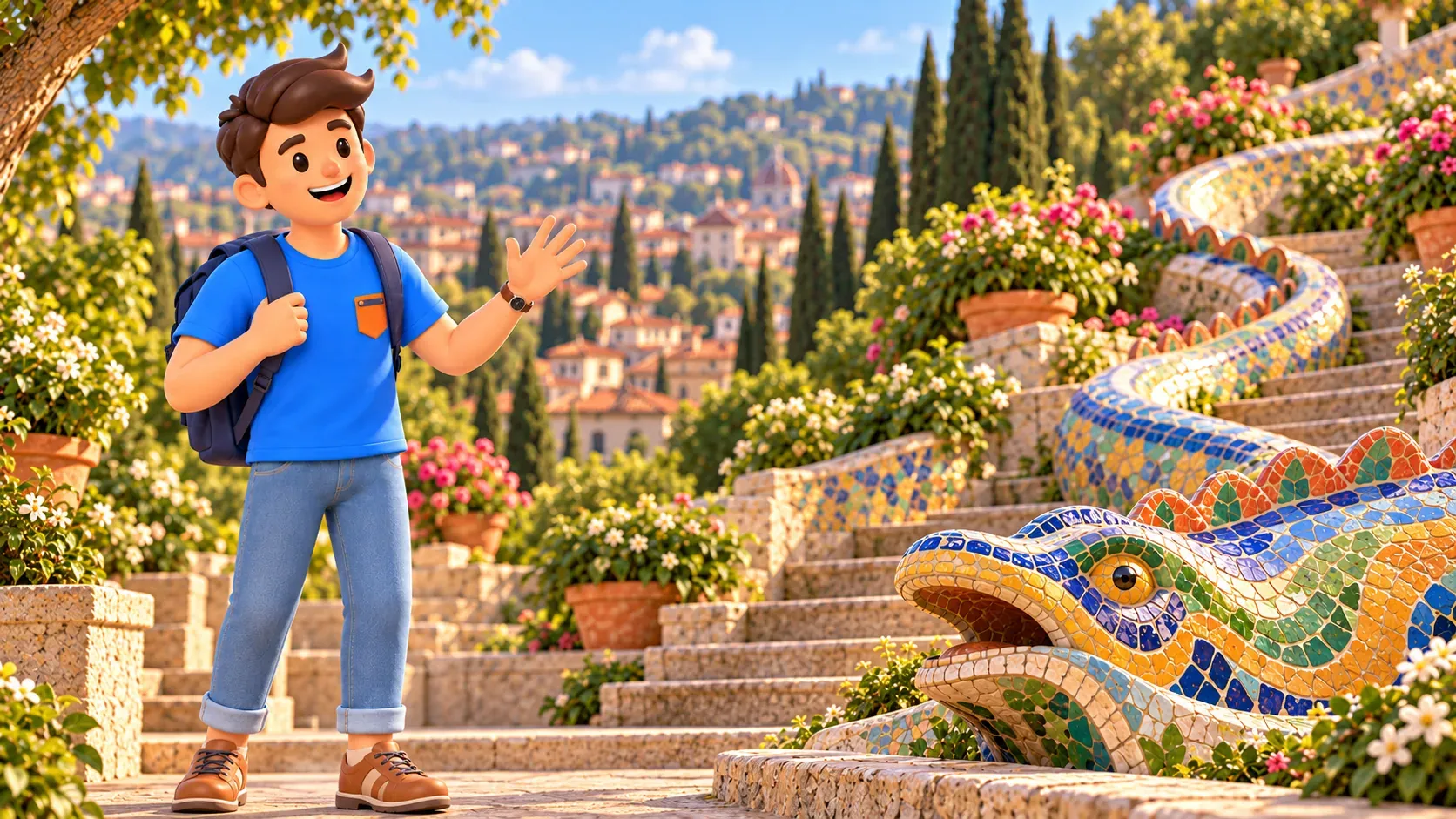
The long serpent or dragon-like fountain along the stair is the most distinctive feature. Associated with a 1990 project by Marco Dezzi Bardeschi, its colour and winding form contrast with the ordered nineteenth-century glasshouse below. That short comparison explains how different generations added their own visual language. You do not need a full sculpture lecture to notice the change. Look from an allowed position where you can understand the line of the work, without blocking steps or treating the fountain as equipment for climbing and play.
Water operation is not guaranteed by the sculpture’s name or by a photograph. The form can remain interesting without a particular flow. The upper view also shows Florence from its northern side, different from the familiar southern-hill perspective. Choose a comfortable viewpoint and keep expectations flexible about visibility and conditions. You do not need to recognise every roof.
Treat the connection to Stibbert as a street walk
For the move towards Stibbert Park, allow roughly twenty-five to thirty-five minutes along the actual public route from your chosen exit, with flexibility for crossings, orientation and pace. Use a current map to connect the real entrance points. Nearby parks do not merge into one green corridor, and a straight line between them is not a navigable path. The street section should be part of the plan, not invisible travel between the interesting bits. Check that the second park’s conditions fit your day before you begin the connection.
Villa Fabbricotti’s park lies in the broader northern area and can be an alternative interest, not an automatic third substantial visit. Adding another full park changes the length and energy required. Choose the main sequence or a revised shorter version deliberately. If the first garden has already supplied the atmosphere you wanted, it is reasonable to finish there and use the remaining time elsewhere.
Do not expect the street connection to offer constant shade, seating or a refreshment business at exactly the moment you need one. Plan modest rest according to what is actually available, with water and appropriate preparation for the weather. If using transport for part of the outing, verify the current service and your real boarding and arrival points separately. This article does not promise a particular bus, fare or taxi availability.
Let Stibbert Park be a romantic landscape
Give Stibbert Park around forty-five to sixty minutes for a selected outdoor walk if it is available. The park surrounds Frederick Stibbert’s villa and reflects a collector’s interest in historical styles. Giuseppe Poggi’s landscape approach used winding paths, changing views and unexpected structures rather than the strict geometry associated with formal Medici gardens. A short visit can follow that idea without cataloguing every pavilion. Look at how planting hides and reveals architecture and how a turn in the path creates a new scene.
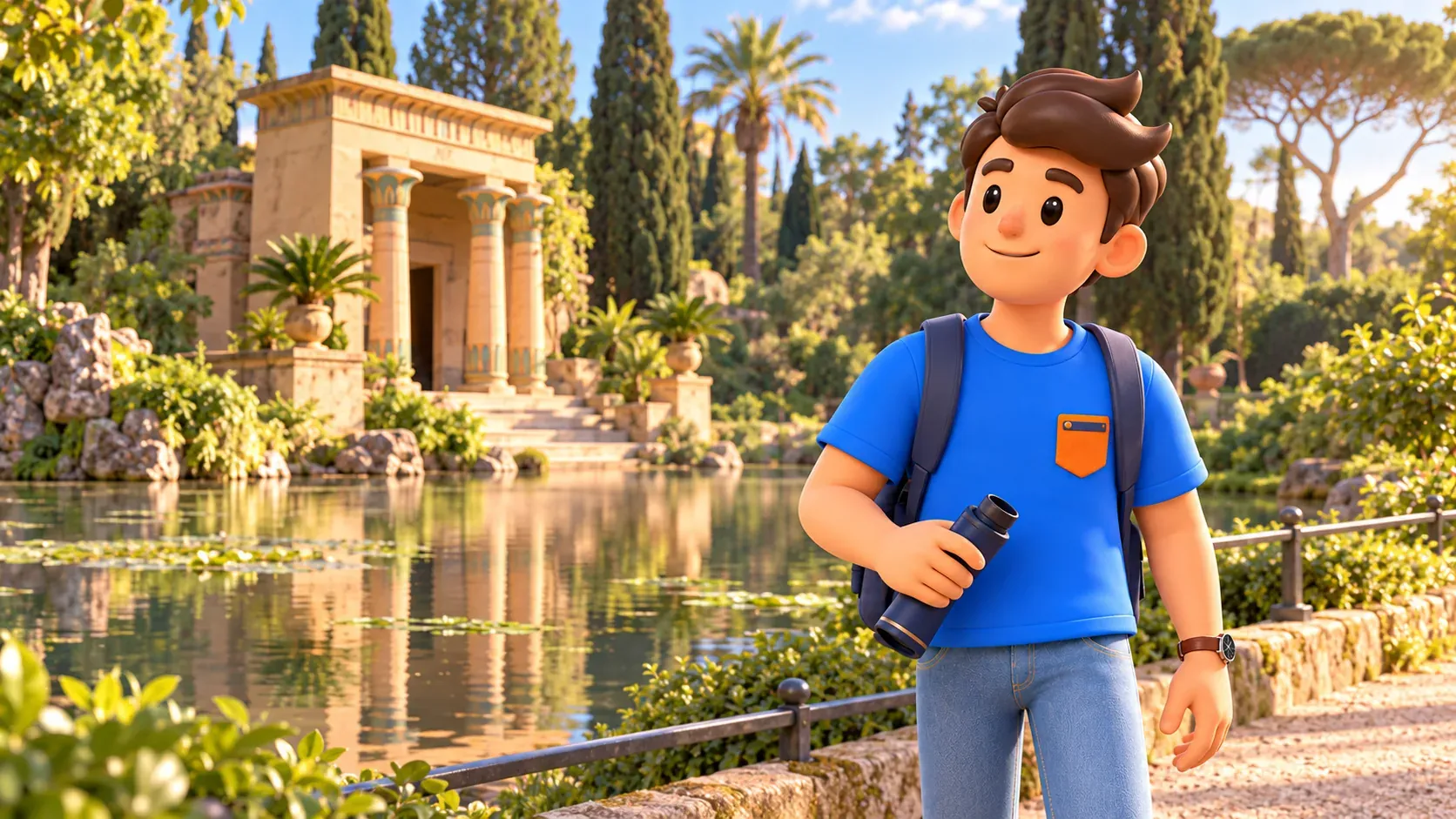
The park’s pond, grottoes and pavilions belong to its romantic character. Classical and Egyptian-inspired structures show the nineteenth-century taste for different ancient cultures, while the limonaia recalls the practical care of delicate plants. These are not ancient monuments surviving from Egypt or Greece in Florence. They are historical garden inventions, important for what they reveal about the owner’s world and the landscape being made around his house. That distinction gives the walk more depth than simply describing the buildings as exotic surprises.
Choose one or two relationships: architecture and reflection, a winding path and its reveal, or a building framed by trees. The available view and permitted path should determine your route. Do not assume every pavilion interior is open or that a pond edge is a place to approach freely. The park is a landscape to observe within its actual visitor arrangements.
RoadMe is more useful than a list of parks when you need a complete personalised trip: your interests and pace determine how green spaces, museums, neighbourhoods and rest fit together. Prepare the itinerary in advance and download the useful content for offline access, so you can spend less effort coordinating the day while exploring.
Keep the museum and the finish separate
Stibbert’s museum and park share a setting but are not the same visit. The collections, including the well-known armour-related interest, require their own current arrangements and time. Do not assume that a park walk includes museum entry or that every component has identical conditions. If you want the collection, make it a deliberate cultural choice and revise the outdoor scope. The route’s three-hour estimate is not a way of fitting a full museum experience into the gaps between green spaces.

Reserve roughly twenty to thirty minutes of short rests across the complete outing, plus a little flexibility for orientation. The general allowance works with selected stops; upper ends of every range, waiting, a long meal or added museum time extend it. Finish at the actual public exit you have confirmed, then give the onward journey its own time. A clear ending matters more than trying to walk back to the original entrance solely to make the route a loop. Choose according to your next destination and actual energy.
Choose the version that fits the day
In heat, reduce exposed street sections and uphill pauses; after rain, consider surfaces and steps. This is not a certification of a fully step-free route. Check garden access, public connections and current assistance information for your mobility. If opening conditions do not align, choose one park rather than forcing the whole sequence. For another day’s green setting, the Bardini Garden and Arno half-day offers a different hillside relationship with the city, with its own approach and return.
The northern route works through contrast: horticultural engineering, a later playful intervention on a slope and a romantic collector’s landscape. Keep those differences visible and the connections honest. A selected outing can give a fuller sense of Florence beyond its central monuments without exhausting every path or adding every nearby museum. The useful finish leaves a clear onward plan and enough attention to enjoy whatever comes next.


