
Bardini Garden and the Arno: half a day between green spaces and the city
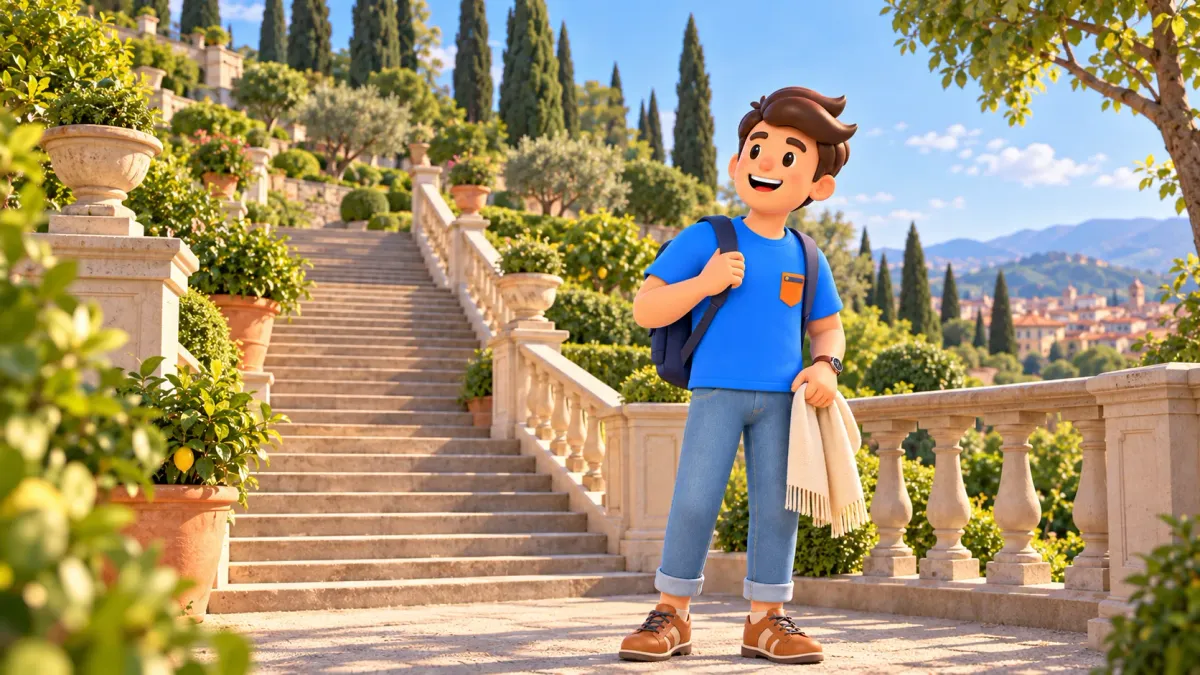
Bardini Garden works well as the centre of a Florence half-day when you want greenery and views without spending the whole outing indoors. Its hillside setting brings the city into the garden, while different planted areas change the pace of looking. Follow that with a short walk near the Arno and the contrast becomes the point: first a landscape shaped by several periods, then the ordinary life of the lower streets and a river view.
Allow roughly three to four hours after reaching the lower Oltrarno area for the approach, a selected garden visit, the return to street level and one modest pause by the river or in the neighbourhood. This is an editorial planning range, not a measured itinerary. Actual admission and waiting, your arrival and the onward journey need their own allowance. A long meal, villa exhibition or museum will extend the half-day. Choose Bardini as the main experience and let the river provide an easier ending instead of immediately adding another hillside destination.
Begin with the entrance and finish you will really use
Before visiting, check the garden’s current official arrangements and which entrances and exits are available on your date. Costa San Giorgio and the lower Via dei Bardi side mean different approaches on a slope; they are not interchangeable starting points with identical effort. Pick a public connection appropriate to your mobility and confirm where you intend to leave. A gate marked on a map is not proof of access. This article offers a structure for the outing, not navigation through a specific entrance regardless of current conditions.
RoadMe makes the complete trip much more convenient to plan: the app develops a personal itinerary around your interests, dates and preferred pace. A hillside garden, cultural visit and riverside rest can fit into one coherent half-day, instead of leaving you to connect appealing places and judge their practical compatibility yourself.
The basic idea is flexible: start in the lower streets, follow the confirmed approach to Bardini, spend a focused visit in the garden, then descend by an appropriate public route and finish near the Arno. If your chosen entrance starts higher, account for how you reach it rather than treating that climb as free time outside the plan. Choose the garden’s scope before adding other stops.
Let Bardini be a garden with several characters
Bardini did not emerge all at once from a single design. Its hillside combines traces of different properties, periods and ideas about a garden. Formal Italian structure, a freer landscape area and productive planting near the old walls contribute different experiences. This is why it is worth looking beyond the famous wisteria image. You can use the visit to notice how designed nature changes character within a relatively small area, without trying to memorise a complete history of every owner or planting scheme.
The broad Baroque stair gives the Italian section a strong visual axis. Its purpose is not only to carry people uphill: movement changes the relationship between garden, city and architecture. Look from a few comfortable positions and notice how the terrace structure becomes visible. The slope is part of the design, not an inconvenience added to an otherwise flat park. Choose a route you can manage rather than assuming every stair is compulsory.
Give the first orientation and one formal garden area around thirty to forty minutes after actual admission. This is a planning suggestion, not a measured circuit. If the weather or your mobility calls for a different route, adapt the choice to the paths that are genuinely suitable. You do not need the exact photograph seen in a guide to have arrived properly.
Treat the wisteria as seasonal, not as a guarantee
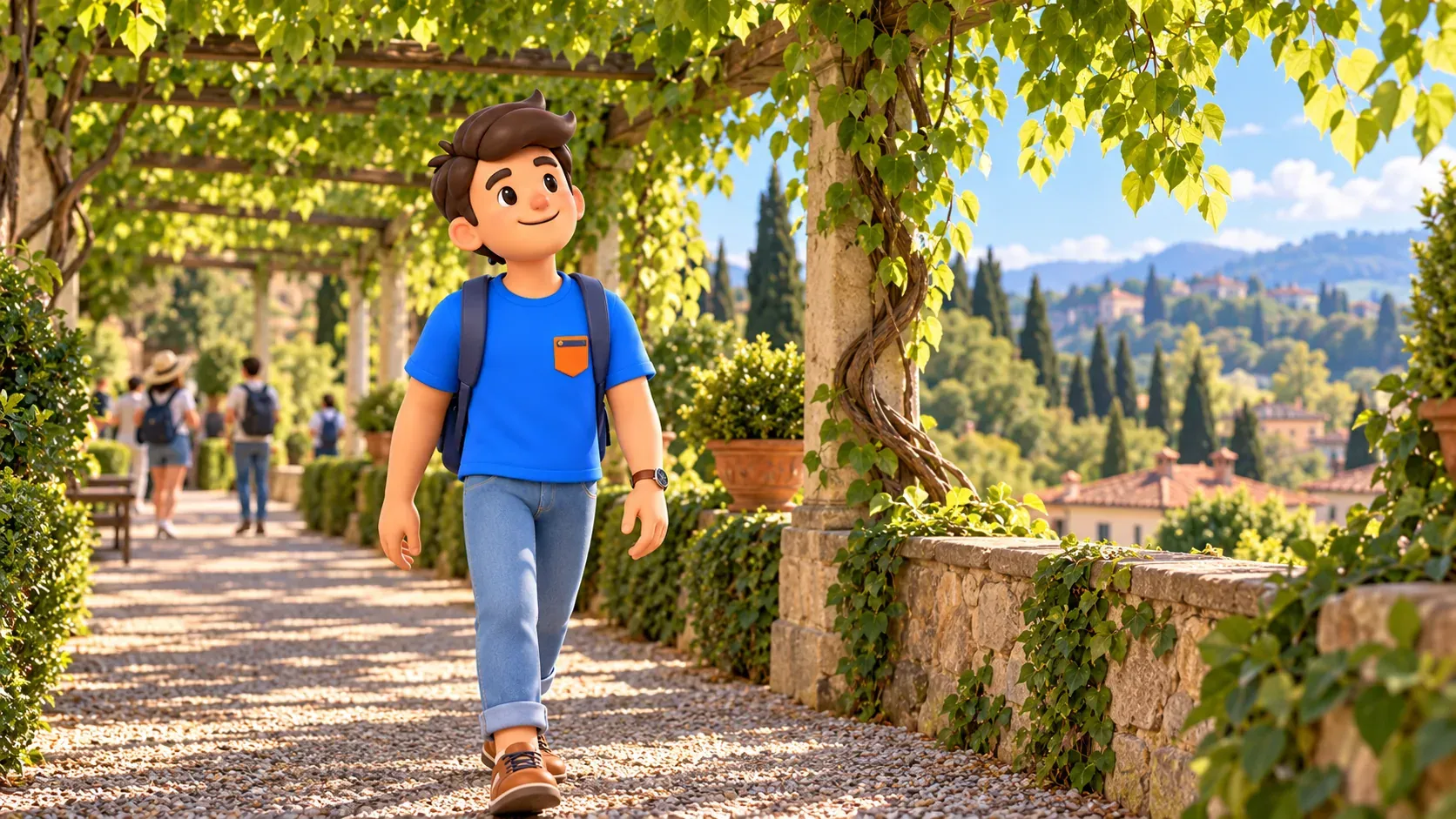
The pergola is associated with Bardini’s best-known seasonal image, but flowers depend on the time of year and conditions. Do not make a half-day rely on full purple bloom being present whenever you travel. If flowering is the main reason for choosing the garden, verify the season and current situation close to your date. At other times, the structure, leaves and view can still be interesting. A living garden is allowed to look different from a photograph made in another month.
When the pergola is busy, keep room for other visitors and follow any local guidance. A narrow planted passage is not a private photography set, and waiting indefinitely for an empty scene can consume the time intended for the whole garden. You can choose a brief observation and move towards a quieter available area. The article’s purpose is to help you use the visit well, not to promise a composition that depends on the absence of everyone else.
The productive garden section near the old walls provides another way to understand the hillside. Planting could serve practical needs as well as display. That theme connects Bardini to a wider history of cultivation around the city, without requiring detailed botanical knowledge. Look at how the space is organised rather than assuming every plant is decorative or available to touch. Respect the garden’s rules, stay on permitted paths and avoid handling or picking anything.
Choose one contrast beyond the formal axis
A freer landscape area offers a different rhythm from the stair and formal geometry. Its planting and paths can feel more natural, while still reflecting deliberate garden-making. Choose one section to compare rather than making every zone equally long. Allow roughly another thirty to forty minutes for a selected continuation and its connections. A short rest and slower looking may take fifteen to twenty minutes more. These allowances help create a focused visit, not an obligation to traverse every path before leaving the grounds.
Notice how open terraces and more enclosed planting change what you see and how you move. The distant city may disappear for a while, then return in another frame. That alternation can be more rewarding than spending the entire visit at a single viewpoint. A small amount of history gives the difference meaning: properties and tastes changed over time, and areas were brought together rather than born as one unchanging composition.
Stefano Bardini acquired the garden in 1913. His collecting interests contributed sculpture, vases, benches and architectural objects to its character. Such details should not automatically be treated as original elements of the earliest garden. This connection between landscape and collecting adds a distinctive layer. You are looking not only at planting design but at a way of arranging historical fragments to shape an impression. One carefully observed object and its setting can communicate that idea without a complete catalogue of every piece on the grounds.
Keep garden, villa and museum distinct
Bardini Garden, Villa Bardini and the Stefano Bardini Museum are not three names for one uninterrupted visit. The villa and its exhibitions have their own programme and visiting questions; the museum on Via dei Renai is a separate institution. Shared associations do not guarantee one ticket, identical hours or direct access between every component. If an exhibition or collection is your main interest, check that specific visit and allow time for it. The garden-based half-day does not silently include all the cultural places carrying the same surname.
This distinction keeps the outing manageable. Choose the garden for landscape, or make a museum the main cultural appointment and reduce the outdoor part. You can also plan the other visit on a different day. The value lies in the experience you want, not completing a set. Clear boundaries also make the river ending more relaxing, because the visit has a recognisable conclusion before you descend and choose the next direction.
Do not assume that nearby Boboli or Forte Belvedere is a convenient extra with guaranteed access. Both change the scope, and their actual conditions require separate checking. If comparing gardens is your main task, the unhurried Boboli visit gives the other landscape its own plan. For this half-day, resist adding another full hill visit just because it looks close on a map.
Give the descent and lower streets proper time
Reserve roughly twenty-five to forty minutes for the actual descent and connection from your confirmed exit towards the lower public streets, adjusting to the route you use. The approach may take around twenty to thirty minutes from a suitable lower starting point, but your exact entrance choice can change both figures. These are editorial estimates. Use a current map and public paths, with suitable crossings. Do not assume the steepest or shortest line is easiest, and do not treat every private-looking opening as a public shortcut.
Once lower down, let the city return at street scale. There is no need for another detailed sightseeing list. A few observations of doors, shopfronts and the movement between river and neighbourhood are enough to change the pace after the garden. If the descent has taken more effort than expected, choose rest before another view. The half-day succeeds when the change between green landscape and ordinary streets remains pleasant.
RoadMe is more useful than a collection of nearby places when you want a complete personalised trip: your interests and pace determine how garden time, museums, neighbourhoods and rest fit together. Prepare your itinerary beforehand and download the useful content for offline access, so less of the day goes into coordination while you explore.
Finish with one short Arno stretch
Choose a suitable public riverside position and a manageable stretch around the lower Oltrarno connections rather than promising a fixed finish at every bridge. The area towards Ponte alle Grazie can provide a useful river ending when it fits your actual descent. Allow roughly twenty to thirty minutes for the chosen view and connection, with another twenty to thirty for a modest refreshment or rest. A full meal takes longer. Look at real availability and displayed prices; the plan does not guarantee a café, bench or particular seat facing the water.
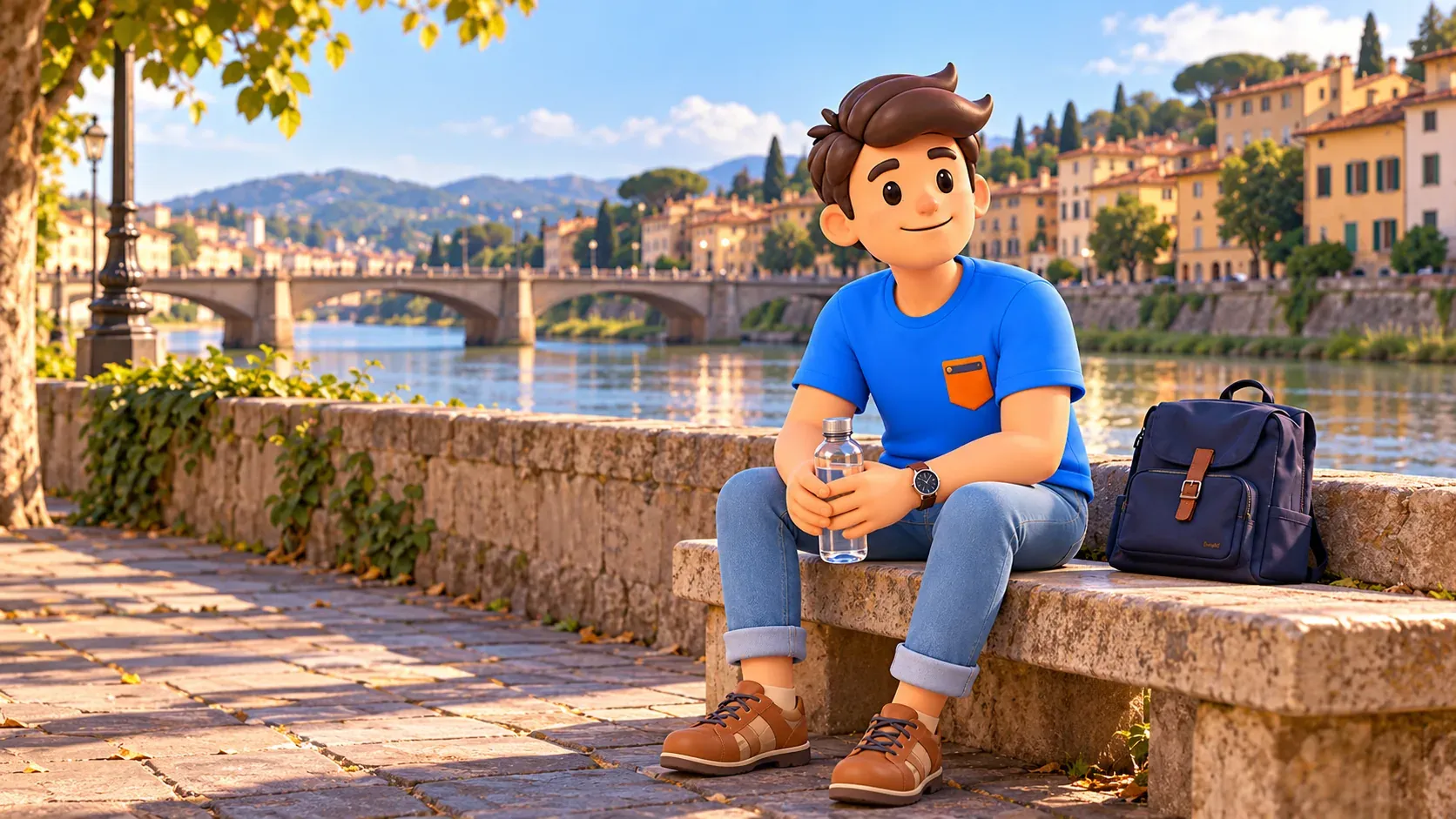
You may stay on the south bank or cross at a suitable public bridge if that matches your onward destination. Decide based on the rest of your day rather than making a return crossing compulsory. The river is an ending, not the start of a second full route. Your actual journey to accommodation or a next appointment remains separate. If you want a longer two-bank sequence on another occasion, the Florence bridges walk gives those crossings their own attention and time.
Match the half-day to the real conditions
The three-to-four-hour envelope works with a focused garden visit, ordinary connections, a brief river stretch and one modest pause. Taking every stage at its longest, waiting, adding exhibitions or eating at length will extend it. In heat, reduce exposed stops and prioritise water and rest. After rain, consider the comfort of sloping paths and steps. Neither a garden label nor a short map distance certifies step-free access. Check suitable routes and current assistance information for your mobility, and choose a smaller version when that is more enjoyable.
Bardini and the Arno work together because they offer different scales of Florence: a layered hillside landscape and the lower city beside its river. Let the garden remain the main experience, choose one or two meaningful contrasts and keep the finish simple. The result can feel generous without exhausting every path or adding every nearby attraction. A useful half-day ends with a clear onward connection and enough attention left to enjoy the rest of the trip.


