
First time in Florence: choose your highlights and leave room to enjoy them
Your first visit to Florence becomes easier when you decide what you most want to experience before collecting attractions. A painting you have wanted to see, the scale of the cathedral, a walk beside the Arno or an afternoon in a garden can each give a day its purpose. You do not need to give every famous place equal time.
Start with three choices: one major indoor visit, one connected area to explore on foot and one slower moment outdoors. This gives you a useful first outline whether you have a single day or a longer stay. The suggestions below help you choose those elements; they are not a timetable requiring every museum, climb and palace in the same trip.
Choose the experience before the attraction
Think about the memory you would like to bring home. For some visitors it is standing before Michelangelo’s David. For others it is comparing Renaissance paintings, understanding a building or watching Florence stretch across the river. These are different interests, and they lead to different plans. A famous name becomes useful when you know why it belongs in your day.
Choose one priority that you would be disappointed to miss. Then add a second interest that changes the rhythm: a garden after paintings, an architectural walk after sculpture or a neighbourhood square after a palace. Keeping that contrast makes the day more varied without continually increasing the number of visits. It also helps when people travelling together enjoy different things.
Putting these choices into practice is much more convenient in RoadMe: the app works out a complete personal itinerary around your interests, travel dates and preferred pace. You can give the trip a clear direction while keeping the places and day-by-day plan together.
Write down one optional experience as well. This is something you will enjoy if time and energy allow, rather than another reservation you must honour. A flexible choice prevents a pleasant afternoon from feeling unfinished simply because you left one attraction for a future visit.
Understand the city through a few useful areas
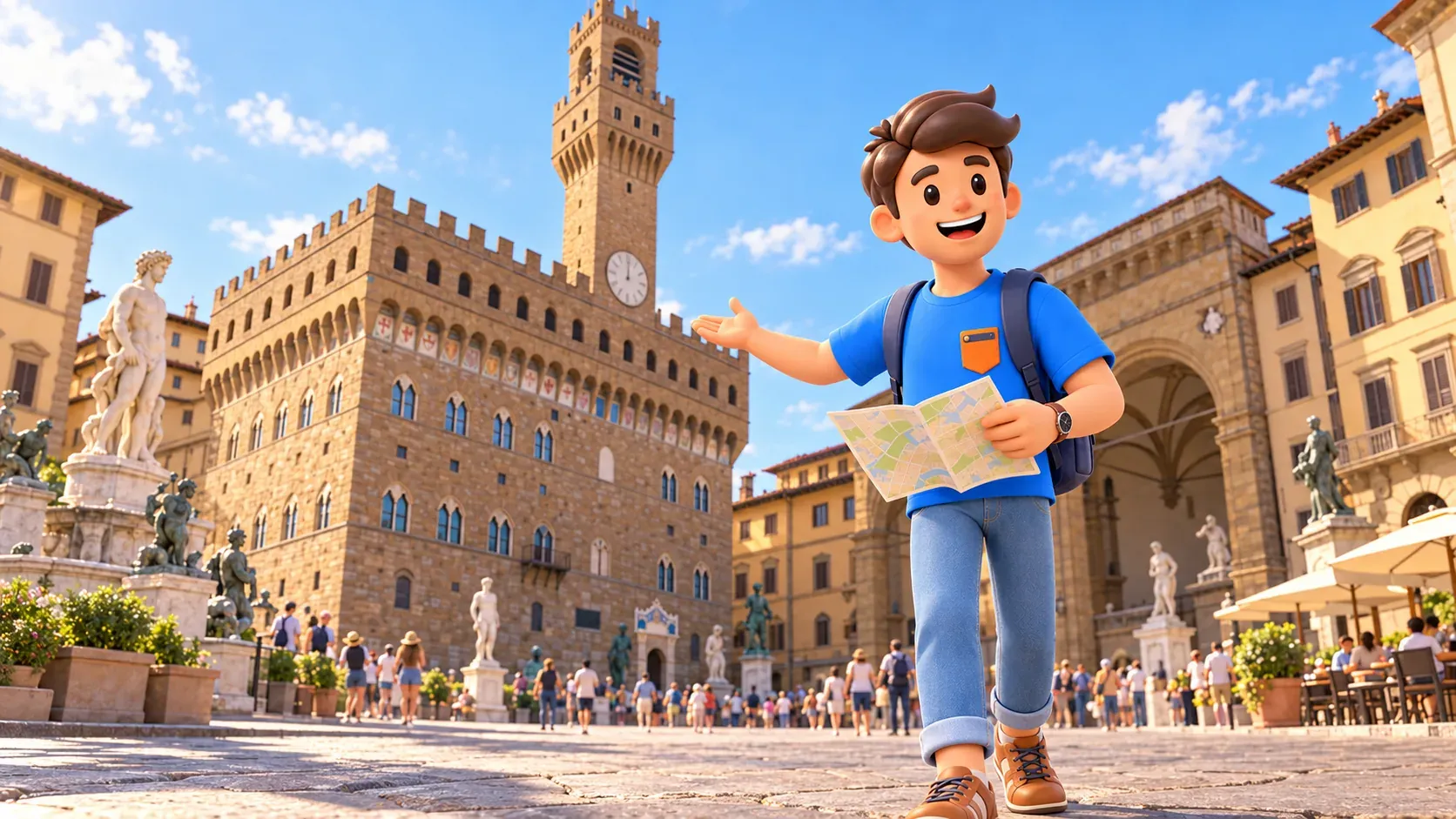
The cathedral district introduces Florence’s religious and architectural centre. Piazza della Signoria and the nearby Uffizi connect civic power with art. The Arno gives a clear visual reference between them and the streets on the opposite bank. Learning these relationships is more useful at first than memorising a long list of street names.
Across the river, Oltrarno contains several distinct areas. Around Santo Spirito you can combine a square, surrounding streets and the exterior of Pitti Palace. San Frediano offers another neighbourhood focus around the Carmine complex. San Niccolò connects the lower streets with routes climbing towards the city’s well-known panoramic hillside. Choose a small area rather than treating the entire bank as one short stop.
There is useful variety north and east of the most familiar route too. San Marco and Santissima Annunziata suit a morning built around art or architecture. Santa Croce and Sant’Ambrogio offer a different combination of monumental spaces, a market and everyday streets. Adding one of these areas can make a return walk feel like a new part of the visit.
Decide what the Duomo means in your trip
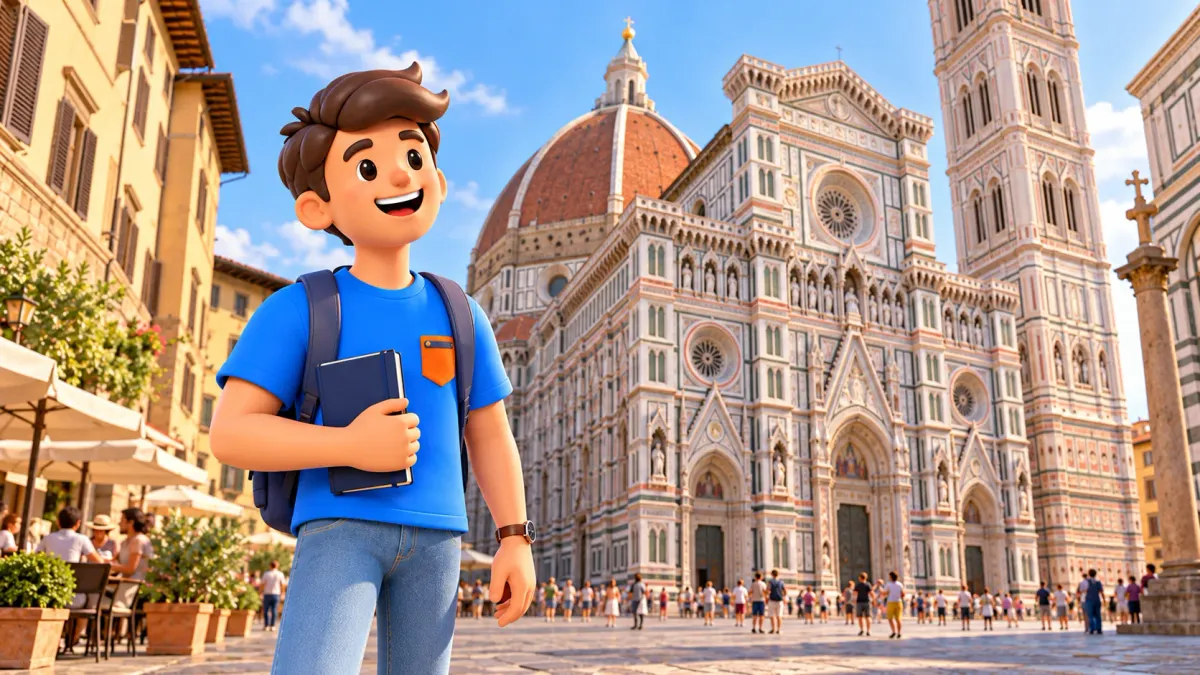
Santa Maria del Fiore is both a major building and part of a larger ensemble. The cathedral, Brunelleschi’s dome, Giotto’s bell tower, the Baptistery and the cathedral museum represent different experiences. Looking at the whole from the square, entering a church, examining sculpture and climbing above the roofs should be separate decisions in your plan.
The dome is especially interesting if construction and engineering appeal to you. Brunelleschi’s solution belongs to the story of Renaissance experimentation, while the cathedral around it contains work from several periods. The outside alone gives you something to observe: the relationship between coloured marble, the broad body of the church and the great volume rising behind it.
If a climb matters, reserve time for the climb itself, entry procedures and recovery afterwards. Do not assume that a tower is a casual addition to a full museum morning. If stairs are unsuitable or heights do not appeal, an exterior visit remains a meaningful choice. You can enjoy the ensemble without turning a first encounter into an obligation to enter every component.
Choose your main encounter with art
The Uffizi and the Accademia answer different interests. The Uffizi offer a broad encounter with painting, including works associated with Botticelli, Leonardo and other major artists. The Accademia are closely associated with Michelangelo’s David. Neither needs to become a test of how many celebrated names you can identify before moving to the next room.
Choose the Uffizi if you want to spend time comparing pictures and noticing changing approaches to figures, space and storytelling. Give yourself a small viewing aim: perhaps a few works that interest you, followed by time to look at something unexpected. Walking past the entire collection at one speed rarely makes every work equally memorable.
Choose the Accademia if seeing David is a personal priority or sculpture is your main interest. The encounter with the original is different from seeing a familiar image reproduced elsewhere. Allow room for that experience without demanding that the rest of the day match the same intensity. The streets around San Marco make a different kind of continuation from another large gallery.
There are alternatives if neither collection matches your interests. The Bargello introduces sculpture in a historic civic building; the Museo Galileo offers a scientific theme; smaller museums can make the cultural centre of a quieter day. Select for curiosity, not because every first visitor supposedly needs exactly the same sequence.
Cross the Arno with a clear destination
Ponte Vecchio is an obvious point of connection, but the bridge becomes more useful when you know what you want to do afterwards. You might continue towards Piazza della Passera and Santo Spirito, approach Pitti Palace or simply walk to another river viewpoint. Give the crossing a destination rather than repeatedly returning to the same crowded approach.
Pitti and the Boboli Gardens belong to the story of Florence’s grand-ducal court, yet they create different visits today. A palace collection asks for sustained attention indoors; the garden asks for walking, changes in level and time outdoors. Seeing the palace façade can also fit naturally into a neighbourhood walk without committing you to a museum visit.
On a first afternoon, a small Oltrarno loop often makes more sense than joining every attraction on this side of the river. Choose the square or garden that interests you and leave time to notice the streets between. A seated break is part of experiencing a neighbourhood, especially when the morning has already demanded close attention in a museum.
Give gardens and viewpoints their own time
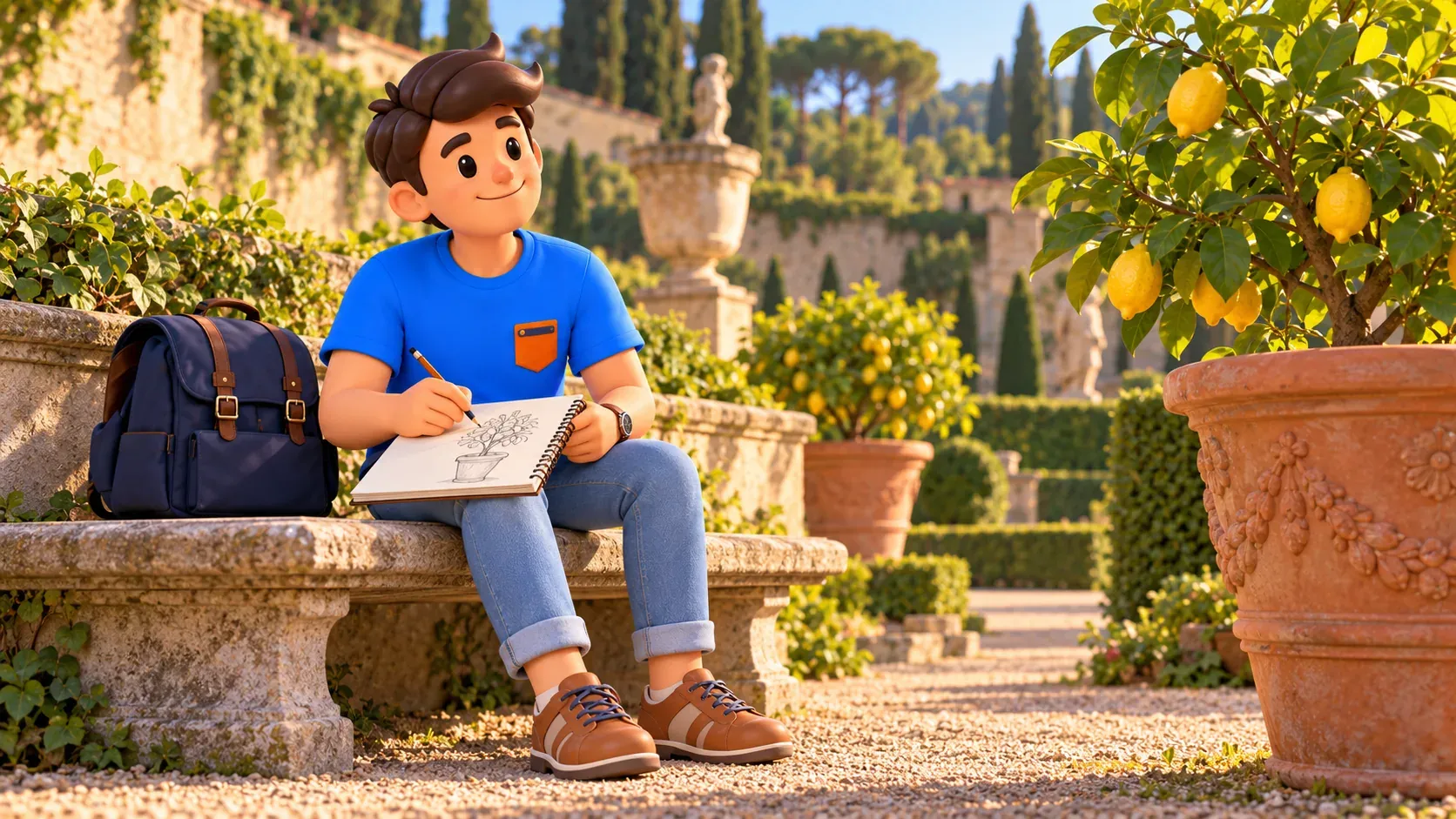
Boboli and Bardini are useful choices when you want greenery, garden design and changing views. They should not be treated as interchangeable patches of shade. Their paths, layout and relationship with the surrounding slopes affect the experience, so choose according to the amount of walking you want and the time available.
Piazzale Michelangelo offers another way to understand the city as a whole. From the hillside, the cathedral and river become parts of a larger urban composition. The nearby San Miniato area can add an architectural dimension, but reaching the hill and returning are real parts of the outing. A viewpoint is not automatically a few spare minutes at the end of any day.
You do not have to make every view depend on sunset. A comfortable point in your schedule, suitable weather and enough energy to enjoy the surroundings can matter more. Decide whether the hill is the main afternoon experience or a separate outing on another day, especially after a demanding indoor visit.
Match your outline to the time available
For one day, keep the emphasis narrow: a chosen museum or cathedral experience, a connected walk through the centre and a river crossing if it fits comfortably. This is an editorial planning suggestion, not a claim that every possible combination takes the same time. Your arrival, departure and entry slot determine how much of the day is actually available.
For two days, divide the trip geographically. One day can focus on the cathedral and northern or central streets; another can connect your chosen art visit with the Arno and part of Oltrarno. The important step is keeping nearby experiences together. Avoid moving between opposite sides of the centre simply because reservations were made in an arbitrary order.
With three days, add depth rather than filling every gap. A smaller museum, Santa Croce and Sant’Ambrogio, or a garden can give the extra day a different character. Leave one period without a fixed entry time. That space lets a discovery, a long lunch or a more leisurely pace become part of the trip rather than a problem to solve.
Set the fixed visits, then arrange the walking
Before completing the plan, distinguish experiences requiring a timed booking from flexible outdoor stops. Consult the attraction’s own current visiting information for the exact product you want: a cathedral visit is different from a dome climb, and a palace complex may contain several collections. The name of a large site alone does not tell you what your ticket includes.
Keep arrival arrangements, breaks and the way back to your accommodation or station visible in the outline. A compact centre still contains queues, crossings, stairs and moments when you want to stop. Treat walking allowances as estimates and leave space around a fixed visit instead of scheduling another entry immediately after its expected finish.
Managing the complete trip is easier and more effective in RoadMe: your interests and preferred pace become a personal programme across the available days. Download Florence beforehand while online if you also want maps and navigation available offline during the visit.

Finish with a short personal selection: the experience that matters most, the area you want to explore and the moment when you will slow down. Everything else can support those choices. Florence offers enough variety for very different first visits, and a clear, manageable plan gives you the space to discover which version of the city you enjoy.


