
Before your train: a short Florence walk near Santa Maria Novella station
The last part of a Florence trip does not have to become a hurried dash to one more major attraction. Around Firenze Santa Maria Novella station, you can notice the station architecture, see the basilica from its square and choose one small continuation. The important choice is how much time is genuinely free after luggage, food and departure needs. A short, complete walk nearby often leaves a better final impression than an ambitious excursion that ends with a run.
This outline starts and finishes at Santa Maria Novella railway station, not another Florence station. Its simplest version visits only the square and exterior of the basilica. A longer version adds the area of the historic pharmacy on Via della Scala. HZero, the model railway museum, is a separate alternative for a deliberately planned indoor visit. Suggested durations are editorial estimates, and none replaces checking your own train, ticket conditions and the actual situation on the day.
Set the return time before choosing the walk
Work backwards from the departure shown on your ticket. Decide when you want to be back at the station, allowing for finding the platform, collecting any stored luggage and dealing with your particular departure requirements. That return time is the boundary of the walk. Do not treat the minutes until the train leaves as minutes available for sightseeing. Two people with the same departure may have very different amounts of usable time.
Consider bags before distance. If luggage is stored, verify the location, collection arrangements and time needed to retrieve it. If it stays with you, choose a route and stops that are comfortable with its size and weight. This article does not promise a particular storage facility, opening schedule or museum acceptance of suitcases. A light outside visit can be enjoyable; dragging several bags through narrow busy streets rarely improves the last hour of a holiday.
Planning the complete journey is much more convenient in RoadMe: the app develops a personal itinerary around your interests, dates and preferred pace. Your final Florence walk can belong to the whole trip, with the experience you actually want selected before you start arranging the departure around several competing sightseeing ideas.
Keep transport details under your own control: consult the operator’s current information and the conditions for your ticket. A city itinerary does not confirm a platform, a train’s running status or a particular boarding procedure. Once the practical boundary is clear, the remaining time becomes easier to enjoy, because you no longer need to renegotiate the whole programme at every attractive doorway.
Choose between a square, a small loop and an indoor visit
If you have only a short gap, choose the square and return. Around twenty to thirty minutes outside can provide an introduction to the basilica facade, before adding the actual station-to-square walking time and your departure reserve. Treat that as a modest experience in its own right. You do not need an additional named stop to make a small walk worthwhile, especially when the weather or your bags favour staying close.
For a more generous gap, a roughly forty-five to sixty-minute outside programme can include the square and the pharmacy area, with the actual return leg still checked against your boundary. This is an estimated programme duration, not a guarantee based on the minutes displayed by a map. Crowds, crossings, a meal or a slow luggage collection can change what fits. Shorten the programme while there is still comfortable margin, rather than waiting until that margin disappears.
An indoor visit needs a different calculation. Start with the time you actually want inside, add access and any waiting, then count both walking legs and the station tasks. Do not infer that a museum is suitable simply because it is nearby. With a tight train departure, the most useful option may be keeping the entire visit for another trip, while enjoying its neighbourhood today without a timed appointment.
Notice the station before leaving it
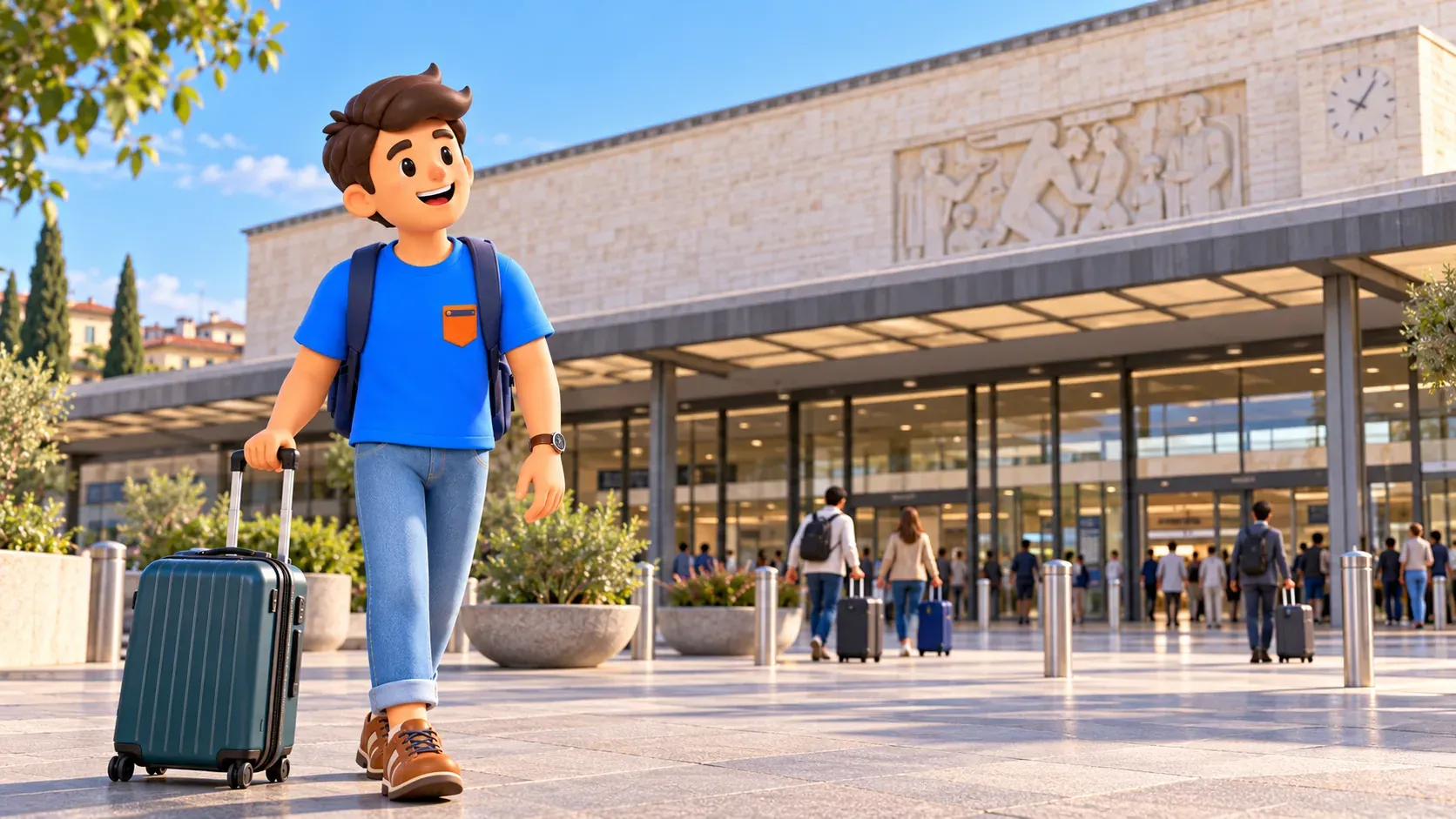
Santa Maria Novella station is itself part of Florence’s architectural story. Its twentieth-century design, associated with Giovanni Michelucci’s Tuscan group, takes a markedly different approach from the monuments most visitors have been seeing in the historic centre. Horizontal lines, stone surfaces and broad glazed areas create a modern transport building. This is an opportunity to look at another period of the city without adding a separate museum to the programme.
Give this observation only the time that fits the station’s actual flow. Stand in an appropriate public position and keep entrances, signs and passenger movement clear. You can notice the scale of the building and the relationship between its surfaces while still respecting its purpose. A station is a working place rather than an architectural display arranged for uninterrupted viewing, and your first responsibility here remains understanding your own departure.
The contrast with the nearby church is particularly useful. It shows a city that continued to build after the Renaissance. You do not need to decide which period is more authentically Florentine. The short walk can contain both, moving from modern mobility to a religious and urban complex developed over centuries. That small change of perspective gives the final part of the trip a subject beyond simply filling the remaining time.
Let Piazza Santa Maria Novella be the main stop
Make your way to the square in front of the basilica, following actual public crossings and a route suitable for your luggage and mobility. The station and the main church facade are different destinations: reaching the church’s vicinity does not necessarily mean you are already standing in the square with the view you wanted. Allow time to orientate yourself rather than expecting the station exit to deliver the complete architectural composition immediately.
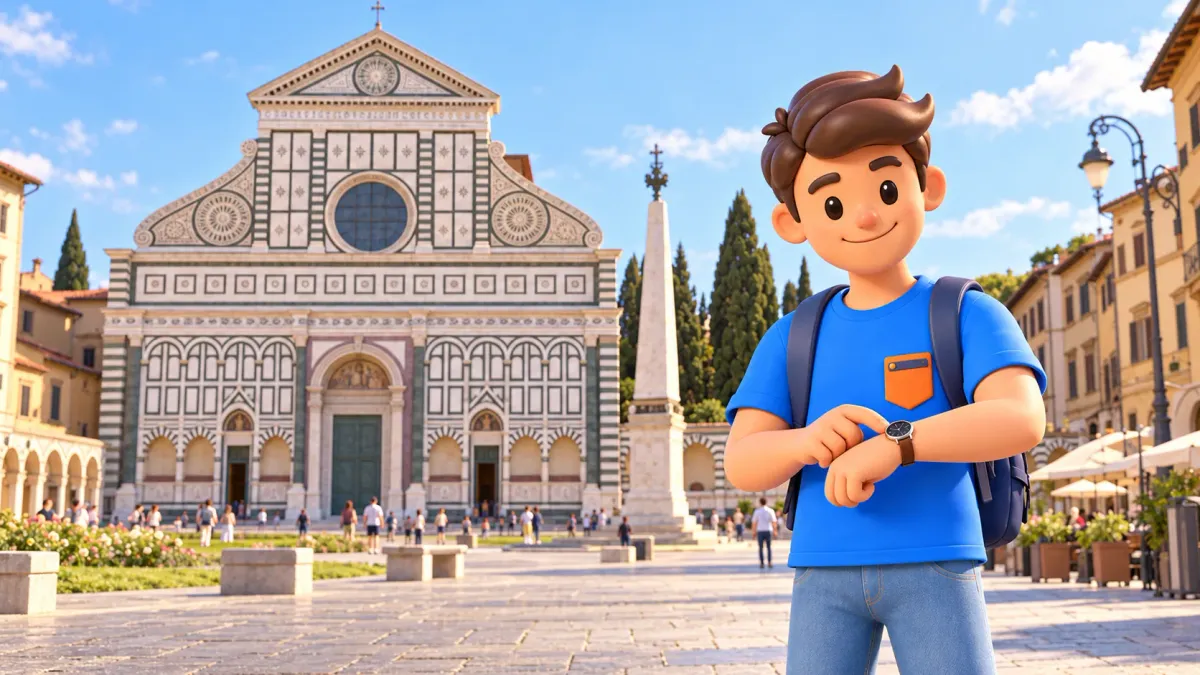
On the square, look at the white and green marble facade and the relationship between its upper and lower parts. Alberti’s contribution helps connect earlier fabric with Renaissance design. The building becomes more interesting when you notice how geometry organises the whole, rather than treating the facade as a flat picture to collect. One observation about circles, divisions or proportions can give the stop enough meaning without a long chronology or a complete catalogue of decoration.
The church and its Dominican context also explain why a large public space matters here. A religious complex had relationships with the city beyond its internal artworks. The square offers a way to sense that connection outdoors. You may recognise the name from the station, but this is a different experience: a place to stand, look and understand the surroundings, with enough room in the programme to return comfortably rather than rushing straight past the main facade.
Keep the basilica interior a separate decision
Inside Santa Maria Novella, important works and historic spaces deserve attention. They are not a brief automatic add-on to an exterior stop. If you want to enter, check the actual arrangements for your date and the time required for your intended visit. Account for the entrance process, any luggage restrictions and the exit before the walk back. Do not let being physically close substitute for making a realistic visit plan.
With a train approaching, avoid a programme in which every room becomes another reason to delay leaving. Choose an interior only when you have enough margin to enjoy it without repeatedly checking the time. Otherwise, keep the view from the square and save the collection for a future visit. An exterior encounter is not a failed museum visit. It has its own scale and can be precisely the right last experience for this particular departure.
If you have a full sightseeing day rather than spare time before a train, the one-day museum and centre outline offers a different starting point. The purpose here is intentionally local. Your final hour does not need to correct everything you did not see earlier in the stay. It can simply give one nearby architectural ensemble a little more attention.

One continuation: the historic pharmacy area
If your available time allows, the historic Santa Maria Novella pharmacy on Via della Scala provides a nearby direction. Its story connects the Dominican setting with medicinal plants, aromatic preparations and later perfumery. This is a different thread from the basilica facade: practical knowledge, craft and the material side of city life. You can approach the area without deciding that shopping must become the final activity of the trip.
An interior visit depends on the access and business conditions you actually find. A queue, a restriction or a longer-than-expected stop can use more time than the distance suggests. Decide whether you want to look, shop or simply pass by, and respect the relevant arrangements. No purchase is necessary to justify your interest in the history, but do not assume that every area is freely accessible or that entry will be immediate before your train.
After this one continuation, turn back towards the station. Do not extend the outline successively towards Strozzi, Repubblica, the cathedral and the river. Those places belong to a larger centre programme. The value of staying nearby is preserving a clear return, not proving that every additional sight is only a few more minutes away. Each small addition changes the whole calculation once stops and your eventual return are included.
A different option: HZero and a focused indoor experience
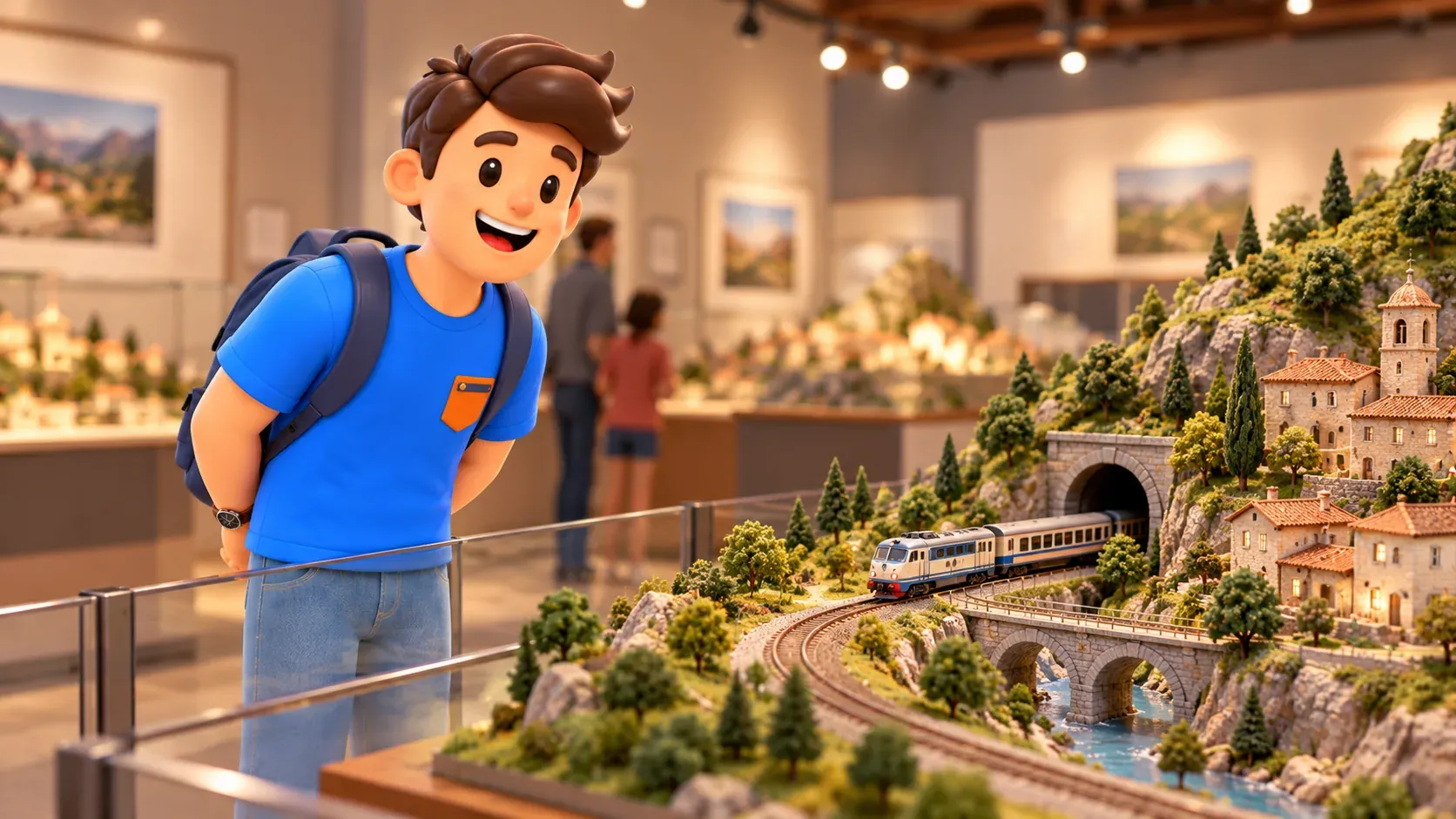
HZero offers the world of a large model railway, where trains, tracks, buildings and miniature landscapes form a carefully made setting. The museum provides a thematic connection to a day of rail travel, but its closeness to the station does not automatically make it a quick waiting room. Choose it because the model interests you, and give that interest a proper visit allowance in addition to access and return needs.
Treat HZero as an alternative to the longer outside programme, not an extra after the pharmacy and basilica interior. Check the current opening, entry arrangements and your ability to use the available time. With children, agree on the leaving point before entering, while allowing that attention may settle on one small scene. If the necessary time does not fit comfortably, a short square visit is a simpler and still worthwhile choice.
End the walk before the departure becomes urgent
Return at the time you set, even if there is another attractive doorway nearby. Retrieve bags, obtain anything genuinely needed for the journey and check current departure information. Food and water need their own small allowance; a seated meal needs more. This article does not assign one universal station buffer, because luggage, mobility, familiarity and the particular train all change what is appropriate. Use the margin that suits your actual situation.
Using the final day is easier and more effective in RoadMe, where a complete personal plan reflects the places and experiences that interest you. Download Florence beforehand while online if you want maps and navigation available offline, and keep the confirmed train details and your return-time decision alongside that plan.
A short walk can close the stay without trying to summarise it. You have seen the meeting of modern station architecture, a historic religious complex and perhaps one smaller story of craft or miniature engineering. Return with enough time to notice the transition back into travel. The last useful memory of Florence can be an attentive look at a facade, not the anxious calculation of whether one more photograph has made you late.


