
Your First Evening in Verona: a Short Arrival Walk
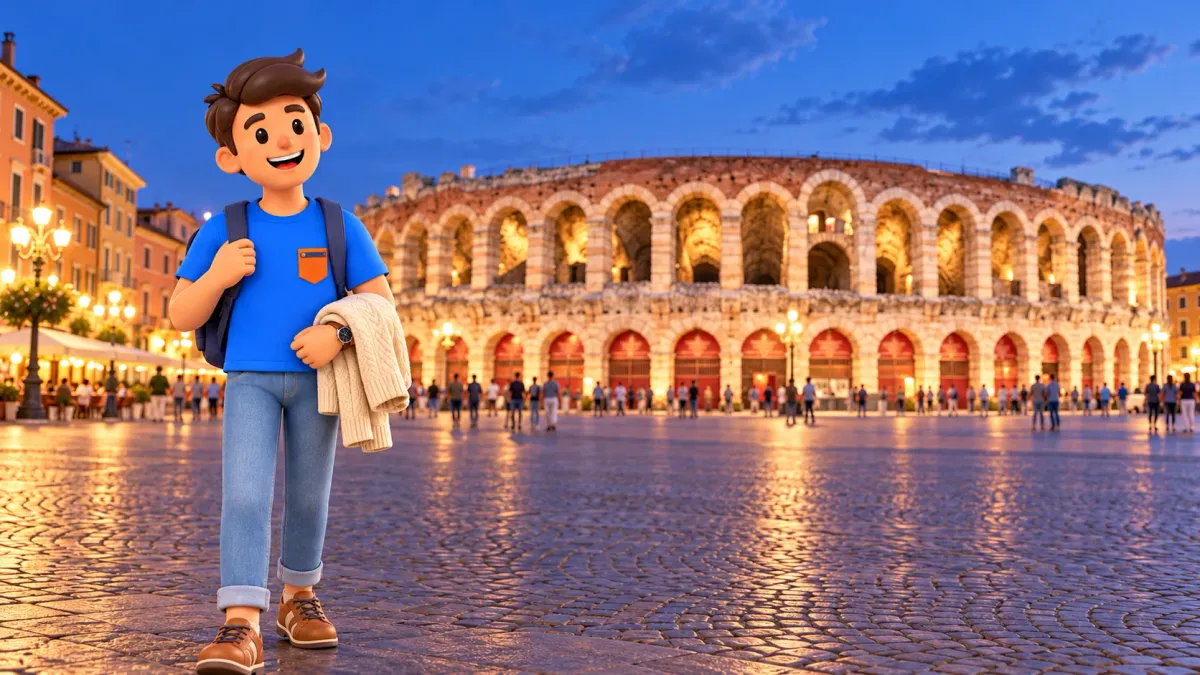
For a first evening in Verona, see the Arena from outside, walk from Piazza Bra along Via Roma to Castelvecchio, then finish near Porta Borsari. Allow roughly 60–90 minutes for this compact introduction, with dinner and the journey back to your accommodation counted separately. If the journey has left you tired, Piazza Bra alone makes a shorter option.
The purpose is to get a feel for the city and notice somewhere you would like to return tomorrow. This outing requires no museum admission, hill climb or precisely timed sunset. Check in, leave your luggage and start when you are actually ready to enjoy walking.
Choose the length of your first evening
Treat Piazza Bra as the starting point, rather than the airport, station or your hotel door. Getting there can take very different amounts of time, so do not quietly fold that transfer into the suggested hour. If you are staying outside the center, consider the return journey too: reaching the final monument is not the same as reaching your room.
Try RoadMe to fit this first evening into a personal plan for your whole trip, using your dates, interests, pace and budget. It is a convenient way to keep arrival day manageable while giving the following days a program that suits you.
Before setting out, finish the practical tasks that would otherwise interrupt the walk: check how to return to your accommodation later, put away your luggage and take only what you need. Comfortable shoes, a charged phone and clothing suited to your dates make more sense than carrying everything from the journey into the old town.
There is no single starting hour that works for every season. A light summer evening and an outing after winter darkness offer different impressions, but both can suit a brief exterior introduction. All durations here are planning estimates, not measured walking times. The main option allows about 30–40 minutes walking and 30–50 minutes looking, photographing and pausing; dinner is extra.
- 20–30 minutes available: Piazza Bra, an accessible exterior view of the Arena, then finish nearby.
- 60–90 minutes available: Bra → Via Roma → Castelvecchio → optional short visit onto Ponte Scaligero → Corso Cavour → Porta Borsari.
- Late and hungry: arrange dinner first, with a short walk afterwards only if you feel like it.
Piazza Bra: a first look without an admission queue
Begin by looking at the square as a whole. It gives you room to stop and understand Verona beyond a single famous photograph. The Arena's stone arches sit beside cafés, strolling space and much later civic buildings. That combination is already enough for an arrival evening, and it leaves plenty to investigate with fresh energy.
The Arena is a Roman amphitheater from the first century AD. Its modern musical history includes the staging of Aida in 1913. Those two facts explain something of its double character: an ancient monument that continues to participate in the city's cultural life, rather than simply a surviving structure viewed from a distance.
Looking from the square and attending a performance are separate activities. Do not expect an exterior stroll to turn automatically into a chance to see inside. A show needs its own arrangements and conditions checked; this introduction works with an available outdoor view. Even keen opera lovers should consider how they are likely to feel after traveling.
A complete circuit around the amphitheater is not essential. Stage installation, events and work can change the passages and visible areas; Verona announced restrictions in neighboring streets for the 2026 season. Follow the barriers and choose a permitted viewpoint. This is not a claim that the entire square is closed.
The Liston strolling area runs along Bra's western edge, with Palazzo Barbieri, the town hall, on the eastern side. Pause and decide whether you want to continue. If not, the short walk has already achieved its purpose. You do not need to use every remaining minute of arrival day to make the trip feel worthwhile.
Via Roma: a gentle transition towards the castle
Follow Via Roma from Bra towards Castelvecchio. After the broad square, this short connection brings your attention back to doorways, windows, the street perspective and ordinary city life. There is no need to find another attraction entrance for this part of the walk to be interesting.
Stop where you can let others pass. On a first visit, it is tempting to look at the map, signs and buildings at once; briefly pause to check the direction, then put the phone away again. Noticing the transition between places helps you remember the city better than following only the next marker on a screen.
At Castelvecchio, brickwork, towers and the defensive outline change the mood. The castle is associated with the Scaliger rulers and Cangrande II della Scala. That is enough historical context for tonight: you can appreciate the difference between the Roman amphitheater and a medieval stronghold without learning every later alteration before dinner.
The street exterior and the museum inside are different visits. Keep the collection for a separate daytime session if it interests you. A closed museum does not remove the view from a public street, but outdoor space beside a building should not be mistaken for permission to enter every courtyard, staircase or passage.
Ponte Scaligero: a small pause over the Adige
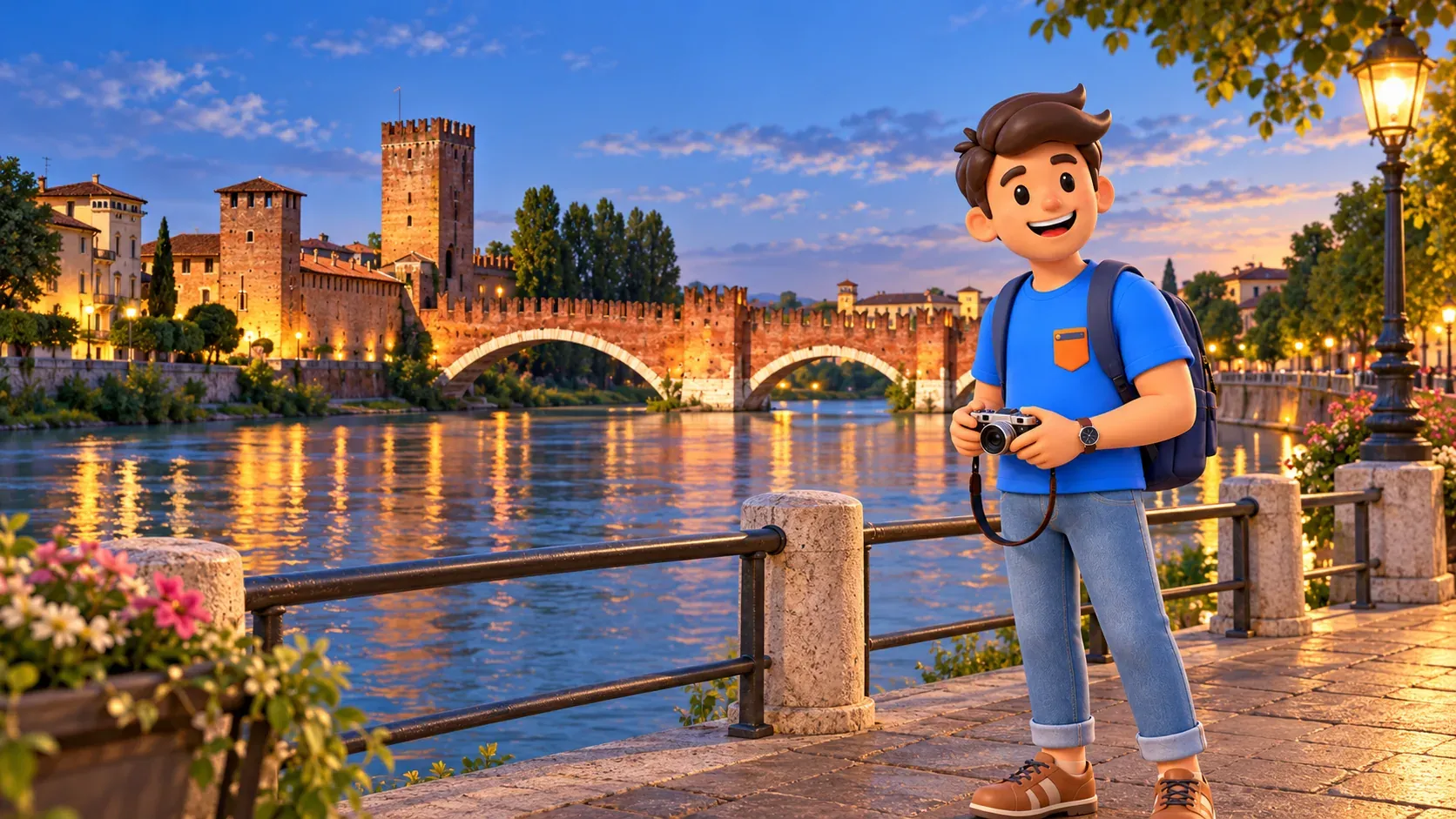
If the passage is open and conditions suit, step briefly onto Ponte Scaligero, also called the Castelvecchio bridge. This outing does not require crossing to the opposite bank and beginning another long loop. A short look from the bridge, returning the same way to the castle, is enough.
Three unequal arches and brick battlements link it visually to the fortress. The original bridge dates from the fourteenth century; after its destruction during the Second World War, it was reconstructed. Its present appearance therefore tells a story of rebuilding as well as medieval defense, adding another layer to a brief river pause.
Give the water and the overall outline a few minutes instead of chasing every possible photograph. Details appear differently at dusk, and the light varies with the season. The walk promises no particular lighting scheme, weather or absence of people. None of these needs to become the test of whether your first evening has gone well.
If it is wet, windy or simply time to eat, skip the bridge and continue from the castle side. The route remains understandable without a stop above the water. Use normal public paths and crossings, respect closures and do not descend towards the river for a closer photograph.
For specific mobility needs, check the actual route in advance. Avoiding a large hill climb is not a guarantee that every part is step-free. The useful principle for tonight is to choose a manageable stretch and finish while it still feels pleasant, rather than completing every optional part regardless of conditions.
Corso Cavour and Porta Borsari: a clear finish
Back by the castle, continue along Corso Cavour towards Porta Borsari. This connection returns the walk to looking at street façades. After the brick fortress, notice the changing materials and proportions. Even on a small part of Verona, the buildings do not belong to one architectural style or one moment in history.
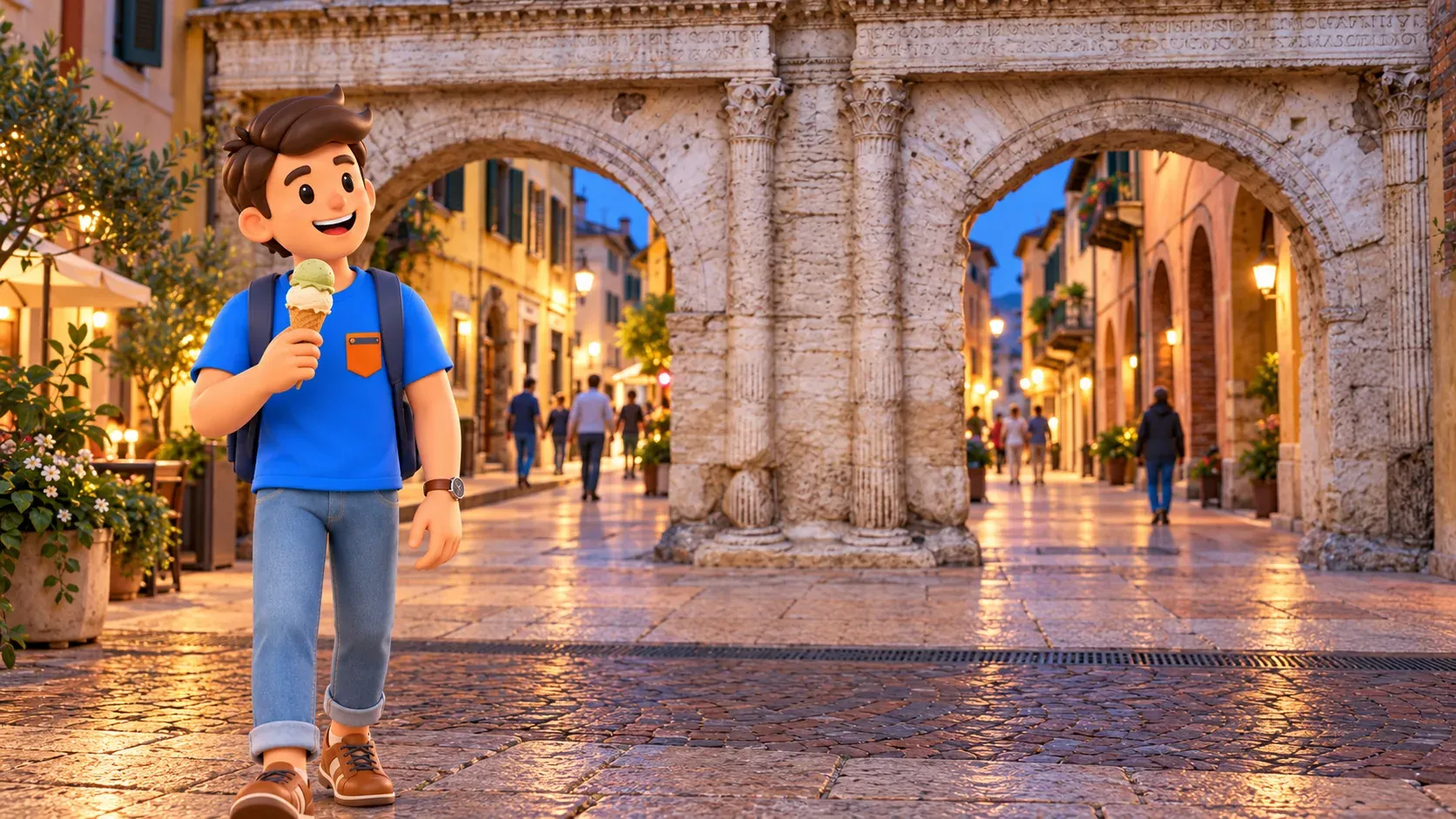
Finish at Porta Borsari. What survives is the façade of a Roman gate from the first century AD, once part of a considerably more elaborate structure. The two lower openings suggest the old entrance, while the upper levels show how decorative a practical urban gateway could become.
You do not need to add Piazza delle Erbe, Ponte Pietra and the San Pietro hill tonight. Each addition sounds modest in isolation, but together they change the outing. Agree on a finish: after Borsari comes dinner or the journey back, with another neighborhood saved for tomorrow.
If you are staying closer to Bra, choose the return route around your accommodation rather than repeating every stop. If your room is farther north in the old town, continue towards it directly. Both journeys count separately: the suggested sequence ends at the gate, not at your own front door.
Give dinner its own place in the evening
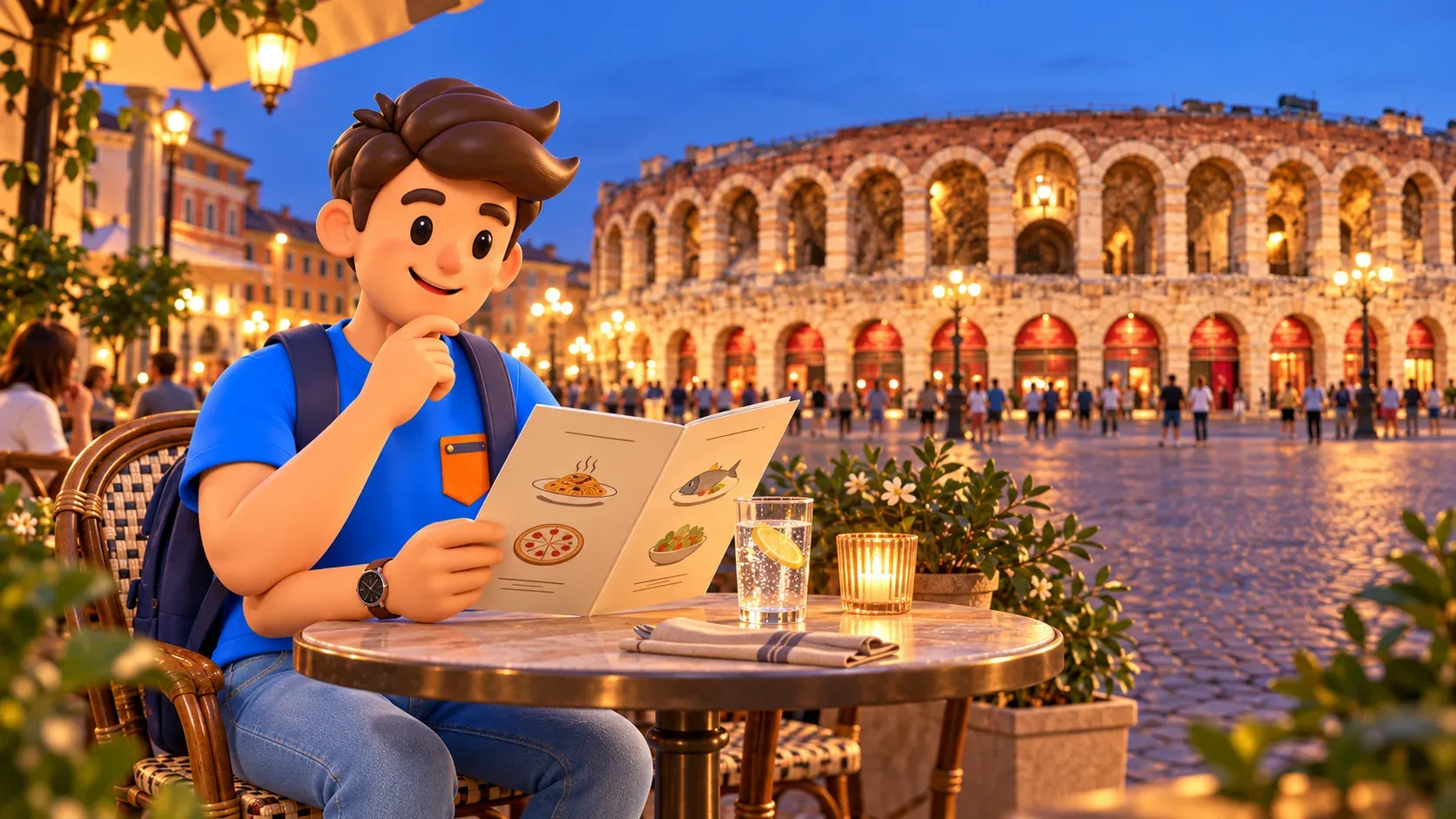
Decide whether you want to eat before or after walking. With an early check-in, a stroll before dinner may be appealing; a later arrival changes the priorities. Confirm the kitchen hours of your chosen place, particularly near closing. An establishment still being open does not necessarily mean it is accepting orders for a full meal.
Do not select a table solely for its monument view, or assume every business on a famous square is identical. Look at the current menu, prices and seating arrangements. On the first evening, food you want and a location that suits you matter more than searching across the city for one supposedly correct address.
Allow dinner a separate block of time and reserve if appropriate. A fixed table booking should not depend on squeezing in ten more bridge photographs. It is easier to finish the walk early and arrive without rushing than to turn an enjoyable introduction into a race between commitments.
Late arrival, rain or tiredness: shorten the plan
For a late arrival, stay around Piazza Bra if it is convenient for your accommodation. Around 20–30 minutes looking at the Arena from outside and taking a short pause can provide the first impression you wanted. If travel took longer than expected, dinner near your room and sleep are enough.
In rain, choose a shorter stretch of suitable public streets and a stop inside a café or restaurant. Arcades and overhanging façades do not make the complete route sheltered. Save the bridge and extended photography for another day if they conflict with the simpler aim of getting warm and resting.
With companions, agree on the limit before setting out. One person may want the whole historic center immediately while another wants a meal. A shared short section and a clear finish keep the evening enjoyable without negotiations at every street corner. Verona will still be there when everyone has had some sleep.
In RoadMe, you can work out a personal program for the following days around your interests and pace, leaving arrival evening comfortably light. Try planning the whole stay in the app so walks, visits and breaks form an itinerary that is convenient to use on the ground.
What to leave for tomorrow
Tonight gives you a first useful choice: return to Castelvecchio for the museum, or explore farther into the old town. Select one main visit and check its timetable before setting out. An evening wish to see something tomorrow becomes more useful when it is turned into a realistic daytime plan.
For a broader introduction, see our one-day Verona itinerary, linking the center, river and an optional panorama when you have a full day. For now, a square, a little history and the feeling of finally having arrived are plenty.


