
Expo City in One Day: Which Pavilions Should You Choose?
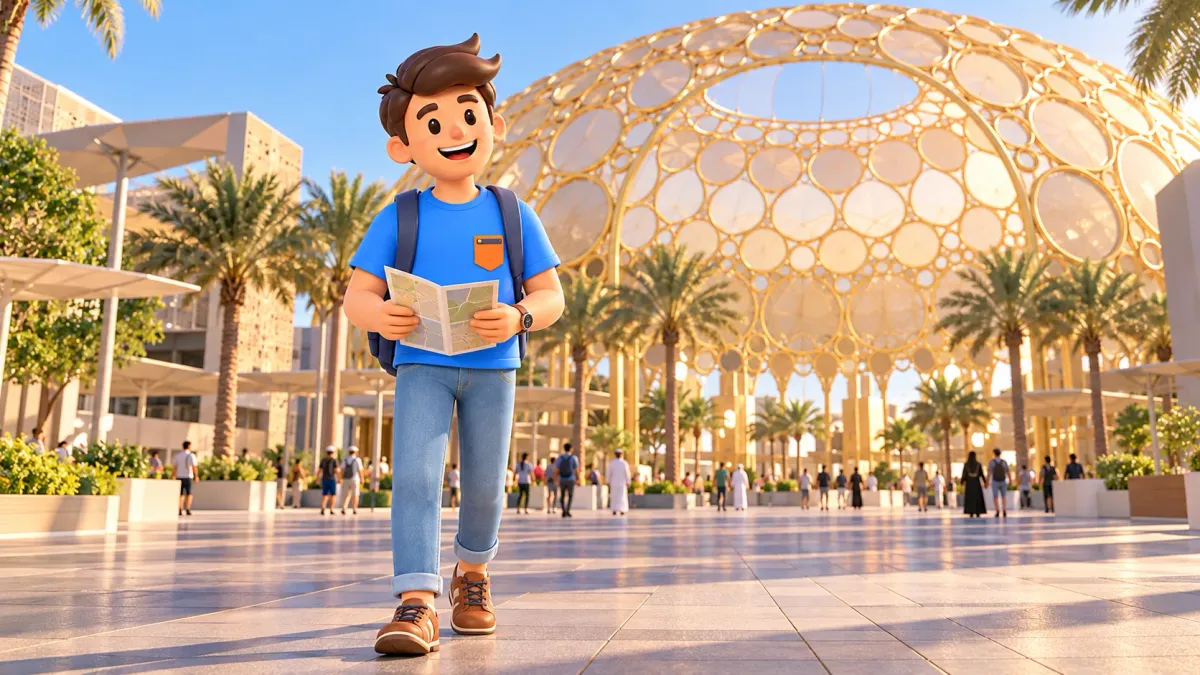
An Expo City day works best as a choice of subjects rather than an attempt to enter everything. Terra introduces a question about resources and the environment. Alif expresses movement through its architecture and mobility theme. The Expo Museum turns the making of a major event into a historical subject. Al Wasl gives these different directions a shared spatial centre.
Choose one main visit and a complementary second, then protect time for moving, eating and looking at the architecture outside. Allow roughly five to seven hours for a relaxed day according to the actual programmes and your pace. This is an editorial estimate, not a measured schedule. Current availability determines what can form the day; the former Expo site should not be treated as an unchanged exhibition with every earlier pavilion experience still guaranteed.
Start with your interest and the current offer
RoadMe can create a personal route or complete Dubai trip around your interests, dates and pace. Prepare Expo City in the app: fitting chosen pavilions, outdoor architecture and rest into a whole day is much more convenient than coordinating separate attraction lists.
Read the actual programme and admission conditions for your date before selecting a pair. A building can remain architecturally important while the exhibition or visitor offer changes. Distinguish an exterior look, a public space and a ticketed interior. Choose the visits you can actually make, then use the architecture as a link between them rather than a substitute for an unavailable exhibition.
For a first visit, one strong subject is enough to anchor the day. Choose Terra if its current offer and environmental questions appeal to you; Alif if mobility and the relationship between movement and buildings are the stronger interest; the Expo Museum if you want to understand how the event was created and what remains after it. These are ways to choose, not promises of today's exact contents.
Keep the second visit as a complement. It can change the subject or deepen it, but should leave enough attention for its own story. Selecting all three interiors plus every outdoor feature can turn a broad campus into a race. A smaller pair with a proper pause gives the day a clearer memory.
Save the real arrival point, selected entrances and departure. A large district name does not explain its internal routes. Give the ordinary movement time, especially when outdoor conditions make shorter sections preferable. The practical plan should connect actual visitor access on the date, not recreate the shape of an old Expo map from memory.
Al Wasl Plaza: begin with the idea of connection
Al Wasl means connection. Its large lattice dome, designed by Adrian Smith + Gordon Gill Architecture, formed a central space for Expo 2020 Dubai, held in 2021–2022. Retaining it became part of the site's transformation into a continuing urban setting. The structure organises a public place rather than simply covering one small interior room.
Look at the curved lattice before searching for an event. Repeated elements make a broad pattern that can appear denser or more transparent as your position changes. The dome is about 130 metres across and 67.5 metres high. Those figures help with scale, but the relationship between a person, the plaza and the overhead structure is the more immediate experience.
The envelope can also serve as a surrounding projection surface. Daylight reveals material and structure differently from an image spread across it. A particular projection or evening programme depends on current arrangements; do not build the whole day around an old video. The architectural view remains a subject without assuming a scheduled spectacle.
Use Al Wasl as an introduction, not another long checklist. Ask how a central space connects different paths and buildings. Then move towards your selected main visit. A clear first question makes the campus easier to understand than trying to recognise every pavilion name before you have begun.
Terra: choose a question about resources
Terra, the Sustainability Pavilion, was designed by Grimshaw with engineering by Buro Happold and opened in 2021. The broad solar canopy and separate energy-tree structures make resource collection visible in the architecture. The building's environmental theme is therefore not only something an exhibition can explain; it is part of the exterior form itself.
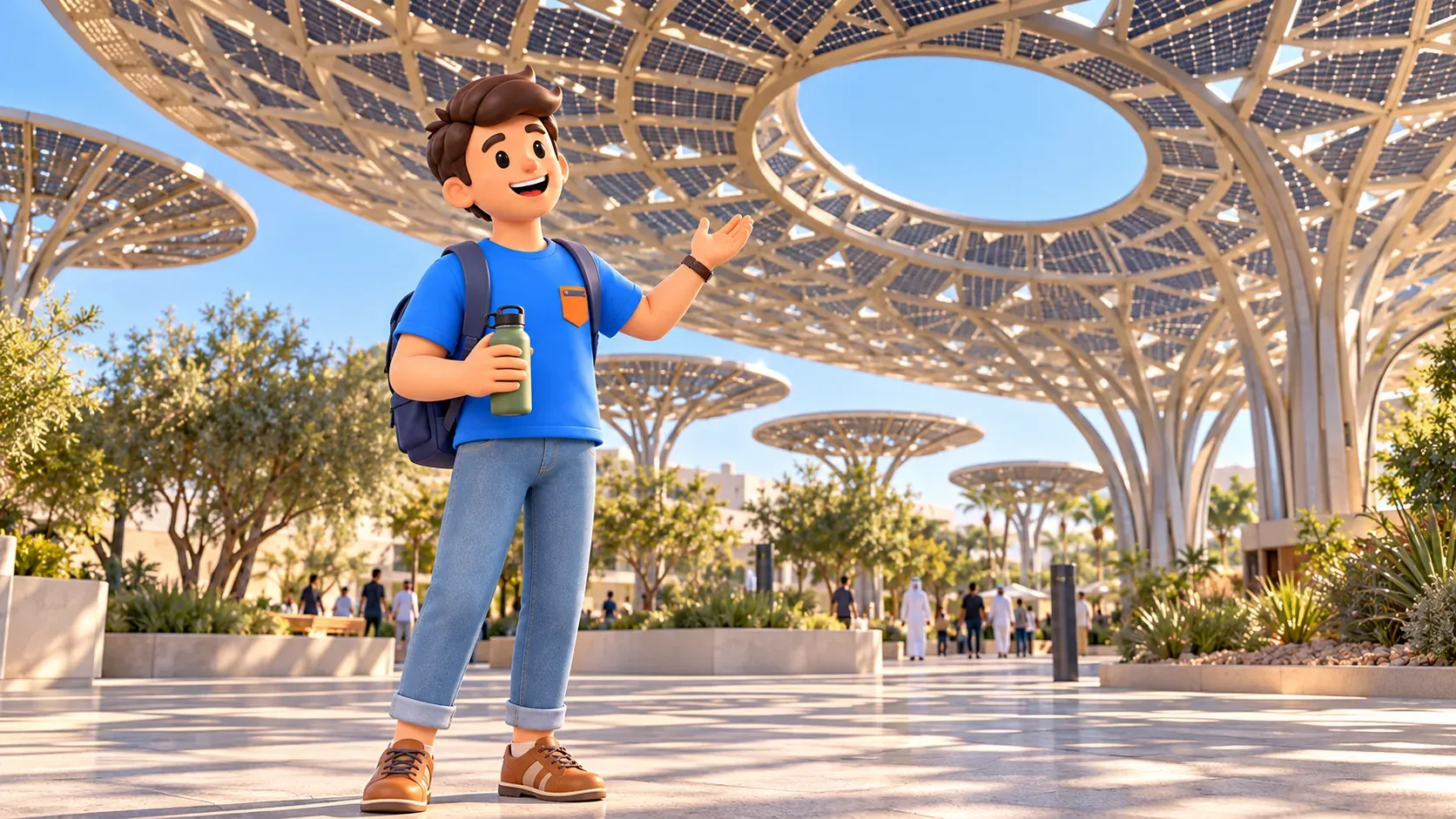
Look at the large canopy as an element with more than one task. Photovoltaic surfaces collect solar energy while the form shades the spaces below. Gaps between elements allow a varied light pattern. This is a useful architectural idea to notice directly: equipment and spatial experience can be designed together rather than one appearing only as a later addition.
The smaller energy structures around it borrow the image of a tree without becoming literal plants. Their relationship to surface and shade gives the form its interest. Compare the technical canopy with the landscape around it. You can ask how a building responds to climate without claiming to calculate its actual performance from one visit.
If the current interior offer is your main visit, choose a personal question before entering: how do resources connect with daily choices, or what makes a designed environment work with its conditions? Follow what the actual presentation offers. One clear question can be more useful than trying to absorb every environmental topic equally.
With children, keep the comparison concrete: what gives shade, what collects light and where does the ground feel different? They do not need to retain a list of engineering terms. Adults can use the same starting point before considering the broader subject. The visible building gives a shared reference for different levels of interest.
Alif: movement in a building that stands still
Alif, the Mobility Pavilion by Foster + Partners, uses three rounded volumes and reflective metal bands. Its name refers to the first letter of the Arabic alphabet and the idea of a beginning. For this visit, the useful visible question is how a still building can suggest movement.
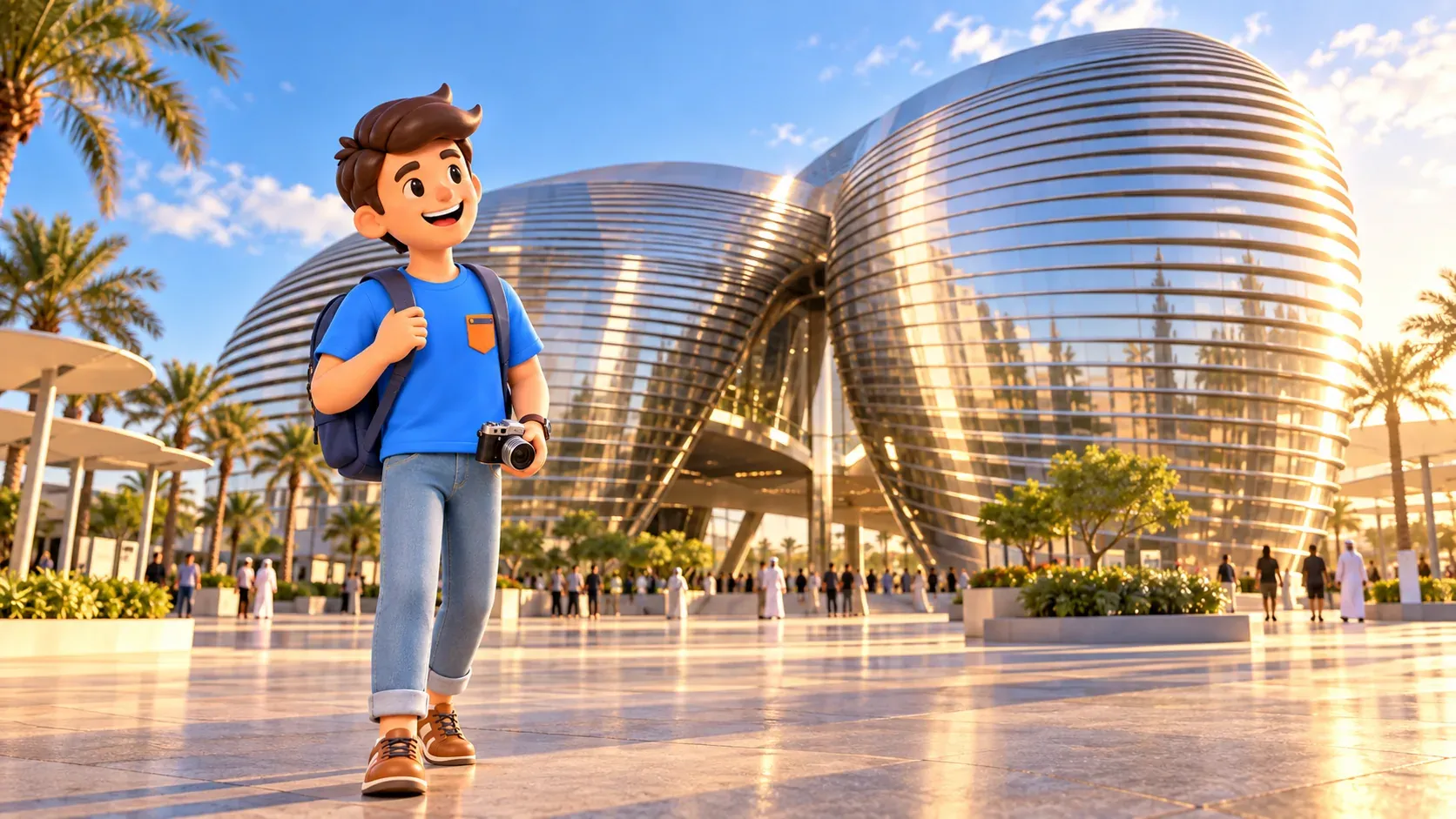
As you move along an available exterior approach, reflections change across the steel. The three-part form gives the larger composition, while the horizontal bands supply a smaller rhythm. Look at both scales. A photograph can capture one appearance, but walking reveals how the same surface alters with position and light.
The exterior's geometry also relates to shading. That makes appearance and practical function connected subjects. There is no need to turn the stop into a technical claim about every panel. Start with the visible relationship between the layered surface and the parts it protects, then use information provided by the actual visitor presentation if you want to explore further.
The project was conceived for a life beyond the temporary event, including the possibility of adapting large interior spaces. That extends the mobility theme into a question about buildings over time: can they remain useful when their purpose changes? It is another way to discuss resources, different from the solar collection made visible at Terra.
Choose Alif's current offer because the topic interests you and admission fits your day. The architecture and any present exhibition are related but not identical. If an interior is unavailable or the programme does not match your interests, a deliberate exterior comparison can be part of a different, shorter version rather than a promised full pavilion visit.
The Expo Museum: understand the event behind the buildings
The Expo 2020 Dubai Museum opened in 2024. Its subject is the creation and legacy of the world exhibition held from October 2021 to March 2022. It turns a large international project into a museum story, giving a different direction from experiencing a pavilion mainly through its theme or striking form.
The useful question is how an event becomes a place with a longer life. Preparation, collaboration, visual ideas and later preservation all belong to that history. The buildings around you are part of the evidence. A museum visit can therefore connect what you see outside with the work that produced the site.
Select it as the main or complementary visit if that historical process interests you. Check the actual programme and entry conditions. Do not automatically add it to a day already filled with two long interiors. Changing from an environmental or mobility question to the history of an event deserves enough attention to be more than one last room.
For a family, the subject can be approached through a simple question: who has to work together to make a place like this? Different answers can come from architecture, design, construction or the presentation itself. The aim is to make the scale of collaboration understandable, without requiring everyone to memorise the whole event timeline.
Pause before deciding on another feature
After the main visit, take a proper meal or rest in an available place that suits the day. A particular restaurant is not required for the plan. Use the pause to decide whether the second chosen visit still feels right. The itinerary should respond to actual attention rather than preserve a full list after everyone has tired.
Ask each person for one question or image they want to keep. It might be the solar canopy, a reflection on Alif or an explanation of the Expo's creation. Different favourites can coexist. A day becomes clearer when you recognise its strongest thread instead of continually adding another subject before the previous one has settled.
If the group wants less, shorten the remaining programme. A main visit and architectural walk can already be a complete day when combined with a longer meal and comfortable movements. The target is the experience you chose, not a compulsory count of interiors. Keep enough time for the actual departure after the last planned stop.
Outdoor features are choices with their own conditions
Surreal Water Feature was created for Expo by WET Design, with music by Ramin Djawadi. Its sloping water walls and combination of physical effects make water an architectural material. That describes the original idea; the current operation and visitor arrangements must be checked before treating it as a scheduled part of your day.
Similarly, Al Wasl's evening image is a separate programme question, not an automatic ending. If a current event interests you, give it its actual time and plan the gap before it. If not, finish after your chosen visits. Expo City's architecture does not require every available effect to be operating at once to have a subject worth seeing.
Leave with a selected day rather than an unfinished catalogue
At the end, compare the topics rather than the number of places. Did the day change how you see resources, movement or the making of a major event? One remembered question and a few architectural relationships can be a substantial result. Another visit can follow a different programme instead of repeating or completing every name left over.
RoadMe can place Expo City in a personal multi-day Dubai plan, balancing your interests, pace and time to rest across the whole trip. Use the app to organise the days more efficiently, so major visits and lighter walks fit together without rebuilding the programme every evening.
For another focused contemporary architecture outing, the Museum of the Future and Emirates Towers half-day develops a different pair. The three-day art-and-architecture itinerary gives several districts separate time. Choose those across the trip, leaving Expo City a day shaped by your own subjects.


