
Eunpyeong and Jingwansa: Hanok Streets and a Mountain Temple
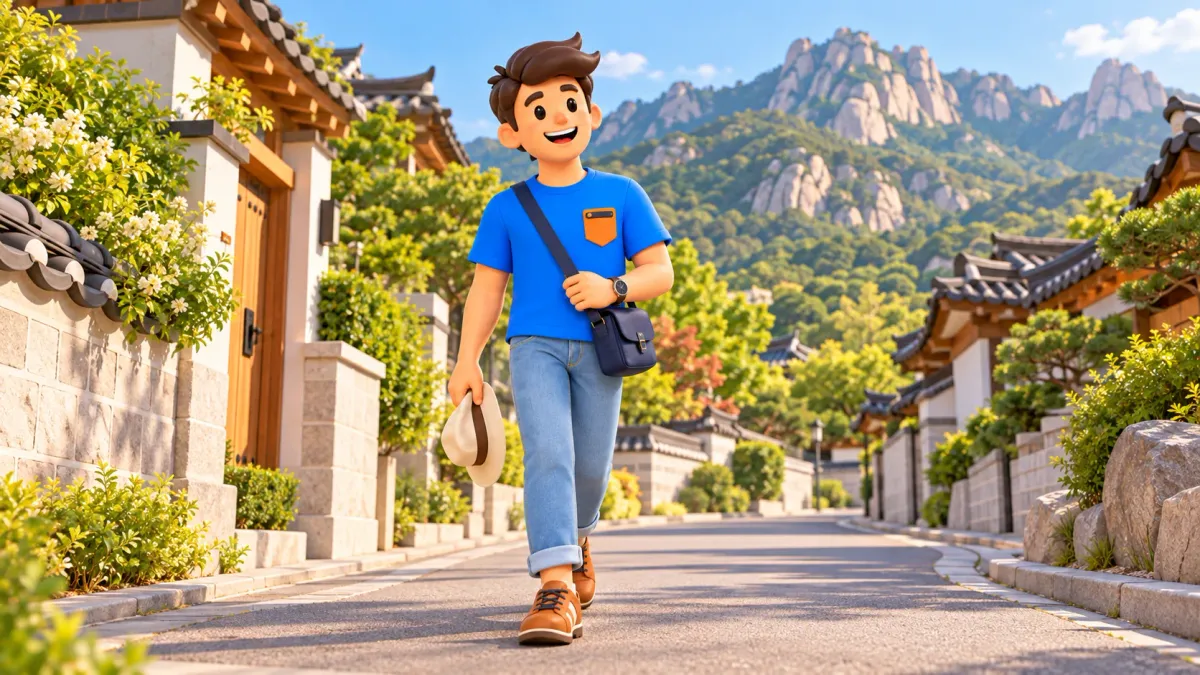
Eunpyeong and Jingwansa make a relaxed four-to-five-hour outing on location: a history and hanok museum first, a short residential walk and an approach to the mountain temple. A neighbourhood pause fits the return before a bus to the subway. The reward is seeing a contemporary traditional house, an explanation of its structure and an active Buddhist institution together.
This is northwestern Seoul near Bukhansan, so travel from a central hotel needs additional time. Do not interpret four to five hours as the complete door-to-door journey. A summit hike, a full temple programme and a long lunch are additional too. The appeal is an introduction at the mountain's foot without making a substantial hike compulsory.
Choose three anchors and leave room for landscape
A first visit needs only Eunpyeong History Hanok Museum, a modest street circuit and Jingwansa. The museum provides a way to look, the district shows traditional form in present housing, and the temple offers another architectural and daily setting. Bukhansan views connect the parts without requiring you to reach the highest visible point.
Planning this outing is much more convenient with RoadMe: the app develops a complete personal plan around your interests, dates and pace. Hanok, history, temple, nature and rest become a trip programme that is easier and more effective to use on the ground.
| Part | Approximate allowance | Focus |
|---|---|---|
| Eunpyeong Museum | 45–60 minutes | District history and hanok structure |
| Residential streets | 40–60 minutes | Roofs, gates and contemporary use |
| Approaches and return | 45–60 minutes overall | Permitted paths and slope |
| Jingwansa | 45–60 minutes | Quiet visit to open areas |
| Neighbourhood pause | 30–45 minutes | Cafe or rest |
These are editorial estimates, not measured times. Transport waiting, accommodation travel and special activities are extra. If the museum is closed, streets and temple form a shorter version. Do not describe an exterior glance as the complete museum visit. Accepting a different scope in advance is more useful than trying to preserve every planned minute regardless of the day's access.
Reach the district, not just its subway connection
Gupabal on Line 3 is a useful transport anchor, followed by a bus to Hanago, Samcheonsa, Jingwansa Entrance. Municipal guidance lists 7723 and 7211; confirm current routing, boarding side and direction before travelling. The subway exit is not directly in the hanok village.
The stop name combines several landmarks. It does not mean the bus enters a temple court or reaches every museum doorway. An ordinary walk remains after arrival. Save 은평역사한옥박물관 and 진관사 to distinguish public entrances from neighbouring homes and other temple directions.
Allow a return margin, especially on a weekend or before a fixed central appointment. A gentle outing becomes hurried when the last bus connection must fit between two rigid deadlines. It is better to end viewing a little earlier than treat every travel minute as an unexpected loss. Returning comfortably belongs to the planning as much as the first museum entrance.
The museum: know what to notice in a hanok
Eunpyeong History Hanok Museum joins district history with the development of Korean housing. Starting here means nearby roofs become more than a photogenic silhouette. The historical section recalls that today's development occupies a place with a longer life. A modern neighbourhood does not appear outside the landscape and settlements that preceded it. This local context makes the walk more specific than a general house-style tour.
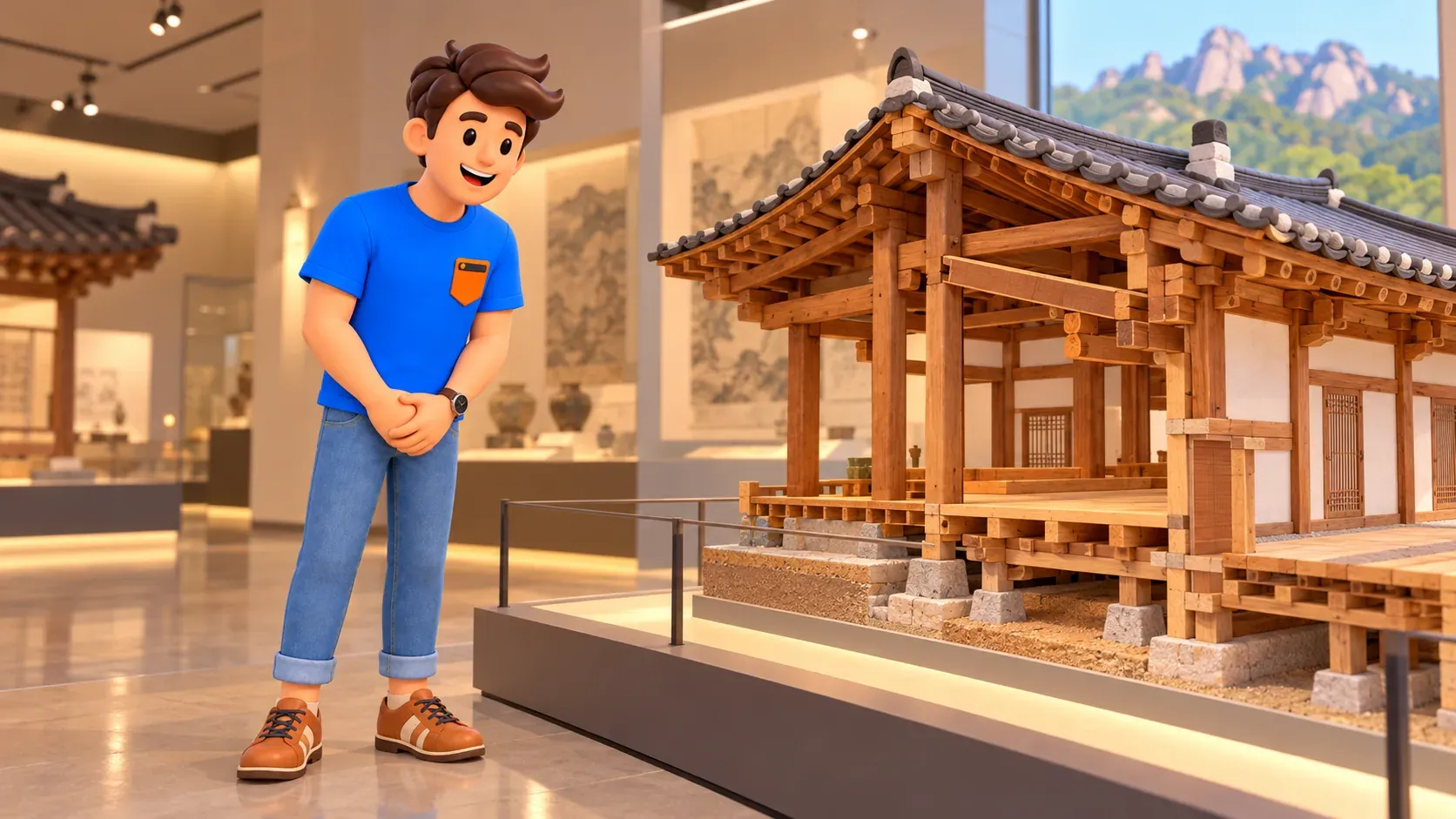
In the hanok section, select three themes: timber frame, floor-and-court relationships and roof construction. Materials and building tools suggest a sequence of practical decisions. There is no need to memorise every term. Understand which components meet and why a timber structure differs from a standard contemporary concrete shell. A few questions will be easier to carry outside than a long technical vocabulary.
Ondol and maru serve different purposes: heated room and timber hall relate to seasonal living. Look at how the display explains them. A model does not guarantee working heating or a workshop. This route needs an understandable observation you can later apply to permitted exterior views in the neighbourhood. Learning a principle is enough without participating in a special activity.
Notice material and repair: connections, wall layers and roofing. These questions present hanok as a continuing building tradition, particularly relevant before new homes where inherited form meets modern living requirements. The museum supplies context without requiring a professional architecture lesson.
Museum calendar and separate services
Normal hours are 09:00–18:00, with last entry at 17:00. Monday is the usual closing day; when it is a public holiday, closure moves to Tuesday. Additional closures cover New Year and Seollal and Chuseok holiday periods. Check current notices around those weeks and before a late arrival. A broad weekly timetable does not resolve every holiday date.
General admission is paid, with separate exemptions and eligibility conditions. Check the category that applies to your visit. Public streets, museum galleries and cultural activities have different access arrangements. A free neighbourhood walk does not automatically include tea experiences, costume sessions or another organised programme. Treat each activity as something real with its own conditions rather than a benefit assumed from proximity.
Follow venue rules for food, photography and exhibits. Flash and specialist equipment have separate arrangements, and commercial shooting differs from an ordinary visit. If hands-on participation interests you, confirm a programme first and increase the allowance. An unverified workshop should not silently become an extra within the same museum hour. A simple viewing visit already answers the route's main architectural question.
Eunpyeong: new houses in traditional form
The hanok neighbourhood was created as a new residential development established in 2014. It should not be described as an unchanged village of houses surviving from Joseon times. Its interest is different: traditional Korean form continues within contemporary construction. A roof's age and its characteristic silhouette are not the same thing. Keeping that clear allows modern hanok to be appreciated on their own terms.
From a public street, compare eaves, gates, walls and a house's position on its plot. Proportions and entry arrangements differ. Look for one museum observation, perhaps roof and supports. That connects the visits without analysing every home as an individual historic attraction. The aim is a readable architectural pattern, not a catalogue of private buildings or a claim that every facade has the same past.
This is a residential area. Closed gates, windows and inner courts remain private; do not enter for a picture or place people in the road. Mountain views can be enjoyed from safe public positions. A broad photograph does not require blocking streets, climbing walls or closely recording somebody's domestic life. Courtesy keeps the neighbourhood pleasant for residents as well as visitors.
A cafe pause is possible when a venue is open and suitable. A particular window view or upper-level table is not guaranteed. Choose available seating and clear conditions rather than an obligatory famous image. A long queue for one angle can consume the quiet temple visit. The pause should help the outing instead of becoming its most demanding task.
Towards Jingwansa: nature from a permitted path
From the neighbourhood, follow a signed public approach towards Jingwan-gil and Jingwansa. Greenery and the valley gradually replace the street setting. Check signs and avoid joining a long mountain trail merely because it seems to continue the walk. The destination is the temple entrance rather than the entire Bukhansan route network. Keep your intended scope visible as paths branch.
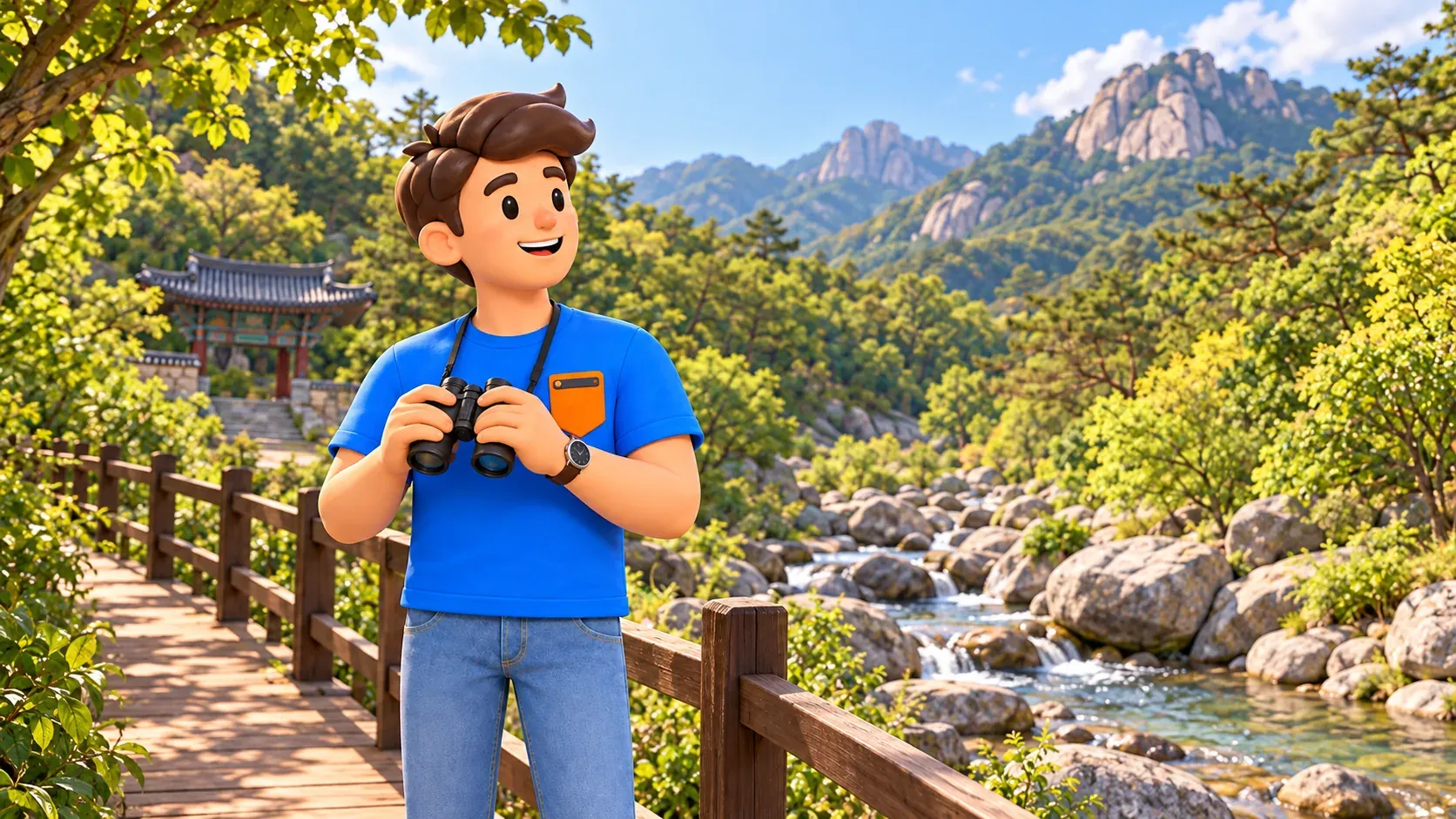
The valley is protected, and entering the water is prohibited. Do not plan swimming, resting with feet in the stream or stepping between rocks for photographs. Water, trees and stone can be observed from permitted routes. Nearness to nature does not mean every part is freely usable. That condition is important to the place itself, not a small exception to a riverside leisure promise.
After rain, choose stable surfaces and consider temporary restrictions. Even a short temple approach remains outdoors. Water and a measured pace help in heat; clothing matters during cold pauses. The label half-day does not make weather uniform across seasons. Shorten the outside section when needed while preserving a comfortable return. A smaller route can still deliver the museum, house and temple contrast.
The temple: long history and renewed life
Jingwansa's history connects to the Goryeo period and royal patronage. The institution's age differs from that of every visible building: destruction and postwar rebuilding form part of the ensemble. Do not read each hall as untouched architecture from a thousand years ago. Religious continuity can coexist with physical renewal. That makes the current temple a living place rather than a single frozen historical moment.
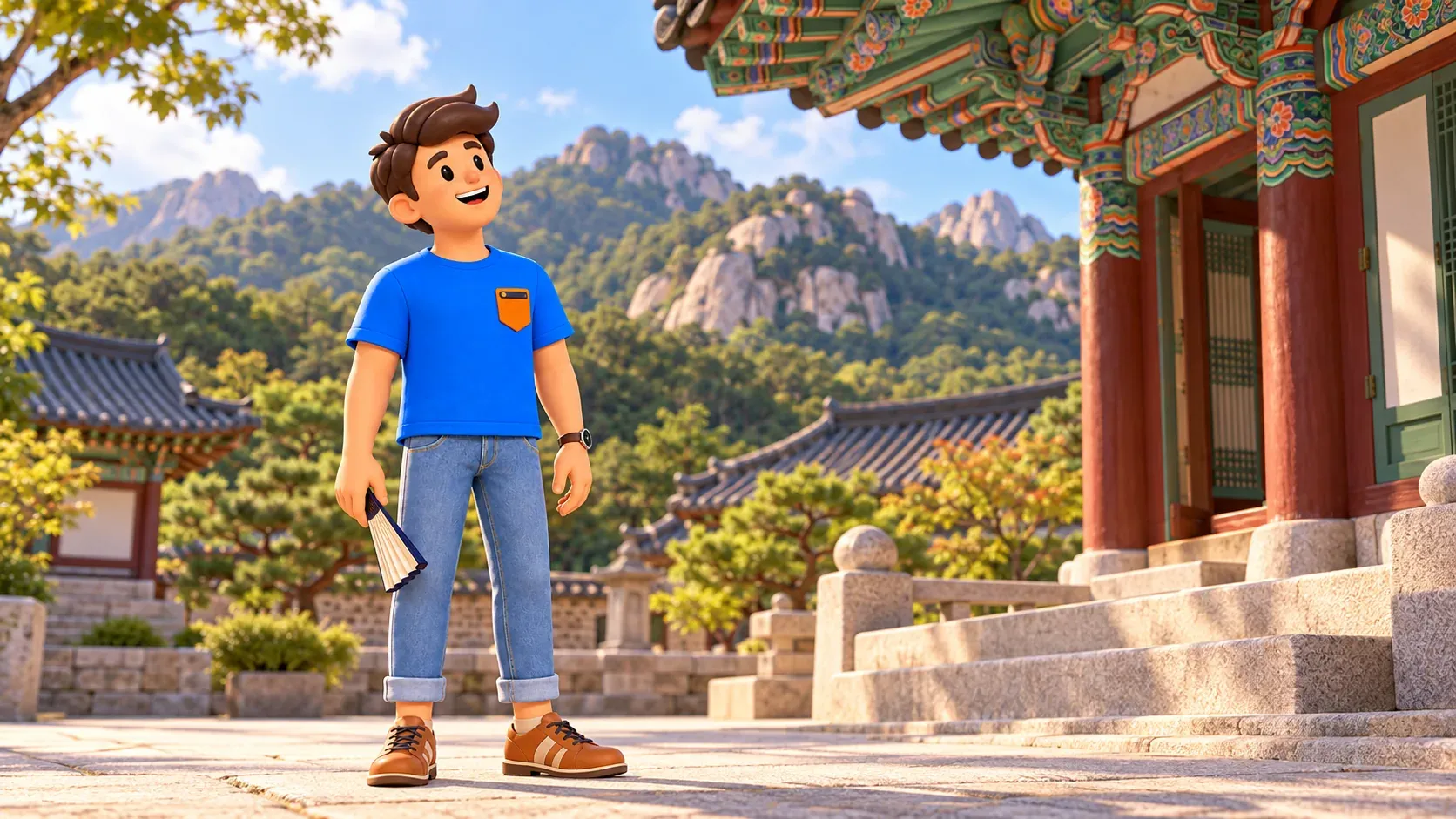
Look at the main hall, smaller buildings and their placement near the slope. Eaves, painted timber and stone bases offer another comparison after residential hanok. Religious function changes the use of space. Decorative colour matters, but so do movement, boundaries and places where prayer continues. Read the setting as a working institution rather than treating every structure as an independently available exhibit.
Begin with a quiet exterior visit to permitted areas. Give worshippers room, lower your voice and stay out of closed rooms. Footwear and photography follow signs. General entry does not mean equal access to every hall, monastic living area or kitchen. You are entering an active religious setting rather than a completely open museum. Respecting that difference improves the experience without requiring specialist religious knowledge.
Jingwansa is associated with the Suryukjae memorial ritual tradition. For an ordinary walk, knowing a ritual culture exists is enough; no performance should be promised on every date. Festivals, ceremonies, temple food and overnight stays have separate programmes and calendars. Confirm them beforehand if they determine the purpose of the journey. Otherwise keep the basic visit independent of special participation.
Do not assume a complimentary meal, spontaneous meditation class or permanent display of every famous temple discovery. Another traveller's experience is not today's timetable. Quiet attention to architecture and natural setting is sufficient for a full conclusion. An additional programme works well when actually available and given proper time. It should enrich a real visit rather than supply a promise the normal walk cannot fulfil.
Return with a pause, rather than another compulsory summit
On the way back, pause in the hanok area and compare impressions. The museum explained construction, streets showed contemporary living and the temple gave related materials another social and spiritual purpose. One question connects the day: how do timber, roof and court change with use? You need not return with an exhaustive history to recognise that relationship.
Including this outing in the wider programme is easier with RoadMe: the app prepares a personal plan for the whole trip around your interests and comfortable pace. Outlying districts, cultural stops, nature and rest receive suitable time among the other days.
For reduced mobility, ask about specific entrances, surfaces and open areas at museum and temple. A level village street does not guarantee equal access along the valley approach. Return bus and subway connection need margin too. Finish viewing while the journey back can still feel comfortable. The final transport stage is part of the outing rather than time left outside the plan.
For another kind of house visit, use Namsangol's relocated estates. For an intimate literary neighbourhood, consider Seongbuk-dong and Gilsangsa. Let Eunpyeong remain an independent outing: new hanok, architectural explanation and a mountain temple provide enough without a race towards the next address.


