
Esquiline Mosaics: Two Hours, Two Chosen Interiors
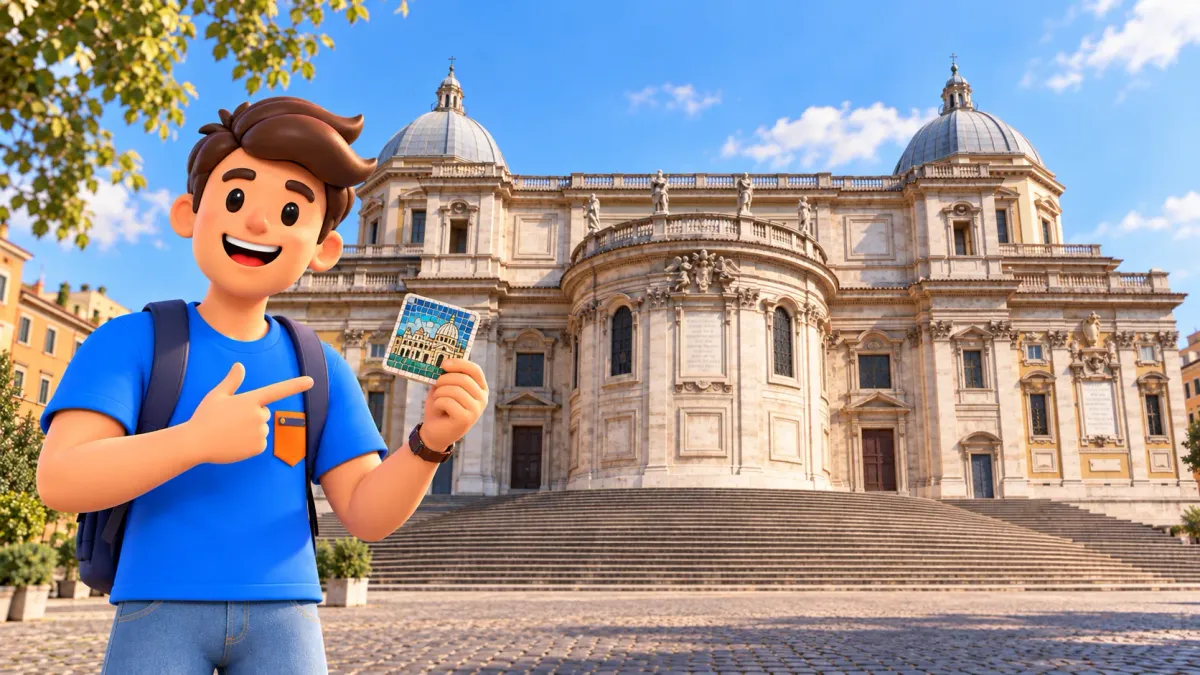
On the Esquiline, several centuries of Roman mosaic art lie within one compact neighbourhood. Santa Pudenziana, Santa Maria Maggiore and Santa Prassede stand close together, but their proximity can mislead: three detailed visits easily turn a short walk into a busy morning.
For two hours, choose two interiors. The main version links Santa Pudenziana and Santa Prassede, passing Santa Maria Maggiore outside. An alternative begins inside Maggiore and finishes at Prassede, omitting Pudenziana entirely. Here is how to choose, divide the time and notice a few meaningful details without identifying every figure.
Choose two interiors before setting off
The main version suits an interest in the transition from late antiquity to the early Middle Ages within two comparatively small spaces. Choose Maggiore for a great papal basilica, fifth-century narrative mosaics and a contrast with intimate Prassede. These programmes replace each other rather than adding together.
To make mosaics part of a convenient plan for the whole trip, try RoadMe: the app creates a personal programme around dates, interests, pace and budget. It makes distributing churches, museums and rest across your days much easier, giving you a considered itinerary to use while travelling.
Choose an ordinary Monday-to-Friday morning for the example, after checking church calendars. A 9:30 start aims to finish around 11:30, before the smaller churches’ midday closures. This is an estimate rather than guaranteed access: worship, restrictions and entrance checks may change the programme.
If you want all three interiors, arrange a longer separate outing. Do not remove rest or turn the connections into a race. Two carefully observed compositions can offer a better introduction than three interiors crossed merely to complete a list.
The main route: Pudenziana and Prassede
| Minutes from the start | Included programme |
|---|---|
| 0–30 | Santa Pudenziana: main interior and apse mosaic |
| 30–45 | Walk to Piazza dell’Esquilino, behind Santa Maria Maggiore |
| 45–55 | Ten minutes outside Maggiore’s rear apse side |
| 55–70 | Fifteen-minute rest |
| 70–80 | Public pavements to Santa Prassede’s side entrance |
| 80–120 | Prassede’s principal mosaics and the Chapel of Saint Zeno, if accessible |
The total is one hundred and twenty minutes. Starting at 9:30 puts Pudenziana’s finish around 10:00, the end of the rest near Maggiore around 10:40, and Prassede at approximately 10:50–11:30. All intervals are estimates. Reaching the first church, onward transport and a proper lunch need additional time.
Begin at Santa Pudenziana, Via Urbana, 160, and finish at Santa Prassede, Via di Santa Prassede, 9/A. Returning to the start is excluded. The programme includes no excavations, complete relic tour or inspection of every side chapel.
Santa Pudenziana: an ancient image in a changed church
Allow half an hour for entrance and the principal interior. Find an available place where the apse is visible without occupying a passage or entering a restricted altar area. Start with the whole: Christ enthroned, the surrounding figures, the architectural background and the cross above.
The mosaic belongs to late antiquity, dated around the late fourth and early fifth centuries in different accounts. For this walk, its relationship with the imagery of late Roman authority matters more: the central figure occupies a throne and the apostles resemble a solemn assembly. A disputed exact year is unnecessary.
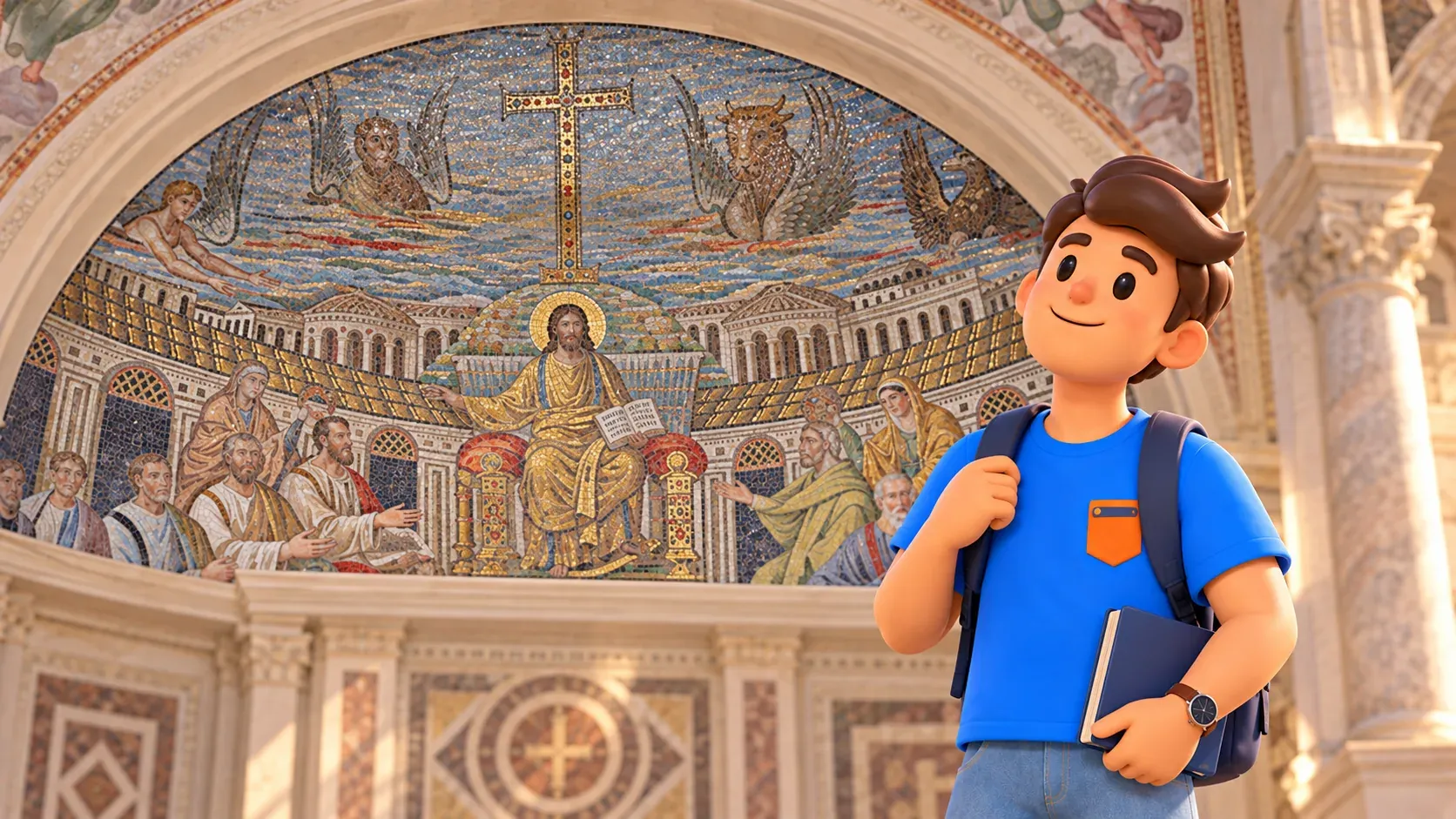
Now notice the buildings behind the figures. They suggest a city and frame the central scene. Choose one gesture or turn of a head next. Moving from the whole to a detail helps you experience the composition without spending the entire stop trying to read every inscription.
Two female figures receive different interpretations: they have been associated with Saints Pudentiana and Praxedes, or with personifications of two church communities. Do not turn an interpretation into a uniquely established label. The saints’ connection with the family of the senator Pudens also belongs to church tradition.
Later rebuilding shaped the church we see. Sixteenth-century changes affected the mosaic too: parts were lost, with fewer apostles surviving than originally shown. This is a valuable ancient work with a complex subsequent history, rather than a completely untouched interior preserved from a single moment.
Pudenziana’s hours: distinguish visits from the office
At the October 2026 check, the basilica itself lists tourist visits Monday–Saturday, 9:00–11:30. These differ from the Filipino chaplaincy office hours also found online. For an independent walk, use information specifically about visiting the basilica.
Outside ordinary hours, the community offers separately arranged private visits. That possibility does not guarantee admission simply by arriving. Excavations are excluded: the website retains a restoration closure notice. A previously stated works duration does not itself establish that access has resumed.
If the interior is unavailable, allow five minutes outside instead of thirty inside. The main walk then shortens to approximately one hour thirty-five minutes. Alternatively, choose the Maggiore-start programme beforehand. Waiting at the first door, then switching and promising the same finish, would undermine the timing.
Towards Maggiore: the rear is not the main entrance
From Pudenziana, follow Via Urbana towards Via Agostino Depretis and Piazza dell’Esquilino. Allow fifteen minutes, including orientation and crossings. This approaches Santa Maria Maggiore’s rear apse side. Its broad staircase and projecting volume are not the principal visitor entrance.
The main version allocates ten minutes to the exterior. Compare this large basilica’s scale with the first church, noticing how its rear shapes the square. Interior mosaics are not promised here: neither a close look through a window nor free admission to an upper loggia forms part of the stop.
Retain fifteen minutes for rest in a suitable available place. A particular free bench or café table is not guaranteed. Water and a small snack can preserve the short pause; a substantial order requires additional time. Food remains outside the churches.
Continue along public pavements beside Via Liberiana towards Via di Santa Prassede. Ten minutes include the approach and finding the current side entrance at 9/A. Do not assume a shortcut through closed basilica grounds or treat a service door as a visitor passage.
Santa Prassede: gold and space
Keep forty minutes for Prassede. Its unassuming street entrance gives little warning of the mosaics inside. Begin with the main space, looking towards the arches and apse. The decoration relates to Pope Paschal I and ninth-century building work, although the church changed repeatedly afterwards.
Compared with Pudenziana’s architectural city, the golden field and solemn rhythm of figures are particularly noticeable in Saint Zeno’s chapel. Neither work needs to be judged more correct or more advanced. They offer different artistic solutions to different purposes and periods.
A later altar structure partly obstructs the apse. Avoid seeking access to a restricted area for a complete photograph. Choose visible sections of the arch and composition from an available observation point. The interruption itself recalls that these interiors remained in use and were altered.
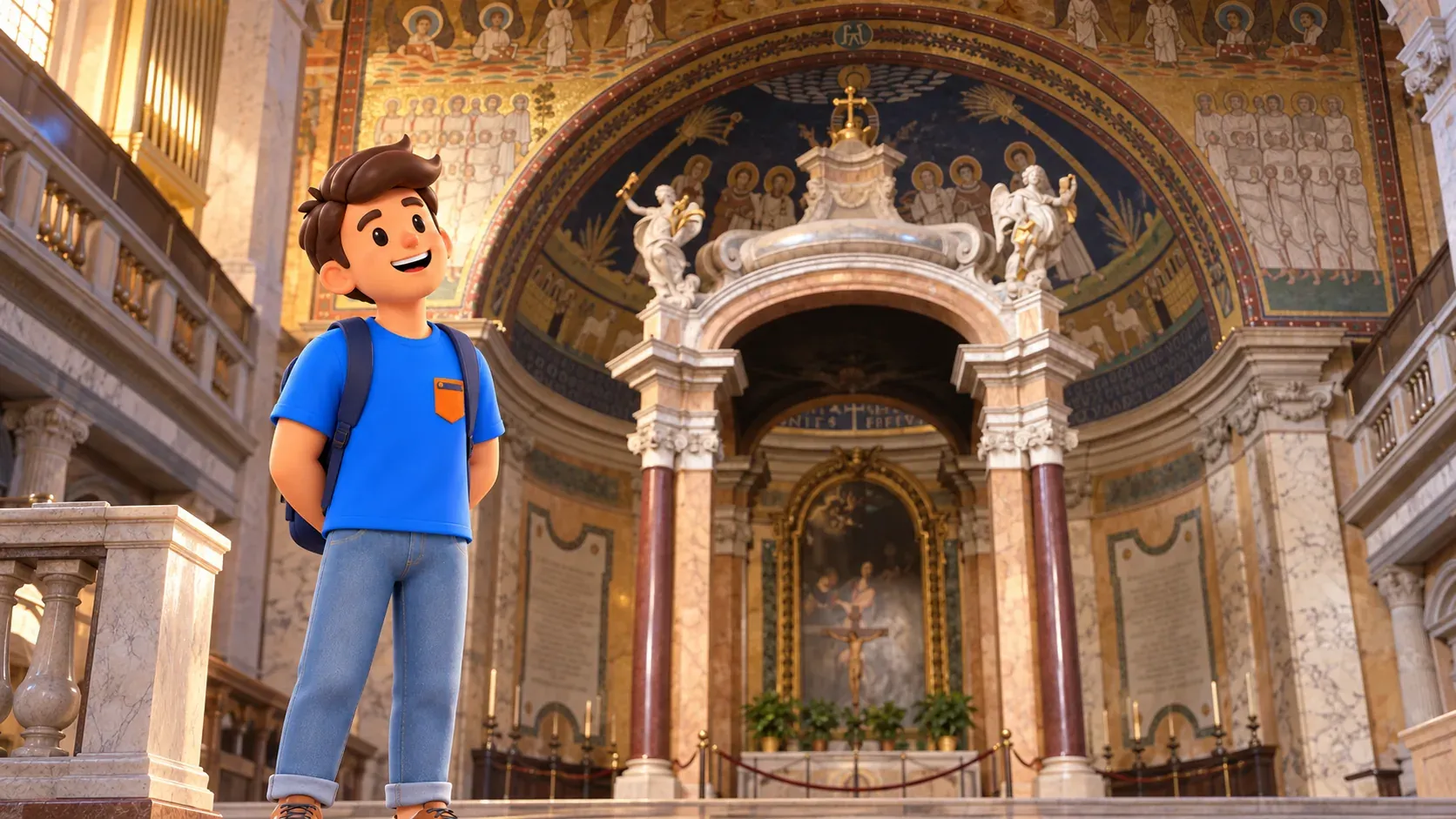
If accessible, include the Chapel of Saint Zeno within those same forty minutes. It was created as a funerary chapel for Paschal I’s mother, Theodora. Saints on the mosaic walls and the Saviour’s image in a vault medallion create an intimate encounter. Give other visitors space rather than occupying the small chapel for an extended group stop.
Confirm local access and lighting arrangements. Do not assume no waiting or identical brightness at every moment. If the chapel is unavailable or occupied, the church’s main mosaics still justify the visit. One necessarily illuminated photograph should not determine the entire outing.
Finish Prassede before the midday break
At the October 2026 check, the basilica’s own page lists daily visits, 9:00–12:30 and 15:00–18:00. Sightseeing pauses during services. Sunday Mass at 11:00 overlaps our example, making an ordinary weekday morning preferable for two interior stops.
The crypt, a detailed relic visit and every additional chapel are excluded from the forty minutes. If the whole church is unavailable, an exterior look needs less time and the walk becomes shorter. There is no need to wait for afternoon reopening merely to preserve the original two-hour label.
The alternative: Maggiore and Prassede in two hours
If Santa Maria Maggiore matters more, begin directly at its current main visitor entrance, on the opposite side from Piazza dell’Esquilino. Pudenziana is omitted completely. Allow twenty minutes for entrance and security, thirty-five for principal mosaics, fifteen for rest outside, ten for walking and forty for Prassede.
This also totals one hundred and twenty minutes, but the twenty-minute entrance block is not a queue forecast. If delayed, lengthen or reduce the programme while considering Prassede’s 12:30 closure. Maggiore’s main basilica is free to enter; the museum, loggia and other special routes have separate arrangements.
Inside, first find the high nave mosaics and triumphal arch associated with the fifth century and Pope Sixtus III. The nave contains Hebrew Bible narratives; the arch concerns Christ’s childhood. Choose one section. Thirty-five minutes allow an introduction rather than a reading of the entire cycle.
The apse’s Coronation of Mary belongs to another period: the thirteenth century and Jacopo Torriti’s work. Do not describe every shining mosaic as early Christian. Ancient panels, a medieval apse and later surroundings reveal the layered history of one space even during a short visit.
Prepare outside and look quietly inside
All three places remain active churches. Maggiore has security checks, restrictions on large luggage and appropriate-dress requirements. Do not expect a cloakroom for a suitcase. If arriving from the station, arrange luggage storage before reaching the basilica door.
Prepare plans and notes before entering: Maggiore’s rules prohibit mobile-phone use inside the basilica. Drawing requires separate permission, and photography also follows local restrictions. A closed guidebook in your bag and attentive looking are enough for this walk.
Use RoadMe to create a personal plan for the entire trip and decide which art interests belong on different days. The app is convenient for preparing your journey and checking the route outdoors between visits, leaving time inside to look at mosaics at your own pace.
Neighbourhood streets slope, and church entrances and levels differ. A ramp at Maggiore does not establish step-free access throughout the walk. Check the specific entrances if needed. For another approach to church space, see our Borromini architecture walk, preferably on a separate day.
Finish at Prassede with one simple comparison: how background, figures and surrounding space change the effect of small coloured pieces. Two chosen stops already reveal that relationship. Other mosaics can remain a reason to return, rather than a list that must be completed urgently today.


