
One Day in Dubai: Old Dubai and an Evening by Burj Khalifa
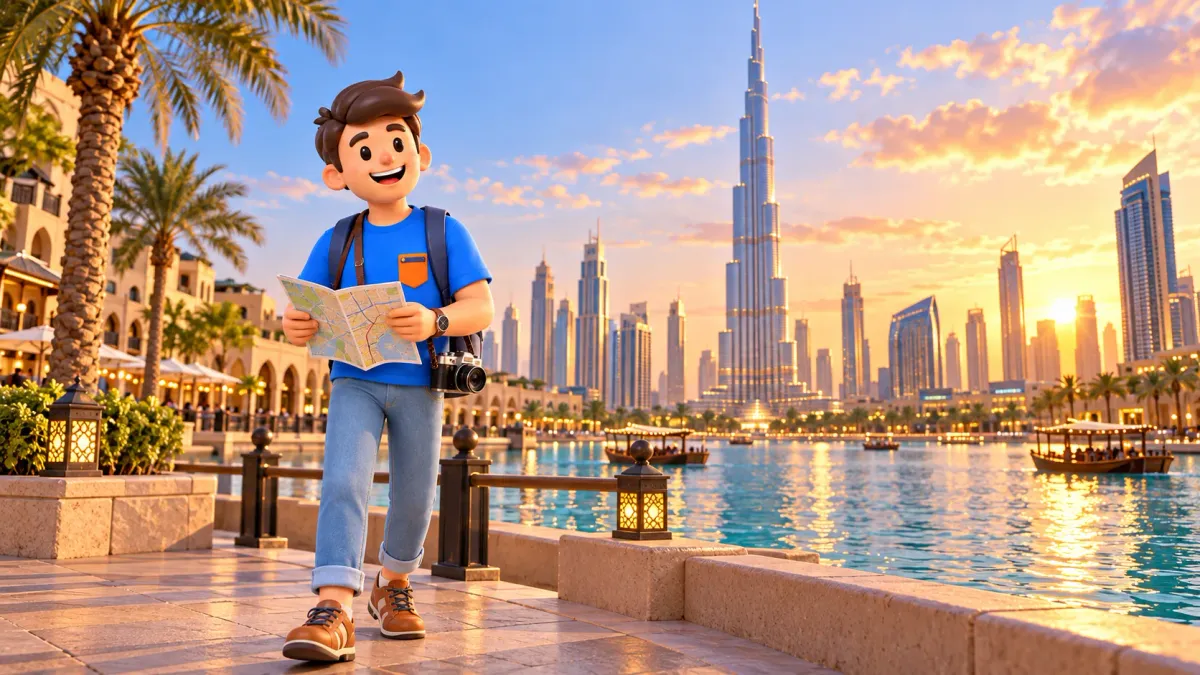
One day in Dubai becomes more rewarding when you choose two parts of the city and give them room. Begin beside Dubai Creek, where trading streets and courtyard houses reveal an older scale of life. Finish in Downtown, where Burj Khalifa rises above a deliberately spectacular urban landscape. The contrast gives the day a story without requiring a long collection of admissions.
This itinerary assumes a complete sightseeing day, separate from airport procedures and checking into your accommodation. You will walk within each district and use transport between them. The suggested periods are planning estimates, with meals and breaks included; they are not measured journey times or guaranteed opening hours.
A workable plan for the whole day
Start in Al Fahidi Historical Neighbourhood, continue towards the Textile Souk and cross the Creek on a traditional abra. Explore a manageable part of Deira, have lunch, then travel to Dubai Mall. Keep the evening for the lake, Burj Park and the views around Burj Khalifa. Going up the tower is an optional main activity, rather than something to squeeze between other plans.
For a personal version of this day, try RoadMe: the app works out an itinerary around your interests, dates and preferred pace. Organising the whole trip there is much more convenient than piecing together separate lists, especially when you want your own balance of culture, views and downtime.
| Approximate period | Focus |
|---|---|
| 09:00–10:30 | Al Fahidi and one optional interior |
| 10:30–12:00 | Creek crossing and Deira |
| 12:00–14:00 | Lunch and a substantial break |
| 14:00–15:30 | Travel to Downtown, with spare time |
| 15:30–17:00 | Dubai Mall at an unhurried pace |
| Late afternoon and evening | Lakefront, Burj Park or a booked tower visit |
You do not need to fill every period. A longer lunch, an exhibition that catches your attention or an early finish can all belong to a successful first day. Choose one paid highlight before setting off, and let the surrounding neighbourhoods provide the rest.
Begin in Al Fahidi, where the city feels smaller
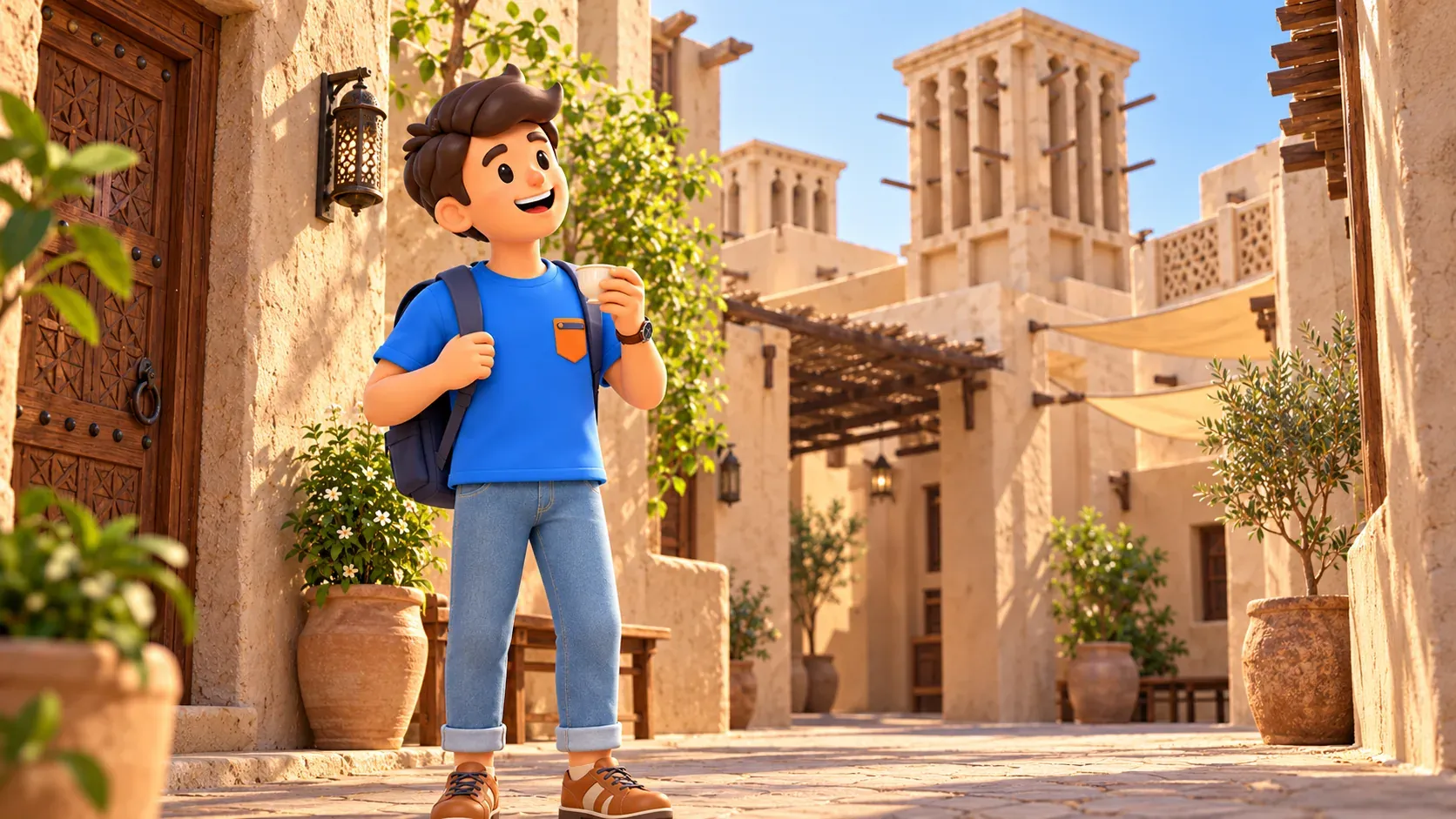
Al Fahidi is a useful starting point because its narrow lanes make an immediate contrast with the Dubai most visitors recognise from photographs. Look up at the wind towers, then notice the courtyards and shaded passages below. These architectural features responded to heat before mechanical cooling became the normal expectation. Their value is easier to appreciate while walking than through a long list of dates.
Keep the first part of the morning deliberately modest. Walk through the public lanes, stop for a drink and choose one accessible cultural interior if you want context. The Coffee Museum, a gallery or a cultural programme can each give the walk a different emphasis. Their arrangements vary, so check your chosen venue before making it essential to the day.
The nearby Al Fahidi Fort offers a reminder that this was once a much smaller fortified settlement. Its history as a defensive and administrative building matters even if you only see the exterior. Do not assume that the museum inside the fort is open simply because the landmark appears on a map; the outdoor neighbourhood walk should remain worthwhile on its own.
Leave room for ordinary observation. A carved door, a patch of shade or the changing relationship between a tower and its courtyard can be more memorable than rushing into several small museums. In hot weather, shorten this section and take your first seated break earlier.
Cross Dubai Creek and choose a small part of Deira
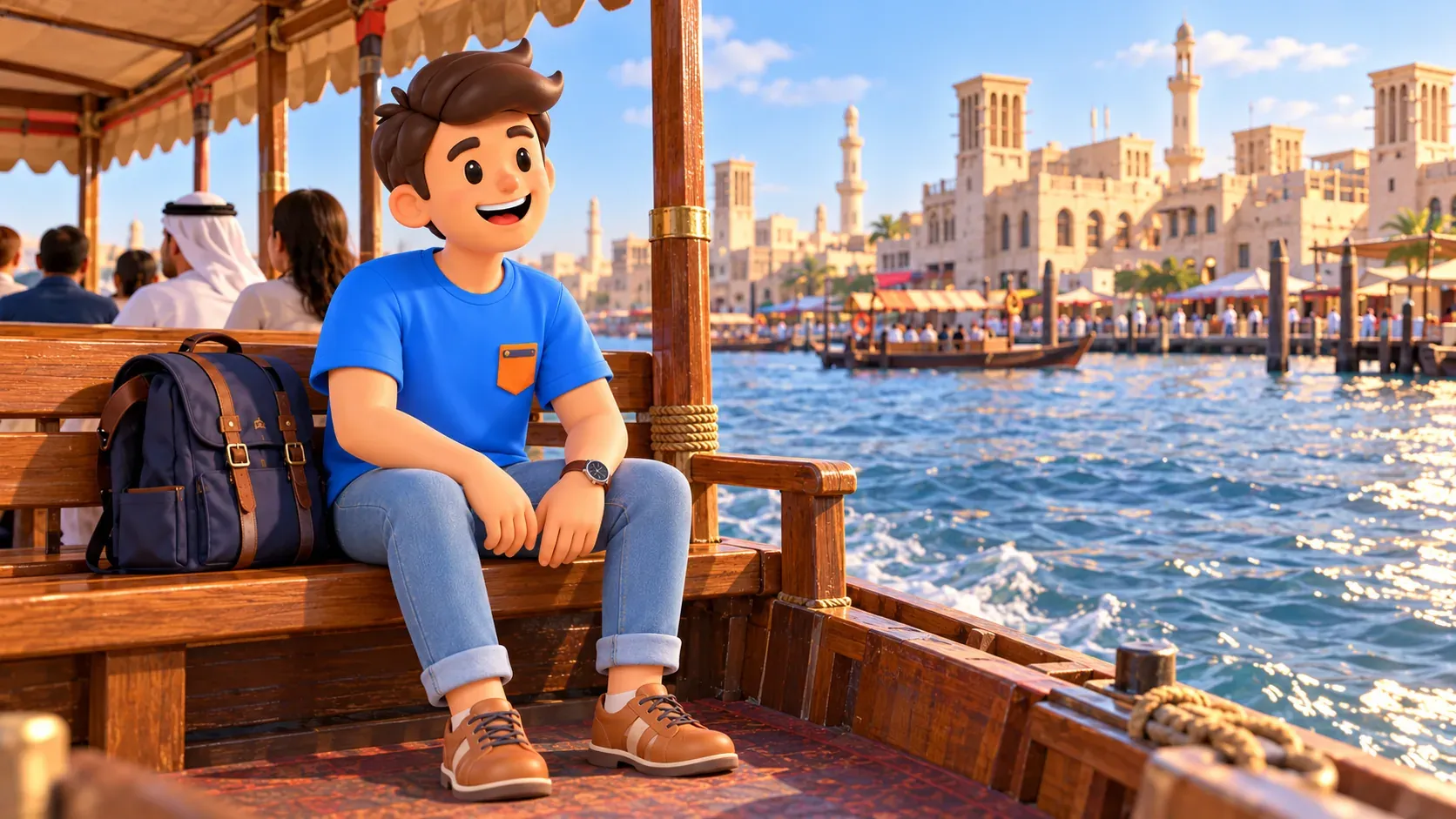
Continue towards the Textile Souk and the waterfront. Here the Creek explains the city more directly than another skyline photograph: water connects markets, neighbourhoods and the history of regional trade. Traditional wooden abras still make the crossing part of everyday movement, as well as an enjoyable visitor experience.
Choose a public abra service that lands near the markets you intend to visit. Confirm its destination and payment arrangements at the boarding point, and have small cash available rather than assuming every boat uses the same system. A short crossing is enough for this itinerary; a private cruise is a separate activity with a separate price and timetable.
In Deira, focus on the Spice Souk and, if you are interested, a short section of the Gold Souk. The pleasure lies in the different materials, colours and trading atmosphere. You do not need to buy something to make the visit count. Ask before close photographs of people or merchandise, and keep working entrances clear.
If cultural history interests you more than shops, consider the area around Al Ahmadiya School and Heritage House instead. These buildings connect the neighbourhood with education and domestic life. Treat interior access as something to confirm, not a promise attached to the street walk. Choose this emphasis or a longer market browse rather than trying to cover every option before lunch.
Make lunch and the journey to Downtown part of the plan
By midday, the useful next stop is often a comfortable seat. Have lunch in Deira before leaving the area, choosing a place whose menu, prices and seating suit you. There is no single essential restaurant for this route. Water, a proper meal and time indoors help the second half of the day feel like a fresh chapter.
Old Dubai and Downtown are separate outings connected by transport. They should not be joined by a long walk simply because both appear on the same city map. A taxi can simplify the transfer, particularly with children or tired companions. Allow for traffic and arrange pickup at an accessible road rather than expecting a vehicle to enter a narrow market lane.
For public transport, you can use the Green Line from the Deira area and change at BurJuman for the Red Line towards Downtown, checking the actual service and direction at the station. Burj Khalifa/Dubai Mall station is not the lakefront itself. The onward connection and walking inside the complex need time too.
The transfer period in the table is deliberately generous. It is not a fare estimate or a claim about traffic. If you arrive earlier, use the spare time for a drink or a slow look around rather than adding another distant district.
Use Dubai Mall as a pause with something to see
Dubai Mall can be useful even when shopping is not your purpose. Treat it as a place to cool down, find refreshments and choose a small number of visual stops. The waterfall with diving figures and Dubai Dino offer different kinds of surprise within the same large complex.
Dubai Dino is a dinosaur skeleton displayed in a shopping environment, a striking change of scale after the narrow lanes of the morning. The waterfall uses repeated human figures to make a large interior feel theatrical. Neither needs a long historical explanation to make you stop and look.
The aquarium is another possible focus, but distinguish a view from the public mall area from paid experiences inside the attraction. If you want a full visit, give it a real place in the schedule. Adding an aquarium, an immersive attraction and a tower ascent to the same afternoon would change the character of this itinerary considerably.
Choose a meeting point if you are travelling together and follow the complex's signs for the exit you need. A huge mall can absorb more time than expected, especially when you are looking for one specific passage. It is perfectly reasonable to see two things, have a break and move outside when the temperature becomes more comfortable.
Finish around Burj Khalifa and the lake
Burj Khalifa is the architectural anchor of Downtown. The 828-metre tower opened in 2010, and its stepped outline is worth studying from ground level as well as from an observation deck. Its changing silhouette helps explain why a distant view and a view directly beneath it feel so different.
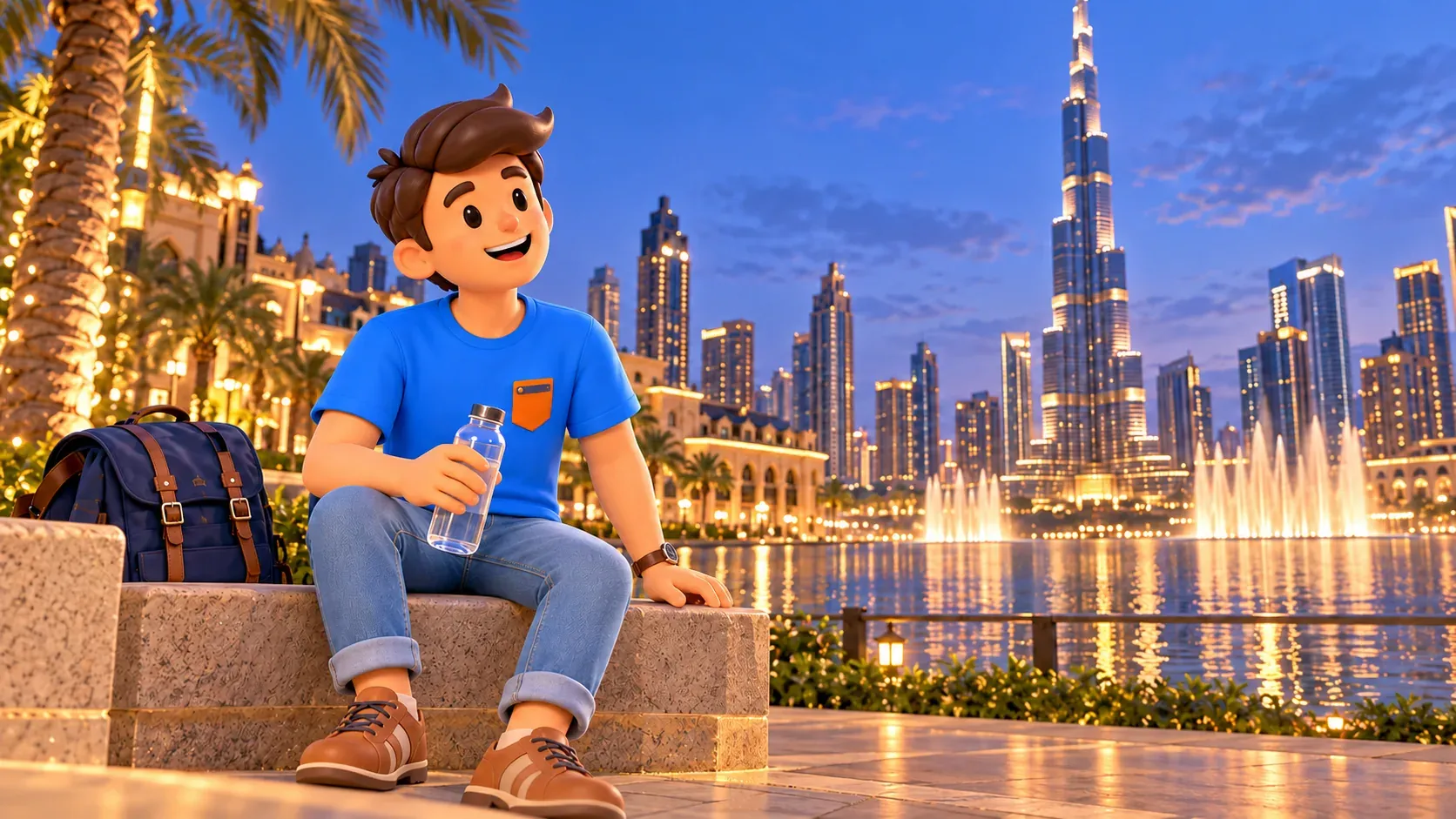
For a relaxed finish, walk towards the lake and choose a manageable stretch around Burj Park and Souk Al Bahar. You do not need to circle every path. Find an accessible viewpoint, sit down when you want to and let the evening light change the scene. Restaurant spending and paid attractions are separate choices, not conditions for appreciating the district.
If the Dubai Fountain is operating during your visit, build your evening around the programme actually announced for that date. Do not make the whole day depend on an assumed performance. Maintenance, special events or access arrangements can change what is available around the water.
If going up Burj Khalifa is your priority, book the appropriate experience and treat its admission time as the afternoon's anchor. Different products have different inclusions, and arriving at the building is not the same as reaching the viewing floor. Leave space for the entrance process, lifts and your own time looking out.
On a one-day visit, choosing the tower usually means shortening the mall section or the morning's optional interiors. That is a useful trade-off, not a missed opportunity. The alternative is to enjoy the skyline from below and keep the evening free for dinner.
Adapt the day to the people taking it
For children, keep the Creek crossing and one engaging stop in Dubai Mall, while reducing museum interiors and market browsing. For architecture enthusiasts, spend more time looking at Al Fahidi's cooling features and Burj Khalifa's form. For a slower day, choose either the Deira markets or a longer morning in Al Fahidi, not both.
You can build the wider trip around those preferences in RoadMe, which prepares a personalised day-by-day plan around what interests you. Keeping your itinerary and saved places together makes the city easier to use on the ground than a stack of disconnected recommendations.
Bring sun protection, comfortable shoes and water, and plan indoor pauses before fatigue becomes the main event. Religious or cultural interiors may have their own dress and access requirements; check the ones you actually intend to enter. Download any maps you need while connected, and keep your accommodation address available for the return journey.
The most satisfying outcome is a clear memory of two different Dubais: a trading city beside the Creek and a contemporary city built around dramatic scale. If you finish with energy left, the itinerary has done its job. More places can wait for another day.


