Disneyland Paris beyond the rides: history, stories and remarkable details
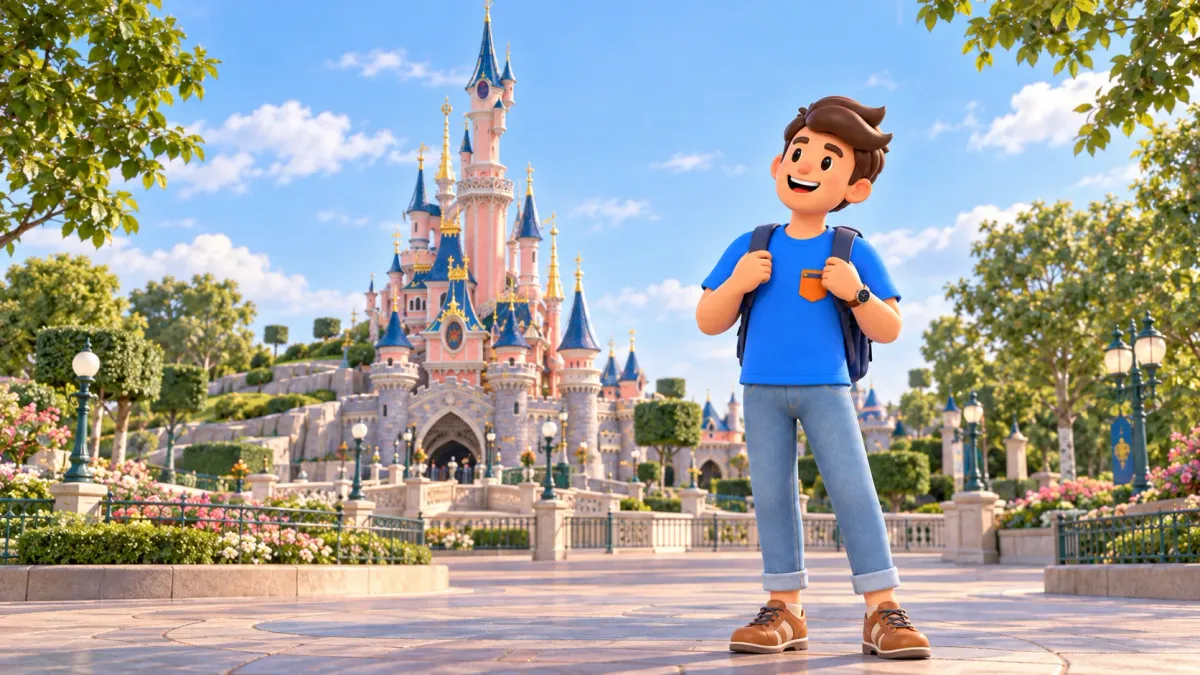
Disneyland Paris rewards a curious eye as much as an appetite for rides. A castle borrows shapes from French monuments, an invented mining town connects a mountain to a haunted house, and Captain Nemo’s submarine turns a film set into a place you can explore. Understanding a little of this design makes the resort interesting even between its biggest attractions.
Here is a guide to its history, distinctive places and small discoveries, from the original Disneyland Park to Disney Adventure World. It explains what gives each park its character, rather than setting out an order of rides or a timetable for collecting them all.
One destination, two different kinds of imagination
Disneyland Paris is the resort; Disneyland Park is the original park with Sleeping Beauty Castle. Its five lands are Main Street, U.S.A., Frontierland, Adventureland, Fantasyland and Discoveryland. They move between an American town, a fictional frontier, adventure stories, fairy tales and imagined futures. For a first encounter with the castle and the classic Disney landscape, this is the clearest starting point.
Disney Adventure World is the second park. The former Walt Disney Studios Park adopted its new name on 29 March 2026, when World of Frozen and the surrounding expansion opened. Its identity now centres on stepping into worlds drawn from Disney Animation, Pixar and Marvel. Older guides may still call it the Studios; that historical name describes the same second park at an earlier stage.
Think about what you want to notice: architectural details, familiar stories, theatrical effects or the physical excitement of a ride. Those interests are more useful than a universal ranking. Give the resort a substantial place in your stay, especially if you want time to look around as well as queue.
For the wider stay, try RoadMe: the app works out a complete personal trip around your dates, interests, pace and budget. Keeping your Paris days in one considered plan makes it much more convenient and effective to give a big park visit room alongside the city’s other experiences.
How a new Disney destination took root near Paris
The agreement between the French public authorities and The Walt Disney Company was signed on 24 March 1987. Construction began in Marne-la-Vallée in 1988, and the resort opened to the public on 12 April 1992. It already combined a theme park with hotels and an entertainment complex: the ambition extended beyond a single collection of rides.
The original park soon gained another landmark. Space Mountain – From the Earth to the Moon arrived in 1995, giving Discoveryland a major adventure inspired by Jules Verne. On 16 March 2002, Walt Disney Studios Park opened as the destination’s second theme park.
Later additions show how the resort kept changing its language. Ratatouille brought a miniature visitor’s perspective on Paris in 2014. Marvel Avengers Campus opened on 20 July 2022, and the second park’s 2026 transformation introduced Arendelle and a new lakeside setting. The destination you see today contains several generations of design, rather than one scheme frozen in 1992.
That is a useful way to look at it. An old-fashioned gallery, a mechanical character and an attraction built around projected animation may work very differently, while each tries to make a story occupy real space.
Sleeping Beauty Castle: a French fantasy with real craftsmanship
The pink castle is called Le Château de la Belle au Bois Dormant. Its slender outline rises from a landscaped hillside, and its towers feel closer to a storybook illustration than to a fortress built for defence. Former Imagineer Tom Morris describes that fairy-tale quality as central to its design. The square-cut trees on the hillside also connect it to Eyvind Earle’s visual style for the animated film.
Look first at the whole silhouette, then at a single change of shape: a rounded tower beside a pointed roof, or a wall that seems to grow out of the landscape. You do not need to identify every reference to enjoy the way the building turns an illustration into something with depth.
French buildings hidden in the design
Its inspirations include Mont-Saint-Michel and the castles painted in the Très Riches Heures du Duc de Berry. Roof patterns recall the Hospices de Beaune, while a stained-glass dome on the northern side refers to Chambord. Inside, twisted, tree-like pillars echo the ambulatory of Saint-Séverin in Paris. These are references combined into a new composition, rather than a copy of one château.
The castle stands 43 metres high. Its colour scheme uses fourteen shades of pink, and tiny gilded snails climb two golden spires. Those details suggest a good way to observe it: alternate the large outline with something surprisingly small. Binoculars or a zoomed photograph may help with distant decoration, without requiring you to leave the permitted visitor areas.
A story told through glass, weaving and a dragon
Upstairs, La Galerie de la Belle au Bois Dormant tells the story through stained glass and tapestries. The nine stained-glass windows were created by Paul Chapman; the handmade tapestries use Aubusson weaving traditions. Seen together, they connect an animated story with techniques that also belong to churches and historic interiors.
Choose one scene and compare the two materials. Glass carries colour through light; a woven surface gives colour texture. Looking at how a face, a fold of cloth or a patch of woodland is represented can be more absorbing than trying to remember every name in the story.
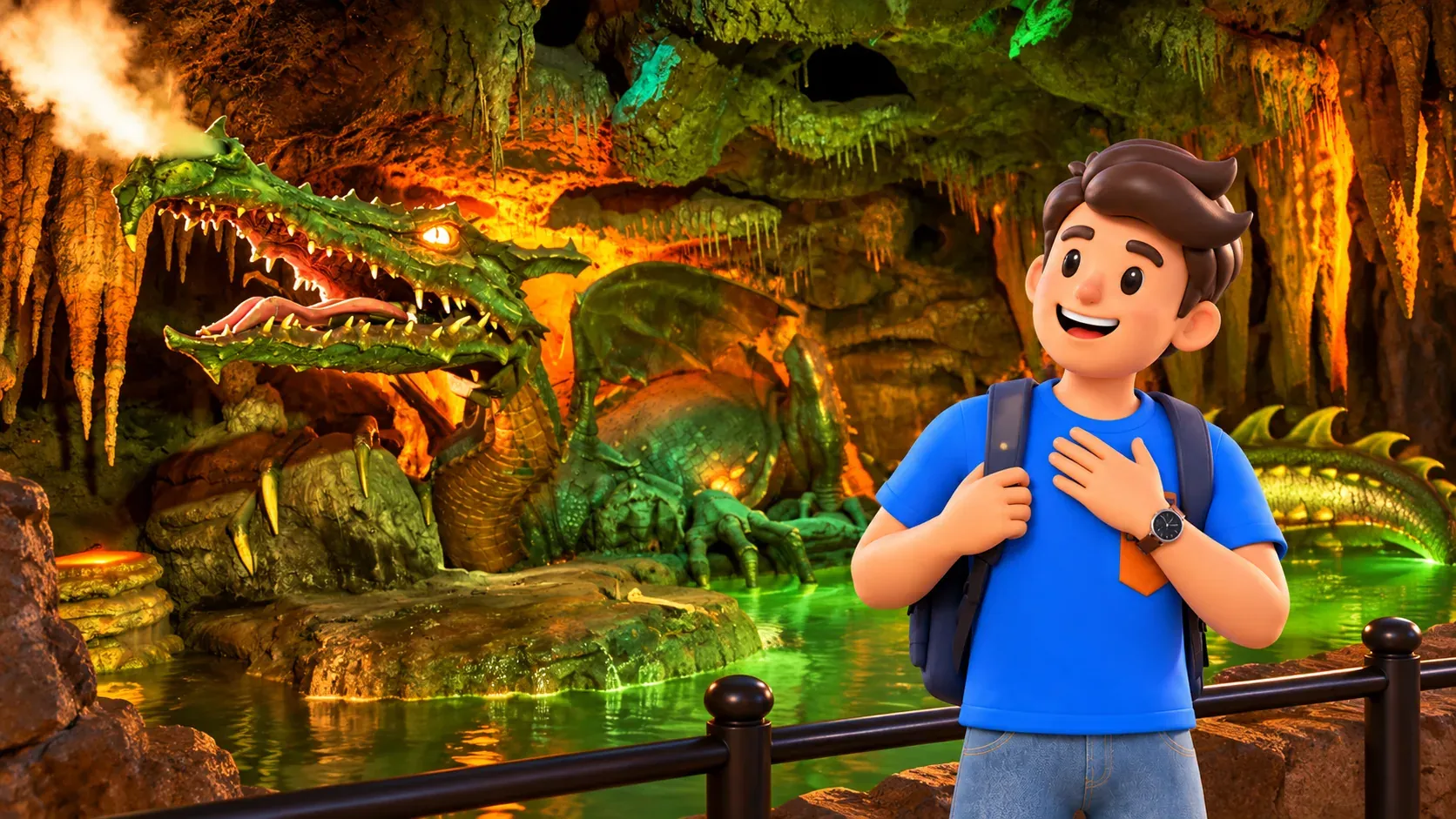
Below is La Tanière du Dragon, with an Audio-Animatronics dragon approximately 24 metres long. The creature changes the scale and mood of the castle: a building that looks delicate from the plaza contains a very different imagined world underneath. Consider your child’s response to a dark setting and a large moving creature before choosing this part.
Access conditions deserve a separate check. The official castle notice consulted on 15 October 2026 still lists refurbishment of the approach bridge from May 2026, while stating that the gallery, dragon’s lair and castle shops remain accessible. That notice does not mean the whole castle is closed; follow the entrances and directions operating on your date.
Main Street, U.S.A.: the opening scene deserves attention
Main Street presents an American small town at the beginning of the twentieth century, with a connection to Walt Disney’s childhood surroundings. Shopfronts, upper windows, transport and decorative details build the setting before you reach the castle. The street helps establish a mood of anticipation; it is worth looking above the merchandise displays.
The two covered arcades behind its shops offer a different scale of observation. Liberty Arcade, on the west side, explores the Statue of Liberty and the relationship between France and the United States. Discovery Arcade, on the east, turns towards nineteenth-century inventions and the imaginative world of inventors. Their ironwork, pictures and models give you things to study at close range.
Compare the arcades with the street outside. A broad view towards the castle encourages movement, whereas a display case asks you to stop. This is one of the park’s simplest pleasures: changing the speed at which you pay attention, even while staying within the same small part of the setting.
The Disneyland Railroad and period vehicles also belong to Main Street’s visual language. Their appearance in the landscape helps create the town, but do not build a fixed plan around every vehicle operating throughout the day. Treat transport here as part of the experience as well as a practical possibility.
Frontierland: a mountain and a manor tell one fictional story
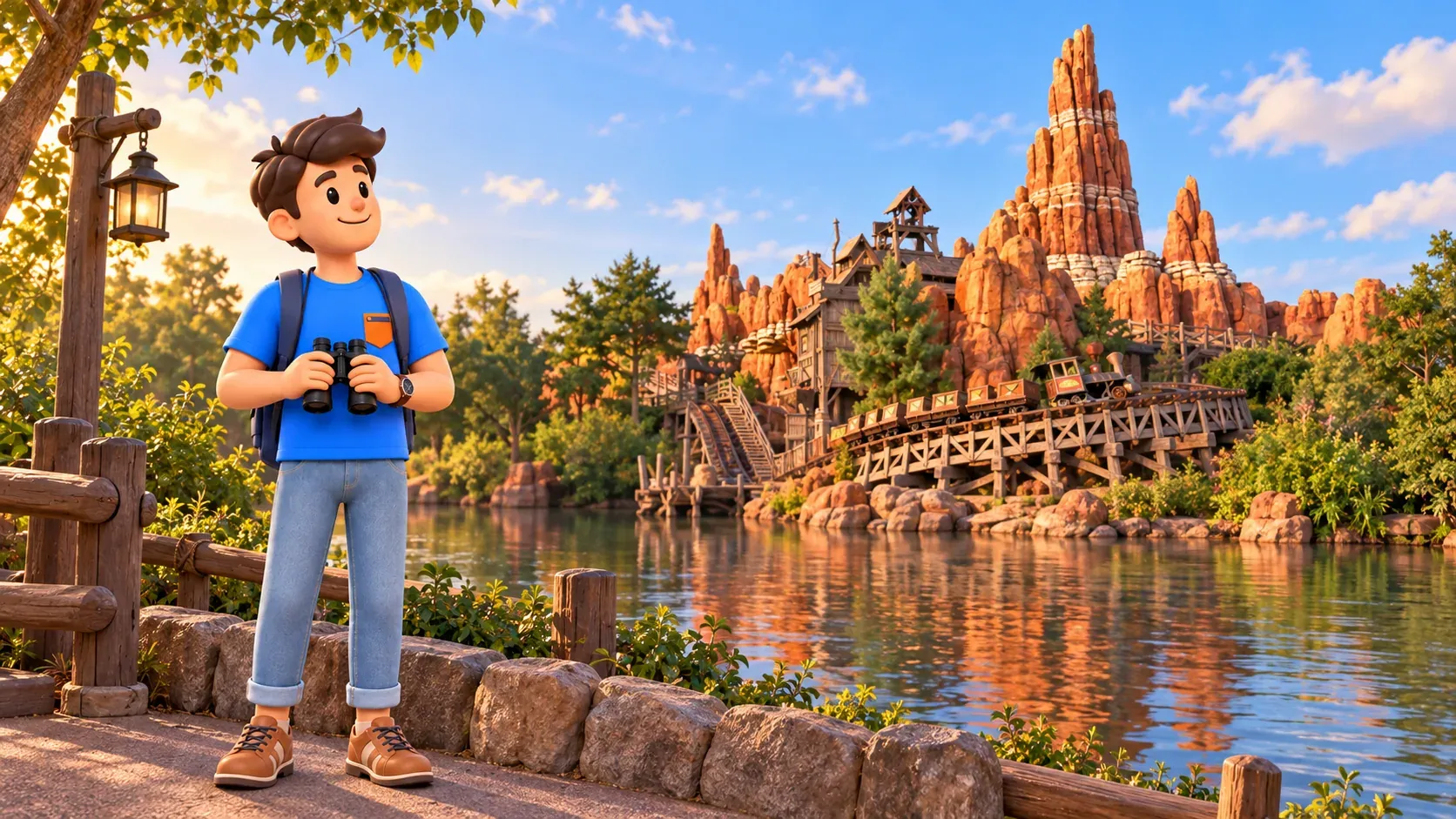
Frontierland’s Thunder Mesa is an invented gold-mining town. Big Thunder Mountain is more than an isolated roller coaster: the mountain and the settlement share a backstory of mining ambitions and supernatural unease. Phantom Manor, associated with the fictional Ravenswood family, belongs to that same narrative landscape.
Keeping the word “fictional” in mind makes the setting easier to read. These are theatrical versions of the American frontier, not fragments of French local history or an archaeological mining site. The structures, rock forms and ominous house are clues in a designed story.
Paris also gives Big Thunder Mountain a distinctive physical arrangement. The train travels through tunnels beneath the Rivers of the Far West, and most of the attraction occupies an island. The water separates the dramatic mountain from the town while the ride connects them below the surface.
Look across the water before deciding whether you want to ride. The relationship between the mountain, river and manor can be appreciated from the visitor landscape. If you are travelling with someone who enjoys the scenery but dislikes thrills or frightening stories, that shared observation is still a worthwhile experience.
Adventureland and the attraction that came before the films
Adventureland gathers several kinds of adventure fiction: a bazaar associated with Aladdin and Arabian Nights, caves and island exploration, a treehouse and a Caribbean pirate setting. The changes in vegetation, building forms and atmosphere are part of the experience. Give one setting time to establish itself instead of treating every path simply as the shortest line to another ride.
Pirates of the Caribbean has an especially useful piece of history behind it. The original attraction opened at Disneyland in California in 1967; the film franchise followed in 2003. The attraction inspired the films, rather than being built originally to reproduce them.
The Paris version was already present when the resort opened in 1992. Jack Sparrow was introduced into several scenes during the refurbishment that concluded in July 2017. A visit therefore brings together an older form of attraction storytelling and characters familiar from later cinema.
That changes what is interesting to look for. Pay attention to the construction of a scene, its characters and the way a boat carries your view through it. Recognising a film character is one pleasure; seeing how a sequence can tell its own story without a cinema screen is another.
Fantasyland: familiar tales, surprising choices of scale
Fantasyland makes room for different ways of entering a story. Peter Pan’s Flight, classic fairy-tale settings and Alice’s Curious Labyrinth each suggest a different relationship between the visitor and an imagined world. A hedge maze lets you move through the setting yourself; Alice’s Paris labyrinth opened with the park on 12 April 1992.
Do not assume that familiarity with a film predicts how an attraction will feel. A child may love a character but dislike darkness, movement or a confusing passage. Describe the kind of experience first, then choose according to the person who will actually be taking part.
“it’s a small world” offers another design story. Its ancestor was created for the 1964–65 New York World’s Fair, before moving to Disneyland in 1966. Richard and Robert Sherman wrote the song so that it could be repeated in different languages as boats moved through the attraction.
The Paris version opened in 1992. Its pastel exterior was a deliberate response to the frequently overcast skies of northern France, according to Disney’s historical account. The facade provides a particularly clear example of a familiar attraction being adapted to its setting.
Listen for how repetition holds the scenes together, then look for changes in shapes and colour. You can enjoy the music and stylised imagery without trying to count every figure or read the whole attraction as a documentary picture of the world.
Discoveryland: yesterday’s dreams of tomorrow
Discoveryland’s enduring idea is a future imagined through visionary fiction. Jules Verne is especially important to understanding it. The original 1995 Space Mountain drew on From the Earth to the Moon, combining a journey into space with a retrofuturist appearance.
As of the conditions checked for this article in October 2026, the attraction carries the Star Wars Hyperspace Mountain theme. A return to a reinterpreted lunar story has been announced, with closure planned for the end of 2027 for several months of work. The announced future version should not be confused with an experience already available today.
Les Mystères du Nautilus explores another branch of Verne’s imagination through the design of Disney’s 1954 film and artist Harper Goff’s submarine. This is a walkthrough setting, rather than a passenger submarine that takes you on a real dive. Its appeal lies in entering an imagined vessel and examining its rooms.
Film decorator Tom Sherman helped the designers with more than 250 napkin sketches of panels, pipes and valves. That modest drawing surface is a memorable contrast with the finished environment: a convincing fictional machine begins with many carefully considered details.
The 2023 refresh introduced a marine-life and conservation story in the Grand Salon. The view through its oculus uses a depth illusion inspired by the multiplane camera, while props and the organ were refurbished. It is an opportunity to notice how light, sound and layered scenery can make a stationary space suggest an underwater world.
Disney Adventure World: a second park with a new centre
The second park’s change of name in March 2026 reflects a larger shift from showing the world of filmmaking towards placing visitors inside fictional worlds. World of Frozen, Worlds of Pixar and Marvel Avengers Campus give it different points of entry, depending on the stories that interest you.
World of Frozen recreates Arendelle, with a village, the North Mountain and Elsa’s Ice Palace forming a recognisable landscape. Frozen Ever After carries its story through a family boat attraction. The setting can matter as much as the ride to someone who has imagined walking into the film.
Adventure Way and Adventure Bay extend that world-building into gardens, a promenade and a lake. Raiponce Tangled Spin turns gondolas and lanterns into a moving scene inspired by Tangled. At a slower pace, looking at how planting and small decorative elements change between spaces gives the park another layer.
The lake also serves as the setting for Disney Cascade of Lights, the nighttime production introduced with the expansion. Water, projected imagery, aerial effects and music make performance part of the landscape. Check the programme for your date: the existence of a production does not guarantee a performance in every weather or technical condition.
Marvel Avengers Campus takes a different approach. Opened in 2022, it presents visitors as recruits entering a place associated with the Avengers. Spider-Man W.E.B. Adventure and Avengers Assemble: Flight Force build on that premise in different forms. Choose according to the experience and its restrictions as well as your enthusiasm for the characters.
Ratatouille: an imaginary Paris inside the resort
Ratatouille: The Adventure opened on 10 July 2014. Rat-shaped vehicles move without a fixed track through a combination of oversized physical scenery and projected animation, creating the impression of sharing Rémy’s scale.
The surrounding Place de Rémy is an idealised Paris filtered through Pixar’s film. References include the Grands Boulevards, covered markets and the city’s squares. At Bistrot Chez Rémy, oversized everyday objects continue the change in perspective: a familiar object becomes furniture when you imagine yourself much smaller.
Compare that invented Paris with the real city during the rest of your stay. What makes a street instantly recognisable: roofs, windows, a fountain, a cafe terrace? The square is enjoyable as a work of interpretation, without needing to match it to a single real address.
Characters and performance: make room for an emotional favourite
A park built from beloved stories is also personal. One visitor wants the scale of a castle, another remembers a song, and someone else hopes to meet the character associated with a childhood book or film. A smaller moment can become the one that matters most.
If Winnie the Pooh is your favourite, make checking the character programme part of your preparation. Line-ups and meeting arrangements change: confirm any reservation or virtual-queue conditions for the encounter you want, and keep another enjoyable idea in mind if it is unavailable.
Leave some freedom around a favourite rather than making everyone’s day depend on one unconfirmed appearance. A performance, a piece of music or a carefully noticed setting can offer a different kind of connection with a story.
You can use RoadMe to shape the complete Paris trip around the interests that matter to your group, with a personal plan based on dates, pace and budget. The app makes coordinating substantial visits, quieter city days and rest much more convenient and effective across the whole stay.
A few practical decisions that protect the experience
For visiting conditions, use the official Disneyland Paris website and app to check your date, the parks included in the ticket you select, attraction closures, height and health restrictions, showtimes and encounter arrangements. Prices and availability vary, so choose the actual admission product before assuming that every part of the resort is included.
Decide whether your main interest is the original castle park, the newer film-inspired worlds, or time in both. More admission coverage is useful only if it matches the time and energy you want to give the place. A meal, travel and pauses also need room in the day.
For families, consider sensory comfort as well as age: darkness, loud sound, motion and frightening images can matter more than the familiarity of a character. Check the attraction’s own information rather than treating “family” as a guarantee that every person will enjoy it.
On another day, the three Paris family day plans with one main activity offer a different rhythm around animals, science or aquatic life. Keep those city experiences distinct from the resort visit, and let each have its own purpose.
The most rewarding detail may be something small: colour chosen for a grey sky, an invented machine drawn on napkins, or a familiar fairy tale translated into stained glass. Disneyland Paris becomes richer when you give those choices a little of your attention.