
Deira Beyond Shopping: Old Houses, a School and the Stories of Residents
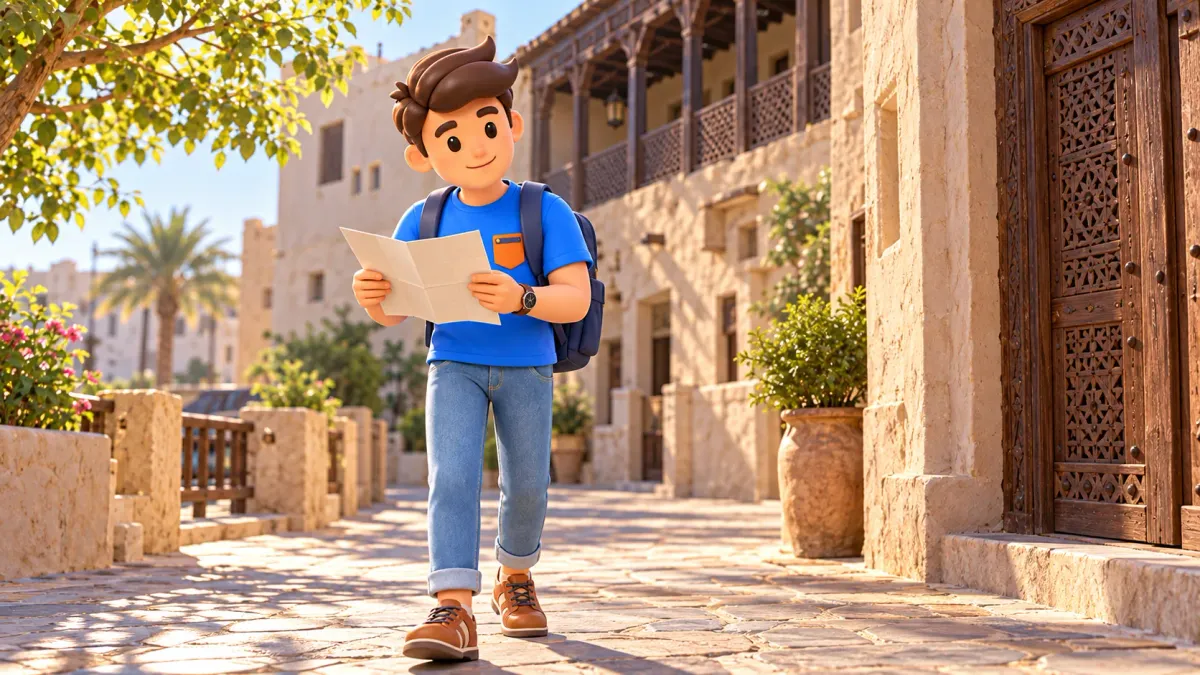
Deira is often introduced through things for sale: gold, spices and textiles. Another visit begins with a different set of questions. Where did people learn? How did a household receive guests? Whose memories have been kept, and whose work becomes visible when a museum tells the story?
This cultural outline starts around Al Ahmadiya School and Heritage House in Al Ras, then turns towards Bait Al Banat Women's Museum near the Gold Souk area. It uses the markets as the surrounding city rather than the main activity. Allow roughly a relaxed half-day, or a shorter outing around one confirmed interior visit. Access arrangements matter more than completing three names.
Plan around a confirmed visit, not three assumed open doors
RoadMe can make a personal route or whole trip plan around your interests, dates and pace. Try preparing the day in the app: it is much easier to bring education, architecture and local stories into a coherent visit than to assemble separate lists during your holiday.
Before travelling, check which of the cultural venues is actually receiving visitors on your date, what access is offered and whether advance arrangements are needed. A historic building's presence on a map is not proof that its exhibitions are open. Do not base the whole outing on three unconfirmed interiors.
Choose one main visit and keep the others conditional. If the school and house can be visited, begin with that compact pair. If the Women's Museum is your priority and its visit is confirmed, organise the day around it instead. If none of your intended interiors is available, choose another day or a different cultural route.
The route has two clusters: the school and house in Al Ras, then the Women's Museum area. It is not an invitation to cross all of Deira. Save the actual destinations and entrances, consider the weather and allow time for ordinary street navigation. All time suggestions here are estimates, not measured walking speeds or official session lengths.
Al Ahmadiya School: trade wealth becomes public learning
Al Ahmadiya School was founded in 1912 through the initiative of pearl merchant Ahmed bin Dalmouk. After his death, his son Mohammed continued the support. This gives the building a story beyond its architecture: money and standing acquired through trade could be directed towards an institution serving a wider community.
The school belongs to an early stage of organised education in Dubai, before the extensive state system of later decades. Religious subjects, Arabic, writing and arithmetic formed part of its teaching history, with the programme becoming broader and more formal over time. It should not be treated as a modern school with an old-looking exterior.
When an interior visit is available, look at the relationship between classroom and courtyard. Small rooms share a common space, while galleries and arches create shaded circulation. Similar architectural tools appear in houses, but here they serve collective learning rather than a single household.
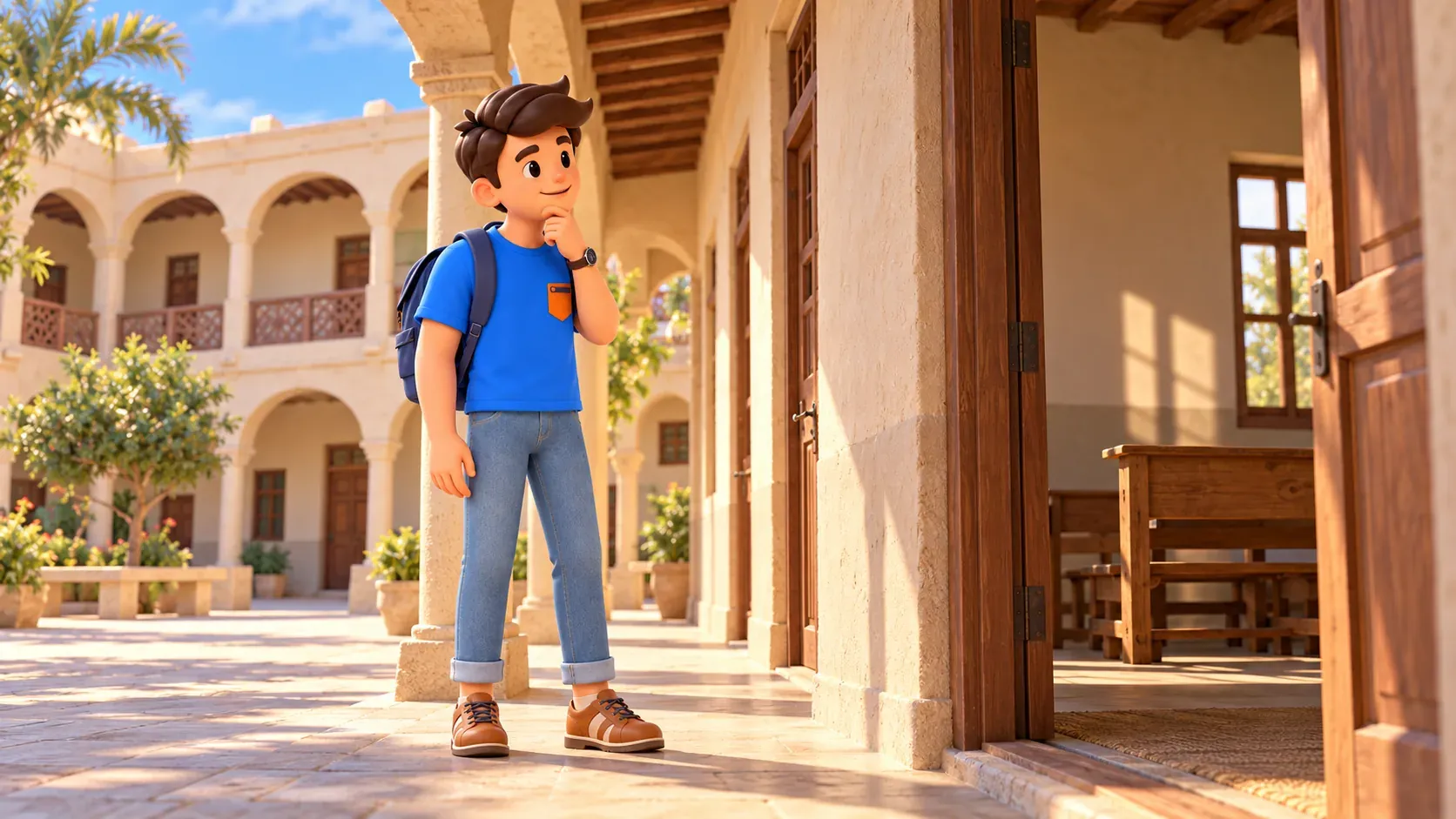
Imagine the practical organisation rather than inventing a scene of daily life. How might a group move between rooms? Where does light enter? How does an upper gallery relate to the court? Those questions make the building legible without claiming to reconstruct a particular lesson or a pupil's personal experience.
If you are interested in the people behind the institution, keep the connection between merchant family and public benefit in mind. It offers a more specific account of change than the familiar phrase that Dubai grew from old to new. Education required decisions, resources and ongoing support, not only a new building.
Heritage House: a home is more than its façade
Nearby Heritage House provides a domestic counterpart. The building dates to 1890, with a history involving changing owners and later links to the bin Dalmouk family. It expanded and adapted over time. Its present form should not be read as a frozen interior from one exact year.
The important relationship is between an enclosed outer edge and the court within. Rooms and shaded transitions organise movement, light and degrees of privacy. A narrow exterior passage can conceal a more open interior, reminding you why one façade tells only part of a house's story.
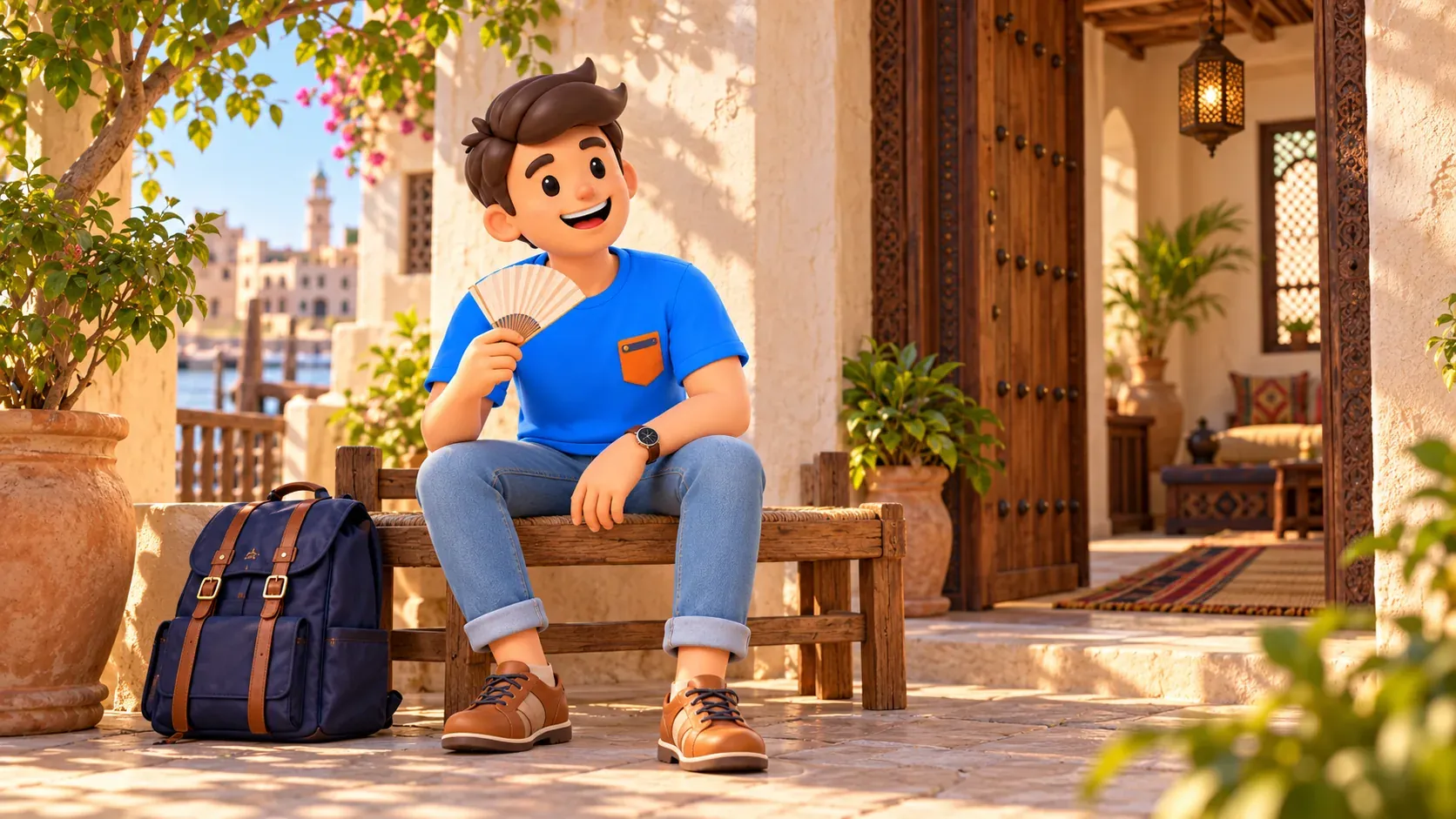
If access is available, compare the approach to a guest-receiving space with routes towards more private parts. A majlis has a social role, while other rooms belong to different aspects of domestic life. The distinction may be expressed through position and access rather than extravagant decoration.
Restoration in the 1990s helped preserve the house and adapt it for telling a story of traditional life. That is another layer, separate from its original construction and the years of family use. Looking at restoration as part of the biography avoids the misleading idea that every visible surface has remained unchanged.
Use the school-house pairing to compare a public purpose and a domestic one. Both respond to climate and use a courtyard, but the people, routines and boundaries differ. This small comparison can sustain a visit better than trying to memorise all the room names or dates.
Between the clusters, let ordinary Deira remain ordinary
The streets between cultural venues belong to a working neighbourhood. Shops, deliveries and everyday journeys continue around the visitor's programme. You can pass through a commercial area without making buying its purpose. Follow public paths, keep entrances clear and avoid treating every person as part of a heritage scene.
Choose a simple pause for water or food when it suits the route. A modest, clearly described offer near the actual destination can be more useful than another famous address requiring a detour. Leave enough time to arrive at a booked visit calmly rather than making the meal another race.
Ask permission before photographing people closely, private interiors or material subject to a venue's photography rules. A personal document may be displayed to explain a life, not to become an unrestricted souvenir image. When in doubt, describe what interested you in a note rather than photographing it.
You do not need to call the area a secret to find it interesting. Deira's value here lies in the change of attention: a school beside a house, a family's history within a commercial district, a present-day street carrying several different kinds of memory.
Bait Al Banat: widening the people in the city's story
Bait Al Banat Women's Museum was created by Emirati academic Rafia Ghubash and opened in 2012. Its name means House of Girls, and its setting is a house from the 1950s. The focus is women's participation in society and culture, explored through personal testimony, objects, documents and art.
The museum adds a perspective often missed by accounts centred on rulers, trade or landmark construction. Education, family life, creative work and public activity become part of the historical picture. A small object matters not only because it is old, but because it helps recover someone's experience.
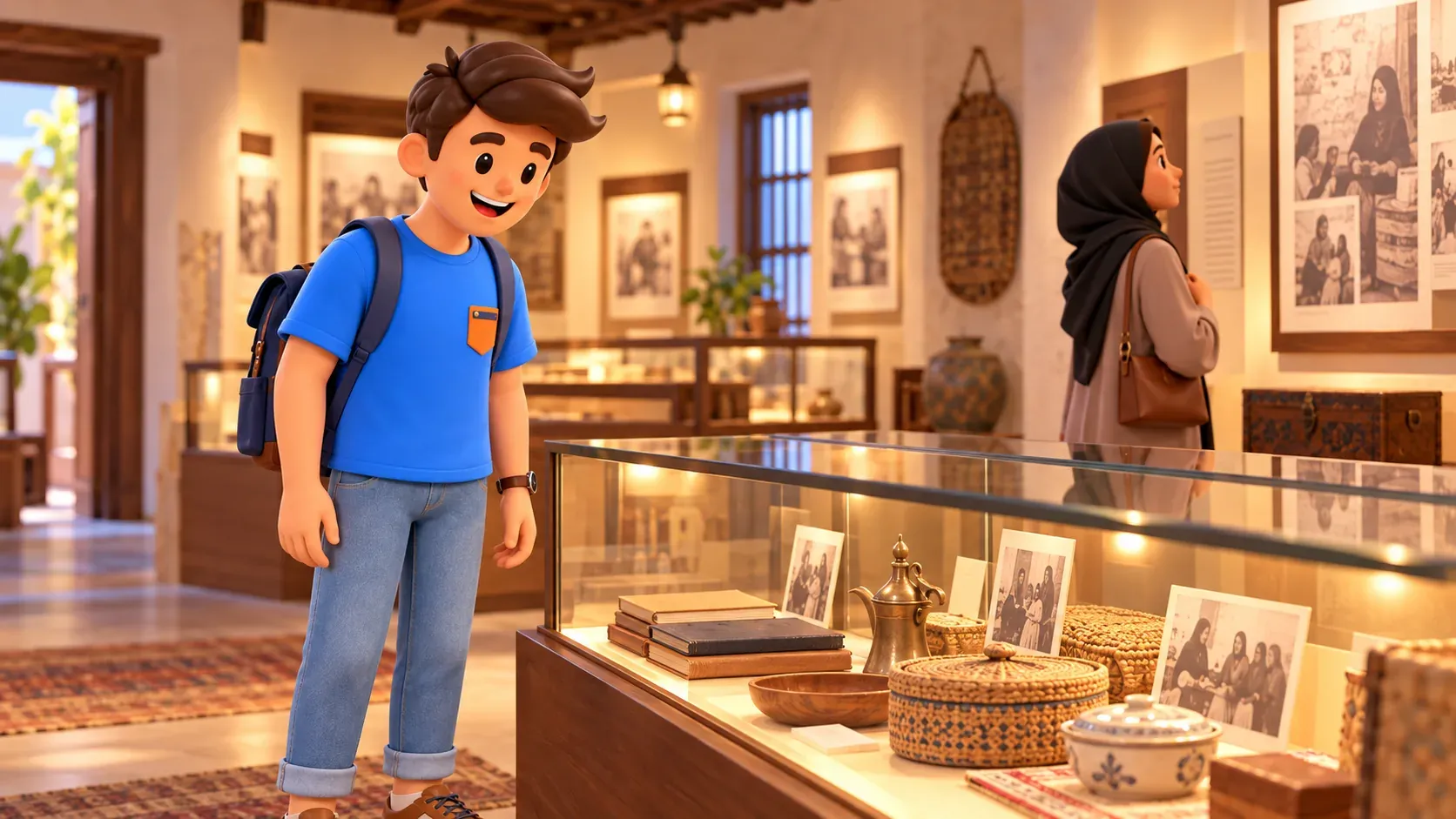
One strand connects with the poetry of Ousha bint Khalifa. The point is not to use poetry as decorative atmosphere but to recognise a voice as a form of cultural presence. The same question can guide your attention to visual art: who is speaking, through which medium, and what aspect of life becomes visible?
Keep the visit specific. A museum's selection cannot stand in for every woman's life or explain a whole society through one label. Read the context of individual objects and stories, and distinguish a named person's biography from a general assumption about the region.
Allow your main confirmed visit enough space for reading and reflection. If this subject matters most to you, shorten the earlier architecture section. The strength of the day is not a perfectly equal allocation of minutes but a clear interest pursued with enough attention.
Questions that make a small cultural visit richer
Try carrying three questions rather than a checklist: who used this space, what work supported it, and what evidence remains? At the school, the answers concern learning and support. In the house, they concern family and guests. At the Women's Museum, they turn towards personal memory and cultural expression.
These questions also help distinguish evidence from imagination. A doorway shows a physical relationship; a label can identify an object; a story may belong to one person. None automatically explains every resident. It is fine to leave with an unanswered question rather than fill the gap with an attractive invented anecdote.
With children, keep the task concrete: compare a classroom entrance and a house doorway, or choose one everyday object whose purpose they can guess. Then check the explanation where one is provided. A short moment of discovery often works better than a long speech about the whole history of Dubai.
For adults travelling together, let each person choose a different detail to discuss afterwards. One may notice architecture, another a document, another the relationship between institution and street. The conversation becomes the shared thread without requiring everyone to enjoy exactly the same thing.
Keep wider Deira for another outing
Naif Museum offers a different institutional theme, linked to the history of policing and justice. It is not the same story as a home or school, and its current visiting arrangements require their own check. Add it only by making it a deliberate priority, not as an automatic fourth interior.
Deira Clocktower and the Twin Towers belong to other aspects of the district's development and are not adjacent stops in this compact Al Ras plan. A map label covering all of Deira can hide considerable distances. Give later urban history a separate route rather than stretching a quiet cultural day across the whole area.
RoadMe can connect these interests with a personal multi-day plan, including the pace and themes you prefer. Use the app to organise the whole trip more efficiently, so a day of local stories fits naturally beside architecture, markets or time by the sea.
If you want the trading-waterway story next, our walk along both banks of Dubai Creek uses markets and an abra crossing as its focus. For a different old-house setting, the two-hour Al Fahidi route combines climate-responsive architecture with coffee and galleries.
Before leaving, save the confirmed visit details, a clear final destination and your return option. A useful cultural day ends with a few human connections: learning supported by trade, a house arranged around social life and personal histories preserved so that the city's story includes more people.


