
Half a day in De Pijp: Albert Cuyp Market and Sarphatipark
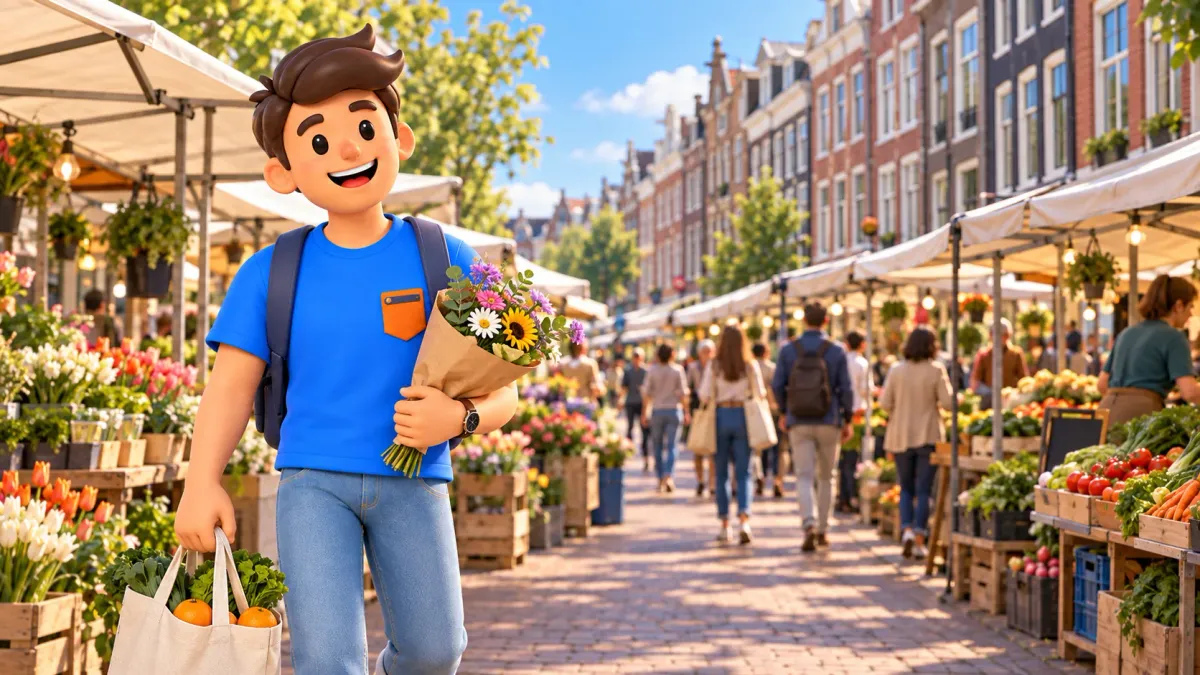
De Pijp is easy to enjoy through a change of rhythm: market stalls on Albert Cuypstraat, a short walk into Sarphatipark’s greenery, then neighbourhood streets and lunch. Give it half a day. The area becomes understandable through everyday activities as well as façades: choosing food, carrying shopping home, meeting over a table and stepping into a park for a brief pause between other parts of the day.
This plan allows roughly four hours, from 10am to 2pm, Monday to Saturday. It includes the market, park, a short neighbourhood walk and a proper meal break, without a major museum or distant journey. Its two main anchors, Albert Cuyp Market and Sarphatipark, are close enough to connect on foot. Add travel from your accommodation separately rather than counting the first train or walk towards the district inside the same four hours.
Choose a real market day
Albert Cuyp Market’s ordinary published hours are now Monday–Saturday, 9:30am–5pm; it is closed on Sundays. Arriving around ten leaves a little room after opening and puts the stalls in the first part of the programme. Check holiday changes for your date. The current calendar, for example, lists closures on 25 and 26 December 2026 and 1 January 2027. A holiday is not automatically an ordinary market day simply because it falls on a Saturday.
RoadMe makes it much more convenient to get a personal walking or whole-trip plan around your interests, dates and pace. Tell the app how you want to combine markets, local history, green breaks and food, then use a complete route it has worked out for your stay.
Sunday can suit a different neighbourhood walk, with more streets, park and cafés but without the regular market. If the stalls are your main reason for choosing De Pijp, move this outing to an operating day. During severe weather, check the organiser’s updates too. Outdoor trading responds to conditions differently from a museum gallery, so let the actual date shape what you expect to find rather than carrying the same picture into every possible visit.
Begin at the western side of Albert Cuypstraat by Ferdinand Bolstraat. The market itself points visitors towards De Pijp metro station and its Albert Cuypstraat exit. Check the route from your own starting address and any current transport changes. The programme within the neighbourhood is on foot. Our two-day Amsterdam itinerary gives this area a place in a broader visit; this half day lets you return with more time while leaving large museums for another part of the trip.
A simple four-hour structure
Reserve 10–11:30am for the market: a first look, several chosen stops and a small snack if wanted. Allow fifteen minutes to reach Sarphatipark by public streets. Walk and rest there from 11:45am to 12:30pm, then give half an hour to neighbourhood streets, perhaps towards Gerard Doustraat. The final hour, 1–2pm, belongs to lunch somewhere you choose. The finish is in the district, not necessarily back at the metro exit where you started.
These are planning estimates, not measured walking times. They include ordinary orientation and pauses within each block. Choose your lunch venue separately: a particular table and serving time are not guaranteed by this outline. If an interesting conversation holds you at a stall, shorten the later street walk. Both main places can remain without rushing through the park or compressing a proper meal into ten minutes merely to preserve an attractive finish time on paper.
Browse once, then give a few stalls your attention
The market dates to 1905 in a nineteenth-century residential neighbourhood. Its mix includes produce, prepared food, flowers, fabrics, clothing and everyday goods. That mixture is the interest: a visitor’s snack sits beside ordinary household shopping. Start with a brief overview to discover what appeals today. Return to several suitable places afterwards, rather than purchasing everything simply because it happened to be the first thing you saw when entering the trading street.
For food, distinguish tasting from lunch. Cheese, herring or a stroopwafel could make a small stop if a suitable offer is available that day. Choose according to your preferences and ask about ingredients when needed. The morning does not require a fixed tasting sequence. A proper meal already has its own hour at the end, so you can keep some appetite for a quieter table after walking through the park and a few surrounding streets.
When you stop, move out of the main flow once you have finished choosing. A photograph can include both goods and part of the street, keeping the market in its urban setting. Ask before taking a seller’s portrait. A brief respectful exchange may give more to the visit than recording everything quickly while nearby people are attending to ordinary errands. They are using a working market, and their day does not have to become part of your photographic programme.

Albert Cuypstraat’s width also carries a historical trace. The Zaagmolensloot once ran here before being filled in during the late nineteenth century, a story described in I amsterdam’s neighbourhood walk. Notice how the long line of trading fits between the façades. Amsterdam’s relationship between water and streets survives even where water is no longer visible. This small layer makes the setting clearer without requiring a detailed history of every former mill or individual plot beside the old watercourse.
Walk from the trading street into greenery
After the stalls, head towards Sarphatipark by public streets, using Eerste van der Helststraat as an orientation point. If you have reached the market’s far end, return towards the needed turn first. A nearby destination is not necessarily in the direction of your last step. The fifteen-minute allowance includes orientation. Your map can help with an available park entrance and current access, while the article supplies the order of two experiences that need no major transport journey between them.
During the transition, notice how continuous trading gives way to separate shop windows, residential entrances and ordinary crossings. Pick one façade and look above ground-floor level for a few seconds. It brings the residential district back into view after food and signs have held attention. The street has its own life, so an open doorway or courtyard is not automatically part of a visitor’s route. Public pavements already offer enough to observe without adding entry to private homes.
Sarphatipark: rest with a small city story
The park is named after Samuel Sarphati, a doctor and philanthropist important to nineteenth-century Amsterdam, and contains a monument to him. A short visit does not require a lengthy biography. The name connects this green space with care for city life. Change activity after the market: first follow an available path, then find somewhere for a proper pause. You do not need to circle every edge immediately for the stop to count as a visit.
There is a practical feature beneath the greenery: the park lies lower than the surrounding neighbourhood. The city identifies a pumping station from 1884 that helps keep it dry. Even an ordinary rest here relates to water management. This is not a promised interior tour of the pumping station. Knowing the detail is enough to notice ground level, pond and the way a small green place is maintained inside dense urban buildings for everyday use and relaxation.
For forty-five minutes, choose an activity that suits your mood. Walk beside an accessible part of the pond, sit, look at trees or use an available table-tennis facility if appropriate and open. The city also lists children’s and sports facilities, but this is no reserved activity session with equipment supplied. For families, an unstructured break can be more enjoyable than another task the adults have decided everyone must complete between shopping and the meal planned for later.
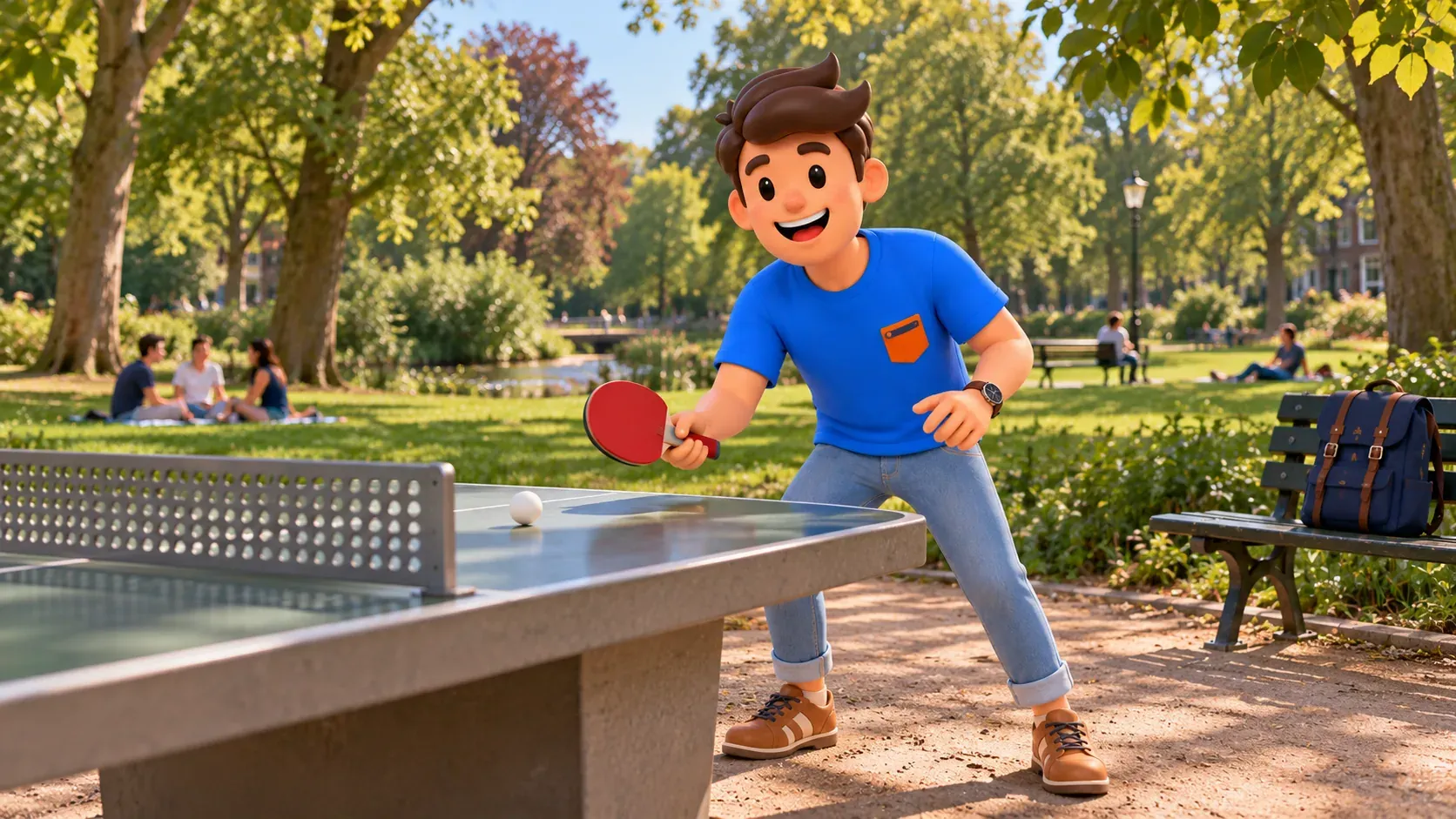
If you want to sit on grass, assess its condition and the open sections. During temporary works, use available paths and make a shorter stop if needed. Pondside wetland plants offer a small detail: the municipal description links them to keeping the water clean. You need no special tour to notice them. Move briefly from the overall green scene to one nearby element, then allow yourself time to rest without continuing a checklist of observations throughout the whole pause.
The park could accommodate a small snack, although the principal meal in this plan is later. Barbecues are prohibited here under the city’s rules; ordinary relaxation needs no grill or large equipment. Take packaging away, keep routes clear and consider other people resting. If you want longer on a bench, borrow time from the following street section. The value of a green pause is changing the morning’s rhythm, rather than becoming another stop that must end exactly when a phone says so.
If you want more or less time for the market, park and food, RoadMe can prepare a personal plan around your interests and usual pace. A fully worked-out trip route in the app is much easier to use than repeatedly connecting individual walking and visiting recommendations yourself.
Let neighbourhood streets lead towards lunch
After the park, return to public streets and choose a short direction towards Gerard Doustraat, checking your map. Half an hour can hold several small scenes: a shop, window, doorway or light changing on a brick façade. It is a flexible walking block rather than a list of shops guaranteed to be open. If somewhere draws you inside under its normal conditions, shorten the next part. This section does not improve merely through counting entered premises.
Keep an hour for food and an easy finish
Choose lunch near the end of the short street walk according to the current menu, available tables and your preferences. The full hour exists so that you can sit and eat properly, not because every venue serves at an identical speed. If you have a reservation, work backwards from it. Use market purchases or your own food in a café only under its rules, rather than treating the table as an automatic continuation of a public park pause.

Consider the rest of your day. After a relaxed meal, finish within the district and calculate the onward journey separately, without an obligatory return to the first point. In rain, shorten the park and street sections and leave more time at a table. When the market is closed, choose another date for trading or a neighbourhood walk with a different purpose. Assess surfaces and entrances for your needs: the complete route has not been checked as step-free.
With only two hours, keep the market and a brief green stop, without promising a separate restaurant meal. With four, use the time for a real change of activity. A good result is not the maximum number of tastes and photographs. It is a morning with room for choosing at a stall, a little city history and a pause that leaves you wanting to continue discovering Amsterdam, rather than urgently finish another compulsory section of a busy itinerary.


