
Çukurcuma in a Few Hours: Streets and the Museum of Innocence
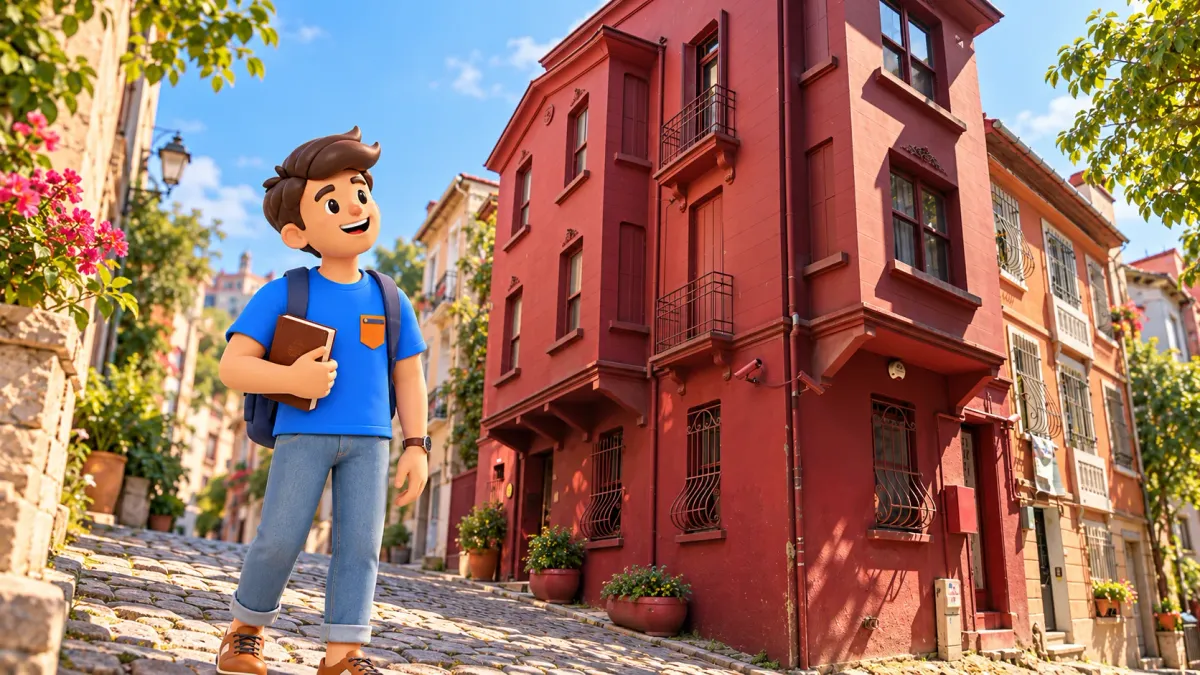
Çukurcuma suits a walk in which small things become the main attraction. After Istanbul's large squares and strong silhouettes, bring your attention closer: a doorway, an object in a window, a photograph beside an everyday detail. The Museum of Innocence gives this movement a subject, connecting objects and memory. Around it, a compact route can combine neighbourhood streets with a proper coffee pause, leaving room to notice rather than simply reach the next landmark.
Allow roughly two to two and a half hours after arriving near the museum. A version with a short interior visit requires a suitable visiting day; queues and close reading extend the time. You can also keep the museum external and give more space to the neighbourhood. All durations are editorial allowances rather than measured journeys. Travel from your accommodation and the subsequent approach to transport are additional.
Build the route around one main interest
Follow a short introduction to streets near the Museum of Innocence, a visit if it suits, a small loop through public Çukurcuma streets and a cafe. The core lies around Dalgıç Çıkmazı and Çukurcuma Caddesi. One cultural address is enough for a first encounter. Give the remaining minutes to the neighbourhood so it becomes part of the outing, with its own observations and time, rather than a transition between museum ticket desks.
Building this day into a complete personal trip is much more convenient in RoadMe, which develops an itinerary around your interests, available days and comfortable pace. Choose more literature, small museums or relaxed neighbourhood walks, and give Çukurcuma the right place in your own Istanbul.
Give the first streets and museum exterior fifteen to twenty minutes, with around an hour to seventy-five minutes for a short interior introduction. Afterwards, allow fifteen to twenty minutes for wandering and twenty-five to thirty for coffee, with a little orientation reserve. This is a compact version, not a suggestion to read everything within an hour. If the collection holds your attention, enlarge its block and finish later.
Decide which of two subjects leads. For a literary outing, the museum gets the largest block and the streets provide a calm setting. For neighbourhood exploration, it can remain an external reference. Both choices work. Discuss this before entering: a reader who wants every explanation and a companion expecting a short pre-lunch walk may otherwise discover their different expectations at precisely the point when one has already bought a ticket.
The first streets: look closer
Begin with a small section near the museum. There is no need to find the single most attractive street in the whole area; nearby public approaches can establish the mood. Notice windows in relation to the slope, differences between doors and the way a display meets the pavement. Such details give the surroundings meaning even when the history of each house is unfamiliar. More named stops are unnecessary for that experience.
Choose one observation theme: round shapes, door handles or an old object beside modern finishes. Two or three examples are enough. With a companion, each person can select a detail to show the other. The walk then becomes a conversation about what you noticed, rather than only directions and distance.
Photograph from comfortable public space without blocking entrances or entering private premises for an angle. A good-looking doorway remains part of someone's daily life. On a slope, place your feet and settle your position before looking at the screen. A few deliberate pictures leave more time for the neighbourhood and a conversation about it.
The Museum of Innocence: a novel and objects
Orhan Pamuk created the museum in relation to his novel of the same name. The novel appeared in 2008 and the museum opened in 2012; he developed the two projects together. Expect a particular conversation between literature and things, rather than an ordinary writer's memorial apartment where every object records a verified episode of the author's biography. This starting point makes the unusual format easier to approach.
The displays connect objects and images with a fictional story. Look at how a small thing can suggest a situation, habit or feeling. The walk does not require a full plot summary with every turn revealed. Preserve the possibility of your own encounter. The museum gives the streets a question to carry outside: why can one everyday detail sometimes hold a memory more strongly than a broad view of an entire neighbourhood?
Reading the novel beforehand is optional, although familiarity adds associations. Without the book, start with visual relationships and personal responses, then use the explanations. Having read it, leave time to compare rather than quickly hunt for every scene. The two approaches have different rhythms. Neither requires an advance examination of your literary knowledge.
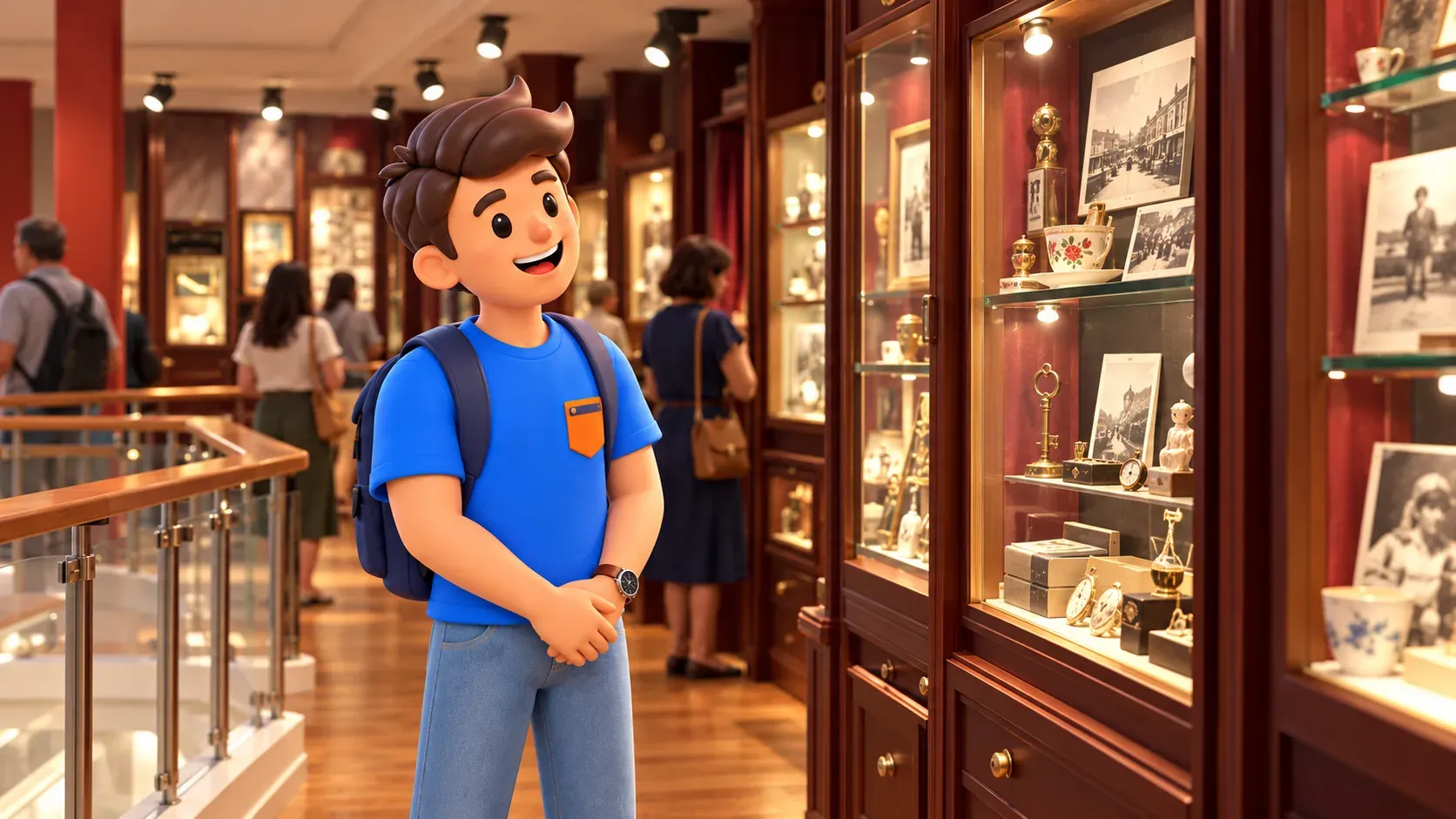
Give the museum its own time
Check current visiting days, tickets and conditions with the museum before setting out. It is normally closed on Mondays, and certain holidays also affect the calendar. Do not schedule lunch or another appointment tightly against the expected exit. You may want to stay longer, and waiting does not become part of the exhibition hour just because the plan was compact. Keep a clear difference between time inside and time required to get inside.
Choose an unhurried method once there. First understand the presentation, then spend longer with several combinations of objects that interest you. Every section need not receive equal time. For extensive reading, enlarge the museum block and shorten the later wandering. Attention then stays on what brought you in, instead of the need to finish another small section quickly.
The museum states that only its ground floor is wheelchair accessible. Entering the building does not mean reaching the entire display. If this matters to your group, clarify the available visit and street approach beforehand. For other mobility requirements, learning the conditions before buying a ticket is useful too. Choose the day's format from actual needs, rather than assuming an attractive general photograph describes the whole access experience.
If entry does not fit, keep the exterior stop and continue the neighbourhood part. The day need not become an extended wait for opening or space. You already have the central subject to bring into street observations. A short walk has value in its own right. A thoughtful museum encounter may suit another day better than a tight accidental gap between other events, when the group has neither time nor attention to spare.
After the visit: continue the conversation outside
Once outside, take a small public-street loop before adding another substantial interior. Let the impression change. After the museum's arrangements, an ordinary display may feel different. Street objects need not illustrate the novel: the interest lies in your renewed attention. Compare something remembered inside with a detail now drawing your eye outdoors. That link gives the route continuity without treating the neighbourhood as a physical reconstruction of a fictional story.
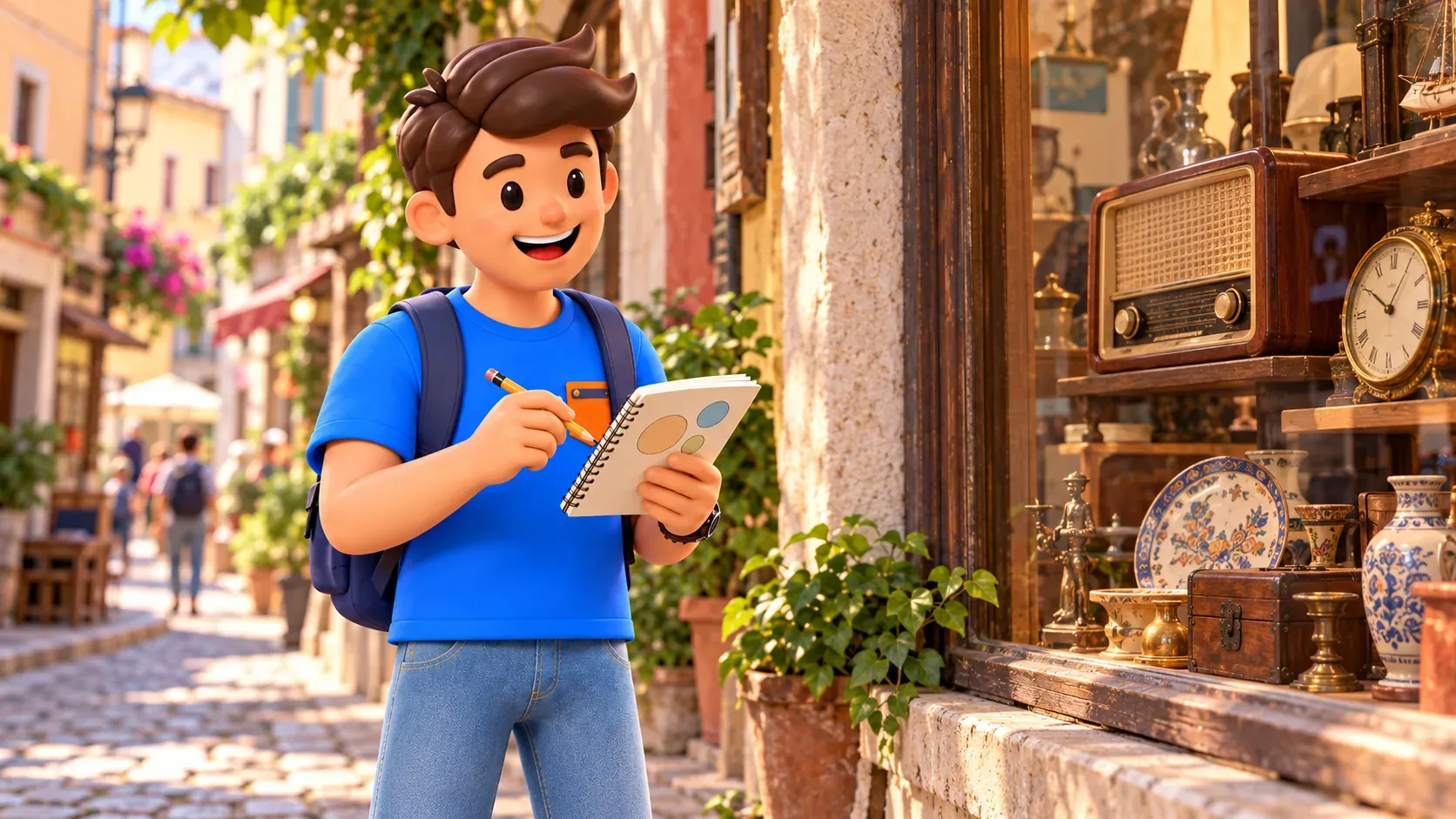
If an open shop interests you, first look without a commitment to buy. One choice is more useful than entering ten places from a feeling that the area must be exhausted. For a purchase, ask about material, condition, size and final price. An old-looking object does not automatically have museum provenance or a documented story. What matters is a specific explanation and your understanding of the item you are considering.
Consider carrying it as well. Fragility, weight or an awkward shape changes the convenience of the remaining day. Discuss packing before payment. You can remember a window and return later if the decision is unclear. That pause fits the route's mood: close attention need not immediately turn every impression into a purchase carried across the city. Looking and choosing can be separate pleasures, with time between them if that feels more comfortable.
One small subject for the group
Give everyone a task connected with things. Someone might look for a familiar childhood object, another for a colour combination, another for an unusual handle or lamp shape. Precise age and origin are unnecessary; explain why it attracted attention. The conversation becomes personal without asking anyone to disclose private history or repeat someone else's museum narrative.
With children, choose a visual task and shorter stops. The museum may particularly interest an adult drawn to literature, so do not promise the same response from the whole family. Discuss this and allow a proper pause. For mixed interests, a clear meeting place and time limit help if someone stays inside or shops longer. Different rhythms then have room without making the rest of the group feel indefinitely on hold.
In rain, shorten optional loops and preserve time for permitted interiors and a cafe. In heat, keep transitions modest and avoid spending the entire allowance photographing an exposed section. This route offers no continuous covered path. Comfortable shoes and some water protect the mood better than another famous stop requiring a change of direction.
Coffee: give the impression one thought
Choose a cafe by actual location, menu and seats. A compulsory rooftop view is unnecessary: an ordinary neighbourhood table continues the small-scale subject. Twenty-five to thirty minutes suits a drink and conversation; a full meal needs more. Before ordering, choose the format if another event has a fixed time. It is easier to decide early than to hurry yourself and companions once the pause has become longer than expected.
At the table, ask which thing from today you would keep in your own little museum, and why. This is no contest for the rarest object. A cup or photograph can matter more than an expressive facade. The answer reveals an interest for another day: a small museum, architecture, streets or something entirely different with water and open spaces.
Write two or three short notes instead of a report of everything seen. Colour, shape and one feeling may be enough to distinguish Çukurcuma from previous Istanbul days. If the visit prompts you to read the novel, leave that as a freely chosen continuation. The museum can lead towards the book without making immediate completion a requirement for the cultural stop to feel worthwhile.

Finish and choose another day
Finish after coffee in Çukurcuma, then choose the transport approach for your next address. Heading uphill towards İstiklal and towards Tophane offer different continuations with different terrain. Check the specific path and allow time. The way you arrived does not automatically determine the best departure: after the walk, your location and next destination may both have changed. A clear endpoint keeps the compact outing separate from the onward journey.
For another day nearby, the İstiklal passage walk explores spaces behind facades rather than the museum and objects' memory. Separate the programmes if you want to look closely and enjoy pauses. Combining them is possible with enough time, but the result becomes a substantial part of a day, particularly with an interior visit, shops and lunch. The useful choice follows your interests rather than proximity alone.
The whole personal plan is more convenient to use in RoadMe, where chosen places, interests and days form a coherent trip that stays easy to consult. Download Istanbul beforehand with an internet connection to use maps and navigation offline afterwards.
Çukurcuma is memorable when attention has time to move closer. The museum gives a subject, the streets offer observations and coffee turns them into a personal impression. A few details that mattered to you can give these hours their own place among Istanbul's larger, brighter days.


