
CosmoCaixa with kids: a science morning and Tamarita gardens
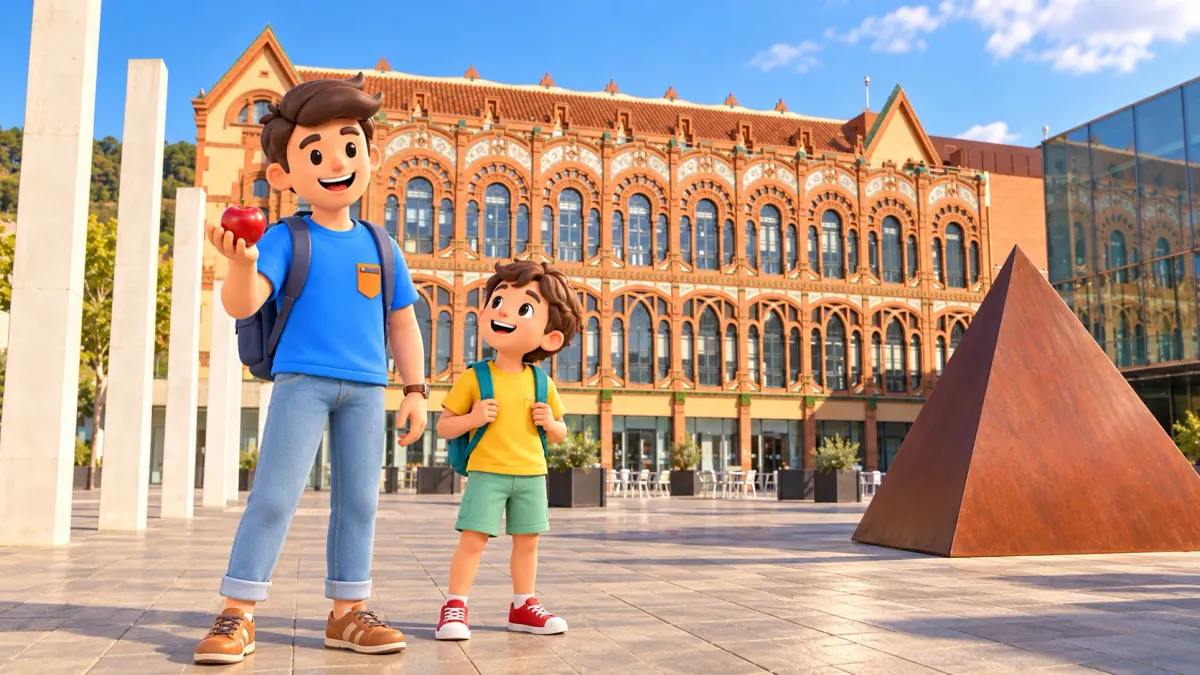
CosmoCaixa can easily absorb more time than a family expected. One child wants to repeat an experiment, another stays beside the fish, and an adult unexpectedly becomes interested in geology. For a first visit, choosing a few purposes and protecting a pause works better than attempting the whole museum in sequence.
This family outing takes about three and a half hours, 10:00–13:30: two and a half hours inside the CosmoCaixa science museum, including rest, followed by a short downhill walk to Jardins de la Tamarita. The main version suits the interests of children roughly six to eleven; that is a pacing suggestion, not a museum admission restriction. Shorten it for younger children or let an interested teenager stay with one subject.
A half-day with one main destination and a quiet ending
Keep 10:00–10:15 for admission, toilets and orientation. Spend the next forty-five minutes with several Sala Universo exhibits, then 11:00–11:25 in the Flooded Forest. A twenty-minute pause ends at 11:45. The following forty-five minutes allow for the Geological Wall, revisiting a favourite experiment and leaving by 12:30. After a twenty-minute connection, spend 12:50–13:30 in Tamarita’s gardens.
The total is 210 minutes: fifteen, forty-five, twenty-five, twenty, forty-five, twenty and forty. These are planning estimates, not timings measured on site. Reaching the museum before 10:00, a full lunch and travelling onwards after the garden are additional. The basic plan includes no reserved planetarium show, workshop or ascent to Tibidabo’s amusement park.
To combine museums, walks and rest into a convenient trip, try RoadMe: the app develops a personal day-by-day programme around your interests, dates, pace and budget. A complete itinerary is much easier to use in Barcelona than joining separate ideas together again each evening.
If an experiment catches your child’s attention, shorten the next section rather than the break. The plan has useful flexibility: the garden can be brief and one museum section can be left out. A successful half-day is a few experiences worth discussing afterwards, rather than a total of completed stops.
Admission: current conditions before old advice
CosmoCaixa’s visitor address is Carrer d’Isaac Newton, 26. At the 17 October 2026 check, standard general admission was €8 per adult. Children under sixteen enter free on an ordinary family visit, accompanied by a responsible adult. The museum may request evidence of age. A teenager who has already turned sixteen does not fall within the under-sixteen category.
General admission covers permanent and temporary exhibitions. It does not include every workshop or planetarium session. For a chosen activity, check its price, availability, age guidance and language, together with the requirement for museum admission. Booking beforehand helps preparation but does not itself guarantee no queue at the entrance or a popular exhibit.
The museum opens daily, including Mondays and public holidays, 10:00–20:00. It closes on 25 December and 1 and 6 January. On 24 and 31 December and 5 January it closes at 18:00. Entrance tickets stop being sold thirty minutes before closing. The morning programme fits a shortened day, but an annual closure still requires choosing another date.
A little history before the first experiment
The older building recalls a life before the present museum. Its design is associated with Josep Domènech i Estapà and a former institution for blind people. A science museum subsequently opened here in 1981. A major transformation led by Esteve and Robert Terradas produced the current CosmoCaixa, inaugurated in 2004.
In 2019 the permanent exhibition was renewed as Sala Universo. Older descriptions of a Matter Hall therefore do not provide an exact outline of today’s visit. The history offers a simple point: science develops, and ways of presenting it change too. You do not need to explain the entire architecture before letting a child explore the first interesting exhibit.
Sala Universo: try, predict and compare
The permanent exhibition connects the cosmos, the evolution of life and questions about the human brain. Its principal sections are Kósmos, Evolución and Fronteras. For the first forty-five minutes, choose two or three available interactive exhibits. Reading every explanation and completing every subject is unnecessary: the hall’s content is much wider than this first encounter.
A useful sequence is straightforward. Read the instructions and establish what visitors may do. Predict the result together, try the activity and discuss any difference between expectation and observation. Repeating with one change can be more interesting than immediately pressing the next button. An adult can ask questions without turning the experience into an examination.
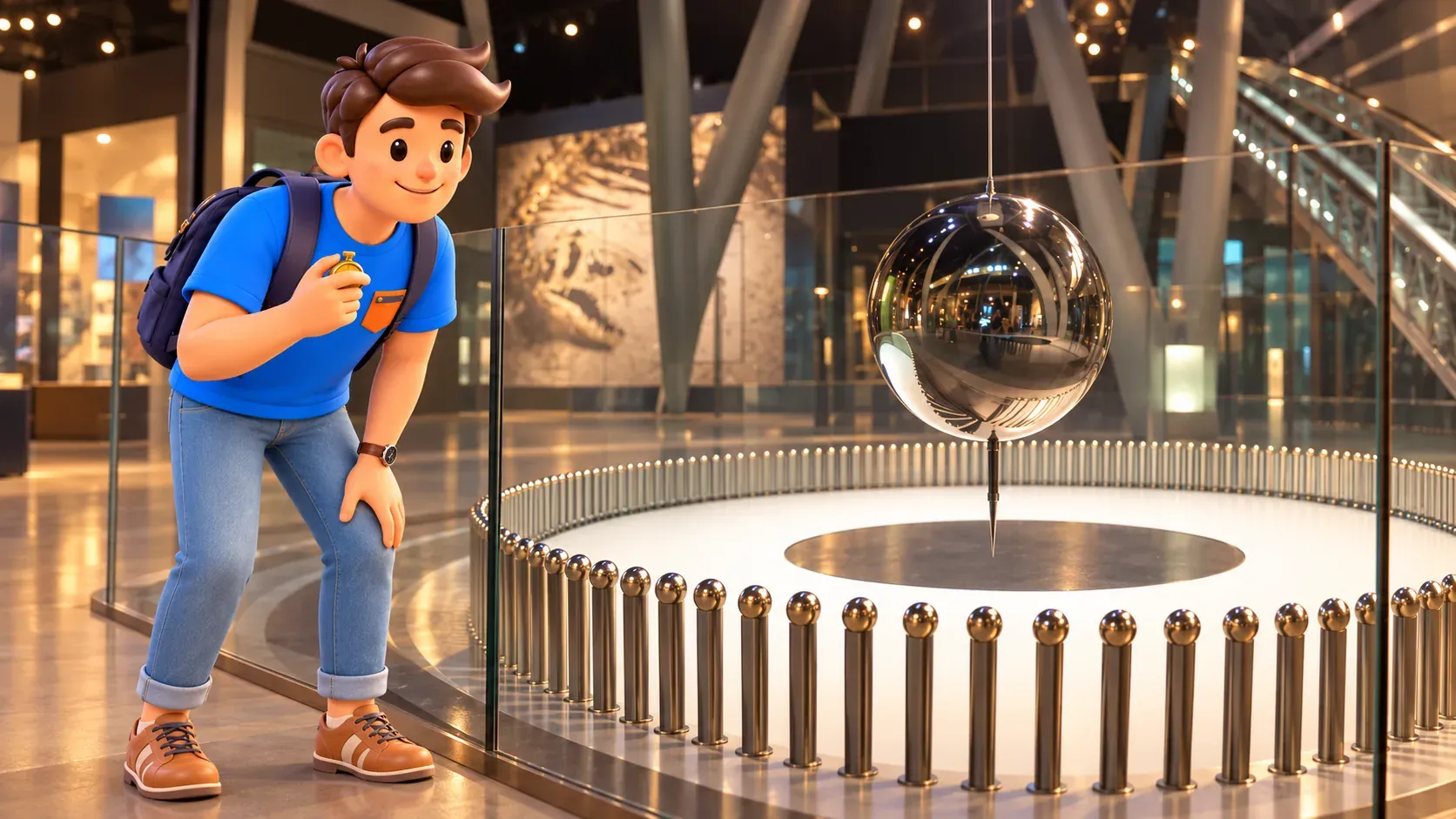
Interactive applies to devices designed for visitor participation. It does not permit touching every museum object, pane of glass or living creature. If an exhibit is occupied, choose another or wait without asking someone to leave for your schedule. When instructions are unclear, ask a member of the floor team, without assuming an explanation in a particular language is guaranteed.
Let your child choose one experiment to revisit before leaving. That gives the final museum section its own purpose; an unseen room need not become compulsory simply because it is still unseen. Where interests differ, alternate choices: one exhibit selected by the child and the next by the accompanying adult.
The Flooded Forest: observe a living system
Around 11:00 move to Bosc Inundat, called Bosque Inundado in Spanish. It recreates part of an Amazonian flooded forest associated with the Santarém region of Brazil. The space was created with the museum’s 2004 expansion. Its interest extends beyond individual animals to relationships between water, plants, light and living organisms.
Change between several permitted viewpoints. What can you notice underwater, and what becomes visible above the surface? Where do roots attract attention, and where do leaves take over? The forest offers different levels of one environment. Do not promise that a particular capybara or caiman will appear beside the glass during your twenty-five minutes.
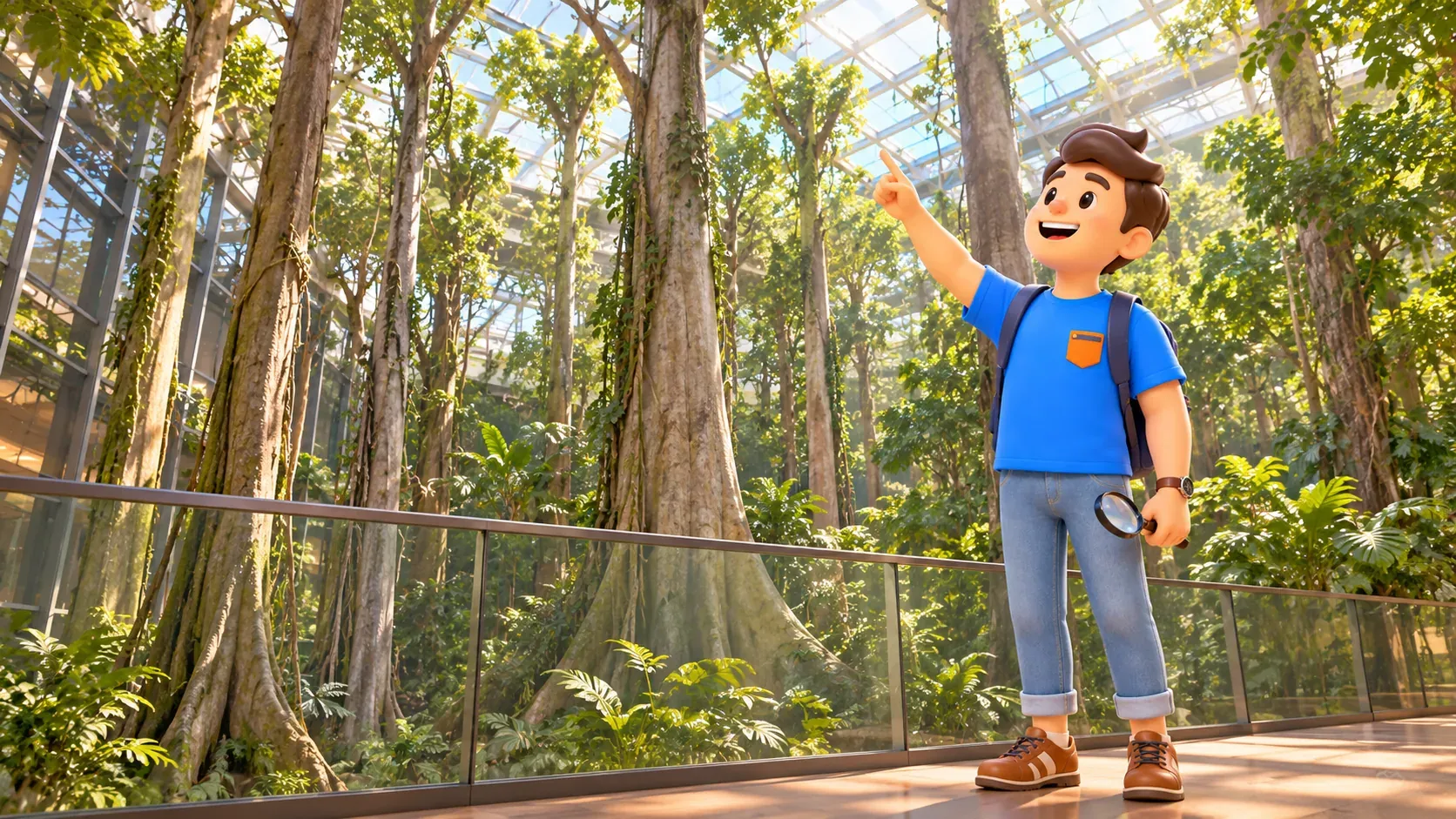
A living exhibition has its own rhythm. Animals may remain out of sight, and not every interesting process resembles a scheduled performance. Choose one observation: a fish’s movement, a leaf shape or the relationship between roots and water. It provides something to discuss even without meeting the forest’s most recognisable inhabitant.
Avoid tapping the glass or offering food. If your child needs quiet, dislikes humidity or has had enough stimulation, shorten this section. A celebrated exhibition need not be compulsory for every family. Returning to a calmer area can preserve both the break and the overall pace of the morning.
A break belongs inside the visit
Use 11:25–11:45 in a permitted resting area or café. These twenty minutes need not become another exhibition task. Water, toilets and a chance to sit separate the first impressions from the next. A full restaurant lunch is not scheduled here; if one is needed, extend the outing or leave out the final garden.
The galleries are kept cool, so a light extra layer can help on a warm day. Pushchairs are allowed in the exhibition rooms. For particular mobility requirements, ask the museum about an appropriate internal route and check the surrounding streets separately. Museum access provisions do not describe the gradients of the whole district.
The Geological Wall and a return to a favourite
After the break, give roughly twenty minutes to the Muro geológico. It comprises seven large real rock sections illustrating different geological processes. Experiments and interpretation explain folds, faults, erosion and deposits. This is an encounter with actual material, rather than only a drawing of the Earth’s surface.
Choose one process. Compare straight and bent layers, for example, then find the explanation relevant to what you see. Remembering the rock’s name is optional; noticing that stone preserves traces of change already gives the stop value. Avoid inventing a hidden object or a compulsory challenge the museum has not promised.
Use the next fifteen minutes to revisit the selected experiment, then about ten for collecting belongings and leaving by 12:30. That makes the ending deliberate. If your child is tired earlier, reduce the repeat visit. Five additional exhibits are rarely more valuable than a calm departure with the next step understood.
Twenty minutes downhill to Tamarita
From the museum, follow open public streets downhill towards Passeig de Sant Gervasi and Jardins de la Tamarita. Twenty minutes allows for family walking, orientation and ordinary crossings. This is not a direct museum passage into a neighbouring park. There is a gradient, so choose a suitable open route, particularly with a pushchair.
The gardens are free. The city directory lists daily opening from 08:00, with approximate closing at 19:00 from November to March and 21:00 from April to October, adjusted for dusk. Arriving around 12:50 fits both ordinary seasons. Temporary notices and restricted sections still take precedence over a general timetable.
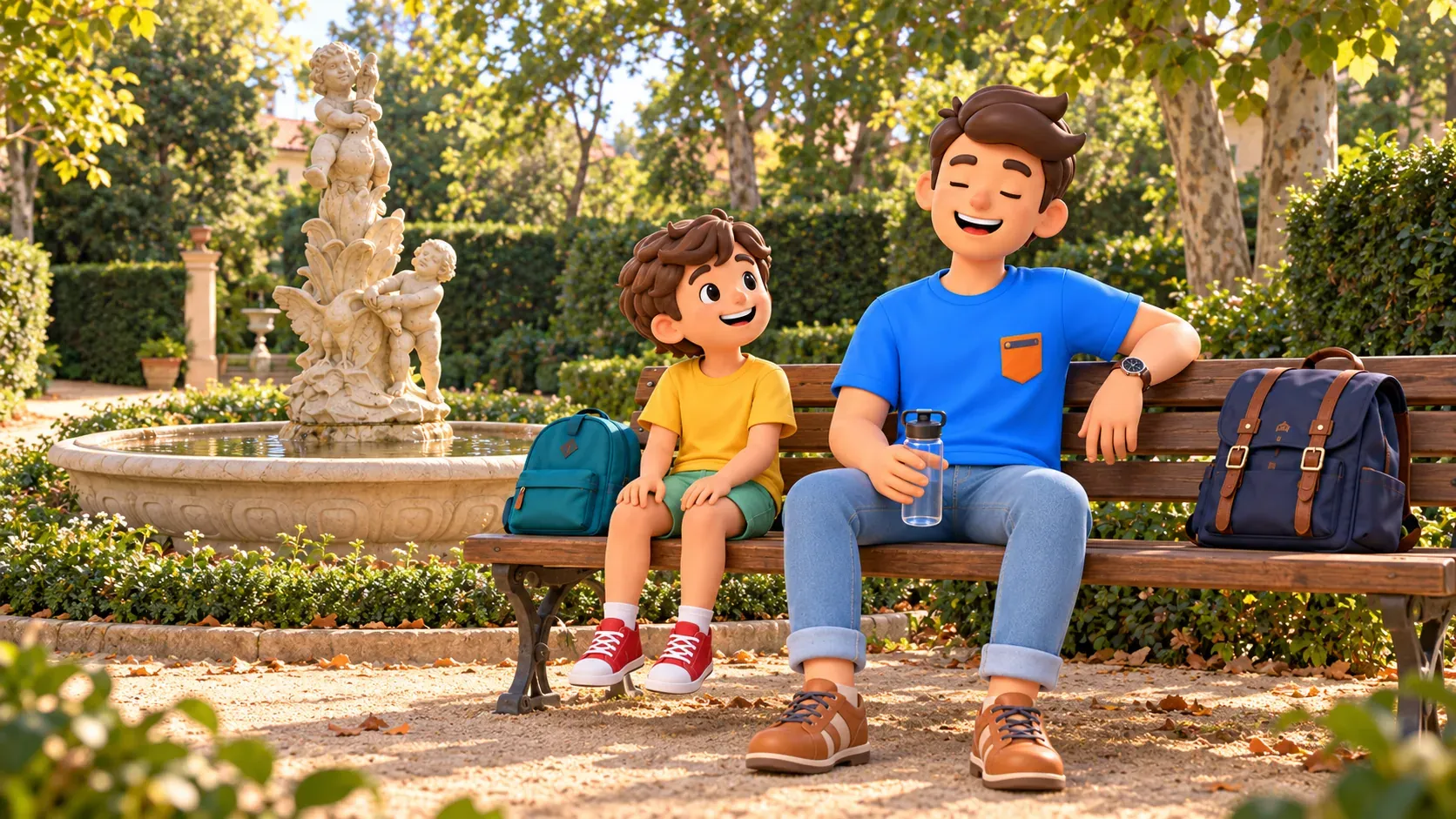
Forty minutes here offers rest among greenery rather than another detailed tour. Walk along available paths, choose somewhere to pause and let attention move to another setting. The directory includes children’s play areas, but a specific piece of equipment should not become a promised reward: an area or feature may be temporarily unavailable.
To balance absorbing museums with quieter days, prepare your trip in RoadMe. The app creates a personal programme around your interests and pace, making the complete itinerary easier and more effective to use once you are in the city.
Adjust the programme to your own family
With a preschooler, choose fewer exhibits and a shorter forest observation. Offer a teenager a question of their own, perhaps about how a rock formed or how one instrument works. Age alone does not determine interest; the willingness to stop and investigate matters more. A planetarium session or workshop can become a separate focus after checking its conditions, replacing part of the basic programme.
For arrival, the museum lists FGC L7 to Av. Tibidabo and several bus routes, including 196. The walk from the station is uphill, so allow for more than a negligible final connection. Tramvia Blau is out of service for modernisation at the check. Add travel before the museum and after Tamarita separately; the hilltop amusement park is not a brief extension of this route.
If you know before leaving that the garden is closed or weather makes it unappealing, finish at the museum or spend longer with a chosen exhibition. On another day, consider the seafront sculpture walk. One museum morning and a green pause are enough today, leaving interest in a few understandable things rather than exhaustion from trying to see everything.


