
Coppedè and Villa Ada: A Northern Rome Half-Day Walk
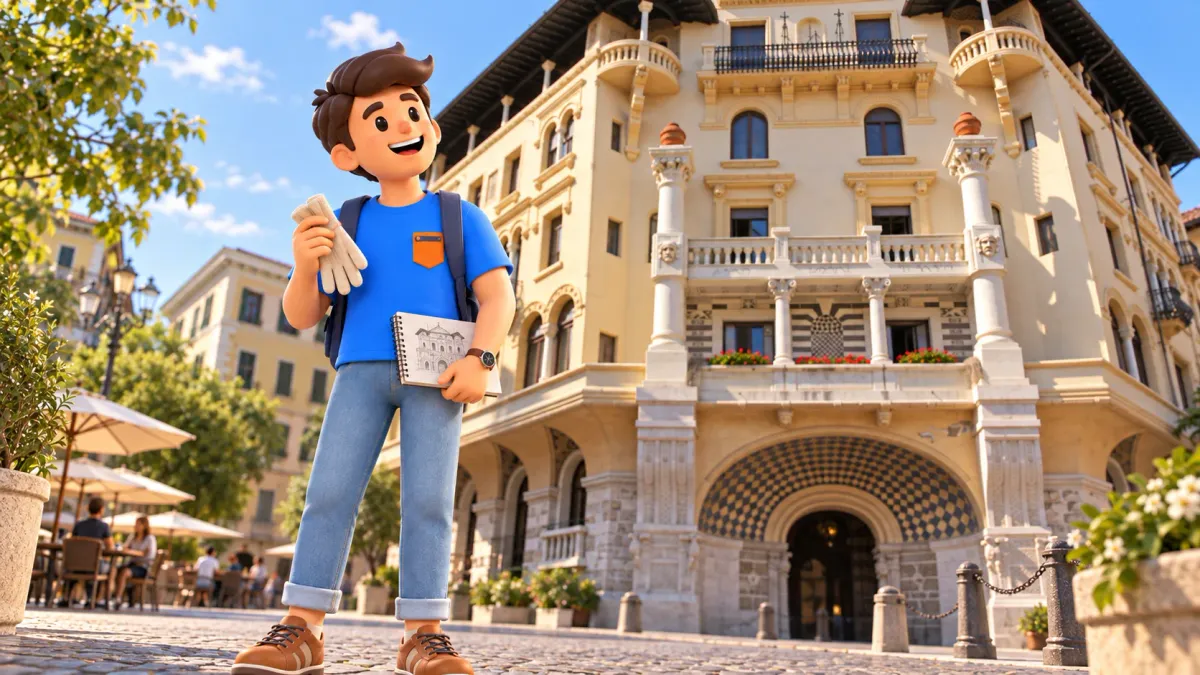
Coppedè and Villa Ada make a walk with a clear change of mood. First, stone animals, unusual windows and theatrical façades hold your attention. Later, trees and the path beneath your feet take over. Both experiences belong to northern Rome, with an ordinary urban connection between them that deserves time of its own.
Allow half a day, including a core route of about three hours: roughly an hour in Coppedè, forty minutes between places and eighty minutes in the park with a rest. Start at the Via Dora arch approached from Via Tagliamento. Finish at Villa Ada’s Via Panama 88 entrance. Travel before the start and after the finish is additional.
Choose architecture and a park without a museum marathon
This version suits a less familiar side of Rome and part of a day among trees. Coppedè offers an intense, compact architectural scene; Villa Ada provides a more open-ended conclusion outdoors. The basic plan contains no interior visits that require steering the entire walk around an admission session.
Try RoadMe to include this outing in a personal plan for the entire trip, based on your dates, interests, pace and budget. The app makes it easier to distribute architecture, museums and rest across your days, then use a considered itinerary more conveniently and effectively while travelling.
Avoid assigning the quarter a full day simply because its photographs look dramatic: the principal impression centres on one square and several streets. Equally, the park is not a tiny courtyard behind the next house. This pairing works when both places receive an appropriate scale and the connection remains visible in the timetable.
Exterior sightseeing on public streets and an independent walk in Villa Ada’s open public grounds do not require a museum ticket. That does not grant access to homes, embassy buildings or private gardens. Check current park access and weather notices, then choose a daylight window with a comfortable margin.
Three hours from the arch to Via Panama
| Minutes from the start | Plan |
|---|---|
| 0–15 | Via Dora arch from the Via Tagliamento side: overall view and exterior passage |
| 15–45 | Piazza Mincio, the Fountain of the Frogs and surrounding façades as one setting |
| 45–60 | A short look at architectural details on nearby public streets |
| 60–100 | Urban walk towards Via Salaria and then the Via Panama 88 entrance |
| 100–125 | Available public paths in the nearby wooded part of Villa Ada |
| 125–145 | Twenty-minute rest in a suitable available place |
| 145–170 | Retrace the same park path towards Via Panama |
| 170–180 | Leave through the chosen gate and orient yourself for onward travel |
The sum is one hundred and eighty minutes. These are estimates rather than measurements; pace, crossings and available paths change the timing. Quarter, square and fountain are separate directory records, but do not become three consecutive hour-long visits here. The park allowance also concerns only a nearby section.
For example, start at 10:00 and finish around 13:00. This is a daylight distribution without a reserved session. The approach from a stop to the arch and transport after Via Panama are excluded. If the morning starts later, shift the whole block or shorten it while retaining a margin for leaving the park.
The arch creates the first impression
Coppedè takes its name from architect Gino Coppedè and belongs to the early twentieth century. Despite towers, medieval motifs and sculpted animals, it is not a surviving medieval village. Historic forms were deliberately combined in a residential ensemble that was modern in its time, with a façade almost becoming a story in itself.
From Via Tagliamento, an arch connects two buildings and marks the approach to Via Dora. A large wrought-iron chandelier hangs beneath it. Look first at the overall structure from an appropriate public place, then pass through the available pedestrian area. The contrast between an ordinary street and this decorated threshold makes the opening memorable.
Fifteen minutes allow two ways of looking: the overall outline and one detail underneath. Keep the passage clear when others approach. You do not need to decipher every sign or turn decorative motifs into an established system of secret messages. Some of the pleasure comes from observation without a compulsory interpretation.
Piazza Mincio and its fountain are one stop
On reaching Piazza Mincio, resist immediately selecting another name. The Fountain of the Frogs and the façades around it make one scene. Look in several directions: a balcony holds attention here, a wall surface there, an animal motif somewhere else. Thirty minutes allow a considered introduction without cataloguing every building.
Gino Coppedè created the fountain in 1924. The frogs belong to the play between water and sculpture: eight sit on the upper bowl, while the composition has twelve overall. Searching for all twelve along the same rim therefore misses the arrangement. The detail encourages attention rather than imposing a counting exercise.
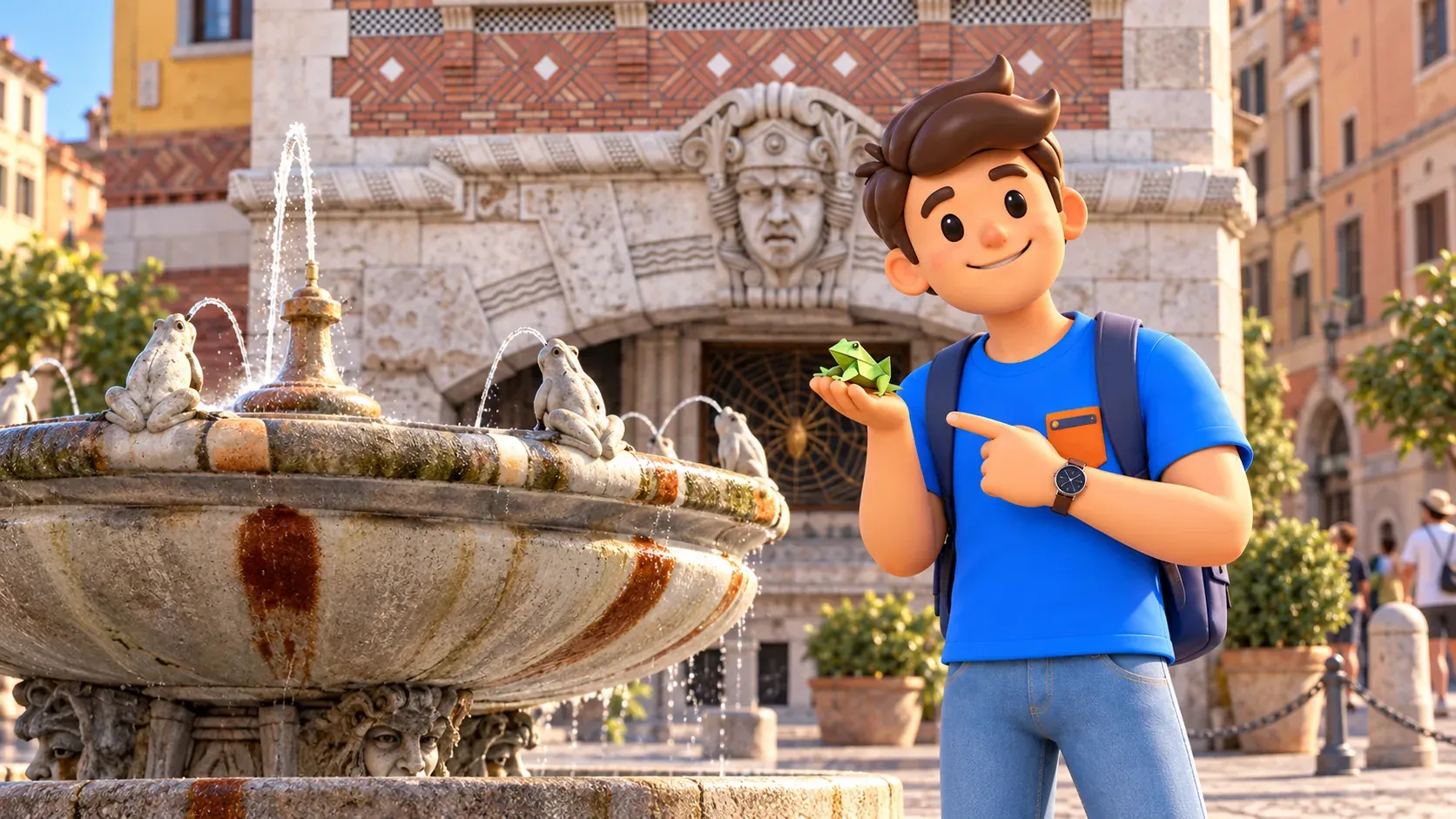
The fountain belongs to the ensemble’s own period, rather than being an ancient Roman discovery or a work by Bernini. Notice how it organises the space around water without needing a complete history of Rome’s fountains. Here the useful question is how a small centre holds many different façades together.
A photograph without people is not guaranteed, and every approach should not be imagined as free of movement. Use the public pedestrian area, observe actual crossings and leave access to buildings clear. Everyday life continues here during a visitor’s sightseeing; it is part of the setting rather than an interruption.
Look for details instead of collecting addresses
Recognisable façades include the Palazzina del Ragno, associated with its spider decoration, and the Villino delle Fate, with asymmetry, varied materials and abundant ornament. Looking from outside is enough for this walk. Their names distinguish different characters, without establishing an open museum inside or admission at a convenient time.
On nearby streets, choose two or three details: a stone head, an unusual support, brick meeting pale decoration. Look from the opposite side where appropriate and safe; distance often reveals upper floors better than pressing against a gate. A close photograph does not require touching a relief or stepping onto private entrance stairs.
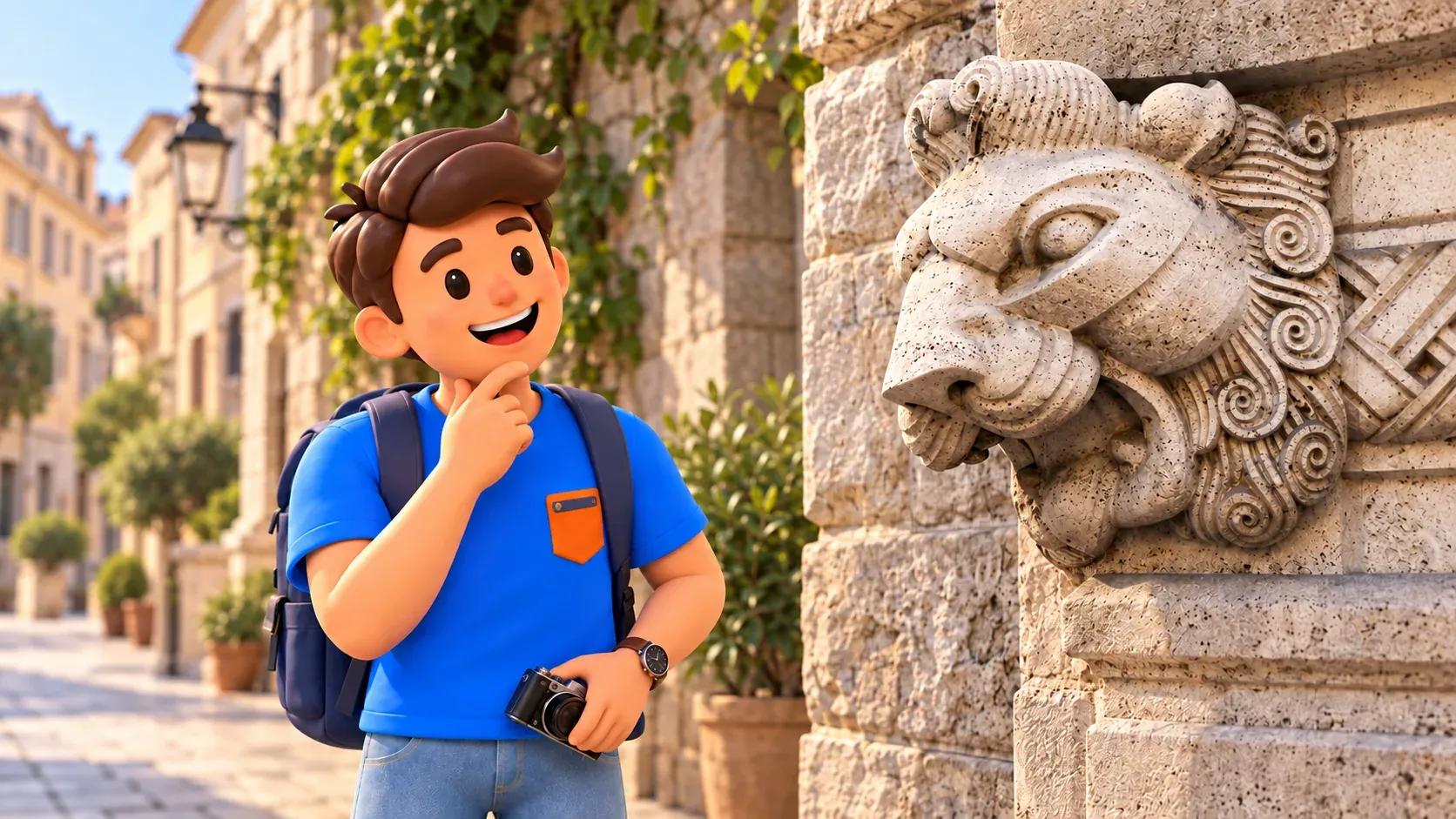
Eclectic is more useful than one rigid style label for every surface. Motifs of Art Nouveau and historic periods meet theatrical expression here. Buildings need not look identical to belong to one approach. Their differences give a small space intensity, allowing a short walk to feel varied without seeking distant additions.
Keep the next fifteen minutes from silently becoming an hour’s hunt for every symbol. If architecture interests you more than expected, deliberately extend this part and reduce the park. Avoid preserving both full programmes by making the urban connection or the rest vanish from the day.
The connection to Villa Ada is part of the outing
After the quarter, use urban pavements towards Via Salaria and then your chosen Via Panama 88 entrance. The table allows forty minutes, including orientation and crossings. This is an ordinary street connection between areas, rather than a secret path through somebody’s garden or movement inside a single park.
Save two distinct landmarks beforehand: the Coppedè arch for arrival and the Via Panama entrance for the conclusion. A general Villa Ada map marker may indicate another part of the large grounds. Arriving straight at the northern lake would create a different order and require a new calculation.
Check suitable transport to the first place and from the last with the operator’s current information. Avoid choosing solely by an old tram number from a guidebook. Start and finish differ here: returning to the arch after the park is excluded and unnecessary for a clear ending.
Villa Ada: from decorative animals to woodland
The park brings together several historical layers: an earlier estate layout, changes under the Savoy family and the later opening of public areas. Its landscape character developed gradually. This is not one house to enter and complete, but extensive grounds with different functions and separate arrangements for individual buildings.
The name Ada honours the wife of Count Tellfner, one of the owners. It does not mean a Savoy princess of that name founded the estate. This short connection is enough for the walk: the familiar park name preserves a private period even though later history again involves the royal family.
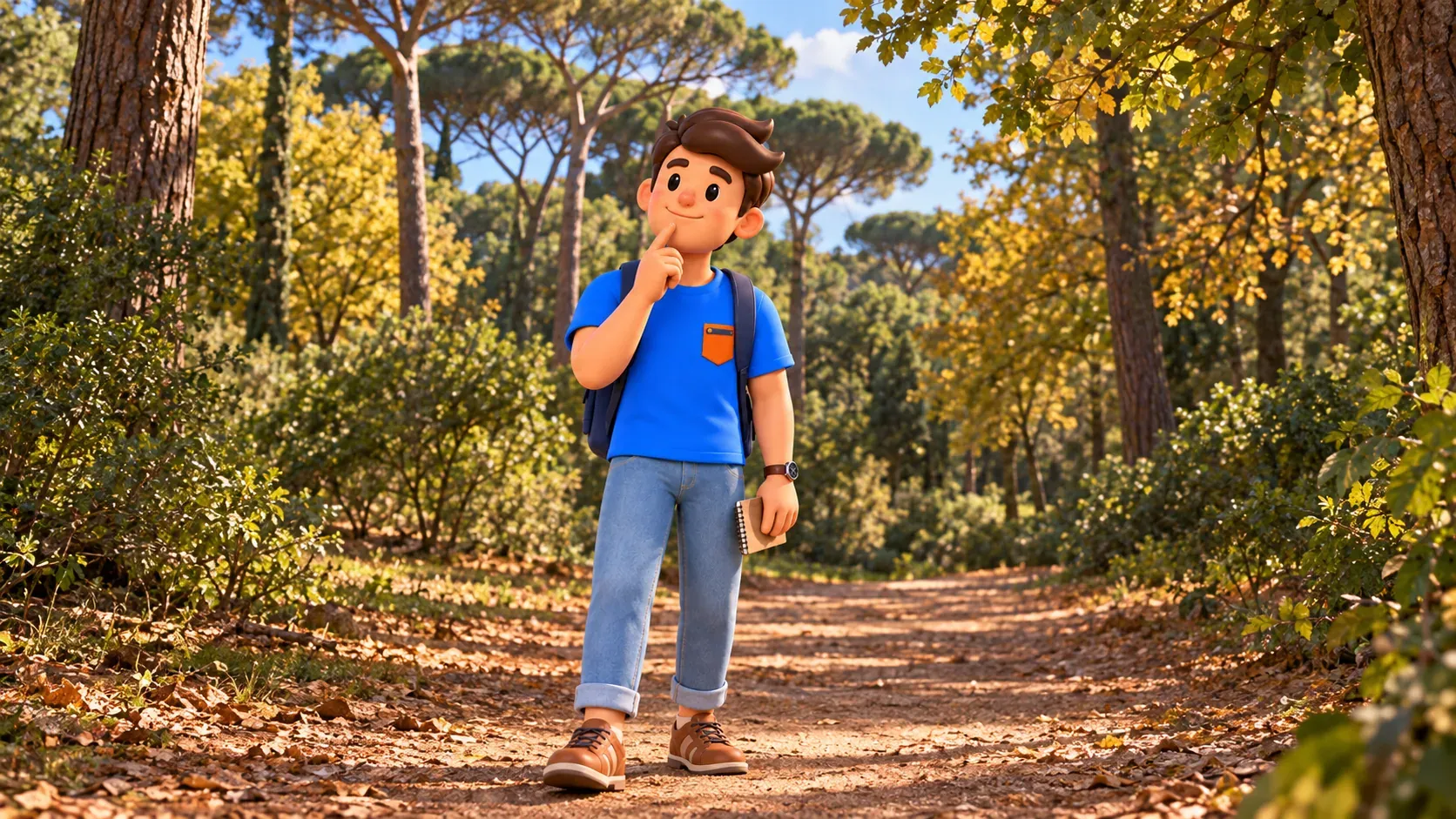
The Via Panama entrance leads into a wooded section. Choose an available public path for roughly twenty-five minutes of gentle walking, followed by a return along the same way. Pines, holm oaks and other trees offer a looser setting after concentrated architectural decoration. Identifying every species is unnecessary for noticing the change in mood.
The distant lake, Forte Antenne, bunker and a complete tour of residences are excluded. Some buildings remain private or have their own visiting arrangements. If a specific structure or underground tour is the main interest, check it separately and reshape the day around its confirmed programme.
Leave twenty minutes without another task
For the pause, find a suitable available place while keeping the path clear. A particular bench, table or open café is not guaranteed. Water and a simple snack brought beforehand prevent rest from becoming another search. A full lunch involving an order and service needs longer than this allowance.
Listen for a while and let your eyes rest from detail. Birds and small animals live in the grounds, but this walk does not promise an encounter at the required moment. Observe at a distance, leaving the woodland as a habitat rather than a stage for a compulsory photograph.
After the pause, retrace towards Via Panama. Allow for terrain and surfacing; the whole park should not be described as level or step-free. Assess the ground after rain and postpone in severe weather. Use local notices and the actual condition of the chosen path when deciding how far to continue.
If the chosen entrance is closed or the path is unsuitable, avoid seeking a way around a barrier. Finish after the architecture and save the park, or choose another confirmed entrance and recalculate. That creates a changed outing rather than preserving the same three hours and finish automatically.
Finish the half-day with room to feel rested
Reach the chosen gate before the outing turns into a search for a new exit. The park has opening and closing arrangements, which differ from access to Coppedè’s public streets. For a first visit, daylight with a margin is easier than relying on the latest possible time at an arbitrary gate.
To connect this outing with your other days, RoadMe can create a personal plan of the entire trip around your interests and pace. The app makes it more convenient to distribute further districts, major visits and freer walks beforehand, retaining time for connections and proper rest.
For a different street-and-greenery combination, see our Via Margutta to Villa Borghese walk. Choose one such outing to suit the day. Here, an arch, a square, a few details and a woodland pause are enough: Coppedè and Villa Ada offer different impressions without requiring a long list of compulsory additions.


