
Beneath Constantinople: Why Cisterns and Aqueducts Mattered

The sea around Constantinople did not solve its drinking-water problem. A large city needed fresh water for people and everyday life, and that water had to be delivered, distributed and stored. An aqueduct above a street and a cistern below ground tell different parts of the same story. One helps explain movement, the other a reserve. Remember that distinction and the famous columns and arches become more than attractive antiquities. Behind them appears a city that needed to function every day, rather than simply impress its visitors with a collection of monumental buildings.
In Istanbul, read this story through the Aqueduct of Valens and one cistern available to visit. You need not descend into every chamber or search for a continuous secret passage between them. Constantinople beneath your feet describes a historical layer; the aqueduct itself is conspicuously above today’s street. A few principles matter more than memorising every date and dimension. Choose a cistern separately according to your visit preferences. This article explains why these structures were needed and what to notice during an ordinary encounter with the city, without turning the entire trip into an infrastructure survey.
Moving water and storing it are different tasks
An aqueduct concerns the conveyance of water; a cistern stores it. This basic distinction prevents the buildings from becoming interchangeable. Visible arches supported a channel at the required level where the landscape called for that solution. Water did not flow through the open archways where you see the sky today. A reservoir, meanwhile, provided storage. It did not have to resemble a celebrated hall with hundreds of columns: different types and sizes existed, including open-air reservoirs. The dramatic underground interior is one form within a wider infrastructure history, rather than a complete picture of it.
RoadMe makes it much easier to develop a personal plan for the whole trip around your interests, available days and preferred pace. Let the app connect history, walks and suitable visits in a coherent itinerary, making your own Istanbul more interesting and effective to explore.
Delivery and storage complemented each other. A long water channel did not remove the need for reservoirs, and a large reservoir did not create water. Approach individual monuments as parts of a system rather than self-contained marvels. However, do not draw a direct pipe from every surviving arch to every famous hall. Archaeological evidence is uneven, and specialists continue reconstructing relationships from different kinds of information. Understanding the general principle does not mean that the entire ancient network is fully known. Nor does it establish a route that visitors can follow through all its spaces today.
Why the hills matter beyond the view
Visitors usually notice Istanbul’s hills through climbs and panoramas. For water supply, elevation had another role. In a gravity-fed system, water moves along a suitable downward gradient, so a channel’s route must account for the terrain. You cannot simply draw the shortest line and expect water to climb wherever required. An arcade can maintain the necessary level while crossing a depression. Seen this way, the stone spans are not only an expression of monumental ambition. Their appearance relates to a practical task: conveying water through a complicated landscape while preserving the working line.
You need not calculate ancient gradients from a holiday photograph. Notice the structure’s relationship with the modern street and surrounding heights. Beside the aqueduct, imagine that its upper channel mattered more than the spaces beneath the arches. The openings provide an attractive rhythm when seen below, but the purpose lay above. This small change of attention makes a familiar monument understandable without engineering training. Avoid assuming that today’s asphalt and road height preserve the exact ground level of the ancient city. The present view combines periods, rather than retaining the original setting unchanged in every detail.
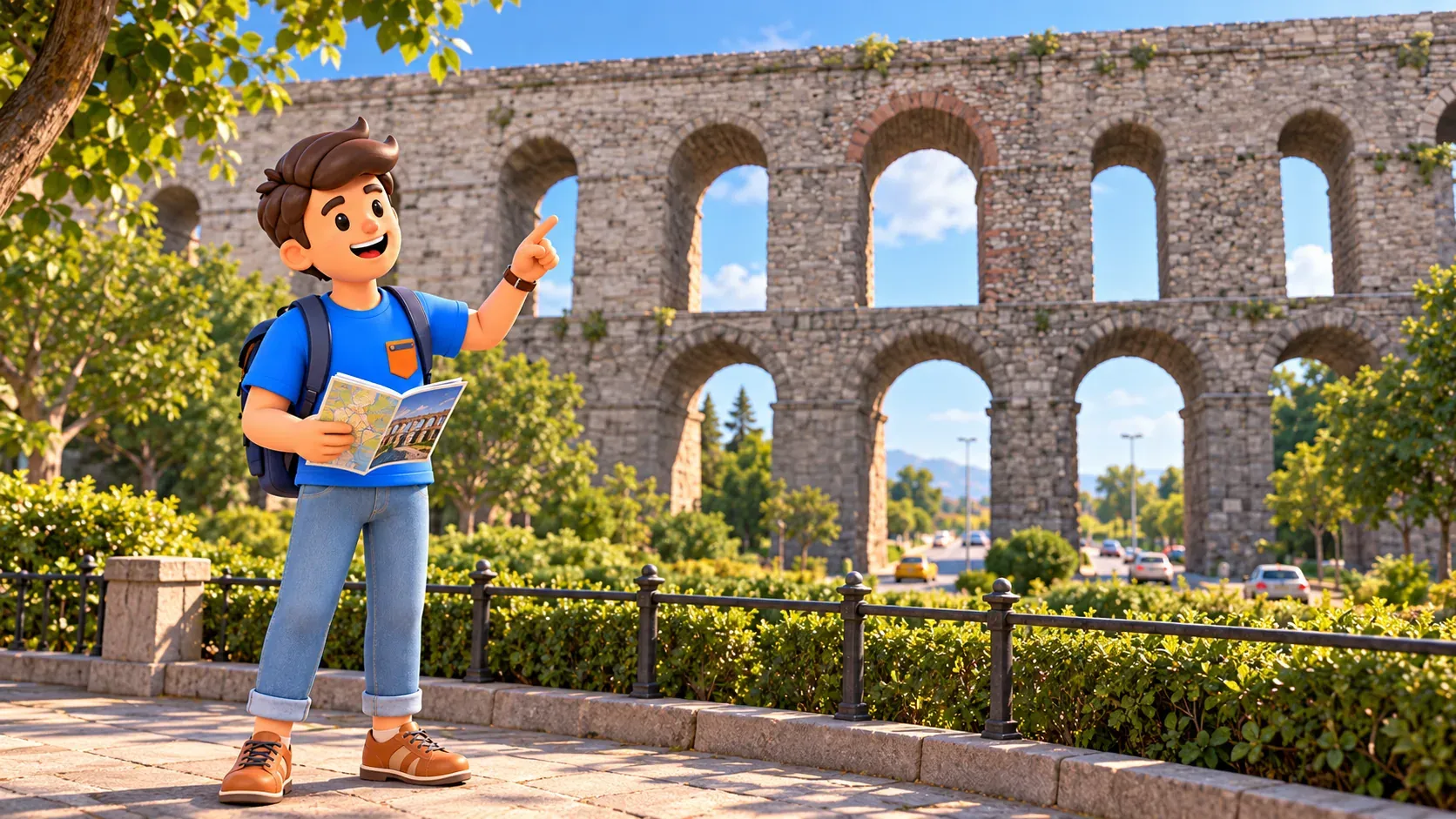
The Aqueduct of Valens: a visible part of a larger network
The Aqueduct of Valens, also called Bozdoğan Kemeri, is one of Istanbul’s most recognisable traces of historic water supply. Its stone arches stand within a living city and modern traffic. Unlike an object displayed in a case, the contrast between original purpose and present surroundings is immediately apparent. Yet the visible arcade is not the whole system. The name of a familiar monument should not replace the wider story of delivery and distribution. Keep one idea: move from admiring an isolated object towards understanding infrastructure that related different parts of the urban landscape.
Study the masonry and two levels of arches from a permitted pedestrian area. There is no need to step into the road for a frontal photograph or climb to the top to understand the structure. Modern traffic beneath the spans does not create a sightseeing path. At a distance, heavy piers, repeated openings and the long horizontal line already convey scale. A more detailed urban programme appears in the Byzantine Istanbul day. It includes other subjects, so it should not be confused with a short standalone look at the aqueduct or automatically added to another full day.
A cistern held water, rather than a subterranean court
A cistern’s central purpose was space for water. Columns and vaults may look palatial, but their primary task was supporting the roof over a large reservoir. Repeated supports divide the interior and make its depth visually striking. With a lit visitor hall before you, it is easy to imagine a place designed for ceremony. Mentally remove today’s lights and walkway. Architecture becomes a solution to a practical problem. Its beauty remains, accompanied by an explanation of repeated structural roles and the organisation of the space. Function and the impression it produces can be appreciated together.
Water reserves mattered beyond a siege. Everyday stability and changes in supply and consumption were also relevant. Modern engineering research proposes variation in inflow as one explanation for the developed cistern system. This is a research interpretation, rather than an instruction left by the builders for visitors. Do not reduce every reservoir to warfare, or dismiss it as a decorative underground chamber. Storage was a distinct part of urban life. Even a brief descent can then evoke residents and ordinary needs usually hidden behind the façades and dramatic episodes of political or imperial history.
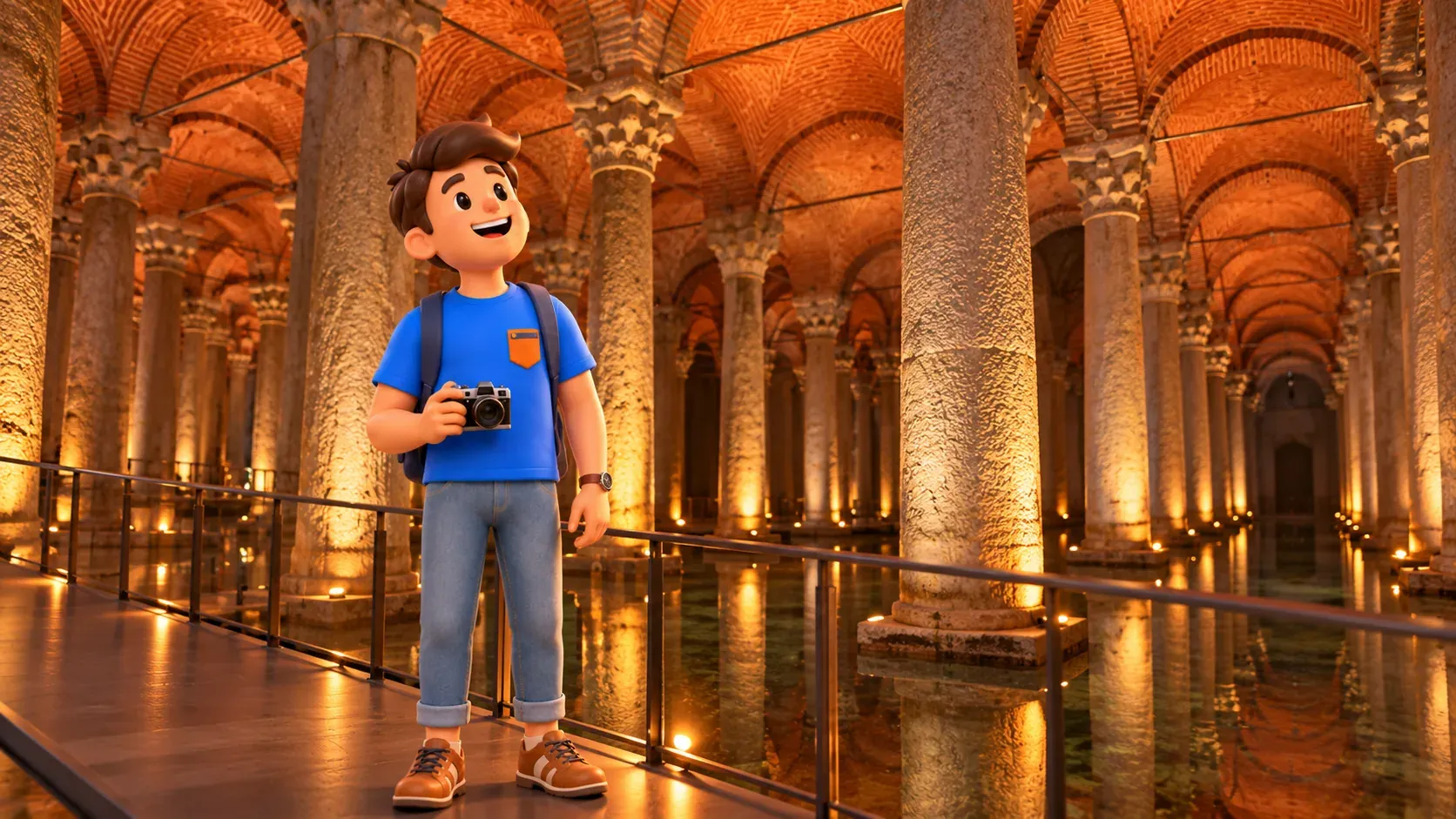
The Basilica Cistern: look beyond the famous Medusa
The Basilica Cistern belongs to the sixth century and Justinian’s period. Its interior contains 336 columns. Those details establish context, but a more useful visiting question is how supports and vaults cover such a hall. Notice receding rows, differences in details and reflections. The impression of an underground palace is understandable without changing the original purpose. Current illumination and visitor arrangements belong to the modern encounter. Do not transfer today’s coloured lights into antiquity or imagine that the historic reservoir always looked like a present tourist photograph. The view has its own contemporary layer.
Two Medusa heads reused as column bases invite attention to the second life of stone. Their original source is not established with complete certainty. Their positions have generated explanations, but an attractive protective-magic story should not be presented as a proven construction reason. Curiosity can remain without a definite answer: why was an older sculpture incorporated into another structure, and how did its role change? This is more useful than a confident legend. It reveals an object’s material biography while acknowledging the limits of knowledge, rather than treating uncertainty as a defect in the monument.
Theodosius and Philoxenos: similar purpose, different encounters
The Theodosius Cistern, also known as Şerefiye, offers another scale of underground reservoir. Notice columns, capitals and brick vaults alongside modern elements of conservation and interpretation. A lighting or projection programme, where offered for your date, is part of the present presentation. It is not ancient painting or proof of the hall’s original appearance. Visitors see several layers together: an old structure, efforts to preserve it and a modern way to explain it. Distinguishing those layers is useful even when your main wish is simply an atmospheric experience beneath the city.
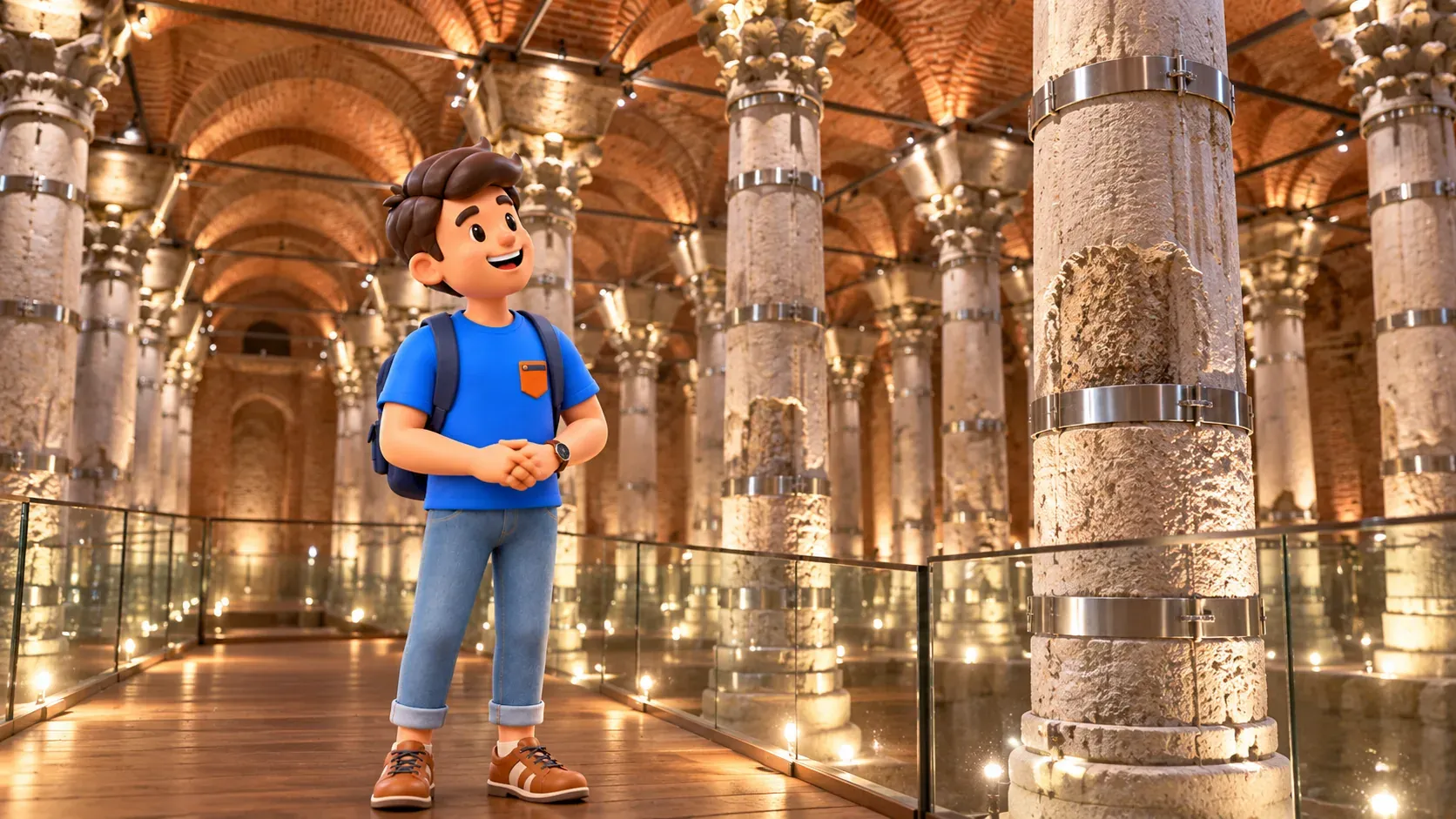
Philoxenos, or Binbirdirek, offers another way to observe supports and roof structure. Its familiar name evokes a thousand and one columns, but should not be treated as a literal count. A dry hall does not cease to be a historic cistern because water no longer dominates the visitor’s impression. Modern uses can differ, so confirm access and events separately. Do not expect every cistern to contain water, share the same illumination or belong to one admission ticket merely because the structures have a common type. The historic function provides a connection without making the present visits identical.
Make the water story your own discovery
For a first encounter, one cistern and a separate aqueduct visit are enough if both fit your trip. They are in different parts of the historic centre; allow walking or transport and pauses separately. Three similar underground halls are not compulsory. The Basilica, Theodosius and Philoxenos comparison helps with the practical choice. Here, the result is different: after visiting, you distinguish delivery from reserve, understand the role of columns and see why water connects architecture with ordinary city life. One attentive encounter can provide that understanding without a checklist of every surviving reservoir.
Before paid admission, confirm the current calendar, ticket, entry format and route accessibility. Darkness in an attractive image does not explain how easy the path is, and old steps in a photograph do not establish present arrangements. Avoid touching structures or leaving the permitted path for a reflection. A preserved monument reveals part of history, without granting access to every technical cavity. Water on the floor is not a drinking source either. A museum or event space should not automatically be understood as an active part of the former drinking-water system simply because it is still called a cistern.
Connecting such discoveries with the rest of your trip is easier and more effective in RoadMe, which develops a personal itinerary around your interests, time and comfortable pace. Download Istanbul while online beforehand to use maps and navigation offline afterwards.
Afterwards, the city can look different: a climb becomes terrain, an arch supports a channel, and an underground column serves a reserve. You do not need to solve a secret map of every tunnel to enjoy understanding. Look beyond the dramatic appearance to the problem solved for residents. Constantinople depended not only on palaces, walls and ceremonies, but on the ordinary necessity of bringing in fresh water. The next familiar vault or stone span can recall that less visible work, rather than merely another successful photograph from an attractive historic interior.


