
Byzantine Istanbul beyond Hagia Sophia: aqueduct, Zeyrek and Tekfur
Byzantine Istanbul becomes easier to understand when you leave the idea of one defining monument behind. The Valens Aqueduct introduces water supply, Zeyrek reveals a monastery’s connected spaces, and Tekfur Palace brings residential architecture to the city’s landward edge. Together they suggest a working capital with everyday needs and changing institutions. This day suits visitors who have already explored Sultanahmet and want another way into Constantinople’s past.
Allow approximately six and a half to seven and a half hours after reaching the aqueduct. That includes walking sections, lunch, a transport connection to Tekfur, and a museum visit when admission is confirmed. Travel from your accommodation to the start and back from Edirnekapı is additional. These are editorial planning estimates, not measured journey times. This is not a continuous walking itinerary: the transport link between Zeyrek and Tekfur is an essential part of the proposed day. Select that connection before leaving rather than treating every distance as another short stroll.
A day organised around water, institutions and a palace
Start at the aqueduct, walk to Zeyrek, stop for lunch, then travel to Tekfur. Finish with a brief ground-level look at an accessible section of the land walls near your chosen onward transport. Chora, underground cisterns and every neighbouring mosque belong to other plans. Adding them changes the time and attention available for the main comparison. You are following changing urban functions rather than trying to collect every surviving Byzantine monument in a single outing.
RoadMe makes planning the whole trip much more convenient by working out a personal itinerary around your interests, available days and pace. Choose more Byzantine history, architecture or relaxed neighbourhood time so this day fits into an Istanbul journey designed around you.
Set aside fifteen minutes to orient yourself, thirty-five to forty-five at the aqueduct, and twenty to thirty for the walk to Zeyrek. Give Zeyrek fifty to sixty minutes and lunch forty to fifty. Budget forty-five to sixty for the transport connection, including approaches and waiting, then sixty to seventy-five at Tekfur. Allow thirty for the walls, fifteen to reach onward transport and another thirty as general breathing room. Adjust these estimates to actual conditions, particularly the museum’s final admission time, rather than letting the timetable become a promise you must force the city to keep.
Choose the full version around Tekfur’s current museum calendar. The municipal operator lists Tuesday to Sunday opening and Monday closure; confirm the day’s arrangements, last admission and your visitor category’s charge before departure. An exterior-only version is shorter and does not provide the same courtyard and exhibition experience. If entry is unavailable, choose another date or deliberately plan a lighter architectural outing.
Valens Aqueduct: start with the city’s working systems
Begin by finding a normal pedestrian position with a clear view. Present-day traffic beneath the arches makes the aqueduct part of a living city, but it is not an invitation to step into the carriageway for a symmetrical photograph. From a pavement or another permitted public space, look at the rhythm of the supports and the relationship between the two levels. One useful overall view is enough. You do not need to trace every surviving section, cross between moving vehicles or search for a way onto the structure to understand its role.
The aqueduct belonged to Constantinople’s water-supply system. It was not a ceremonial gateway built simply to announce arrival. That distinction changes what you notice: the arches carried an essential route across the terrain, connecting monumental construction with everyday survival. Ask how your idea of an imperial capital changes when water becomes the first subject. The visible bridge is only part of a larger system. Its presence can open that question without requiring an unsupported reconstruction of every channel, source and underground connection from the portion standing in front of you.
Choose one detail to remember: an upper arch, the mass of a pier, or the contrast between masonry and current street life. Separate that observation from a historical conclusion. A difference in stone colour does not let you date a repair by sight, and every change in texture is not evidence of a different emperor. Looking carefully remains valuable without inventing an explanation for everything. This first stop establishes a useful habit for the day: notice the physical evidence, learn the broad function, and leave uncertain details open rather than filling them with a confident story.

Walk to Zeyrek through the present-day neighbourhood
The next section follows public streets towards Zeyrek. The twenty-to-thirty-minute allowance is for a practical link, not a complete neighbourhood tour. The change in scale matters: a long engineering structure gives way to a group of connected buildings on a slope. Consider gradients, surfaces and usable crossings when choosing the approach. If a member of your group uses a pushchair or finds uneven ground difficult, assess the actual route in advance. A short line on a map is not proof of equally easy walking for everyone.
Residential streets also explain why historic Istanbul cannot be read as a single preserved period. A timber house near a Byzantine building does not become Byzantine through proximity. Look from public space and respect homes, windows and private courtyards. You can appreciate changes in material and scale without treating residents as part of a historical display. The neighbourhood’s later layers are part of its interest. Let the walk show how old monuments remain within a continuing city rather than describing every nearby facade as a surviving piece of Constantinople.
Zeyrek: understand a connected group of spaces
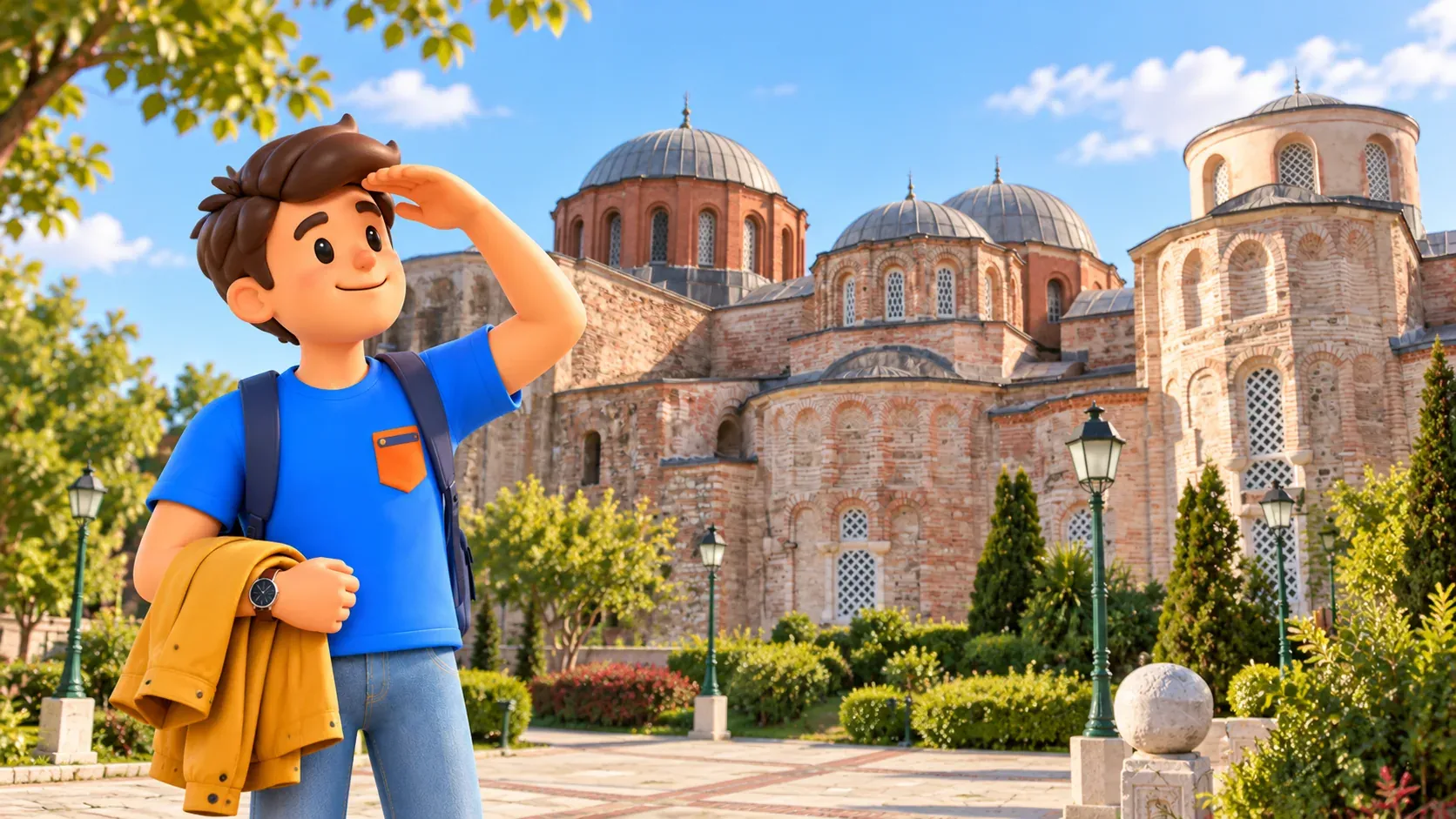
Molla Zeyrek Mosque occupies the former twelfth-century Pantokrator complex, whose architectural core brings together three adjoining church volumes. That brief context helps the irregular silhouette become legible. Look at how the parts meet instead of expecting one symmetrical dome composition. From a permitted approach, a small shift in position can explain more than searching for a single perfectly frontal photograph. The useful question is how several connected spaces form one recognisable place.
The historic institution was more than an isolated room for worship. However, that does not mean visitors can now walk through every former department or identify every lost function in the surviving walls. Concentrate on the volumes and surfaces you can actually see: curved forms, brick and stone, windows and domes. Notice connections without confidently assigning a historical use to every present-day room. The difference between a visible building and the wider institution it once supported is itself worth considering. It prevents a short visit from promising a complete reconstruction that the site cannot supply.
This is an active mosque, so interior visiting depends on prayers and permission at the time. Follow local dress requirements, remove shoes where required before the prayer hall, and ask about photography. Do not expect every part of the complex or an ancient floor to be continuously available. If interior access pauses, the exterior comparison remains worthwhile. The fifty-to-sixty-minute allowance gives you room to choose an appropriate visit without making entry the sole measure of success or pushing the afternoon museum stop towards its closing time.

Lunch and the transfer: make room for the afternoon
Take a proper forty-to-fifty-minute lunch break after Zeyrek. Choose an open place with a clear menu, check prices before ordering and avoid making the entire timetable depend on one panoramic table. Put the historical names aside for a while. If you enjoy comparing impressions, consider the shift from the aqueduct’s repeated line to Zeyrek’s connected volumes. The pause helps the palace remain a distinct experience rather than the last building seen when everyone has stopped paying attention.
Use the transport connection selected beforehand to continue towards Tekfur. The forty-five-to-sixty-minute estimate includes walking approaches, waiting and the ride; it is not a guarantee for a particular service. Check current connections and stop locations before setting out. When traffic adds time, compare the new arrival estimate with the museum’s last admission. If you prefer walking the whole distance, add time and reassess the effort. Replacing transport with a substantial walk while keeping the original timetable does not preserve the same day, however appealing the straight line on the map looks.
Tekfur: a late Byzantine residence with later chapters
Tekfur is a late Byzantine palace building, dated to the thirteenth–fourteenth centuries, beside the land walls. Avoid imagining it as the entirety of a surviving Blachernai palace: the precise relationship is more complicated. Here, a residential building introduces another urban function after water supply and a religious institution. The comparison makes Byzantium feel like a long history with different needs, rather than one architectural style frozen in a single moment. You do not need a long succession of rulers to recognise that change in purpose and setting.
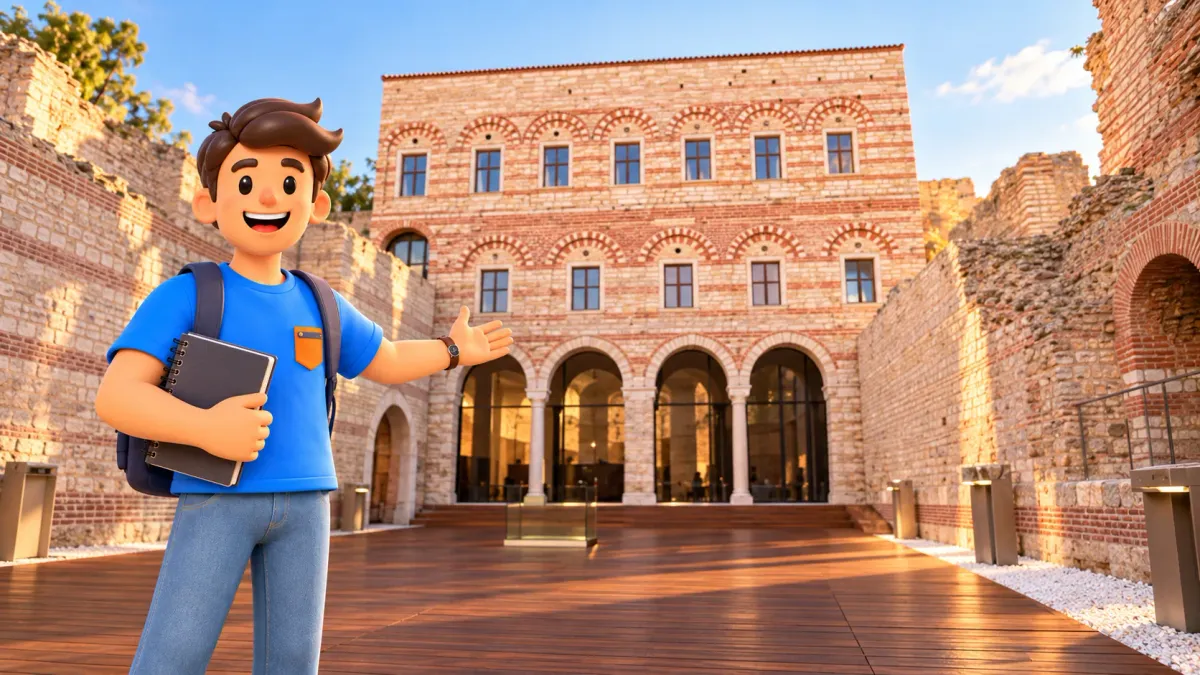
Its present appearance includes modern restoration. The courtyard and facade should not be presented as an untouched historical scene. During a permitted museum visit, look at the alternating brick and pale stone, large lower arches and decorative treatment around upper windows. Compare the rhythm with the aqueduct: both use repetition, but to different ends. Here it shapes a residential facade and courtyard. That is enough for a useful personal comparison without inventing a precise event for an unidentified room or treating the restored surfaces as direct evidence of every earlier detail.
The building also had a later chapter associated with ceramic production. Its museum story therefore extends beyond the Byzantine period. Use current exhibition labels to distinguish an excavated object, a reconstruction and a replica; do not expect a particular item solely because it appeared in an old photograph. Sixty to seventy-five minutes allows a selected visit rather than an exhaustive examination of every case. If ceramics become the highlight and you want longer, shorten the final wall stop. Keep the experience you are enjoying instead of rushing through it to satisfy a secondary part of the schedule.
Finish beside the walls, with another day left open
Allow about thirty minutes for a ground-level view from an accessible public section near the walls. The point is to place the palace beside a city boundary, not to climb fortifications or trace their entire length. Stay on permitted paths and use the available view if works restrict the approach. After a substantial day, a short final observation is enough. The physical relationship between structures matters more than securing one last dramatic photograph from a height. Then leave fifteen minutes to reach the onward transport you selected, with the journey home counted separately.
For a slower version on another day, choose the separate Zeyrek and aqueduct walk. If the western edge and Chora’s surroundings interest you more, use the Edirnekapı itinerary as its own outing. Neither is an extra obligation today. Before leaving, recall one observation about water, one about connected religious spaces and one about a residence. That gives the day a clear thread without demanding a complete list of dates. A few distinct ideas are easier to carry into the rest of the trip than many names encountered in a hurry.
Planning these interests as a coherent journey is easier and more effective in RoadMe, which works out a personal trip plan with suitable days and a comfortable pace. Download Istanbul beforehand while online to use maps and navigation offline afterwards.


