
Gardens Among the Offices: a Gentle City of London Walk

A garden walk through the City of London can connect three very different places: St Dunstan in the East, Cleary Garden and Postman’s Park. One places greenery inside a ruined church, another makes a small hillside feel like a series of rooms, and the last brings you close to a moving memorial. Together, they offer a gentler way to explore a district often associated with offices.
Allow around two to two and a half hours, including time to sit, look and read. The route is outdoors and uses public streets between the gardens. It does not include rooftop gardens, a cathedral visit or a long lunch. You can enjoy a complete outing with these three stops, or choose just one when the rest of your London day is already busy.
Connect three gardens without filling the whole day
Begin at St Dunstan in the East near Monument or Tower Hill. Continue west through the Eastcheap and Cannon Street area towards Queen Victoria Street and Cleary Garden. From there, head north on the public route past the outside of St Paul’s, using the New Change, Newgate Street and King Edward Street area to reach Postman’s Park. Follow the available crossings and street signs rather than cutting through private premises.
Try RoadMe to make planning the whole London trip more convenient, with a personal programme based on your interests, dates, pace and budget. The app works out how short garden walks, longer visits and time to rest can fit together across your days.
Expect roughly two to two and a half kilometres, depending on the entrances and public approaches you use. This is an editorial estimate, not a measured walking track. A useful balance is twenty-five to thirty minutes at St Dunstan, around twenty at Cleary, and thirty at Postman’s Park, with the remaining time for walking and an unhurried pause. Actual walking occupies only part of the outing.
Start with enough daylight to finish comfortably. These are small managed gardens, so an open street outside does not mean every gate remains open all evening. Check current arrangements before leaving, particularly around holidays. If your time is limited, one thoughtful stop is better than hurrying through all three while watching the clock.
St Dunstan: look at what the open sky changes
Enter the garden and first notice the relationship between stone and planting. Empty window openings, climbing greenery and the absence of a roof make an unusual setting for an ordinary city pause. Look through one arch before moving to another, rather than treating the garden as a backdrop for a single photograph. The different frames can make a small space feel surprisingly varied.
The church has origins around 1100, but its surviving fabric belongs to several periods. It was damaged in the Great Fire of 1666 and again during the Blitz in 1941. Christopher Wren’s tower and steeple survived the bombing. After the war, the decision was made not to rebuild the church, and the ruins became a public garden. Avoid imagining every visible wall as an untouched medieval survival.
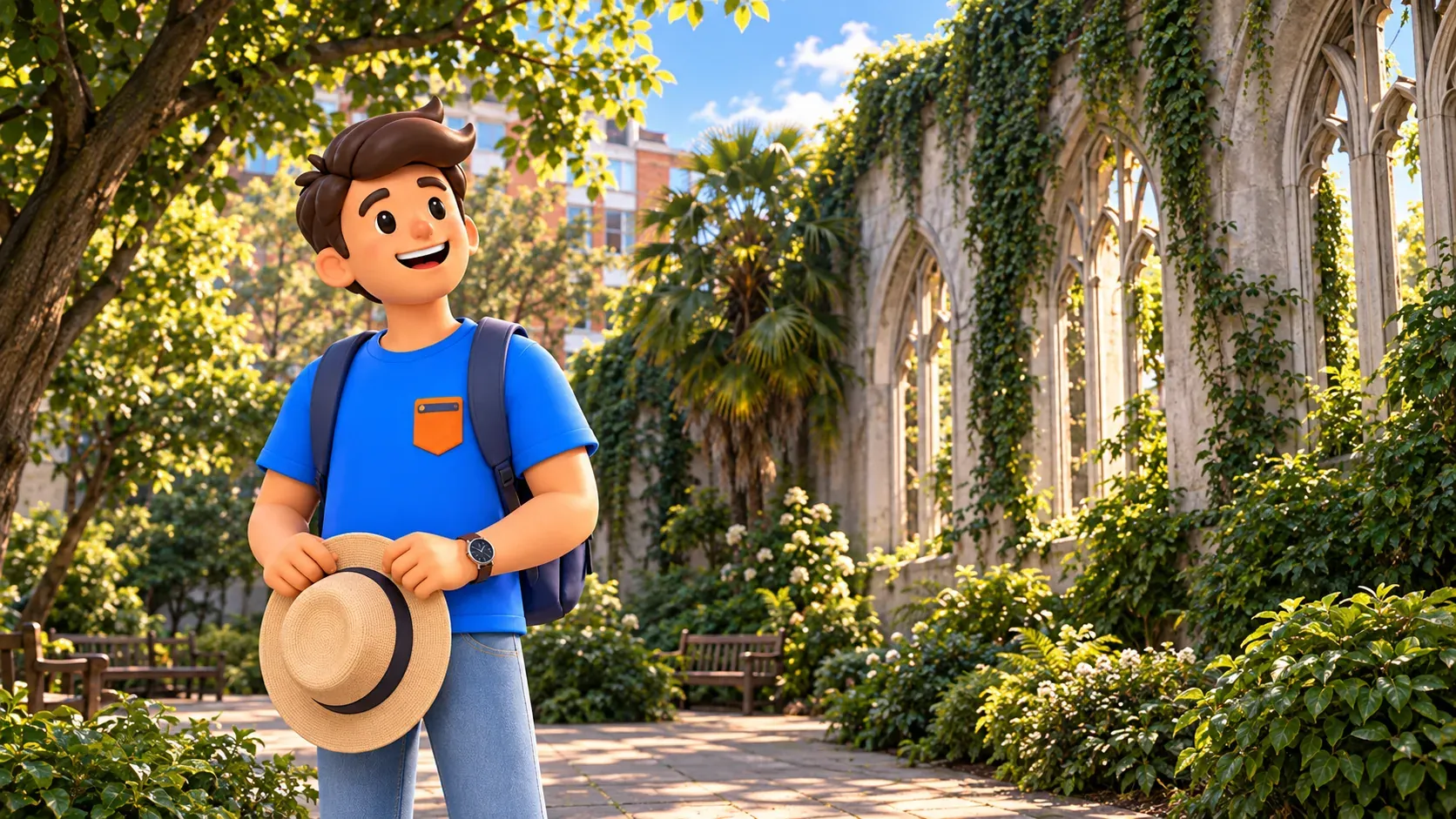
You do not need to reconstruct the entire building in your mind to appreciate the change. Simply look up where a ceiling would usually be. Then notice a plant against an edge of stone. The value of the stop is partly in that change of attention: a large historical event becomes connected with a place where people can now spend a few ordinary minutes.
Choose a bench if one is available, keeping the paths and entrances clear. The garden is well known, and a beautiful photograph does not prove that it will be empty when you arrive. Other visitors may be taking pictures or having a break too. If you want a quiet moment, allow a little flexibility rather than expecting a private scene.
Personal visitor photographs are welcome under the City’s guidance; organised shoots have separate permission requirements. For an ordinary walk, keep the equipment and setup modest and share the space. The stonework and planting deserve attention without climbing, leaning on fragile elements or moving into a bed to recreate a particular view.
Cleary Garden: a pause on several levels
Return to the public streets and continue west towards Cleary Garden on Queen Victoria Street. The connections pass through the working City rather than a continuous park. That is part of the outing’s character: the transition from pavement and traffic to a small planted space gives each stop its own sense of arrival. Use the current crossings and leave room for people moving through the area.
Cleary Garden is arranged over three tiers, with arbours, shaded seating and a lower lawn. Its layout offers a different experience from St Dunstan’s stone enclosure. Rather than looking for one famous view, notice how a change in level alters the relationship between planting, walls and nearby buildings. You can make the stop about sitting and observing instead of trying to explore every corner.

The garden is named after Fred Cleary, who encouraged trees and new gardens in the City during the 1970s. It is a useful reminder that small urban green spaces also depend on people advocating for them. This stop does not need a grand palace story to be worthwhile; the ability to sit among plants in a dense working district is itself part of its interest.
There is an older layer underneath: the site includes the buried remains of a Roman bathhouse. Those remains are not visible from the garden. Think of this as historical context, not a promise of an excavation, museum display or underground visit. What you have come to see today is the garden and the way it occupies a limited piece of the modern City.
Check the actual route between levels before committing to it if steps are a concern. A terraced garden is not automatically a suitable continuous route for every wheelchair or pushchair. You do not need to reach every tier to enjoy the stop. If the available approach does not meet your needs, keep to the suitable public area and preserve time for the next garden.
Postman’s Park: give the memorial time
Continue north towards the St Paul’s area, then on to Postman’s Park. Seeing the cathedral from the street can help you understand the setting, but entering it is a separate visit with its own arrangements and time allowance. This walk keeps its attention on the smaller green spaces. You can leave a major interior for another day without feeling that the garden route is incomplete.
The park’s name recalls workers from the nearby old General Post Office who used it for their lunch break. Today the planting and benches still invite a pause, but there is another reason to slow down. The Watts Memorial to Heroic Self-Sacrifice, unveiled in 1900, remembers people who died while trying to save others. It honours everyday acts of bravery, rather than only a particular profession.
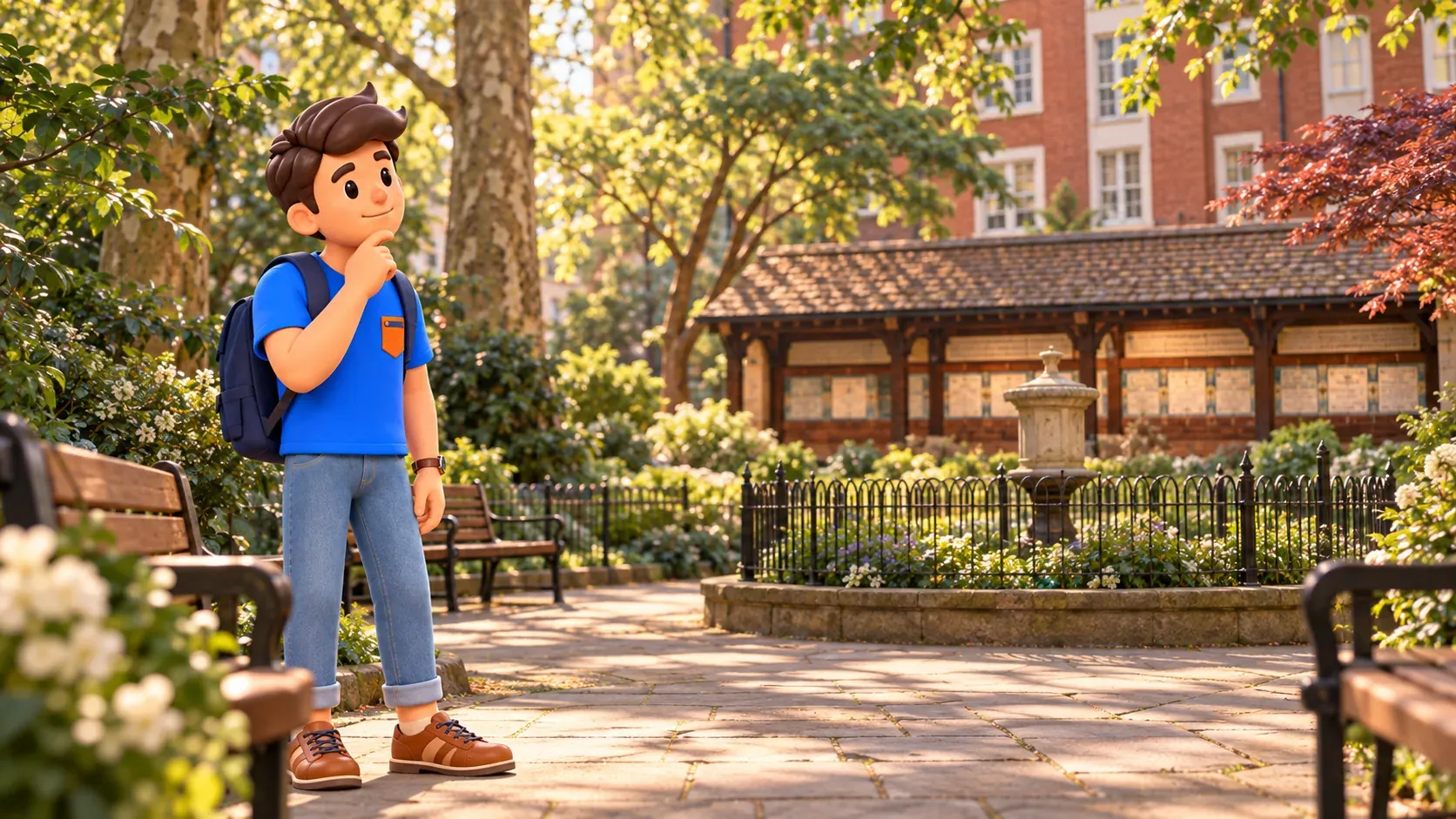
Take time with one or two ceramic panels. Read a name and the outline of what happened before moving on. You do not need to read every inscription to understand the memorial’s purpose, and a few carefully considered stories may stay with you longer than a hurried photograph of the entire structure. Keep room for others who would also like to read.
The tone of this stop differs from looking at picturesque ruins. If you are visiting with children, decide how much detail is suitable and let their questions guide the conversation. There is no need to turn tragic events into a game or demand a particular emotional response. A short explanation that these were real people helping others can be enough.
The published opening pattern is eight in the morning to seven in the evening or dusk, whichever comes first; Christmas Day, Boxing Day and New Year’s Day are closed. Check current notices as well. In the darker months, an afternoon start may leave less time than the clock alone suggests. Plan the final garden around daylight, not an assumed late-evening opening.
Let the season shape the pace
This is a garden walk, so do not judge it against one photograph taken in full summer growth. Planting, light and the amount of leaf cover change across the year. A bare branch can reveal the outline of a ruin, while fuller greenery can make the same corner feel more enclosed. Look at what is present on your day rather than expecting a particular flower display.
In wet weather, seats may be damp and paved areas may be slippery. Bring a layer that suits the forecast and choose a shorter outing if lingering outdoors would be uncomfortable. These gardens offer a pause within the city; they do not provide the same all-weather shelter as a museum. A hot drink, meal or indoor visit can be planned separately if that would improve the day.
With RoadMe, it is easier to turn the places you enjoy into a complete personal itinerary, instead of arranging each day from scratch. Let the app plan around your interests and travel pace, giving gardens a useful place alongside the larger visits you want to make.
You can also treat the three stops as choices for different days. St Dunstan suits a short encounter with ruins and greenery; Cleary offers an intimate terraced setting; Postman’s Park rewards time with a memorial. Choosing one is a practical way to keep a busy day comfortable. The gardens do not become more meaningful simply because you reach all of them before closing.
For another side of the same district, our walk from Leadenhall Market to the City’s skyscrapers focuses on architectural contrasts. Keep it for another slot if you want today to remain restful. Finish near Postman’s Park, check onward transport from your actual exit, and carry away a few clear impressions rather than a longer list of places rushed past.


