
Butte-aux-Cailles: A Two-Hour Paris Neighbourhood Walk
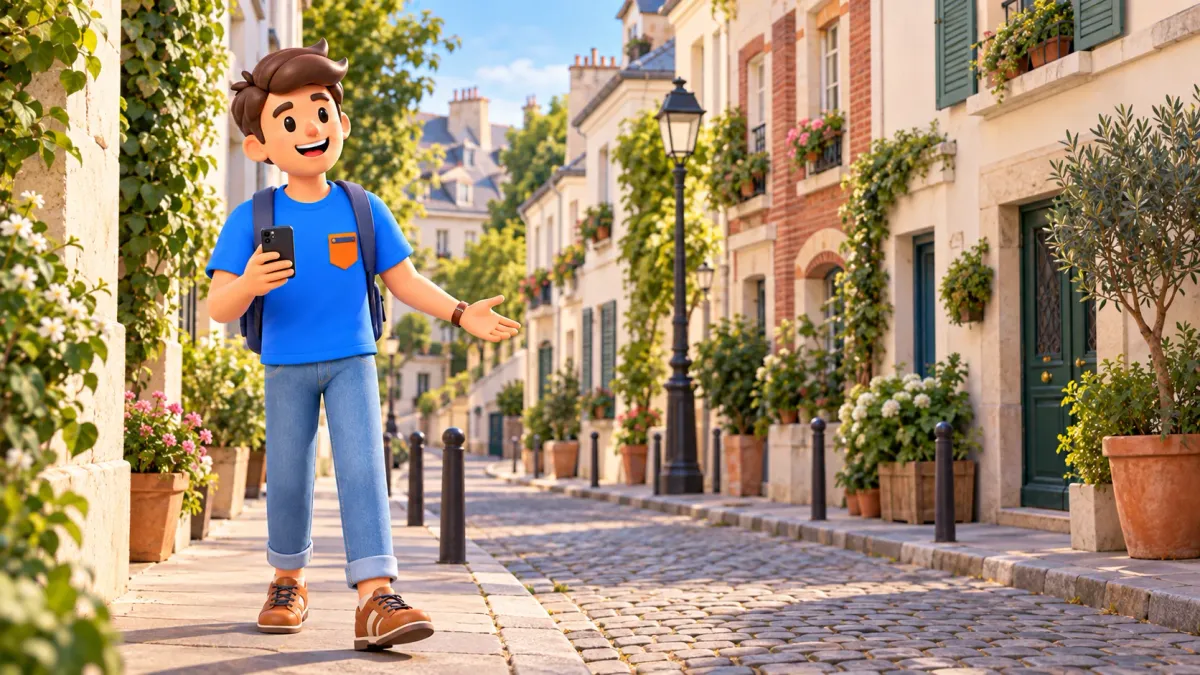
Butte-aux-Cailles reveals Paris through small streets and everyday details. Look at the height of the houses, discover images on walls and pause outside a municipal swimming pool with more than a century of history. The pleasure builds gradually: a brick arch, a turning street, a blue gateway and a moment to talk over coffee.
Allow around two hours for this neighbourhood walk. Start at Corvisart Métro, follow rue des Cinq Diamants to Place Paul-Verlaine, then explore rue Michal and rue Daviel before finishing at Glacière Métro. The route stays on public streets and focuses on exterior views. The pool is currently closed for renovation, while residential courtyards remain places where people live.
A two-hour route from Corvisart to Glacière
Both stations are on Métro line 6. From Corvisart, head towards rue des Cinq Diamants and follow rue de la Butte-aux-Cailles east to Place Paul-Verlaine. After the square, retrace a short stretch of the same street and turn onto rue de l’Espérance. Continue via rue Michal to rue Barrault, head north to rue Daviel, then west to rue de la Glacière. Follow that street north to Glacière station.
Allow roughly 25 minutes for the first streets, 20 for the square with its pool and fountain, 25 for rue de l’Espérance and rue Michal, and 15 for exterior views around rue Daviel. Another 35 minutes covers all transfers, a brief pause and the finish at the Métro. That makes 120 minutes: a planning estimate, rather than a measured walking time. Travel from your accommodation, a full meal and shopping need extra time.
Try RoadMe to create a fully worked personal trip plan around your dates, interests, pace and budget. A coherent day-by-day itinerary is much more convenient to use while travelling and gives this short walk a suitable place in your whole Paris stay.
The short return after the square is intentional. It lets you see the pool before moving towards the smaller residential streets without a large detour. You need not explore every passage to enjoy the neighbourhood. If a stop absorbs your attention, shorten the next one; if you decide to sit down for lunch, treat that as an extension of the day.
Understanding the neighbourhood’s village feel
Butte-aux-Cailles sits in the 13th arrondissement, between Place d’Italie and Parc Montsouris. Low houses, narrow passages and stretches of paving create a different scale from the city’s broad avenues. “Village feel” describes that spatial impression. This is a lived-in Paris neighbourhood, where the attractive façades also enclose ordinary daily routines.
The area became part of Paris during the city’s expansion in 1860. Its earlier story includes craft and industrial activity around the Bièvre river, giving the small streets a history of work as well as a picturesque appearance. A brief introduction is enough for this walk: use it to look differently at modest buildings and public facilities.
Begin on rue des Cinq Diamants by taking in the overall scene. Notice where one building is lower than the next, how a shopfront meets the pavement and how the street bends between façades. Then select a detail, perhaps shutters, brickwork or planting beside an entrance. Moving from the whole street to one feature rewards attention without adding more stops.
Avoid assigning the district a compulsory mood. At one hour, open shops and terraces may attract you; at another, closed shutters make the architecture more prominent. The neighbourhood can be lively, and neither constant silence nor an absence of visitors is guaranteed. Daylight is a useful choice for a first visit because building details and street names are easier to read.
Discover street art without a compulsory checklist
Street art contributes to the character of Butte-aux-Cailles. Some images are small enough to miss on a hurried walk: a silhouette beside a doorway, a coloured fragment at a corner or a composition best noticed from a junction. Start looking along rue des Cinq Diamants and rue de la Butte-aux-Cailles while keeping the overall route in mind.
This art changes. An image from an older guide may disappear, be obscured or give way to something new. Look at what is actually present rather than expecting to reproduce someone else’s photographs. Avoid guessing an artist’s name or a date from a similar style. An unsigned image can remain an interesting discovery without a confident attribution.
Give yourself one simple observation task: find two works of different sizes and compare how each relates to its wall. One may incorporate a window or drainpipe, while another reads almost independently of the building. The relationship is the point of the exercise. Architecture and an image can shape each other rather than appearing as separate exhibits along the street.
Choose a place to stop before taking a photograph. Leave room for pedestrians and opening doors, and avoid stepping into the road for a straight-on view. A wider photograph often tells more than an isolated close-up. It preserves the scale of the wall, the neighbouring buildings and the setting in which you noticed the work.
With children, or companions less interested in architecture, agree on a shared subject such as an animal, a colour or an unusual shape. Discussing two discoveries can be more engaging than reading a history for every house. Everyone has a reason to look, while the outing retains a clear direction and an unhurried pace.
Place Paul-Verlaine and the historic swimming pool
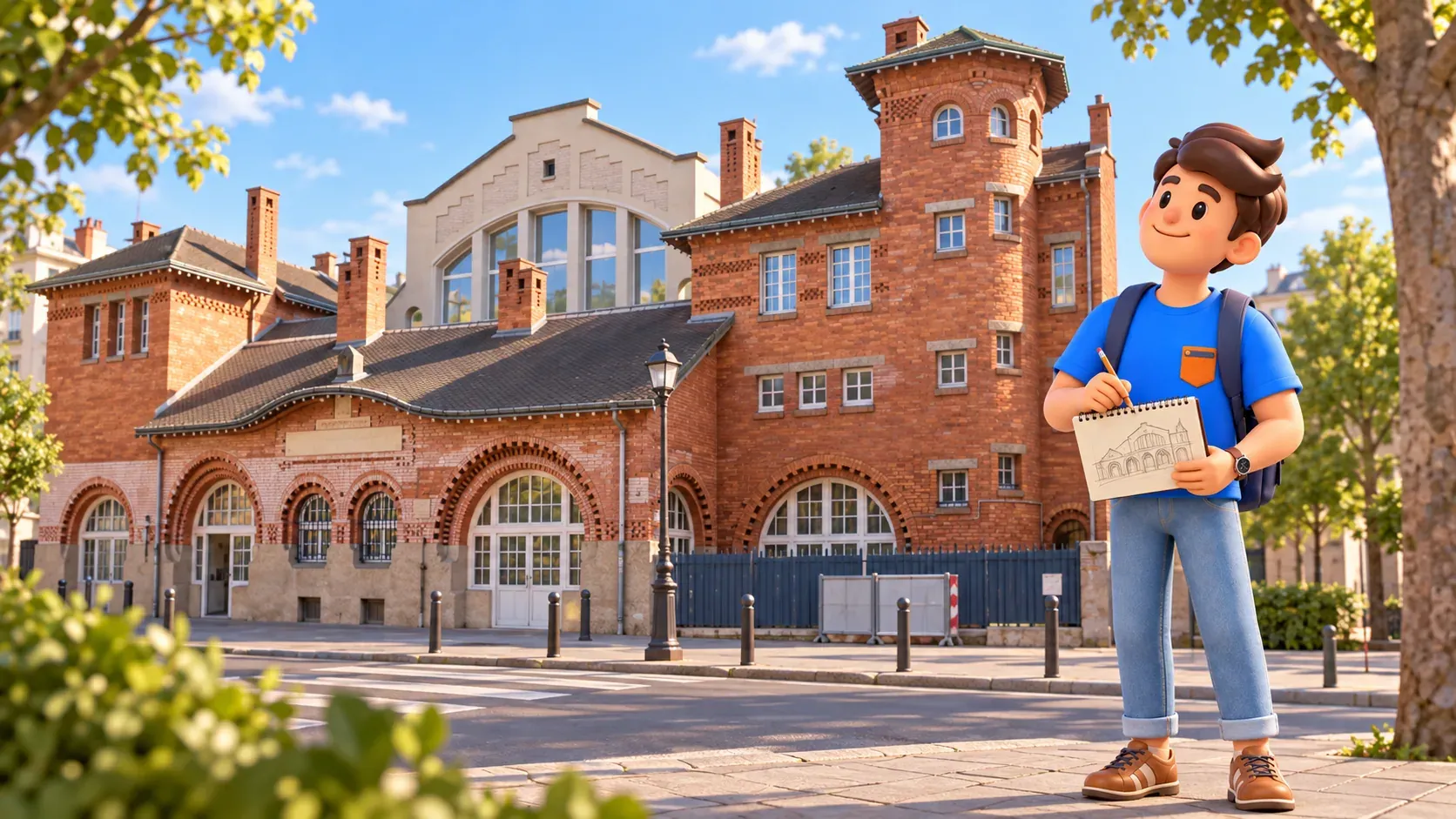
The square’s landmark is Piscine de la Butte aux Cailles, at 5 Place Paul-Verlaine. Architect Louis Bonnier completed it in 1924. Red brick and large arched openings show how expressive architecture could serve a practical municipal institution. Its appeal lies in the connection between visual character and everyday usefulness, rather than the scale of a grand monument.
View the façade from a permitted section of public pavement, keeping entrances and barriers clear. Compare the broad lower arches with the upper parts of the building. Even a short pause helps explain its importance as a neighbourhood landmark. If you enjoy sketching, choose one arch and a few roof lines rather than attempting the entire façade.
As checked on 13 October 2026, the pool is closed for renovation that began on 7 September. The municipal project schedules the indoor pool to reopen in spring 2027, with outdoor pools and new facilities following in spring 2028. These are planned dates, not confirmed future openings. This itinerary includes an exterior stop only, and works barriers may affect which details you can see.
Older descriptions recommending year-round swimming do not describe the current visit. Leave an indoor pool session out of your two-hour plan. For a future return after renovation, check the actual reopening, public sessions and admission conditions separately. The present walk still offers a useful combination of streets, neighbourhood history and exterior architecture.
The fountain and a story beneath the square
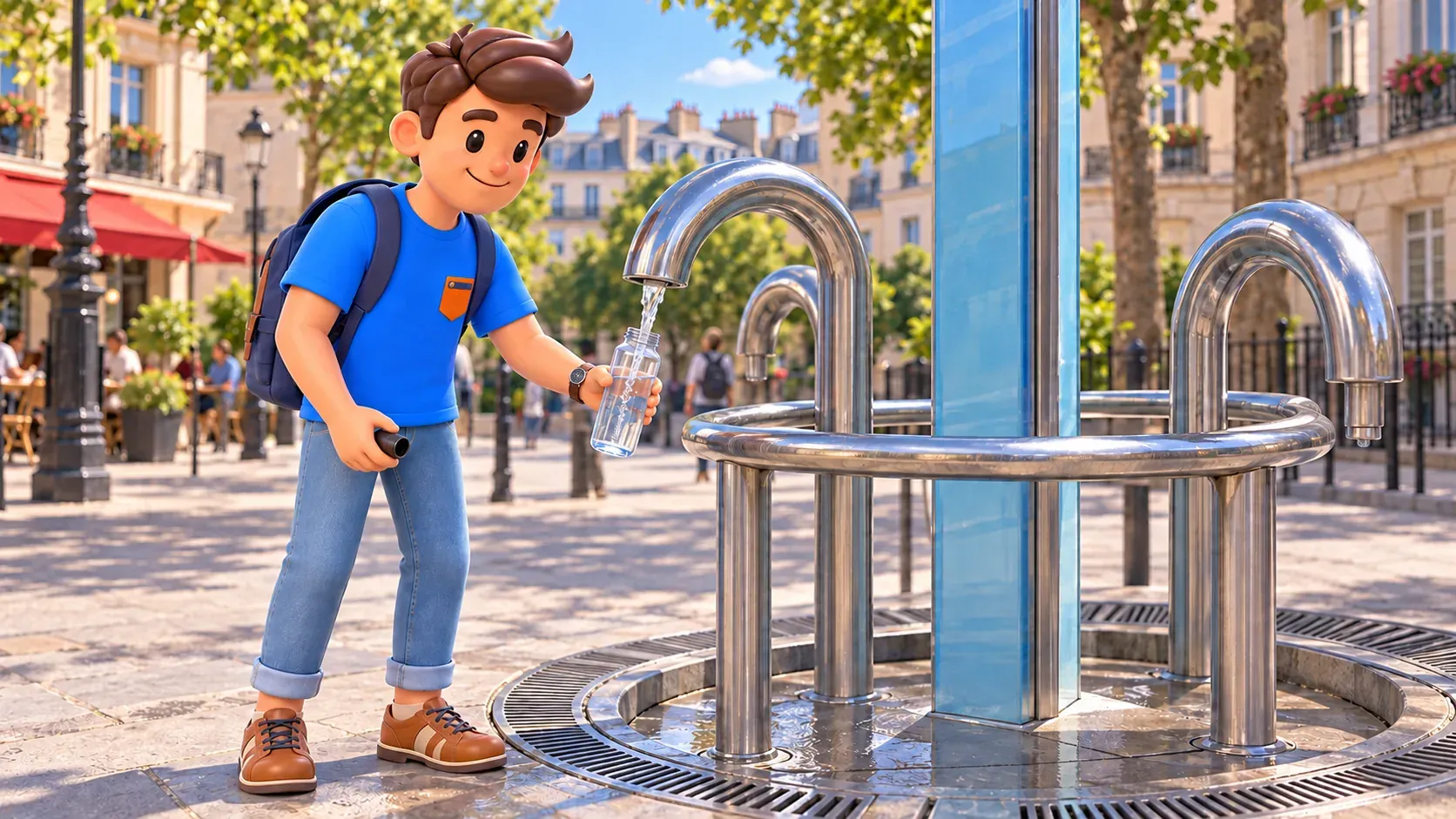
On the same square, the fountain draws on artesian water from the Albian aquifer, roughly 600 metres below ground. It provides a reason to think about what lies beneath an ordinary public space. The story of water and municipal services adds another layer to the neighbourhood without requiring a long technical explanation.
This contemporary fountain looks different from the green Wallace fountains: curved metal outlets surround a central blue post. Eau de Paris reported that service resumed on 29 January 2026 after maintenance. The water is potable and monitored. If the fountain is working and local instructions allow use, refill your bottle while leaving room for others.
Artesian water historically supplied the swimming pool too, but the well now supplies the fountain rather than the pool. Keep the two stories distinct. There is no need to attach health claims to the water: a practical refill and a little understanding of its origin already make this a worthwhile pause.
Rue Michal and rue Daviel: houses at a smaller scale
Return a short distance along rue de la Butte-aux-Cailles to rue de l’Espérance, then continue towards rue Michal. After the more animated opening streets, shift your attention to house heights, roof shapes and plants along façades. Not every stretch is equally picturesque. The movement between ordinary and distinctive buildings is also part of understanding the district.
Take rue Barrault north to rue Daviel. At number 10, Petite Alsace is an early twentieth-century workers’ housing ensemble associated with architect Jean Walter. Half-timbered details, brick and a blue gateway stand out from neighbouring buildings. The street view alone gives you a useful architectural comparison with the homes you have already passed.
Petite Alsace’s courtyard is residential space. Stay on the public pavement even if a gate is open: a glimpse inside is not an invitation to enter. Opposite, you can look towards the entrance of Villa Daviel from rue Daviel. Leave approaches to private gardens and doors out of the required route; an exterior view is enough for this outing.
Select one detail you might otherwise overlook: how materials meet, the angle of a roof or the design of an entrance. Then continue west on rue Daviel to rue de la Glacière and turn north towards the Métro. The walk ends at a clear point, allowing the smaller houses to remain part of the memory rather than disappearing beneath additional journeys around the arrondissement.
Fit the walk into a comfortable Paris day
The basic public-street route needs no admission ticket. Coffee, meals and shopping are separate choices and expenses; individual businesses have their own opening times. A short pause fits the allowance, but plan a full restaurant meal after the walk. That leaves you time to enjoy the final architectural stop without rushing.
Choose comfortable shoes for slopes and occasional uneven paving. A short distance does not establish a fully step-free route: pavement width, kerbs and station access need separate consideration if relevant to you. In heavy rain, shorten the walk to the opening streets and square and save the rest. The closed pool cannot serve as an indoor rain refuge.
Decide how much energy this outing should use within the day. After a substantial museum visit, its modest exterior stops can offer a change of focus. If neighbourhood architecture is your main interest, allow more time around rue Michal instead. Make the choice before extending the itinerary, so a small walk does not quietly become an exhausting afternoon.
Use RoadMe to organise small neighbourhoods, major sights and rest into a personal plan for your whole trip. A day-by-day itinerary shaped around your interests and pace is much more convenient and effective to use in the app than rebuilding every day from separate lists.
For another day, try our two-hour Batignolles walk through a square and a modern park. That district reveals its character through green spaces; this one through small streets, a public building and residential architecture. Give Butte-aux-Cailles one straightforward purpose: notice a few details and finish with a sense of the neighbourhood, rather than a completed checklist.


