
Batignolles in Two Hours: An Old Garden and Contemporary Paris
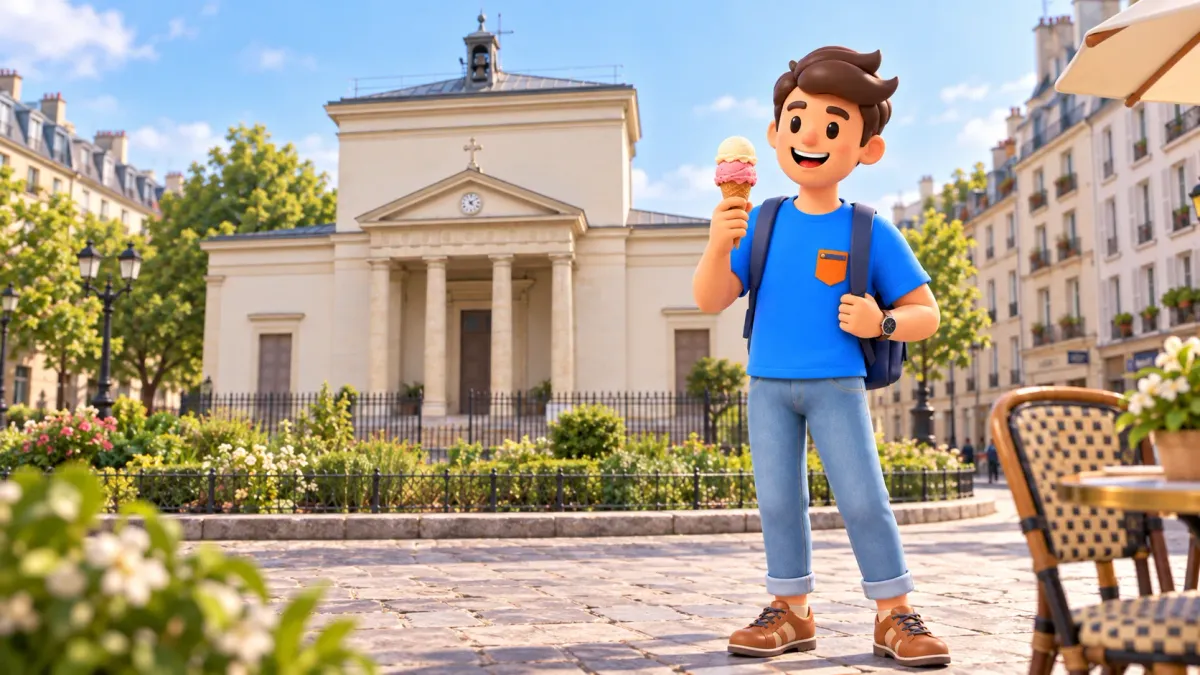
Batignolles is easy to explore through two green spaces and a square among residential streets. A columned church, a nineteenth-century landscape garden and a contemporary park on former railway land sit close together. They tell a clear story about a suburb becoming part of Paris and industrial ground becoming a setting for everyday city life.
Allow around two hours for this walk. Start at Sainte-Marie des Batignolles, continue through Square des Batignolles and finish your exploration in Parc Clichy-Batignolles–Martin-Luther-King. The itinerary focuses on exterior architecture, paths, water and greenery. Interior visits, a long lunch and a full sports game require additional time beyond the suggested allowance.
A two-hour walk through a square and two gardens
Begin on Place du Docteur-Félix-Lobligeois in front of Sainte-Marie des Batignolles church. Continue towards Place Charles-Fillion beside and behind the church, entering the older garden from that side. Follow open paths towards the pond, allowing time for bends and stops beneath the trees.
Gradually head for the Rue Cardinet exit, using the square’s municipal address, 144 bis Rue Cardinet, as your reference. Cross the street at a marked crossing and approach the contemporary park entrance from 147 Rue Cardinet. Inside, choose paths at the lower level, the railway-themed garden and an approach to the biotope pond, then return towards the same entrance.
A finish on the Cardinet side is convenient for Pont-Cardinet station. Reaching it involves a city street, so keep a little time after leaving the park. Do not try to reach railway tracks through a fence: their proximity explains the neighbourhood’s history but does not make them part of a pedestrian route.
A suggested allocation is 20 minutes for the square and church façade, 35 for the older garden, 40 for the contemporary park, 10 for street transfers and 15 for a short break. This totals an estimated two hours rather than a measured timetable. If you want a café stop or closer attention to plants, allow longer and keep time for rest.
To choose walks around your interests and arrange them across your days, try RoadMe for a fully worked-out personal trip plan using your dates, pace and budget. The completed itinerary is much more convenient to use while travelling, combining gardens, architecture and time to relax.
The lifts to the belvedere in Martin Luther King Park are currently out of service. This walk stays on the lower level and does not depend on reaching the elevated viewpoint. Follow signs and available passages on site if temporary restrictions affect a particular path, keeping the general sequence rather than insisting on an exact line.
The Sainte-Marie square: a suburb at neighbourhood scale
The church’s pale façade is clear from the square: columns support a triangular pediment, and the composition recalls an ancient temple. Stand back from the entrance to compare its height with the surrounding homes.
The church belongs to the first half of the nineteenth century. The official architectural register records building campaigns in 1828 and 1835 and names architect Auguste-Isidore Molinos. That is enough context for a short walk: the building grew with a settlement that was not yet a Paris neighbourhood in the present sense.
Batignolles-Monceau became part of Paris in 1860. A square with a church, trees and terraces makes that former suburban history tangible through the arrangement of space. Your attention moves from the façade to residential windows and ordinary city activity. It is a natural place to begin or pause, without turning the walk into an extensive restaurant directory.
If you would enjoy coffee or ice cream, choose an open business around the square and use some of your break allowance. Do not assume that a particular terrace will have space or operate in every season. Going inside the church is a separate decision, subject to parish arrangements and services. The main route remains understandable from the exterior.
Square des Batignolles: a small landscape with a long history
The older garden opened in 1862, shortly after the district joined Paris. It belongs to the Second Empire system of city gardens and the work of Adolphe Alphand. Greenery formed part of everyday urban life within that approach. The square created a small world in which water, trees, terrain and garden details could be experienced during an ordinary outing.
Paths curve, while plants conceal and reveal successive views. A small stream, rock compositions and a rounded pond give the space variety beyond its size. Notice the change after a single bend: branches come forward, then water, then another group of trees.
The rocky elements should not be understood as untouched natural countryside. Artificial stone features and decorative techniques helped produce a miniature sense of travel. Compare a natural form with a designed arrangement during your short visit. There is no need to determine every tree’s age or list the full range of species to appreciate the setting.
The square’s lawns are closed to access. Look from the paths and keep off grass when approaching the water. A closer photographic angle does not justify crossing the boundary of planting.
Water, sculpture and small details
Near the pond, look for Louis de Monard’s Vultures, a group of four birds made in 1930 from dark Volvic stone. The sculpture differs from living birds around the water and gives the garden an image of its own. Observing its outline from a permitted spot adds a story without requiring a lengthy specialist visit.
A bust also recalls Léon Dierx, a poet who lived in the neighbourhood. Such details explain why this green space carries memories of local cultural life. You do not need to find every monument.
Notice a leaf, bark or changing colours in a nearby shrub. A small magnifying glass can help you examine a reachable leaf without detaching it from the plant. Stay on the path and avoid pushing through planting for a photograph.
On the railway cutting side, the square offers another perspective: trains on the Saint-Lazare network can be seen through the fence. Observe from the permitted public side. The movement recalls the garden’s place within a working city. A green setting does not mean complete silence, and that relationship helps connect this stop with the former railway land across Cardinet.

Across Cardinet: a park on former railway land
Crossing Rue Cardinet after the older garden noticeably changes the scene. Building proportions, contemporary materials and more open path lines come into view. Martin Luther King Park became the central space of the redeveloped Clichy-Batignolles railway area. Homes, public facilities, workplaces and everyday services surround it, giving the landscape a role in daily neighbourhood life.
Landscape architect Jacqueline Osty and her team worked on the park from 2004, with its arrangement completed in July 2021. Its final area is ten hectares. You do not need to cover all of it during this two-hour introduction. Choose a few open paths between planting and the pond, maintaining a clear return towards the Cardinet entrance.
The design brings together seasons, sport and water. Those three themes make the park readable without specialist preparation. Planting changes with the season, some zones support activity and play, and water belongs to the landscape’s operation.
The jardin du rail, or railway garden, recalls the site’s previous life. Rails are incorporated into paving in some areas. Treat them as traces of former land use rather than operating transport routes. Contemporary architecture nearby shows how a city can retain a memory of its past while changing the practical character of a substantial area.
The biotope pond: water working for the park
At the biotope pond, notice the relationship between water, waterside plants and pedestrian approaches. The pond has a role beyond decoration. It receives rainwater and non-potable water; settlement and plants participate in natural filtration. Some water is then reused for irrigation. This makes the pond part of the park’s operation as well as a setting for building reflections.
Do not confuse pond water with drinking-water points. Fill a bottle only at a designated drinking source available on site. Keep out of the pond rather than approaching plants through water. Compare reflections and shoreline shapes from a permitted passage, leaving enough room for other people walking beside you.
Surrounding contemporary buildings belong to the view: balconies, stepped façades, glass and planting change the familiar city silhouette. Choose one shape and compare it with the Sainte-Marie façade seen at the beginning. That simple link brings the walk’s two urban settings into one story.
Room for movement and a short pause
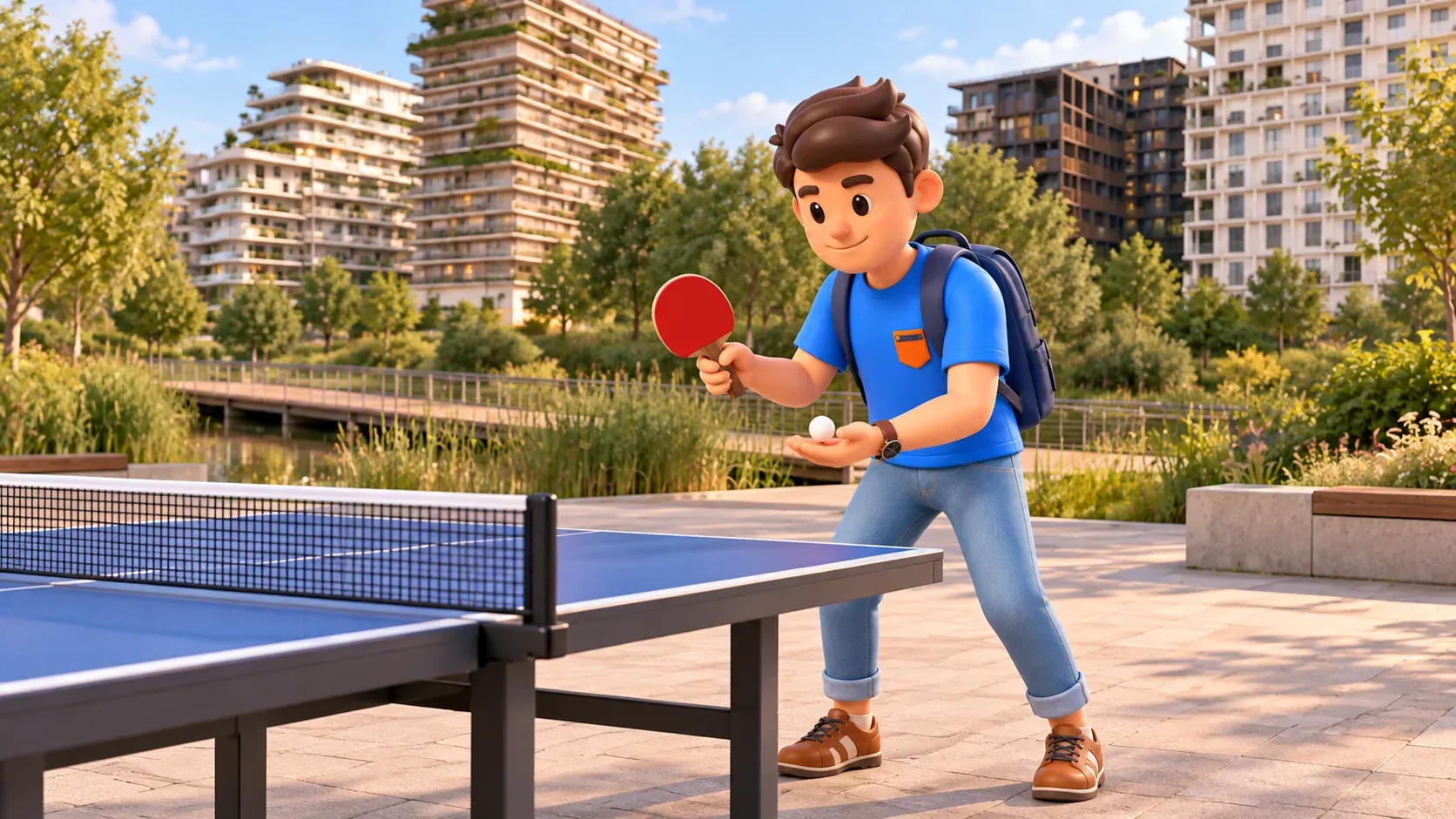
The park has sports areas, children’s zones and table-tennis tables. If you want to change the outing’s rhythm, bring your own paddles and ball and allow additional time to play when a suitable table is free. Equipment on site does not imply a loan service, a booking or guaranteed availability without other visitors.
For the main two-hour introduction, simply notice how active areas sit alongside planting and calmer spaces. A long game changes the plan: shorten the walking section or extend the outing. The neighbourhood suits a day that includes outdoor relaxation as well as architecture, with your own interests determining how much attention each part receives.
Opening times and a comfortable visit
Both green spaces have free entry and open daily on seasonal timetables. When checked on 13 October 2026, the schedule for 1–24 October was from 8am on weekdays and 9am at weekends for the square, and from 7am and 8am respectively for Martin Luther King Park. Both close at 7:30pm. For another date, check the relevant period and temporary notices.
A midday or afternoon start avoids relying on their different morning opening times. In the evening, keep a margin to leave and reach transport before closure becomes a concern. Follow administrative instructions during wind or adverse weather. You can shorten the route to the square and one open garden while preserving its neighbourhood story.
The municipal page lists Martin Luther King Park as accessible for visitors with reduced mobility, while its belvedere lifts are currently unusable. Equivalent information is not provided for the older square. Do not treat the whole outing as a confirmed barrier-free route. Ask about paths, entrances and the street crossing in relation to your specific requirements beforehand.
The city page lists no toilets for the older square and provides them in the contemporary park. Consider that when choosing your sequence and breaks. Illustrations convey atmosphere and activities rather than exact equipment locations. Use an actual map and signs for orientation, and permitted areas for resting.
Choosing your own Batignolles pace
If garden history matters most, spend longer in the older square. If contemporary architecture and the workings of water interest you, expand the Martin Luther King section. For a relaxed day, keep a modest break on the square and a few observations near the pond. The route suits different interests when its time is distributed deliberately.
For a trip combining parks, neighbourhood architecture and breaks, use RoadMe to prepare a personal plan of the whole journey around your interests, pace and budget. It makes it easier to distribute experiences across your days and use a completed itinerary in the city.
For another day, our walk through Parc Monceau and the neighbouring mansions offers its own two-hour outdoor plan and separate museum conditions. Batignolles can stay in memory through the transition from a former suburban square to a landscape garden and the park of a contemporary residential district.


