
Buam-dong in Half a Day: Art and a Villa among Rocks
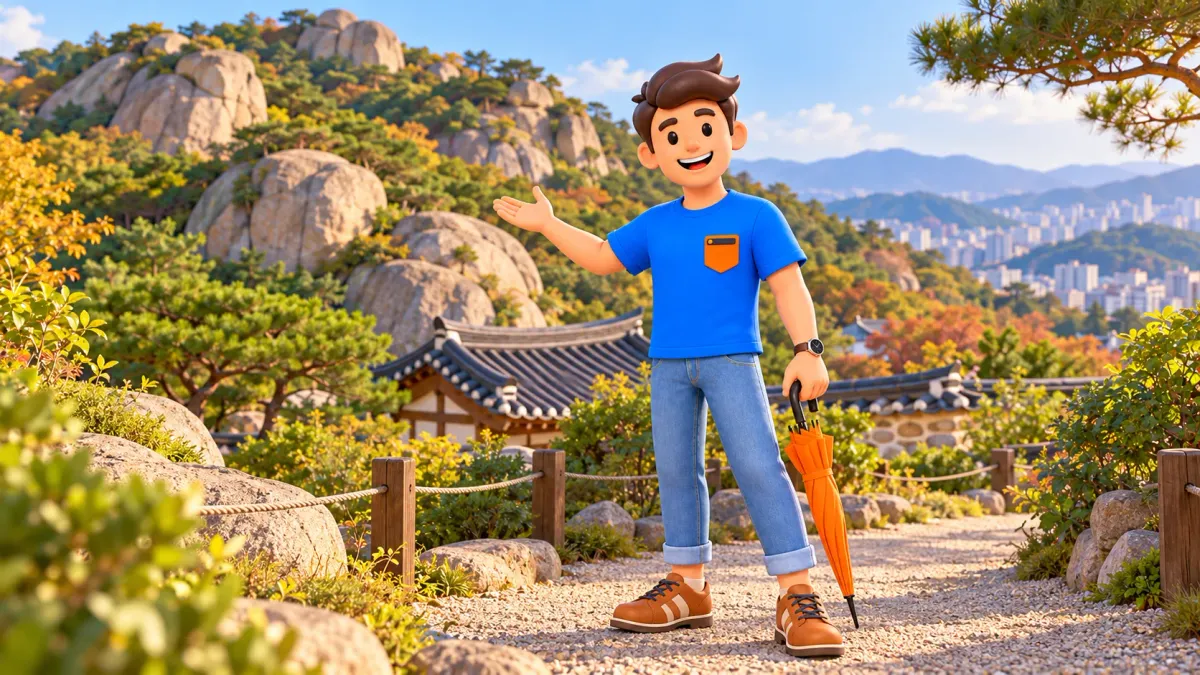
Visit Buam-dong for four to five hours of art and rocky landscape: begin at Whanki Museum, pause in the neighbourhood and continue to Seoul Museum with the Seokpajeong estate. This is a day of looking carefully, first at painting and architecture, then at buildings among rocks and trees.
The full version normally suits Wednesday to Sunday, after checking both venues' calendars. Whanki Museum and Seoul Museum are separate institutions with separate tickets. Seokpajeong is visited as part of the Seoul Museum complex; it should not be treated as a free public garden passage or offered as a separate garden-only ticket. Understand that distinction before travelling rather than at the counter.
One question connects the afternoon
Buam-dong lies among slopes and buildings generally lower than Seoul's familiar business districts. The route does not collect every cafe and viewpoint. Its thread is the relationship between human form and nature: a museum building responds to terrain, painting changes how you see colour, and a traditional estate uses rock as part of its space. That connection gives the different visits a shared purpose.
Planning this day is much more convenient with RoadMe: the app develops a complete personal itinerary around your interests, dates and pace. Art, architecture, walks and rest become a trip programme that is easier and more effective to use on the ground.
| Block | Planning guide | Content |
|---|---|---|
| Whanki Museum | 60–90 minutes | Selected exhibition and building |
| Streets and pause | 30–45 minutes | A cafe outside museum areas |
| Seoul Museum | 45–60 minutes | A focused part of the current display |
| Seokpajeong | 45–60 minutes | Estate and permitted garden route |
| Local approaches | 30–45 minutes | Slopes, entrances and stops |
These are editorial estimates, not measured times. Studying two extensive exhibitions completely requires longer; the half-day version selects a few meaningful threads. Add accommodation travel and a long lunch separately. Place the estate early in the day or early afternoon rather than depending on a disputed final garden hour. The sequence can change when confirmed access requires it.
Reach the district and find Whanki Museum
Gyeongbokgung is a useful central transport starting point, with city buses towards Buam-dong. For Whanki Museum, Buam-dong Community Center is the relevant neighbourhood stop, followed by a public approach to 환기미술관. Confirm the current service and boarding direction on the day. A bus number alone does not establish the correct direction, and the subway exit is not beside the museum door.
The final approach follows sloping urban streets. Do not look for a shortcut through a private courtyard. Follow institutional signs and keep the Korean name available. A few clear landmarks are more useful than a promise of an exact walking time in every weather and at every pace. Leave ordinary orientation room within the schedule rather than treating it as a failure.
Whanki Museum opened in 1992 to preserve and study the legacy of Kim Whanki, an important figure in Korean abstract art. It is a purpose-built museum ensemble rather than simply his former home. Its creation connects to his wife Kim HyangAn's work in preserving paintings and memory. That origin helps explain the attention to art, archive and architectural setting together.
Look at painting without demanding a familiar subject
A first encounter with abstraction need not identify an object behind every colour. Begin with distance: overall rhythm first, then small changes of tone and edge. If the current display includes Kim Whanki's later dot-based works, notice how individual marks join into a whole. Do not promise yourself a particular famous painting in advance: the exhibited selection changes.
Choose two or three works, or one modest section. What changes when you step back? Where does attention settle? Compare your response with available interpretation instead of guessing one correct answer. This approach also suits people who rarely visit art museums. A small meaningful selection is more rewarding than a tiring circuit accompanied by the feeling that everything must be understood immediately.
Current rules limit photography and video to designated photo areas. Plan primarily to observe rather than photograph the entire display. A regular guided commentary should not be promised either: the operator reports a suspension pending further notice. If interpretation is central to your visit, confirm the format actually available rather than relying on an old programme description.

The building deserves attention too
Architect Woo Kyusung connected the small museum volumes to their hillside. Stone surfaces, upper curves and links between spaces make the building an experience in its own right. You do not have to memorise its whole plan. Notice changing light and the relationship with surrounding trees while following the permitted visitor route. Architecture can remain interesting even when an exhibition theme is unfamiliar.
This is not a universally level visit. The museum itself warns about numerous stairs and difficulties for strollers and wheelchairs. Ask staff about usable areas before admission when this matters to your party. A taxi to the building reduces urban effort but does not remove internal architectural conditions. Plan from specific access information rather than assuming that a modest size means an easy surface throughout.
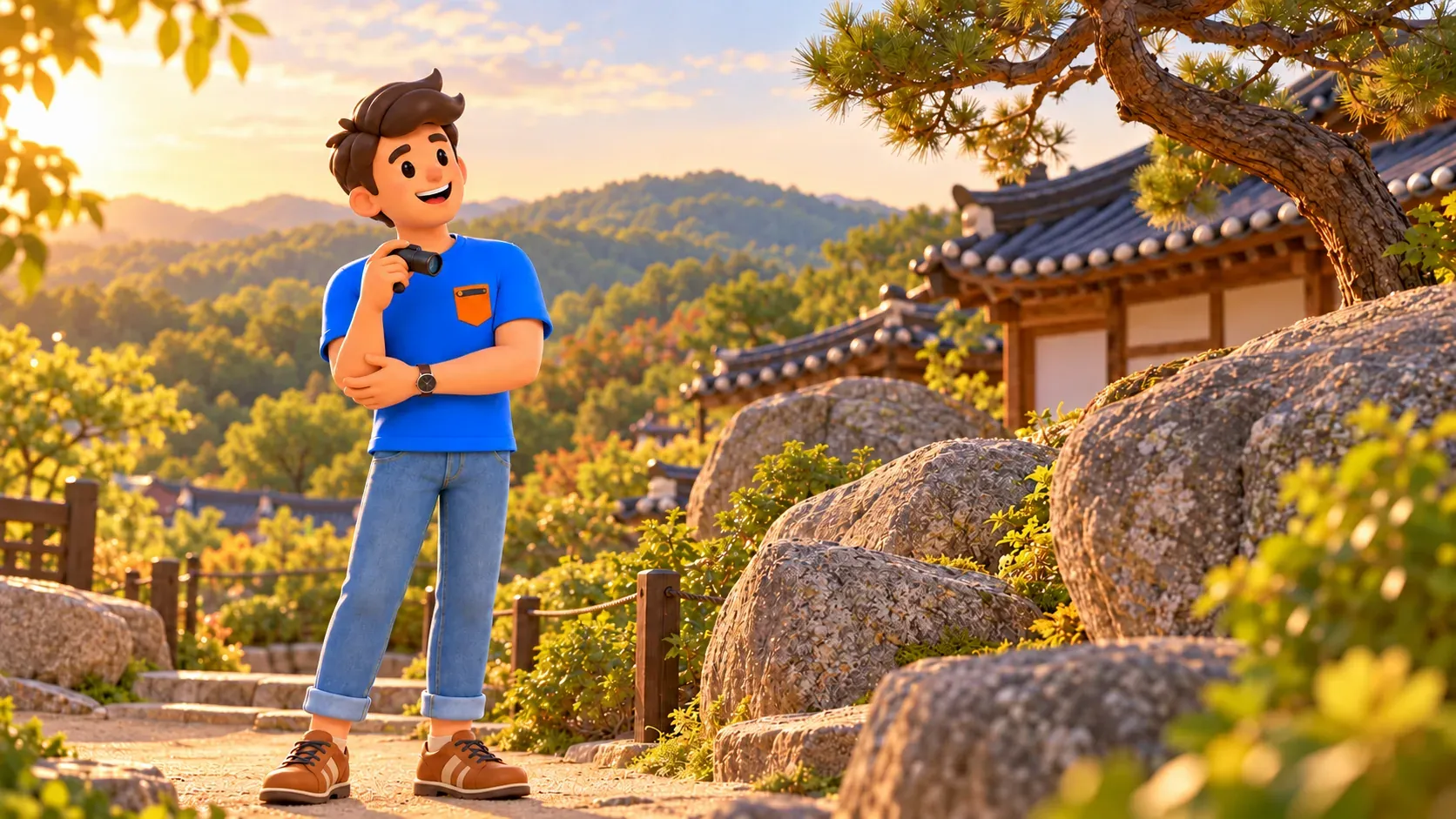
Store luggage and bulky items according to venue rules. Food and drinks are not allowed in galleries, so rest only where actually permitted rather than on a museum connection. This article's illustrations convey the district's atmosphere; they do not replace a building plan, documentary photographs or the current exhibition description. The real venue's signs remain the guide to movement.
A pause between separate venues
Return to public streets and use a current urban walking route towards Seoul Museum. The two venues are close on a map but belong to separate plots. Do not assume a direct garden connection. Allow for orientation, crossings and changes of level. A short distance still deserves a practical route, particularly when you are carrying belongings or travelling with children.
A cafe fits naturally between them. Choose an available place with a suitable menu instead of making one famous address a condition for a successful day. A drink and small snack allow discussion and restore attention. A full lunch needs more time and may require reducing the second exhibition. An unhurried break often improves the estate visit more than another hurried street detour.
Buam-dong contains homes as well as cultural institutions. Stay out of private gates and avoid stopping for photographs where you obstruct passage. A street can be interesting for its stone wall, roof silhouette or hillside view without assigning a museum-like history to every house. Observe the visible setting rather than inventing former residents or uses for attractive buildings.

Seoul Museum: distinguish the name
The second venue is the private Seoul Museum associated with Seokpajeong, 석파정 서울미술관. It is neither Seoul Museum of History nor the municipal SeMA network. Search using the complete complex name when selecting admission. Similar English names can otherwise send you to another part of the city, turning a short neighbourhood connection into an unnecessary journey.
Choose the current exhibition according to interest. Do not apply a previous show's description or assume a particular work is permanently displayed. Within half a day, one section or a focused brief survey may be enough. If the programme is especially compelling, extend the day rather than rush every room before the garden. The visit should follow actual content, not a fixed duty to cover all available floor space.
The combined ticket covers Seoul Museum and Seokpajeong; current rules do not provide separate estate-only admission. It is not the ticket bought at Whanki Museum. Before paying, confirm open sections and outdoor access for the chosen date. This matters particularly in rain or snow, when the garden may be restricted even while interior galleries operate. Know which part is essential to your plans.
Seokpajeong: buildings make room for rock
The estate belongs to the late Joseon period. Its early history connects to official Kim Heung-geun and later to Heungseon Daewongun, father and regent of King Gojong. The Daewongun was not himself the reigning king. This is a retreat-like estate rather than an official palace arranged around a succession of large ceremonial courts. Keeping that distinction clear makes the small scale easier to appreciate.
Look at buildings together with substantial rock, pines and slope. A boulder here is more than an isolated decoration placed in front of a facade: terrain shapes the relationship between structures and viewing positions. From a permitted path, find a view where roof, tree and stone surface form one composition. The surrounding landscape is part of the subject rather than a background to be excluded.
Then change distance: a broad view first, an eave line beside stone next, and finally the space between wall and vegetation. Several attentive stops reveal more than an insistence on reaching every available branch of the path. Do not climb rocks or cross restrictions for a picture. This is both a historic property and an uneven natural setting, with boundaries serving preservation and visitor movement.
Houses, garden and present museum use belong to different time layers. Do not assume every view is unchanged since the nineteenth century. The ensemble's value lies in surviving relationships between architecture and landscape, and in the possibility of seeing them today from permitted visitor routes. A closed room does not prevent understanding the principal idea of the exterior setting. Observe what is genuinely available.
Calendar and weather matter more than a final stop
Seoul Museum and Seokpajeong normally close on Monday and Tuesday. Whanki Museum normally closes Monday, with additional holiday exceptions. Wednesday to Sunday therefore offers the usual overlap. Check current notices nevertheless: a general weekly pattern does not exclude an exhibition change or a special restriction. Both venues need to fit the date for the complete version to work.
The operator's pages disagree on the garden's closing time. Avoid a late final visit and confirm the chosen day's hours. Poor weather can restrict the outdoor section even when museum galleries remain open. If the garden is your main reason for travelling, confirm access before buying and making the journey. A cautious scheduling choice here is more useful than repeating one uncertain hour as definitive.
Connecting these details with the whole journey is easier with RoadMe: the app prepares a personal plan around your interests and comfortable pace. Museums, nature, other districts and rest receive suitable days, keeping the programme convenient for the real trip.
The complex restricts food and drinks, including water; keep refreshments for a permitted place outside the visit. Store bags and umbrellas as staff direct. For return travel, confirm the appropriate stop near Jahamun Tunnel Entrance and the bus direction towards the centre, or choose another suitable city connection. A clear return prevents fatigue from becoming the day's final impression.
Finish the half-day with room to remember it
Do not automatically attach a mountain route because slopes are visible around you. An Inwangsan or Bugak climb requires separate preparation, weather consideration and time. If tired, the day is already complete: art, intimate architecture and an estate among rocks form an independent programme without an obligatory summit. Leaving a possible extra for another day can preserve what you enjoyed here.
For another intimate district, consider Seongbuk-dong's literary houses and Gilsangsa. For a different park-and-culture mood, use Seoul Forest and Seongsu. Let Buam-dong retain its own distinction: the chance to watch human form meet the terrain, with enough attention left to recognise the relationship.


