Bruges with a Pushchair: How to Plan a Comfortable Outing
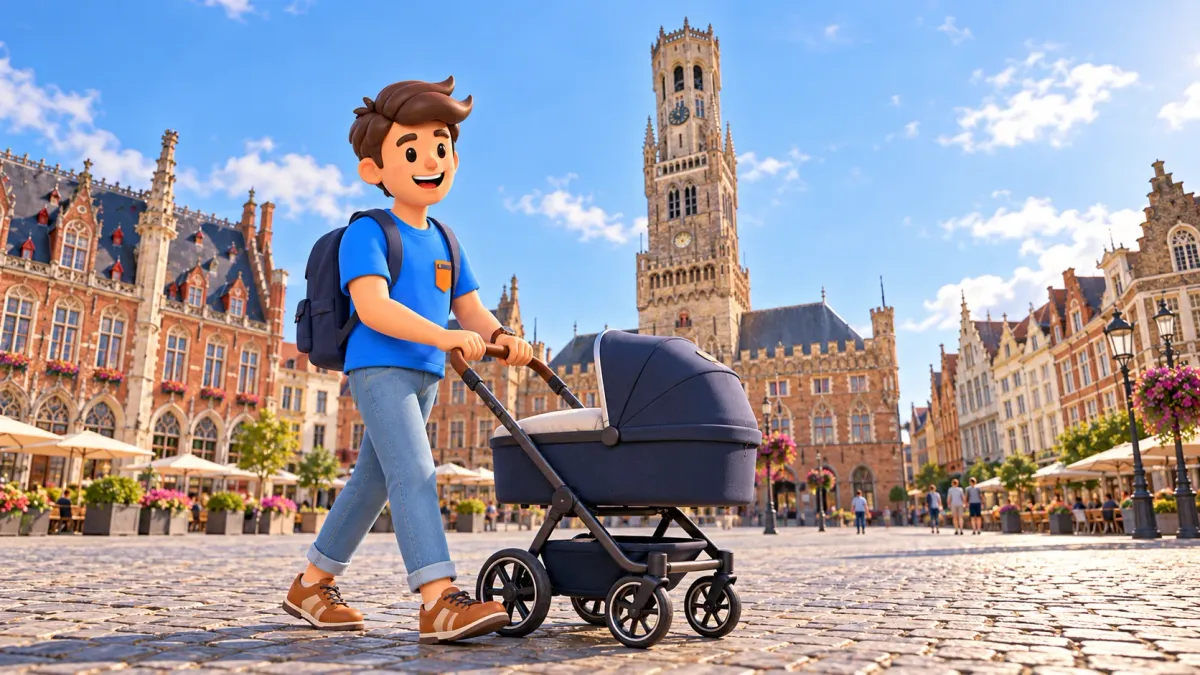
For a Bruges outing with a pushchair or stroller, choose one small part of the centre, identify a place to pause and check individual building entrances. The challenge is less about distance than cobbles, occasional steps, narrow passages and time for ordinary family needs. A compact historic city does not provide an equally comfortable route for every set of wheels.
Start with a modest aim: Markt and neighbouring Burg, or some time in Queen Astrid Park. Avoid combining every famous place immediately. This article concerns a child's pushchair and family preparation; it does not certify a wheelchair-accessible route. Individual needs and entrance conditions require separate decisions.
Plan short outings with an easy finish
Instead of a large circuit of the entire centre, choose one area and a finishing point that will feel complete. You might start with around 30–45 minutes of walking and looking, followed by a proper break. This is an editorial example for organising a day, rather than a prescribed walking duration for a child of any particular age.
RoadMe makes it much easier to develop a personalised plan for the whole trip around your family's interests, available time and pace. Try planning Bruges in the app so short outings and rest have a considered place alongside the visits that matter to you.
For an outing of roughly an hour and a half to two hours, allow preparation, a pause and returning as well as sightseeing. Your family determines the appropriate duration. A successful first section does not oblige you to add another immediately. Finishing after one attractive square can be enough when everyone would enjoy a different rhythm next.
Establish the return before setting off. An open-ended route works when you know how to get from its finish to your accommodation or transport; otherwise a short walk gains an unexpected extension. Do not compare your pace with a map estimate for an adult walking without pauses. A pushchair outing includes choosing surfaces, manoeuvring and stopping, which a simple walking estimate cannot describe fully.
Cobbles: examine the surface as well as the distance
Much of the historic centre is paved. The city's official accessibility guide recognises uneven cobbles and discusses ways to reduce obstacles. A comfortable strip in one place does not create an uninterrupted smooth path across Bruges. Surfaces change within short sections, while weather and the precise approach affect how easy those sections feel with your own pushchair.
Look ahead for the end of a flatter patch, a kerb, gutter, tables narrowing a passage or approaching traffic. A slightly longer but calmer approach can be preferable to a tight shortcut. Do not use a road edge or cycle lane just because its surface looks smoother. Convenient wheels still need an appropriate walking space and attention to the signs currently in place.
You do not necessarily need a new pushchair for Bruges. Understanding how your familiar model handles uneven ground, how its brake works and what its manufacturer permits is more useful. Your actual transport arrangements matter too. A travel label does not guarantee comfort for a particular family on a particular street, and larger wheels do not remove steps or narrow entrances.
Keep passages clear during pauses and avoid blocking a narrow bridge for photographs. Near water, choose somewhere with sufficient room for both you and the pushchair. If a preferred composition requires an awkward manoeuvre, find another view. The aim is an enjoyable day, rather than reproducing a photograph taken without your belongings, child and fellow visitors to consider.
Markt and Burg: a small central chapter
Markt makes a clear goal for an initial outing, with the Belfry, market halls and surrounding façades. The civic tower recalls urban administration and trade, making the square interesting without a climb. Notice how the large public building relates to smaller houses around it. One readable theme can give a short walk more substance than a dozen names passed without stopping.
If time and energy allow, continue along Breidelstraat to Burg, where the town hall introduces another part of civic history. This connects two neighbouring squares without promising a clear passage at every hour. Groups, terraces and movement change the setting. If it feels tight, pause somewhere suitable or finish at the first square. A street visit can be shortened without losing what you have already enjoyed.
Burg connects with authority and important civic institutions, while Markt brings together commercial space and its tower. That simple distinction is enough for this outing. You need not enter the town hall, basilica and every neighbouring interior. An indoor visit is a separate choice with its own entrance, rules and time, rather than an automatic continuation of looking from the square.
If this central section fills the day you want, do not add a distant park at the last moment. A small clear plan with a return option is often more convenient than completing a loop merely to close a line on a map. Nor should you expect empty squares at a particular hour: conditions depend on the actual day as well as your arrival time.
Boniface Bridge: a view does not require a crossing
In the museum quarter, Boniface Bridge illustrates the difference between the shortest line and a comfortable route. The bridge has steps, so do not make crossing it essential to your pushchair plan. A view beside it can preserve the experience of its surroundings. There is no need to turn an attractive bridge into a task involving carrying a loaded pushchair.
The Church of Our Lady and Gruuthuse palace stand nearby. Water, brick and high towers create a Bruges scene without a compulsory photograph from the middle of the bridge. Approaches and courtyards still require attention to surfaces and access. In this area, keep the option of retracing a suitable familiar section rather than seeking a passage through every garden.
Do not extend one bridge's conditions to every other bridge. Actual steps, slope, width and the approach are what matter; photographs often leave those details out. An attractive location need not join every family outing. Sometimes looking from farther away and preserving time for a comfortable pause is the better decision for the day you are actually having.
Queen Astrid Park: make the pause part of the visit
Koningin Astridpark is near central neighbourhoods and changes the scale from street façades to trees, paths and places to sit. It has a pond, decorative pavilion and playground. The park can be the main aim of a short outing, rather than a compulsory extra after several museums. Adults may appreciate a break from moving over paved streets as much as children do.
Green surroundings do not make every path identical: consider your particular approach and a suitable place to stop. A bench in a description does not guarantee an available seat when you arrive. Rain, leaves and surface conditions alter the experience. Choose a suitable section in person rather than expecting the park automatically to solve every practical family need.
A playground may interest an older child without requiring a baby's pause to become another scheduled activity. One person may need conversation and quiet observation, another movement. What matters is that rest was allowed for and does not feel like a delay between the real sights. The break already forms a worthwhile part of spending a day in Bruges together.
Inside a museum: permitted does not always mean convenient
Choco-Story permits pushchairs but does not recommend them for its route. There are four entrance steps without a ramp, further changes of level inside and a lift that does not serve every floor. A suggestion to take a baby to the chocolate museum therefore needs context: an appealing subject and convenient passage are separate questions. Ask about your requirements before purchasing.
Historium does not allow strollers within its attractions; they may be left at the counter where the Story audio guide is issued at the beginning of a visit. This does not establish suitability for every baby or make the experience essential. Arrangements for wheelchairs and assisted lift access are not permission to take a pushchair through every part of the complex.
At Gruuthuse, distinguish approaching the courtyard from visiting the palace museum with its stairs. An enjoyable exterior does not guarantee equal convenience inside. If the interior matters, ask about the actual route and belongings. Do not buy admission for the group on the assumption that any historic museum must have suitable space for a large pushchair and a wholly level route.
The Belfry's 366-step ascent is not a pushchair outing, and Historium Tower is reached by stairs too. If one adult wants to climb, agree waiting arrangements and a meeting point with the other adult and child beforehand. It should be a deliberate group decision, rather than an unexpected separation at the ticket desk after several tickets have been bought.
Rain, cafés and everyday family needs
Give yourself a way to finish the outdoor section early when the weather changes. For a café, ask about the entrance, available space and bringing a pushchair. A nearby door does not mean no steps or enough room between tables. A particular room may suit one setup and feel tight for another. A general family-friendly label cannot explain all those details.
With RoadMe, preparing a personalised plan for the whole trip is much more convenient, connecting your family's interests with short outings, meaningful visits and rest. Try the app to spend less effort assembling each day manually and enjoy Bruges at your own pace.

Toilet access and baby-changing equipment are different questions. Ask the venue about what you need and its current conditions, rather than expecting every café or museum to provide everything. Historium, for example, lists a changing table in its toilet facilities. That does not turn the whole building into an unrestricted family space without ordinary visiting arrangements.
For weather protection, use accessories intended for your model according to the manufacturer's instructions. Avoid building the day around a promised sleep on cobbles or an assumption that a child will stay content through an entire museum. A flexible plan is useful precisely because it does not require predicting everyone's response or the weather minute by minute.
Count the station approach separately
Getting from transport to the first square also belongs to the day's effort. Work continues around the station in 2026; in the current phase, foot and cycle paths on the inner side of the R30 are unavailable, with the signed central crossing by the bus station used instead. Follow current signs rather than copying an older approach description. A further phase is planned from December 2026, so later travel requires updated information.
Do not add the station walk invisibly to an already chosen short outing. Returning and pauses along the way count too. If the main aim is a small central area, let that remain the principal experience. For a broader family day, consider the park and chocolate-museum plan; the guide to planning visits ahead explains admission choices.
Before setting off, settle three decisions: where to walk, where to pause and how to finish. Then check one entrance that really matters. This keeps useful certainty while leaving permission to shorten the day. Bruges with a pushchair is remembered less through the number of bridges crossed than through how comfortably the family could enjoy looking at the city together.