
Bruges with Kids: A Short Walk, Astrid Park and Chocolate
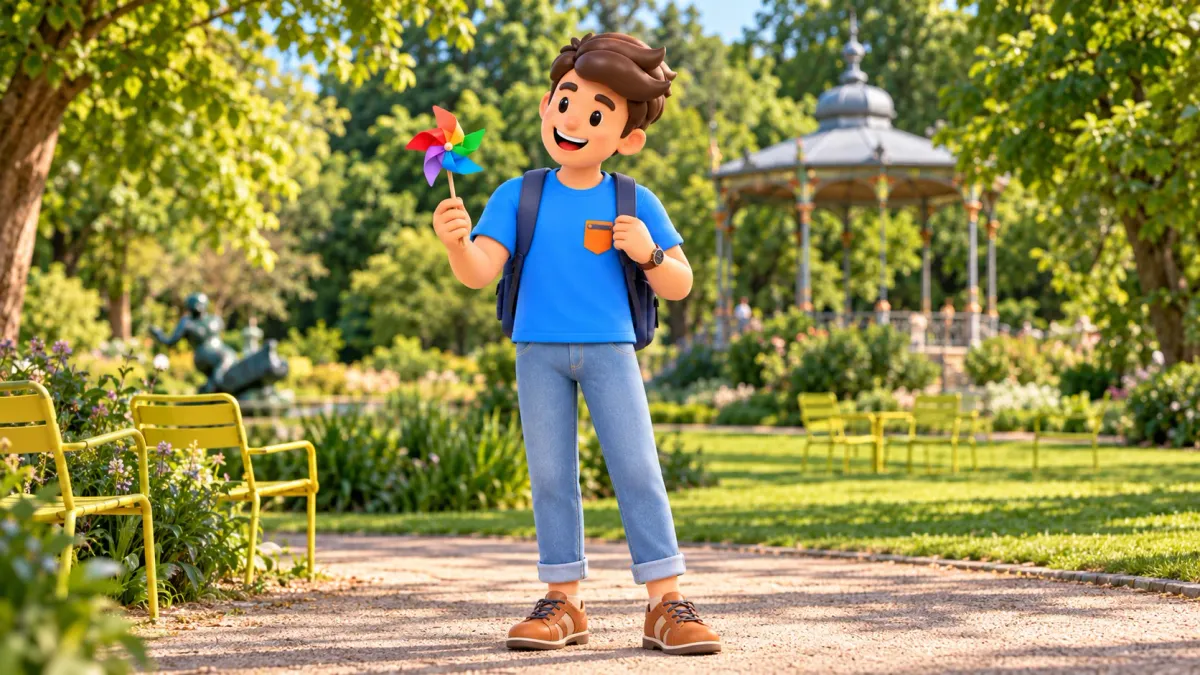
For a short family walk in Bruges, connect Queen Astrid Park, the Fish Market, Burg Square and the Choco-Story chocolate museum. Begin with some outdoor time and finish with one substantial visit. Walking distance is roughly 1–1.3 kilometres, with around two and a half to three hours for the programme. Reaching the park, returning afterwards and a full lunch are additional.
The walking is short; the museum is not a ten-minute stop. Choco-Story recommends approximately an hour and a half for a visit, so avoid fitting it between several other museums. Think of three different activities: movement in a park, observations in the streets and one indoor story. For a very young child, the outdoor section can be a complete outing without a compulsory ticketed finish.
One museum and a few understandable stops
Instead of a long attraction list, the family has a clear sequence. Move around in the park, notice shapes at the colonnade, choose a facade detail at Burg and follow cocoa towards chocolate in the museum. Adults do not need to deliver a continuous guided tour. One small idea at each stop, with a willingness to move on while interest remains, is enough.
With RoadMe, it is much easier to work out a personalised plan for the whole family trip, shaped around your interests, dates and pace. Try the app to bring Bruges walks, chosen visits and downtime together without building the entire schedule yourself.
For the main version, allow about 25–30 minutes in the park, 30–45 minutes for walking and brief city stops, roughly 90 minutes in the museum and a little admission buffer. These are editorial estimates, not a measured child’s pace. Extend the allowance for a longer play session or attentive museum visit. Cutting another stop is preferable to hurrying a child through the activity they enjoy.
Decide what matters most before setting out. If chocolate is the main interest, keep some attention for the museum. If playing and walking matter more, a lengthy interior need not become the obligatory conclusion. Age alone does not decide curiosity: one school-age child enjoys labels, another prefers finding objects. A small programme lets you choose without repeatedly feeling late.
Queen Astrid Park: start by moving
Koningin Astridpark lies within the historic city, near the Fish Market and Burg area. It has mature trees, a pond with a fountain, an ornamental kiosk and a playground. The park changes the activity immediately after travelling or looking at facades. Begin with an available play area or a short circuit on the paths, rather than trying to explain the whole history of Bruges.
Its botanical character gives a simple reason to look around. Compare the leaves of two trees, find different greens or notice the sky reflected in water. These are suggestions for your own game, not a promise of an organised quest provided on site. They need no special activity kit. Sometimes one observation is enough to make a park a memorable place in its own right.
The pond and kiosk are useful landmarks without requiring a stop on every path. If the playground captures attention, spend longer there and shorten the next exterior stop. The park need not be merely somewhere to use up surplus energy. Adults can rest too, sitting when convenient and enjoying the trees before the day moves back towards streets and buildings.
A pause before leaving helps make the next section understandable. Explain a clear sequence: columns, a handsome square, then the museum. This is a description of the day, not a reward for good behaviour. Knowing the remaining activities is easier than repeatedly hearing that there is only a little more walking after every turn.
From the park towards the Fish Market
Leave by public paths towards the northern side, then use the Park and Pandreitje area towards Rozenhoedkaai and Huidenvettersplein before reaching Vismarkt. Old streets and water make a short connection. The main route needs no courtyard visits, boat departure or circuit of neighbouring churches. Let the surrounding city provide the setting for a modest walk rather than another growing checklist.
Beside the canal, choose somewhere to pause without occupying the passage. Look for a bridge, reflection or boat if visible, without promising that a vessel will appear at exactly the right moment. Water and banks already provide something to notice. A small specific task may be more engaging than a long explanation of the entire canal system.
Use ordinary care around bicycles, paving and moving traffic. The historic centre is not one enclosed playground. There is no need to make this a constant stream of prohibitions: choose a space at the side and keep games away from narrow bridge crossings. Families can then look around while other people continue their journeys.
The Fish Market: a short look beneath the columns
Vismarkt is recognisable by its stone colonnade. The Fish Market recalls that Bruges is a place of trade as well as attractive buildings. That simple connection between a place and an activity is enough for a family stop. Do not promise fish stalls operating on every date: a historical function does not automatically describe the trading you will find today.
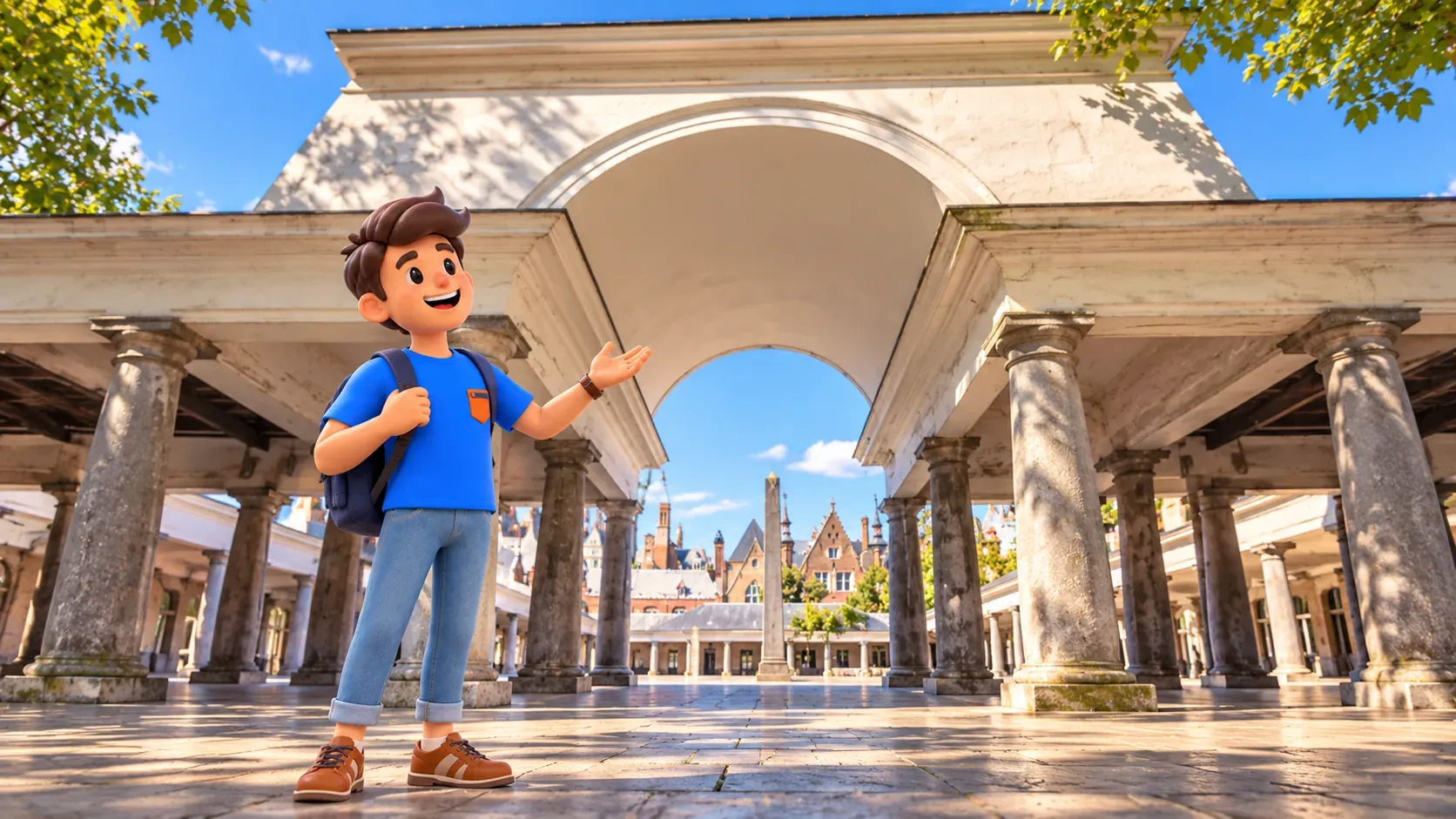
Compare the rounded arch with straight lines, look along the columns or choose a perspective for a photograph. Count a few nearby supports rather than making a complete count compulsory. If everyone has had enough little tasks, simply continue. The stop works because it asks for very little new effort after the park.
Continue through Blinde-Ezelstraat towards Burg Square. The small passage between important civic buildings changes the scale again. Look up at the covering without blocking the route. The street has its own stories, but retelling all of them before a museum visit is unnecessary. A transition can remain a transition, leaving space for an unexpected detail to become memorable.
Burg: one detail instead of a square’s entire history
Burg has long been a centre of civic power, and Bruges’s administration still occupies the Gothic Town Hall. That is an understandable starting point for children: an old and beautiful building continues to serve the city. A list of rulers and architectural dates is optional. Begin with the facade, pointed turrets, windows and neighbouring buildings that clearly differ from one another.
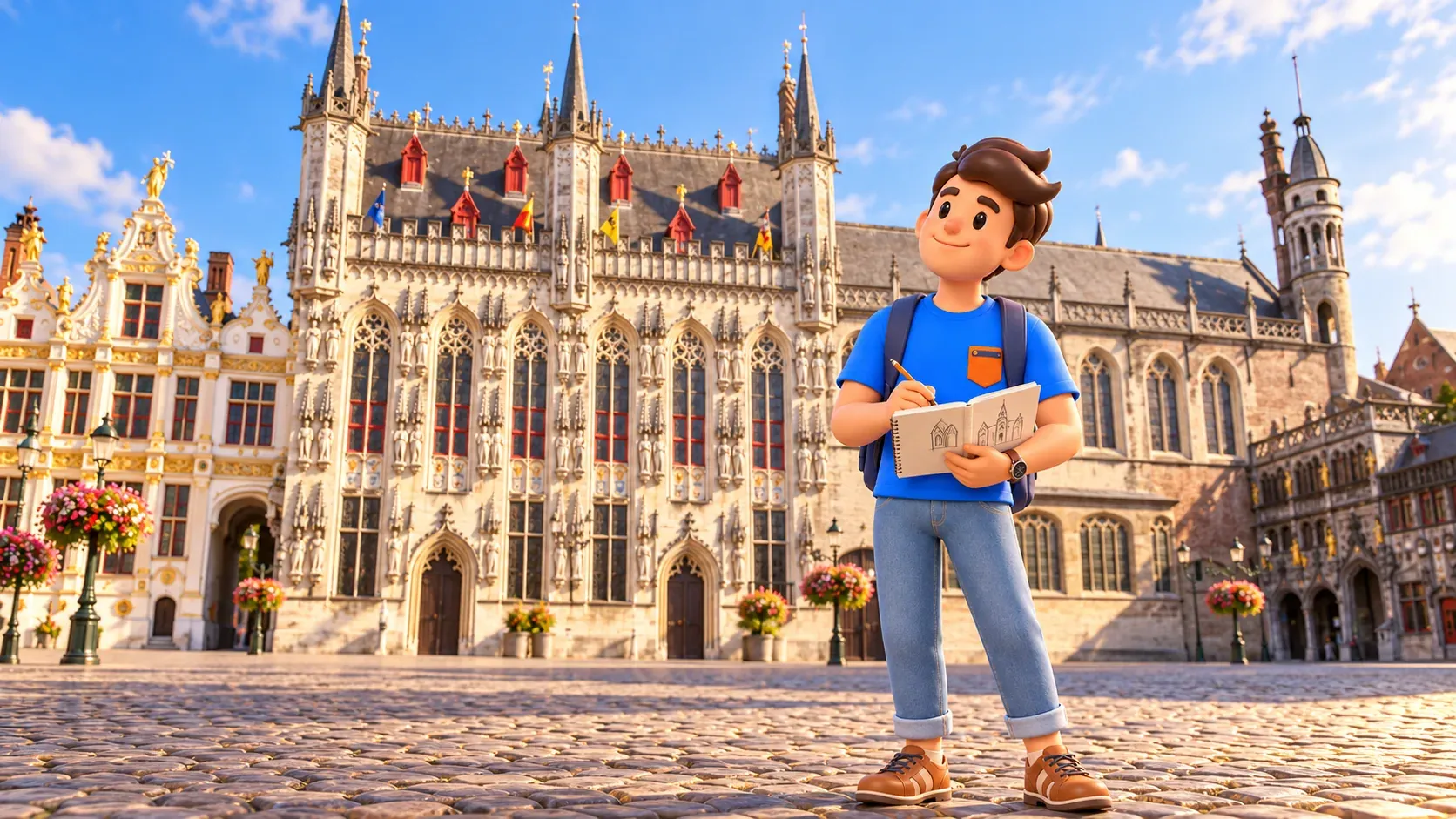
Let each person choose a detail, perhaps a figure, window colour or roof shape, then compare the choices. A few lines in a small notebook can preserve an impression if drawing appeals. The itinerary does not promise a museum activity pack or an official children’s trail here. Everyone can see the square differently, without a single correct answer required to make the stop worthwhile.
The Town Hall interior and Basilica of the Holy Blood are not included in today’s programme. They are nearby, but two extra interiors quickly take time and attention away from the chosen museum. Adults gain a longer list while children may experience only successive doors. Let the square be a complete outdoor encounter without another required ticket.
From Burg, head by Philipstockstraat and Cordoeaniersstraat towards Sint-Jansstraat and Sint-Jansplein. Choco-Story is at Wijnzakstraat 2 beside the square, the end of the walking section. Pause before entering to check the time, organise belongings and switch from street to museum. The last few metres need not become a race simply because the main indoor visit is close.
Choco-Story: a familiar sweet with a longer story
The museum introduces cocoa and chocolate through objects, images, interpretation and a praline-making demonstration. A familiar treat gains a sequence: plant, drink, changing methods of preparation and recognisable forms. That is enough as a family’s central idea. A detailed historical summary in a walking article would add little; leave room to notice something unexpected inside.
The displays occupy four levels, so this is more than a shop with a single case. The museum recommends around an hour and a half. Do not assume every child will give every part equal attention. Choose a few questions and move at your own pace, leaving some interpretation to the adults or a future visit. Quality is not measured by how many labels are read.
Before entering, ask what the family wants to discover: what cocoa looks like, why chocolates differ or how a filled chocolate is made. Return to one question when a relevant object or demonstration appears. It gives the rooms a connection. There is no need to provide every answer beforehand or turn the visit into a lesson that children must repeat afterwards.
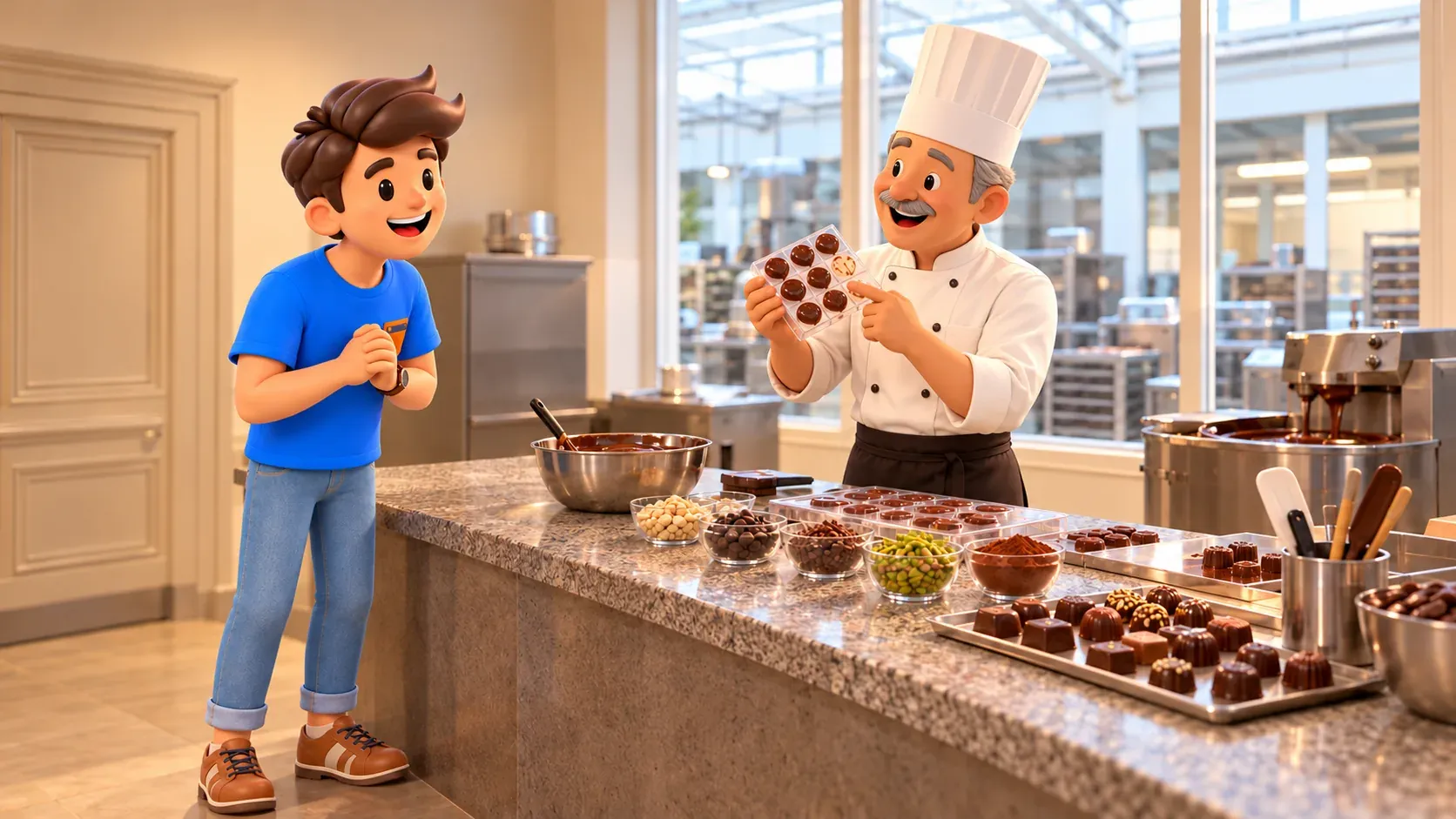
Watching a chocolatier demonstrate and attending a hands-on workshop are different experiences. An ordinary museum visit does not imply that everyone makes chocolates themselves. Choose the appropriate activity and booking terms if practical work is the goal. Tasting need not become the only purpose either: the story, tools and observation of a craft have their own value.
The wider account involves different parts of the world, including Maya and Aztec traditions and later changes in Europe. A family introduction can simply notice that a familiar food has a long history and once took different forms. Avoid expecting identical enthusiasm at every age. One child may remember an object, another a process, and a third a single surprising question.
Admission time, belongings and a pushchair
Current normal hours are daily 10:00–18:00, with last admission at 17:00. Arrive earlier for an unhurried ninety-minute visit. On 24 and 31 December, closing is 16:00 with last entry at 15:00; the museum closes on 25 December and 1 January. Check other special closures for the relevant year rather than transferring January 2026 maintenance dates to the following winter.
Booking is recommended for individual visitors, rather than generally compulsory. A ticket does not provide fast-track entry, so a buffer remains useful. Large backpacks are not allowed during the visit; take a manageable amount of belongings. Preparing for the entrance is more helpful than trying to squeeze another square into those final few minutes.
Try RoadMe to work out a personalised family stay in Bruges, distributing walks and visits across your trip according to your interests and preferred pace. The app makes it more convenient to give this short route the right place while leaving room for rest between experiences.
Choco-Story has four entrance steps without a ramp, further steps inside and a lift that does not reach the fourth level. Pushchairs are allowed but not recommended on the museum route. The whole programme therefore cannot be promised as step-free. Discuss your family’s visiting arrangements before booking; if necessary, the park and streets form their own outdoor version.
Afterwards, another major event is unnecessary. Finish at Sint-Jansplein, share the most memorable discovery and decide whether lunch or rest comes next. For a different day, choose the Sint-Anna neighbourhood walk or the windmills route, without joining everything immediately. A park, a few city details and one museum already give the family a complete shared story.


