
Bronzeville in Three Hours: Five Addresses in African-American History
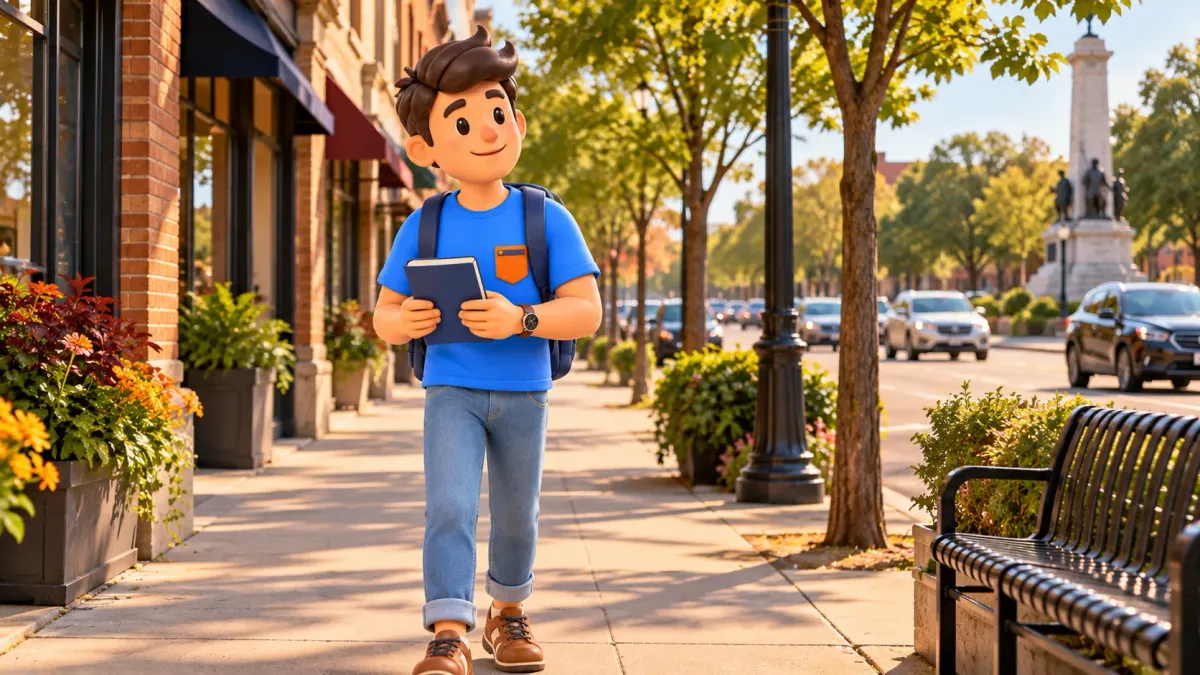
Three hours in Bronzeville can connect five places that show different sides of African-American urban history: public remembrance, insurance, journalism, enterprise and community support. Begin around 35th Street and King Drive with the Victory Monument and Supreme Life Building, then continue to the former Chicago Defender headquarters, the Overton Hygienic Building and Wabash Avenue YMCA.
This is an exterior walk through a living neighbourhood, rather than a sequence of open museums. Allow about three hours within the area, with cross-city travel added separately. The aim is to understand a compact historical corridor through several short stories, leaving distant museums and detailed biographies for another outing.
Give the three hours a clear shape
A useful outline allows eighty-five minutes across the five exterior stops, fifty for walking and crossings, twenty-five for a break and twenty for flexibility. These are editorial planning allowances, not measured journey times. A permitted interior event or a longer meal needs its own adjustment rather than being silently added to the same schedule.
RoadMe helps shape a complete personal trip around your dates, interests and preferred pace. Try giving this half-day to neighbourhood history, then balance your other Chicago days with the museums, architecture and outdoor time you most want.
Start in daylight and choose a pace that lets you read and look without blocking the sidewalk. Keep the sequence simple: the King Drive pair first, Indiana Avenue for the Defender, State Street for Overton, then Wabash Avenue near 38th Street. Your final location differs from the starting point, so plan the onward journey from there.
Before leaving, check any operator information relevant to an interior you hope to add. A landmark listing establishes historical significance, not a public opening schedule. The core walk needs no interior reservation because it does not rely on one; that should never be mistaken for unrestricted entry to the buildings.
Read Bronzeville as a network of institutions
The historic Black Metropolis developed with businesses, newspapers and social organisations serving Chicago’s African-American community amid discrimination and restricted opportunities elsewhere in the city. The selected buildings help make that network tangible. A bank, an insurer and a community centre each addressed different needs, even when their histories overlapped.
Keep that framework modest. Five surviving addresses cannot explain every resident’s experience, and the present neighbourhood is not simply a stage set for the early twentieth century. Look at the historical role of each institution while remaining attentive to ordinary entrances, current occupants and people going about their day.
At each stop, ask two questions: what service did this place provide, and how did it connect people beyond the building? Those questions give the walk continuity without requiring a long chronology. They also help distinguish a memorial’s public message from the practical work once carried out in an office or meeting room.
Begin with the Victory Monument
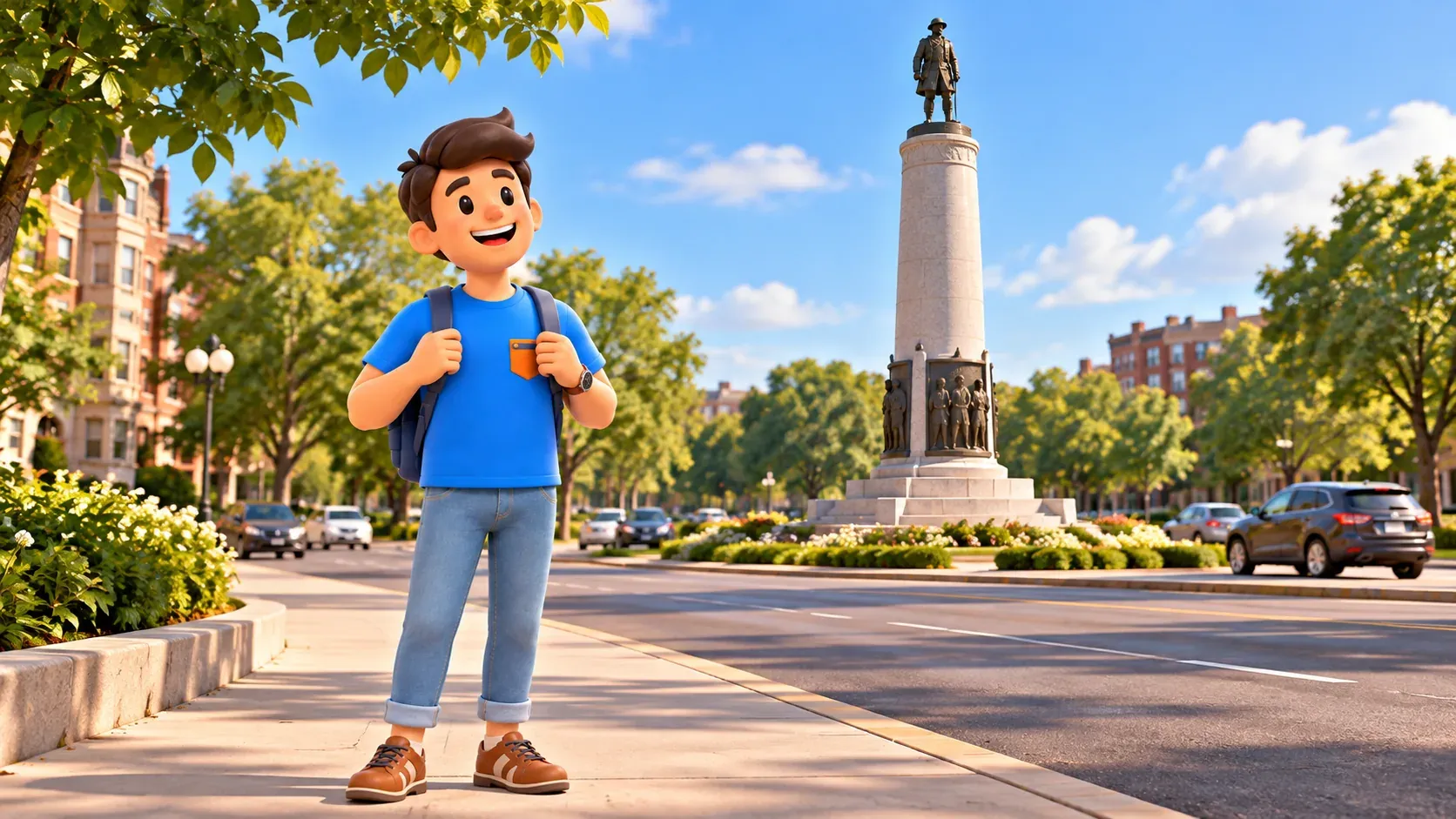
The Victory Monument stands at 35th Street and King Drive. It honours the Eighth Regiment of the Illinois National Guard, an African-American unit whose soldiers served in France during the First World War as part of the 370th Infantry. Begin with that specific subject rather than treating the word “victory” as a generic label.
From a suitable public viewing position, look at the relationship between the stone shaft, bronze reliefs and soldier above. Notice how an object meant for public remembrance communicates at more than one scale: the overall silhouette is visible at a distance, while individual details require closer attention where access permits.
The monument is associated with a broad roadway. Use lawful crossings and actual pedestrian access rather than stepping into traffic for a symmetrical photograph. If reaching a particular viewpoint would require an unsafe movement, stay with a more distant view. The meaning of the stop does not depend on approaching every side.
Give the memorial a few quiet minutes before taking photographs. You can then carry one useful question into the rest of the walk: how do public recognition and the everyday institutions of a community reinforce one another? There is no need to rehearse every campaign or military movement to make this first encounter meaningful.
Look across to the Supreme Life Building
The Supreme Life Building is at 3501 South Dr. Martin Luther King Jr. Drive, close to the monument. It was a longstanding headquarters of an African-American-owned insurance business, with roots in Liberty Life. This gives the second stop a different scale of history: an ordinary commercial service could also be an important institution.
Consider what an insurance office represents. Families and firms need ways to manage risk, make plans and obtain services. In a setting where access was unequal, a business serving the community had significance beyond its facade. You do not need to imagine a particular customer’s story or invent a transaction to understand that role.
Observe the building from the public sidewalk and distinguish its historical identity from whatever use or access exists today. An old photograph or landmark account may show another stage of its appearance. Changes to a commercial building are part of its history, not evidence that the address has no value unless everything looks original.
Do not assume an open office door invites sightseeing. Unless a specific public programme has been confirmed, make this an exterior stop. A short, attentive comparison between monument and commercial building already adds something: public commemoration stands close to a place associated with practical financial organisation.
Continue to the former Chicago Defender headquarters
Use public sidewalks west along 35th Street and then north on Indiana Avenue to 3435 South Indiana Avenue. This building housed the Chicago Defender from 1920 until 1960. The newspaper was founded by Robert S. Abbott in 1905, before it occupied this address. Keeping those dates separate avoids confusing a publication’s beginning with one of its homes.
The Defender combined news with a strong editorial voice and reached readers beyond Chicago. Its coverage and arguments helped shape discussion around the Great Migration, when African Americans moved from the South to northern cities. Treat the newspaper as an influential participant, rather than reducing a complex movement of people to a single cause.
For a brief visit, focus on circulation as an idea. A paper produced at one address could connect distant readers, share opportunities and encourage debate. That makes the building a useful counterpart to the insurer: both operated locally while participating in a much wider network.
The structure was originally built as a synagogue before its newspaper period. A building can therefore carry more than one history, with changes of use and altered details. Look at the facade as it exists today without claiming that every visible element dates from the Defender’s occupancy or that a newspaper exhibition waits inside.
Stay clear of doorways and respect current use. If interpretation or a plaque is accessible from the street, read it without obstructing others. The stop does not require searching for a newsroom, entering a working property or presenting the historical headquarters as the publication’s present visitor centre.
Follow the enterprise story to Overton
Return towards 35th Street, continue west to State Street and then south to the Overton Hygienic Building at 3619–3627 South State Street. Check the address carefully: the correct block is the 3600 block. An incorrect number in a secondary itinerary can send a short walk farther south than intended.
Anthony Overton’s enterprises connected cosmetics, banking and other business activities. This building housed the Overton Hygienic Company and the Douglass National Bank, as well as professional offices. The relevant idea for today is concentration: several forms of economic activity shared one address rather than existing as isolated stories.
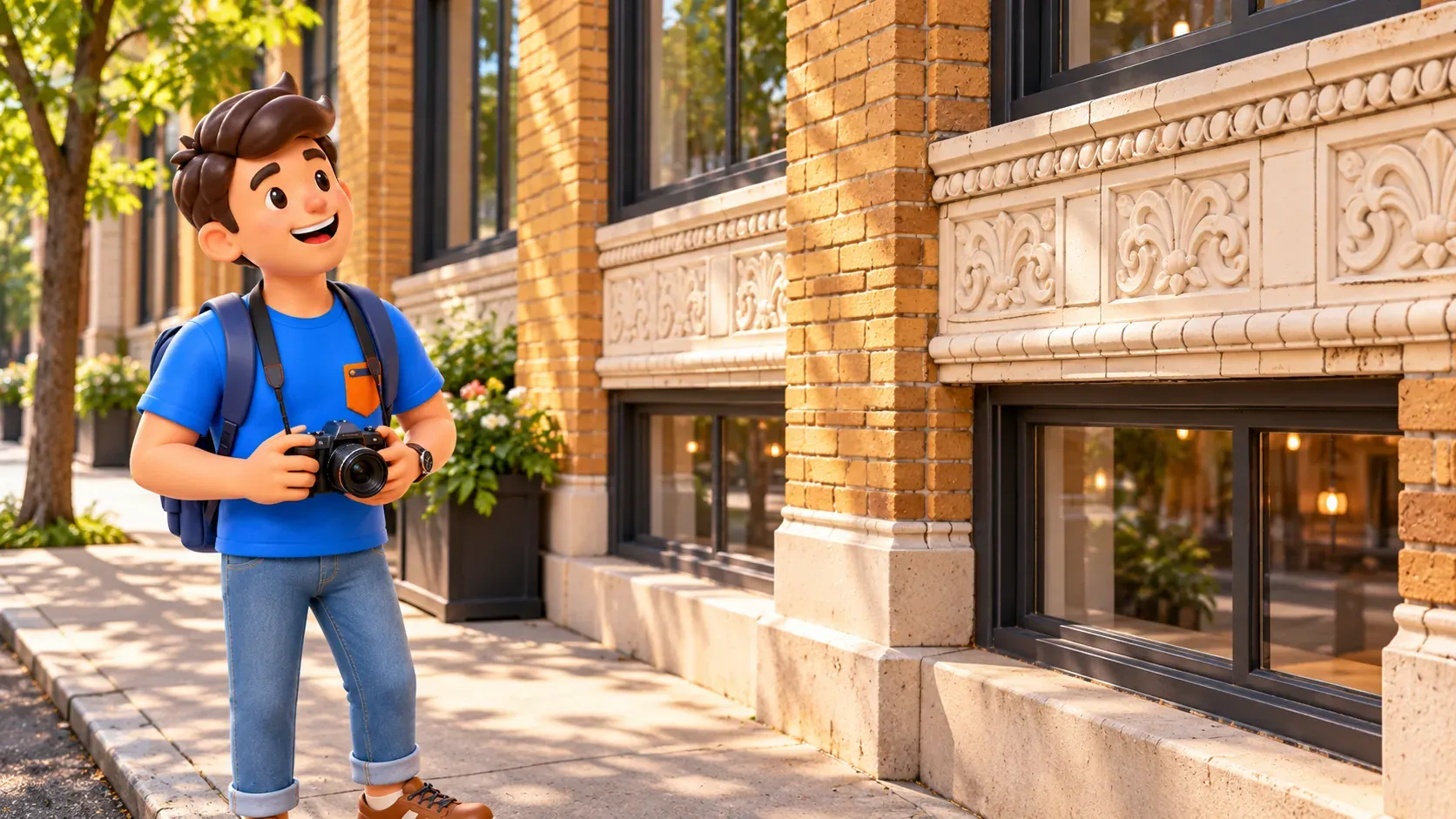
From outside, look at the repeated windows, broad commercial form and contrasting pale trim against the yellow-brown brick. These details help distinguish it from a monument or religious building. Think about how a multi-storey commercial structure could accommodate different functions without pretending you can identify every historical room from the sidewalk.
The building is not open to the general public. Keep this stop outside and do not translate historical descriptions of its bank or offices into a current invitation to enter. A closed interior does not prevent a useful visit when the purpose is to connect a real address with its documented role.
Finish at Wabash Avenue YMCA
Continue south by public streets, turn towards Wabash around 38th Street and reach the historic Wabash Avenue YMCA at 3763 South Wabash Avenue. The building adds education, social resources and community formation to the walk’s earlier themes of public remembrance, press and enterprise.
Completed in 1913, it served as a place where African Americans could find educational and employment-related support during a period of migration to Chicago. You do not need an inventory of every former room to grasp the change in emphasis. This stop concerns the infrastructure of arriving, learning and making connections in a city.
The operator, The Renaissance Collaborative, has described historical tours as paused during construction and restoration. Special events or past open-house weekends do not establish an everyday walk-in schedule. If an interior visit matters, ask the operator about current arrangements before planning around it; the core route ends with an exterior view.
Notice the building’s scale and its place on the corner while keeping present occupants and entrances unobstructed. Restoration is also part of a living building’s story. It is reasonable to leave questions for a future guided visit instead of treating a construction barrier or closed door as something to bypass.
Use the remaining time deliberately
Take the planned break where a suitable place is actually open, or use some of the reserve to revisit one comparison. A substantial meal needs more than a token stop. The itinerary does not depend on a named cafe, a particular dish or an unverified promise of toilets inside a historic building.
In rain or uncomfortable heat, shorten the exterior discussions or split the sequence. This is mostly an outdoor walk and should not be sold as a weatherproof museum afternoon. If steps, standing time or crossings affect your group, review the actual public route and arrange transport as needed rather than inferring accessibility from a short map distance.
RoadMe can organise the wider Chicago trip around the historical interests and walking pace that worked here. Try placing a longer museum visit on another day, with room for travel, meals and rest instead of adding distant stops to these three hours.
For a different neighbourhood approach centred on a chosen museum and church architecture, consider the Ukrainian Village half-day. Finish Bronzeville with five distinct roles in mind: remembrance, financial services, journalism, enterprise and community support, each attached to a specific place.


