
Bridgeport in Half a Day: Palmisano Park and the Chicago Maritime Museum

A Bridgeport half-day can connect two different ways of reading Chicago: a former quarry reshaped into Palmisano Park and a museum devoted to the city’s waterways. Begin with the park’s pond, planting and changing levels, take a genuine neighbourhood transfer and break, then give the Chicago Maritime Museum a substantial visit.
Allow around four hours within the area, with travel from your accommodation added separately. The two attractions are not neighbouring entrances, and the museum is not an outdoor ship waiting at the park. Their connection is thematic: how a working city uses land and water, and how those uses leave traces in the landscape.
Let the museum calendar set the half-day
The museum normally opens Tuesday to Sunday from 10am to 4pm and closes on Monday, with holiday and special exceptions. Its visitor page, checked on 24 October 2026, also announces a closure on Thursday 29 October for festival preparation. Do not plan the full park-and-museum sequence on that date without a confirmed change.
RoadMe helps build a complete personal trip around your dates, interests and preferred pace. Try giving Bridgeport a half-day for landscape and maritime history, then balance the rest of Chicago with the museums, architecture and outdoor experiences that matter to you.
A useful four-hour outline allows sixty minutes in the park, fifty for the street transfer, ninety in the museum, twenty-five for a break and fifteen for flexibility. These are planning allowances, not measured journey times. A guided tour or a full meal may need a different allocation, so protect the museum block before adding extras.
For the park-first version, aim to reach the museum comfortably before the final ninety-minute window ahead of closing. A late start may make museum-first more sensible, with the park afterwards in daylight. If the museum is closed altogether, a park visit remains possible, but it is a different outing from the two-part route described here.
Start at Palmisano Park’s public entrance
The park’s main address is 2700 South Halsted Street, near 27th Street. Check the actual route from your accommodation and use public entrances. The Chicago Park District lists daily park hours from 6am to 11pm; for this outing, daylight is more useful for reading the terrain and fitting the museum calendar.
Begin by noticing that this is not flat ornamental parkland. Changes in level, exposed rock and water make its earlier use legible. The site was known as Stearns Quarry, later received clean construction debris and eventually became a park. That sequence matters more for a short visit than memorising a set of depths or dates.
Keep the scale realistic. The slopes and quarry walls are unusual within a city neighbourhood, but this is not a mountain expedition or a wild canyon. Choose a comfortable public path and let the terrain guide a few observations, without leaving marked routes to hunt for a dramatic angle.
If gradients, path surfaces or standing time affect your group, review the actual available route. A park can contain several surfaces and levels, so a general accessibility label is not a guarantee that every viewpoint fits every visitor. You can choose a shorter section and still understand the transformation.
Use the pond and quarry wall as the first comparison
Look at the relationship between the pond, retained quarry walls and planted edges. Water occupies part of a space shaped by earlier extraction, while new planting changes how it is experienced. Stay with what is visible rather than trying to turn every rock face into a geological explanation without interpretation.
One useful question is how the park makes its previous life visible instead of hiding it completely. An ordinary lawn would communicate something different from a wall, a change of level and a path descending towards water. The design lets several layers of use sit together in one small landscape.
Remain on the permitted paths and keep away from unsafe edges. The pond is not a swimming or boating invitation, and the existence of fishing does not establish permission for every activity on the water. This walk requires no equipment and makes no promise of a catch or a particular wildlife sighting.
Use the camera after you have found a stable stopping place. Avoid blocking a narrow walkway or backing towards an edge while framing a picture. If other visitors are using the route, a wider view from a less crowded point can show the relationship between rock, water and planting just as well.
Look at the wetlands and choose the hill deliberately
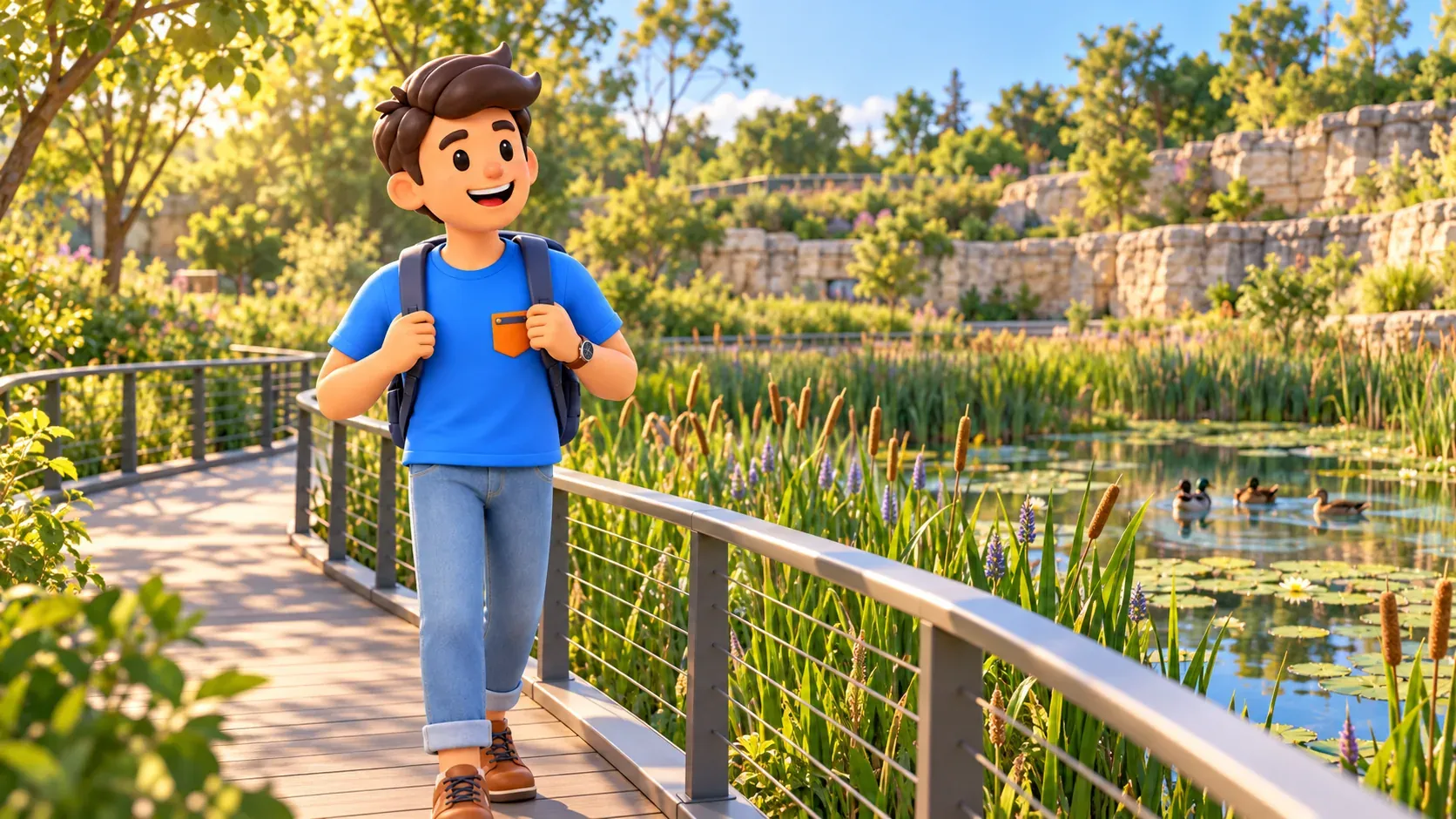
The planted wetland areas introduce a different part of the park’s design. Notice transitions between open water, reeds and higher ground, as well as the way walkways frame them. You do not need to identify every plant or bird to see that this is a deliberately organised habitat rather than an untouched fragment of wilderness.
If the conditions and your group’s energy suit, use the designated route towards the mound for a broader view. Treat it as an option, not a mandatory summit. Weather and visibility affect the city view, and a photograph from another season does not guarantee the same skyline or foliage today.
Skip the climb if the ground is slippery, the wind uncomfortable or the extra effort would make the museum rushed. The lower landscape already contains the outing’s central contrast. A flexible park hour is more useful than completing every path and sacrificing the part of the day that required a specific opening window.
Before leaving, take a moment to connect the sections: an earlier working site has become a place for recreation, planting and water. Keep that simple observation for the museum, where waterways will appear as routes for trade, work and leisure rather than only a scenic background.
Give the neighbourhood transfer real time
For a straightforward public-street connection, leave towards the 29th Street and Halsted area, continue south along Halsted towards 35th Street, then head west towards Racine and the museum’s building. Check your actual walking route and crossings. Allow roughly fifty minutes for movement and orientation; this is an estimate rather than a measured guided route.
This section is a neighbourhood walk, not a continuous waterfront promenade. Do not assume there is a public shortcut beside the river, through an industrial yard or across private property. The useful connection follows real streets and permitted pedestrian access, even when a straight line on the map looks shorter.
Keep the planned break separate from walking time. Choose somewhere suitable that is actually open, or rest when you find an appropriate public place. A full lunch needs more than a token stop. The itinerary does not rely on a named restaurant or on unverified facilities inside the park.
If the transfer is too long for your group, plan a suitable transport connection instead of pretending the attractions are adjacent. Recalculate from the actual pickup and drop-off points, including waiting. Your aim is one satisfying park visit and one museum visit, not a test of how many neighbourhood blocks you can cover.

Find the Maritime Museum’s actual entrance
The Chicago Maritime Museum is at 1200 West 35th Street, on the River Level of the Bridgeport Art Center. The standard visitor directions approach the north side from Racine Avenue, look for the blue awning and follow signs down a flight of stairs. The street address alone does not explain the last part of arrival.
For ramp and elevator access, the museum identifies an alternative through the east-side atrium. Check the current accessibility directions in advance and contact staff if assistance is needed. Do not send everyone down the standard stairs and then describe the entire arrival as equally suitable for all.
The museum has admission categories and concessions, while guided tours have separate arrangements. Check the current fee and what any booked programme includes. A tour described as free on a particular day does not necessarily remove the requirement for museum admission or guarantee a place without reservation.
This is the maritime museum in Bridgeport, distinct from the bridgehouse museum on the downtown Riverwalk. Verify the full address when arranging transport. A generic search for a Chicago river museum can lead to another institution with a different location, layout and subject emphasis.
Choose a few objects rather than rushing every display
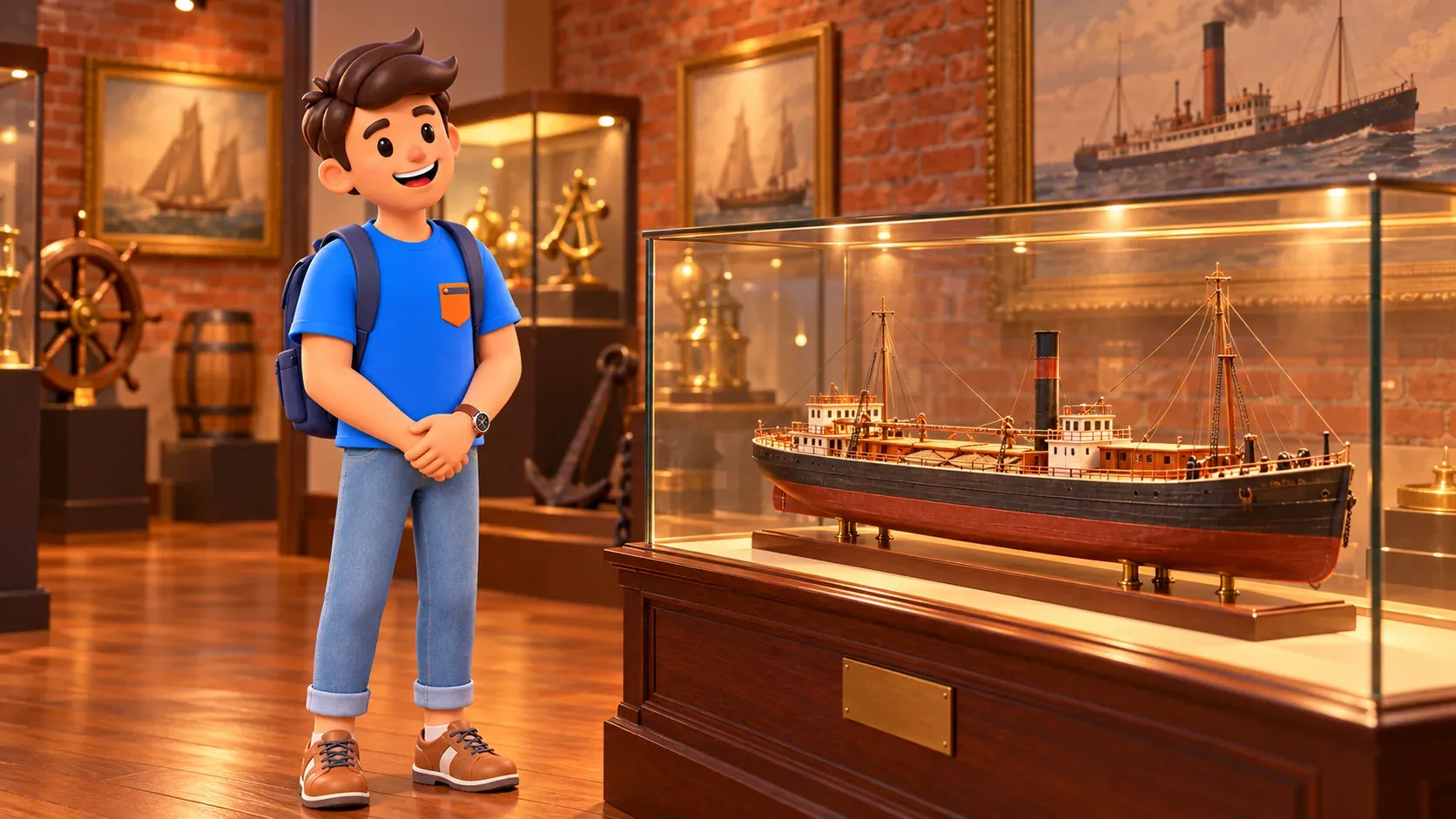
The museum uses objects, images, art and models to explore local maritime history. Let the displays actually open on your date shape the visit. A temporary exhibition from an older article may have ended, and a description of the whole collection should not become a promise that every named item is on view.
Start with a question about movement: what travelled on the waterways, who made those journeys possible and what connected Chicago with a wider region? A model, a working object or an interpreted image can each answer a different part. Read the accompanying information before deciding what the object represents.
Give a small group of exhibits sustained attention. Look first, read, then return to a detail that now seems important. This method makes ninety minutes useful without demanding specialist knowledge of vessels. It also gives companions a shared way to compare observations rather than competing to remember the most dates.
Keep scale models distinct from actual vessels and historical interpretation distinct from an activity ticket. A maritime gallery does not imply boarding a full-size ship, joining a cruise or accessing every nearby stretch of waterfront. This visit is complete through its exhibitions, without an invented waterside programme.
Connect land use with waterways without forcing the story
The park and museum do not need to share a single historical event to form a worthwhile outing. Their connection lies in how urban landscapes support work, movement and later reuse. The quarry makes a changed piece of land visible; the museum asks you to look at waterways as part of the city’s development.
A short final comparison is enough: what did you understand by looking at the physical landscape, and what required an object or explanation indoors? The two kinds of evidence complement one another. Avoid claiming that a park pond is itself the museum’s maritime route or that every nearby industrial building tells exactly the same story.
In poor weather, protect the museum and shorten the park. On a comfortable day, use some reserve outside while keeping the closing time intact. If a confirmed guided visit becomes the priority, adjust the rest openly rather than compressing all other parts into implausibly small intervals.
Finish from the museum, not the park entrance
Plan onward travel from the actual museum exit and your chosen public route. You do not have to return to 27th Street simply because that is where the outing began. Check current transit, pickup access and how the remaining day fits your energy after an outdoor walk and a focused indoor visit.
RoadMe can organise the rest of your Chicago trip around the pace and interests that worked in Bridgeport. Try giving another neighbourhood its own day, with realistic room for travel, meals and rest instead of attaching distant museums to this half-day.
For another pairing of a main indoor visit and flexible green space, save the Garfield Park conservatory and Gold Dome half-day. Bridgeport keeps its own emphasis: a transformed quarry landscape, a real transfer and time to understand Chicago through its waterways.


