
Garfield Park in Half a Day: Conservatory, Park and Gold Dome
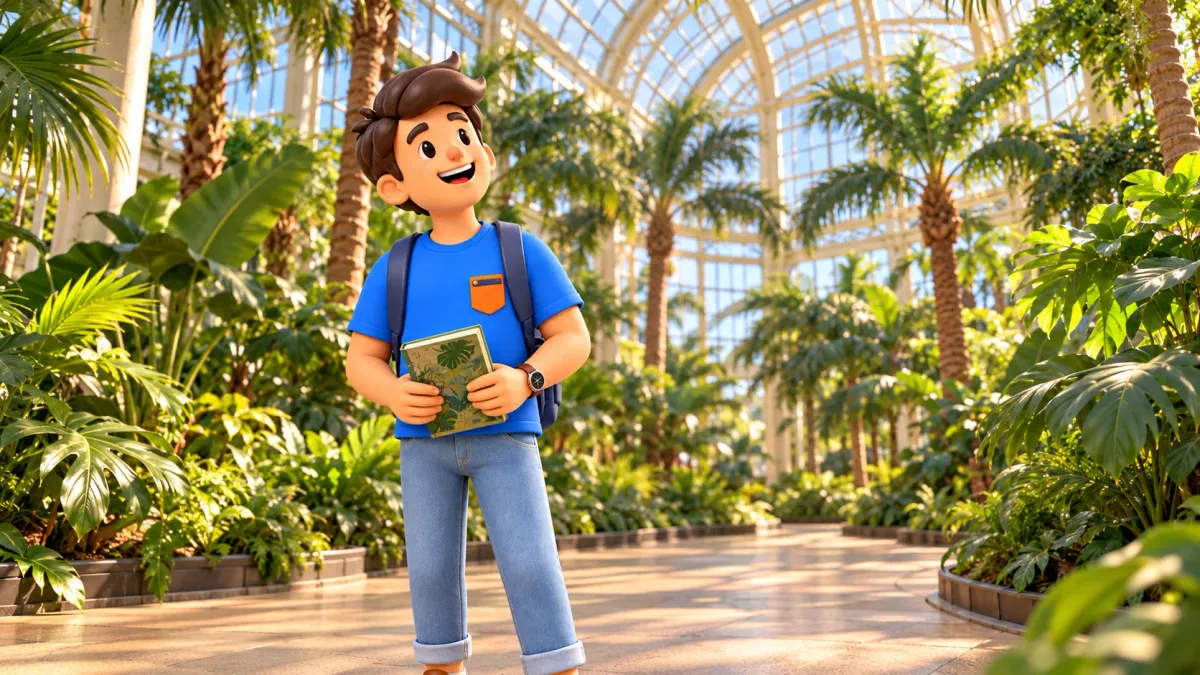
A half-day in Garfield Park works best with the conservatory as the main visit and the surrounding park as a flexible extension. Give the glasshouses time, then walk towards the Gold Dome Field House if weather and energy suit. The contrast is useful: living plant collections under glass, open park space and an elaborate building used for community activities.
Allow roughly three and a half hours within the area, apart from travel across Chicago. The core does not require an interior tour of the field house or every conservatory room. A shorter conservatory-only visit is a valid alternative in poor weather, while families adding a separately reserved children’s garden should adjust the plan rather than simply extending the checklist.
Book the main visit before planning the park
Garfield Park Conservatory uses ticketed entry. Advance reservations are strongly recommended, and walk-ins depend on capacity rather than a promise of admission. Reserve for the actual members of your party, including those eligible for free entry. The public park and the conservatory’s ticketed garden campus are different spaces with different access arrangements.
RoadMe helps build a complete personal trip around your dates, interests and preferred pace. Try making the conservatory this half-day’s focus, then balance your other Chicago days with architecture, museums and outdoor time that fit your own trip.
A useful three-and-a-half-hour outline allows one hundred minutes for the conservatory, thirty for park observation, twenty for the field house exterior, twenty-five for movement and thirty-five for a break or flexible margin. These are planning estimates, not measured times. A substantial meal or additional booked activity requires a corresponding adjustment.
The conservatory normally closes Monday and Tuesday, opens Wednesday from 10am to 8pm and Thursday to Sunday from 10am to 5pm. Check the actual date and reservation information, including holiday changes. Choose a slot that leaves daylight for the park if you want the full sequence; an evening glasshouse visit is a different plan.
Understand admission without assuming residency
The current policy distinguishes verified residents of the City of Chicago from visitors living outside its boundaries. Chicago residents can receive admission without charge under the stated verification rules; other visitors generally pay the applicable admission fee unless a recognised concession applies. Check your category and the current conditions when booking.
Residency is not the same as nationality, a hotel address or simply being in Chicago during a holiday. Do not select a resident category without meeting its requirements. Likewise, a discount described for a particular membership or programme should not be extended to everyone who happens to share a broad characteristic.
Have the reservation confirmation ready for arrival and follow its actual entry window. Allow a little time for check-in, particularly when the venue is busy. The point of booking is to protect the main experience, not to fill the morning with another stop that makes you late for the slot you selected.
If the EMG Children’s Garden is important to your group, check its separate reservation requirement as well as general admission. It is not automatically an unplanned addition included at any moment. Decide whether it replaces another part of the visit or needs more time, and include every child in the appropriate arrangements.
Arrive at the conservatory, not the field house
The conservatory entrance is at 300 North Central Park Avenue, near Lake Street. The CTA Green Line’s Conservatory stop serves the area; check current service and your actual route. The Gold Dome Field House has a different address, 100 North Central Park Avenue, and is the later architectural stop rather than the glasshouse entrance.
If arriving by car, use the current visitor parking arrangements south of the conservatory entrance. Keep the route from your vehicle or station to check-in in the schedule. A nearby address on a map does not account for crossings, station stairs or the time needed to orient a group.
Bring layers appropriate to both the greenhouse environment and the outdoor weather. Conditions vary between plant rooms, and some paths may be wet. Comfortable footwear and a manageable bag are more useful than assuming that an indoor visit eliminates all practical considerations.
For particular access needs, consult the conservatory’s current accessibility information in advance. The Fern Room is the stated exception to wheelchair access. Do not describe a route through every room as universally step-free, and do not let the absence of one room make the rest of the collections seem unavailable.
Begin by looking up in the Palm House
In the Palm House, take a moment to notice the scale of the planting beneath the high glass structure. Looking up at a canopy and then back towards individual leaves gives the visit a clear opening. You do not need to identify every species before the room can be interesting.
Choose one comparison: broad and narrow leaves, different trunk forms or the way light changes through overlapping foliage. Read the labels for the plants that actually draw your attention. A living collection changes, so a named specimen or flowering moment from a past photograph should not become a guaranteed feature of today’s visit.
Keep to the visitor paths and leave the planting undisturbed. A leaf extending close to the route is not an invitation to collect or handle it. For photographs, give other people room to pass and follow the venue’s current rules; organised or professional shoots can have different requirements from personal snapshots.
Use the Fern Room as a landscape, not a time machine
If the room is accessible to your group, look at the relationship between ferns, rocks and indoor water. The composition evokes an ancient landscape, but it is a designed living display, not a surviving prehistoric site beneath the city. That distinction lets the setting remain imaginative without turning interpretation into a false geological claim.
Slow down enough to see changes in leaf texture and height. The water and planting can organise the view, while the glasshouse structure remains part of the setting. You do not need to follow every side path or approach the water’s edge to understand the room’s atmosphere.
If stairs or another access condition prevent this section, choose a longer look in an accessible room instead. Avoid treating a companion’s different route as a lesser visit. The half-day is built around careful observation and contrast, not an obligation to complete every named space.

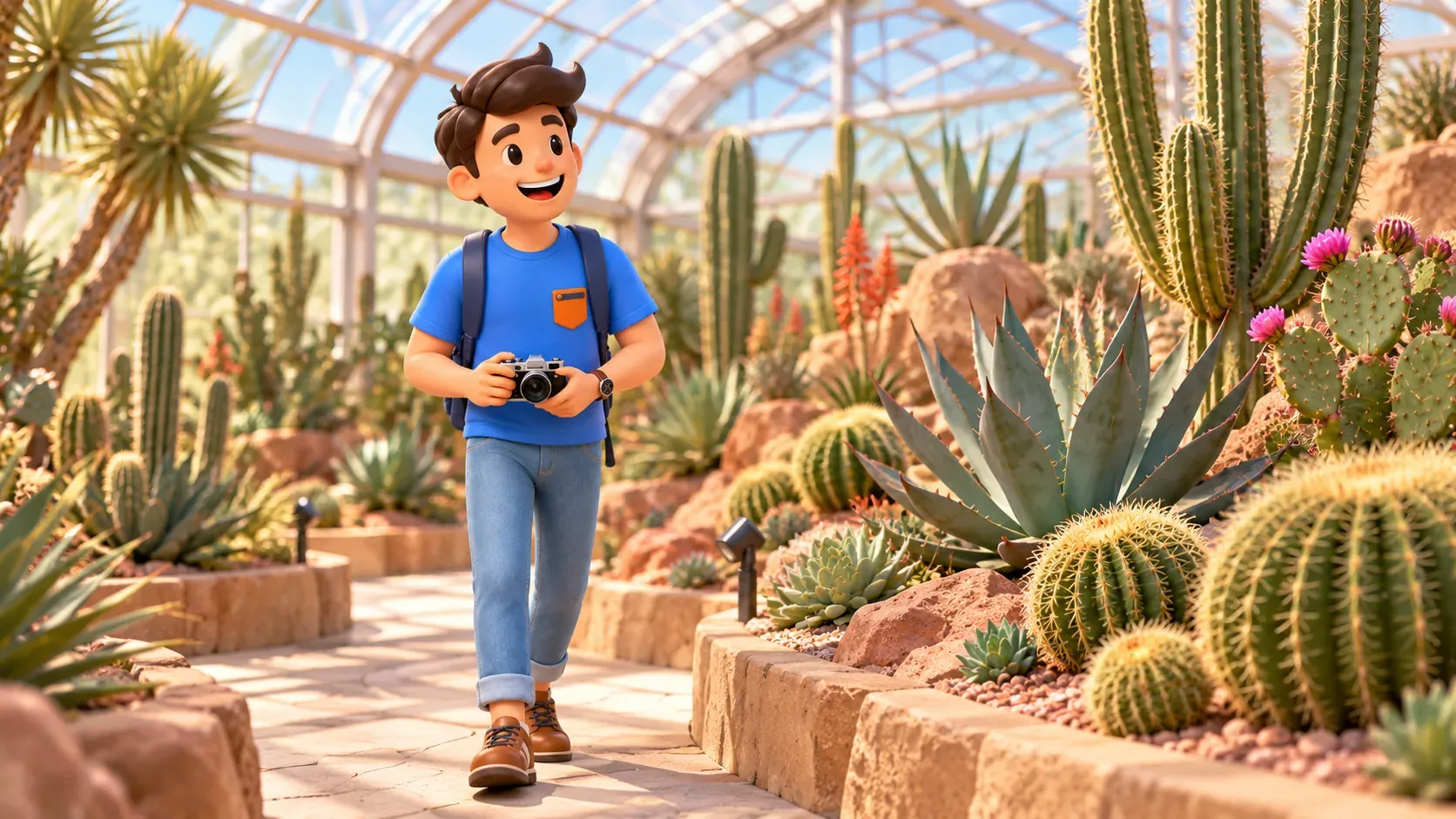
Change the visual question in the Desert House
The Desert House offers a different comparison through cacti and other succulents. Look for forms associated with storing water: thick leaves, stems and compact shapes. Let actual plant labels guide the detail rather than assuming every spiny plant belongs to the same species or comes from the same place.
This collection brings plants from different regions together. It should not be described as one exact natural desert where all of them would grow side by side. That makes the room useful for comparison: similar adaptations can appear in plants whose origins differ.
Keep your hands and bag clear of the plants and remain on the path. A good photograph does not require leaning into a bed or moving a label. Notice the shift from the leafy rooms to more open planting and different silhouettes; this is a change in how you look, not a competition to choose the most exotic specimen.
Use the remaining conservatory time for another room or an outdoor garden according to actual access and interest. Seasonal planting is variable, so do not expect every flower show or outdoor display to be present year-round. More time in one rewarding space can be better than a rushed sweep of all the gardens.
Leave the garden campus and continue through the park
After the main visit, leave by the actual public exit and use permitted crossings to continue towards the park south of the conservatory. Lake Street and the transport infrastructure are part of the transition, so follow real pedestrian routes rather than drawing a straight line through a planted area or across traffic.
Keep the park section modest. Follow open paths towards the Gold Dome area and choose a comfortable place to pause. Open lawns, trees and views around the park’s water offer a different scale after the glasshouses. You do not need to circle every lagoon or add all recreational facilities to understand that contrast.
Stay on appropriate paths and respect areas being used for sport or community programmes. Public green space is shared with local users. A short visitor walk does not give priority over a class, game or event, and the presence of a facility does not mean every activity is freely available on arrival.
In rain, uncomfortable heat or cold, shorten this section or finish after the conservatory. The park extension is flexible; it is not a reason to undermine the main visit. If weather improves, some of the margin can become outdoor time without committing you to a long circuit.
Look at the Gold Dome Field House as a working building
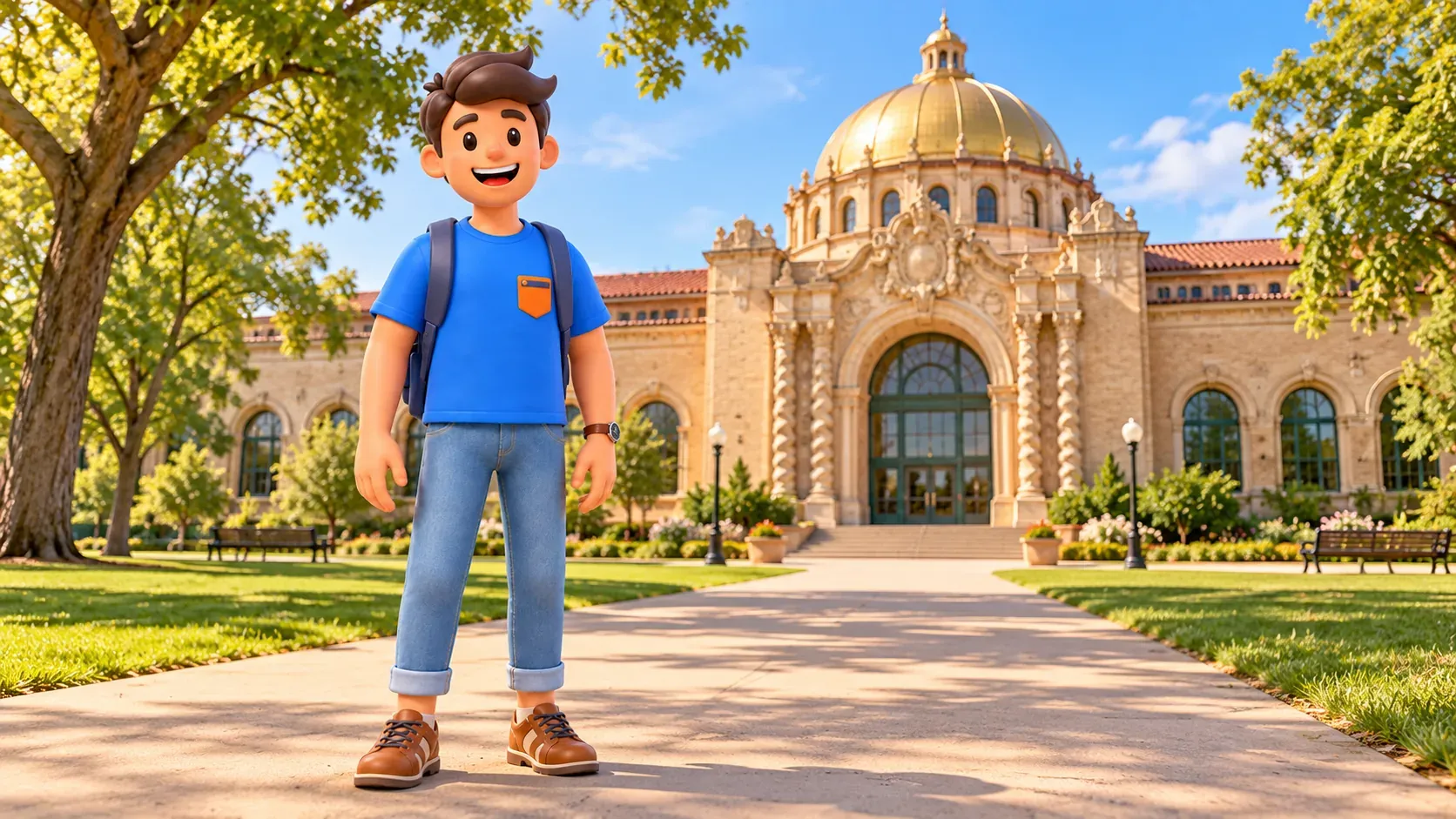
The Gold Dome Field House is at 100 North Central Park Avenue. Built in 1928, it uses Spanish Baroque Revival design, with a distinctive gold-leaf dome above an elaborate facade. From outside, compare the strong central feature with the lower building and its decorative entrance details.
It was originally headquarters for the West Park Commission and later became a field house within the Chicago Park District. Today’s community role matters alongside the architecture. A field house is a place for programmes and activities, not automatically a museum with every attractive room open for sightseeing.
Make the exterior your dependable stop. If you hope to see the rotunda, ask about current public access and follow staff directions. Published facility hours do not guarantee unrestricted entry to all interiors, especially during classes, private events or other scheduled use.
Look from public paths without obstructing entrances. If the building is busy, a quieter exterior comparison still completes the architectural sequence. You have moved from a glass structure shaped around plant environments to a decorated civic building serving people’s everyday activities.
Finish with the version of the outing that suited you
Use the break allowance for a real rest or a suitable food option that is actually open. Keep eating within the conservatory’s designated areas if you have not yet left its campus. A substantial meal needs its own time, and this route does not depend on a particular restaurant or assumed cafe inside the field house.
RoadMe can organise the wider Chicago trip around the balance of nature and architecture that worked here. Try choosing a longer garden visit or a more compact outdoor section, while preserving realistic room for travel, meals and rest across your whole stay.
Plan onward travel from the actual final stop, checking the route back to your chosen station or pickup point. For a separate excursion connecting a planned neighbourhood with industrial architecture, save the Pullman half-day. Garfield Park’s focus remains one substantial living collection and a flexible architectural continuation.


