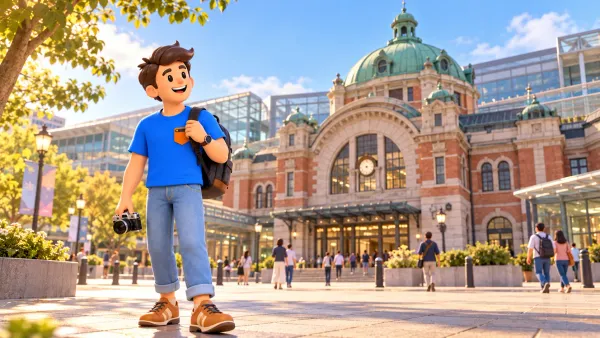
Bosphorus Yalıs: What Istanbul’s Waterfront Houses Reveal
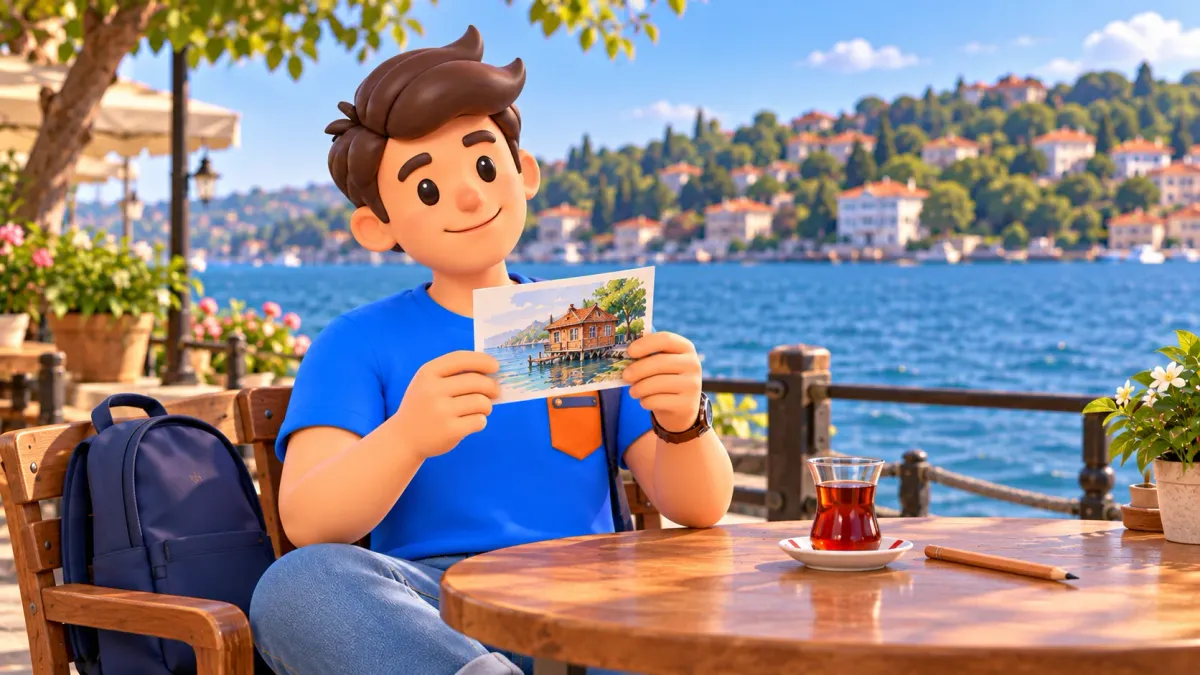
Bosphorus yalıs are more interesting than a list of expensive homes. They suggest another way of living in Istanbul: looking towards the strait from rooms and relating a house to boats, gardens and slopes. Notice those relationships and a walk or water journey becomes richer than guessing owners. You need not collect every name or find the most luxurious mansion. Understand how water belonged to the organisation of a home, rather than merely providing an attractive picture outside an otherwise ordinary city window. The shore becomes an inhabited landscape instead of a display of prices.
For a first encounter, choose one Bosphorus episode and a few architectural questions. Do not make a short walk from all the examples here: Ortaköy and Yeniköy are substantially separated. A view from water, a permitted street view and admission inside are different formats. Many houses are not public museums. This article reads architecture and waterfront life without promising courtyard entry, landing at a private quay or equally good views from every ferry. The actual way to see your chosen façade needs a separate decision suited to your day, time and preferred kind of outing.
What yalı means and why the shore matters
The word yalı is connected with the Greek word for shore. In the Bosphorus setting, it describes a particular waterfront house type, rather than any large villa with a water view. Its relationship with the shoreline and associated way of life matter. A residential architecture developed on both sides of the strait; it cannot be reduced to one royal residence. Palace on the water may convey an impression, without accurately defining every example. Private home, imperial palace and modern event venue can stand beside the same water while differing in history and access.
RoadMe makes it much easier to develop a personal plan for your whole trip around your interests, available days and preferred pace. Let the app connect a suitable Bosphorus outing, architectural discoveries and rest in a coherent programme, making your own Istanbul more interesting and useful.
Notice where windows face, how the building meets the water and what rises behind it. These questions change attention even without interior access. The water-facing façade need not be the one visible from a road. Historically, water offered arrival and communication between shoreside places, giving that front its own role. Do not assume every present quay is a visitor entrance. Architecture can retain a trace of earlier life while today’s use of the property depends on its owner and purpose. A visible landing is a feature to understand, rather than permission to arrive there.
Timber, light and projecting rooms
Timber architecture is closely associated with the yalı tradition. Upper projections, windows and light details suggest rooms oriented towards water and daylight. Yet the claim that every yalı is an identical two-storey wooden house is too crude. Scale, materials, clients’ tastes and subsequent changes differ. Some familiar shoreline buildings produce another image entirely. Observe the actual façade rather than fitting it to an expected postcard. Where do windows repeat, how does the roof silhouette change, and is the house horizontally extended or vertically composed? These observations do not require knowing the complete interior plan.
An attractive window does not allow a confident reconstruction of every room. Do not expect the particular drawing room or bedroom view described in an account of another house. Historic descriptions of shoreside life explain the type without replacing information about each mansion. Even balcony needs care: a projecting enclosed room and an open platform are different. Compare lines, shadows and proportions without turning a distant façade into an invented interior tour. An exterior encounter has value and honest limits. You can understand a relationship with light without claiming to have stood inside the room.
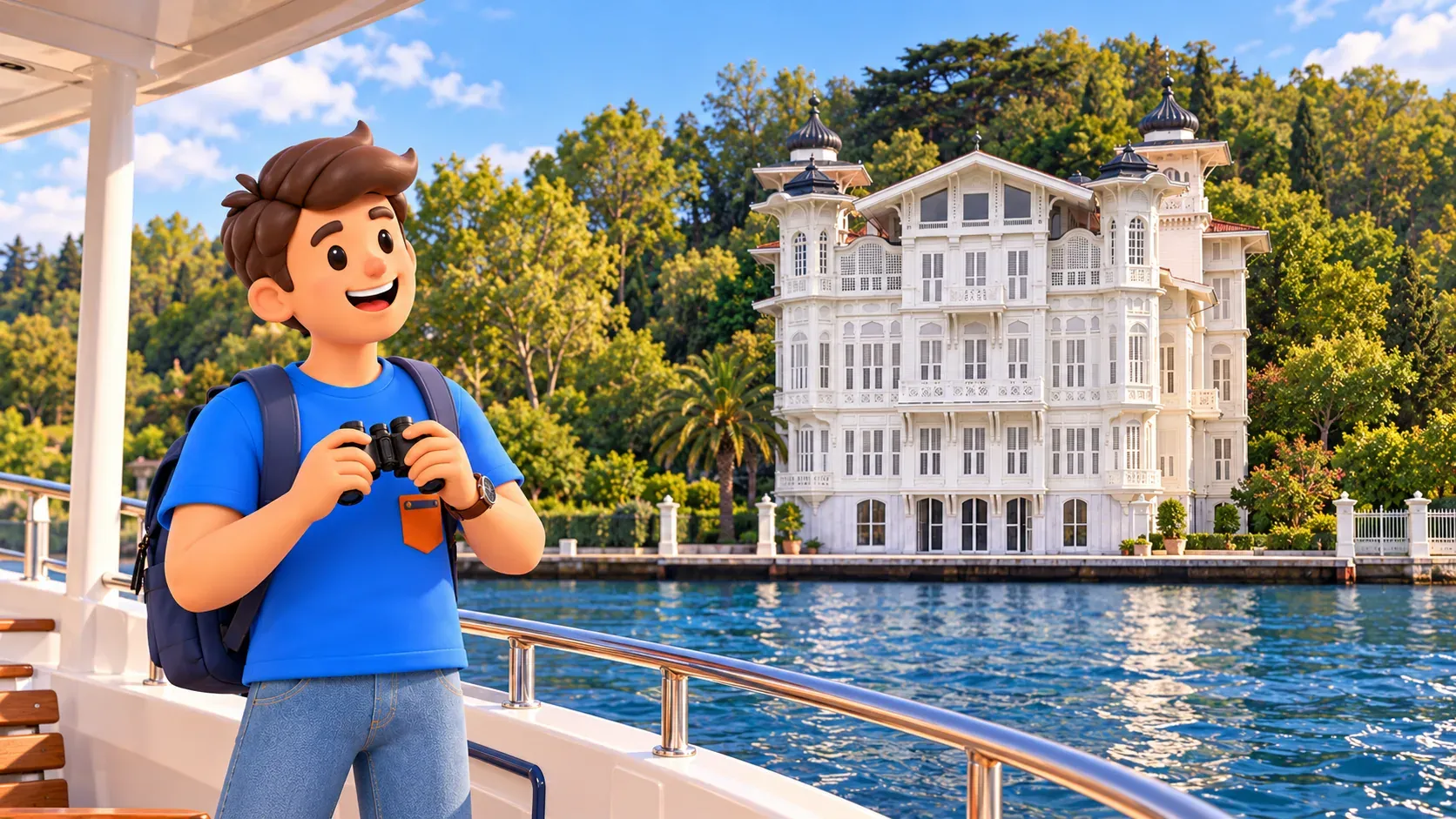
Ahmet Afif Pasha: a façade worth observing
The Ahmet Afif Pasha Yalı on the European shore shows how expressive a residential silhouette can be. White surfaces, many windows, projecting volumes and elaborate upper features create a memorable image. Look beyond overall scale to relationships between parts: a central gable, narrower side elements, decorative details and the water’s edge. Every ornament does not need a special legend. An attentive look already distinguishes this house from a calm elongated façade with a more even rhythm and another roof design. The contrast can be appreciated without a catalogue of rooms or a biography of every owner.
This example does not require current property prices, ownership gossip or television filming stories. Those can displace architecture, and a recognisable name does not grant interior access. Ask instead why the building looks light despite its height. Consider pale details, numerous openings and the division of volume. Trees behind it contribute to the impression without establishing a publicly accessible garden. The illustration artistically reinterprets an exterior; it does not guarantee an exact free viewpoint, disembarkation at the house or a guide waiting there. Seeing a façade from a boat remains its own form of encounter.
Sait Halim Pasha: a biography beyond one family
The Sait Halim Pasha Yalı in Yeniköy presents another rhythm: a broad pale façade, ordered windows and a comparatively calm horizontal line. Its history includes changing ownership, reconstruction, fire and restoration. That already explains why survives does not necessarily mean unchanged in every detail. A historic building has a material biography, and its present appearance may result from substantial efforts to recover a form. Fresh paint alone is no test of authenticity. Distinguish the older idea of the house from the successive episodes of its later life, rather than assuming one unbroken moment preserved forever.
The owner now describes weddings, meetings and other events. That is not the same as a permanently open museum available during any walk. An older account of a restaurant or museum rooms does not confirm today’s format either. If an interior visit matters, establish the actual conditions for this particular building. For our subject, recognise the change from family residence to hospitality and events. The waterfront architecture continues participating in urban life, though its use differs from the initial home and may not be available to a casual passer-by. A familiar exterior can have a less familiar present purpose.

Do not imagine the Bosphorus mansions as a single museum row. Each has its own circumstances: private life, work, events, conservation or changed purpose. Architectural similarity creates no shared opening hours, ticket or entrance rules. Recognition and admission should remain separate. A permitted observation point can offer a meaningful experience without going inside. Special access, where offered at all, is another decision. This approach preserves interest without organising the day around an unsupported hope of opening closed gates. You can appreciate a house while allowing its current life and boundaries to remain part of the scene.
Esma Sultan: when the old shell remains visible
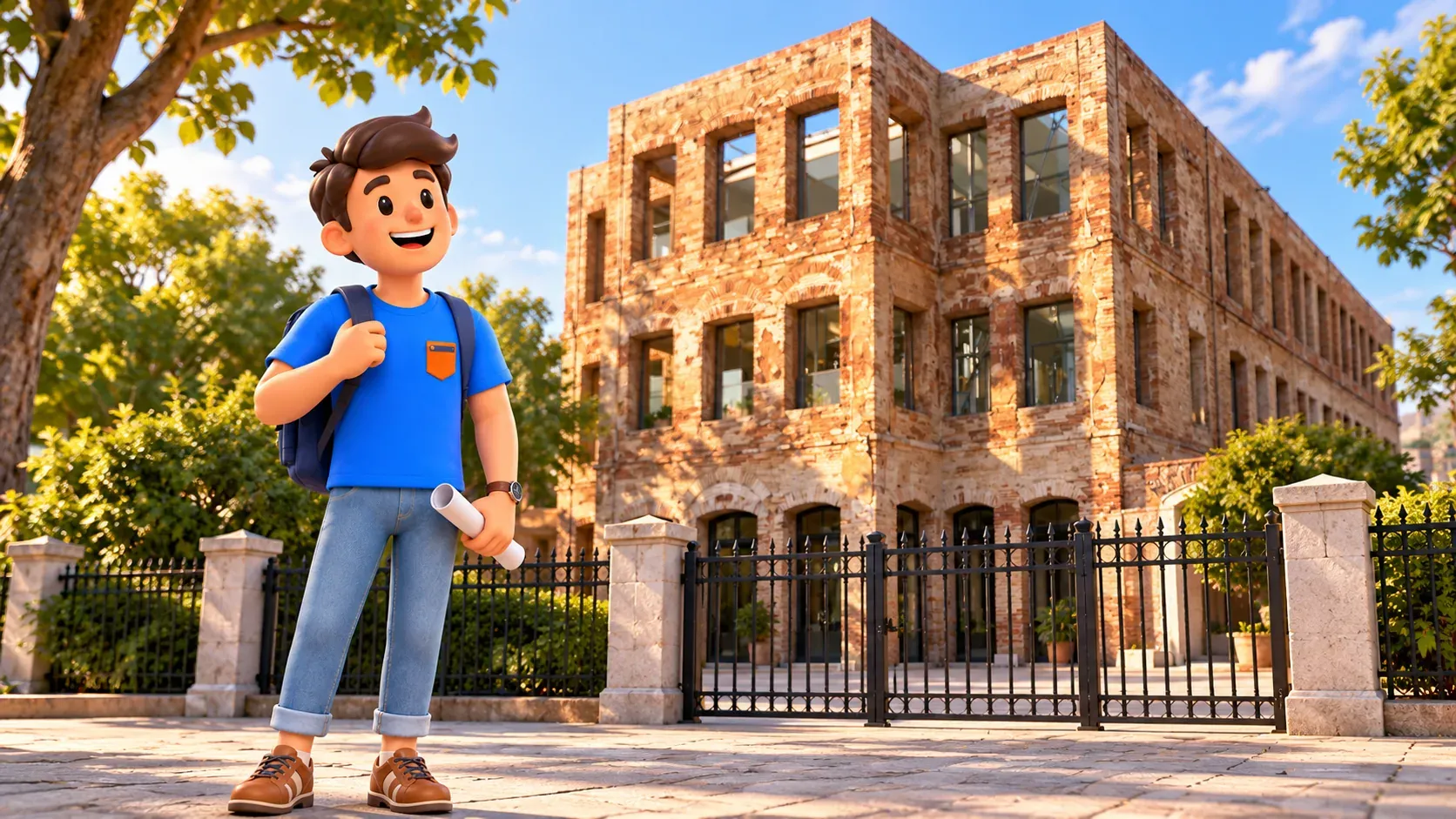
Esma Sultan in Ortaköy challenges the assumption that a yalı must resemble a white timber home. Its masonry shell and rows of tall windows became the basis of another architectural story. After the 1975 fire, the earlier interior and roof no longer formed a complete original space. Reuse introduced an independent glass-and-steel structure inside the surviving walls. Read the exterior as a meeting of old and new, rather than simply an abandoned ruin or a mansion whose original rooms and furnishings must all survive. Those are different explanations of the same striking visible shell.
The contrast need not be hidden to make the monument interesting. Old walls and contemporary insertion address different tasks: retaining a material trace and enabling another use. It is now an event venue, so historic value does not imply free entry to courtyard and rooms. The separate Ortaköy walk treats the exterior architectural episode. Do not turn that into a promise of attending an event or crossing the grounds to the water. Seeing the shell, understanding its history and obtaining permission inside are three different things. An exterior impression can be complete on its own terms.
Why water changes the impression of a house
From water, the sequence of façades and relationship with the hill can be clearer. From the street, neighbourhood scale, boundaries and everyday building patterns become more apparent. Neither is universally the best method. Choose what fits your time and interest. If travelling by boat, check its actual route, direction, stops and return. Not every ferry passes equally near each mansion, and seeing a building does not mean stopping beside it. Weather, distance and position aboard also affect visible detail. Avoid promising an exact reproduction of a photograph or making the whole outing depend on one unobstructed view.
On land, do not expect a continuous public path immediately in front of every house. A private quay, garden or enclosed property does not become a through-route because it borders water. Use established public spaces and permitted approaches. For park and art together, consider Emirgan and the Sabancı Museum separately, keeping the distinction between walk, museum and waterfront houses. That is another day format, not a free addition to every Bosphorus journey. You need not cover the entire shore to make an architectural episode rewarding. The programme should fit its actual setting and access.
Take away more than an attractive façade
Afterwards, recall three differences rather than the most expensive home’s owner: relationship with water, window form and silhouette. You then need no complete name catalogue. One house extends along the bank; another divides into projections and upper features; a third exposes older walls with a contemporary insertion. These observations reveal the Bosphorus as a lived and changing landscape rather than a wealth display. Family and event histories can deepen the subject later when one building particularly interests you. Architecture already provides enough questions to begin, without making a private interior the only worthwhile encounter.
A good outing leaves ordinary rest too. Comparing façades does not demand a day holding a camera or constantly chasing the next house from a moving vessel. Choose a small episode and reflect during a pause. Meals, transport and special visits have their own arrangements and costs; an exterior view does not make them included services. If one house is hidden by an angle or unavailable, the subject still emerges through clear relationships between home and water. Do not pursue every photograph at the expense of a comfortable return and the rest of the day.
Matching outings like these with the rest of your trip is easier and more effective in RoadMe, which develops a personal itinerary around your interests, time and comfortable pace. Download Istanbul while online beforehand to use maps and navigation offline afterwards.
Yalıs explain the Bosphorus at the scale of a house: windows, shore, arrivals, changing materials and new uses. A few examples stop white façade, elongated mansion and masonry shell from becoming interchangeable waterside scenery. Each acquires a relationship with water and a history of change. On another visit, the shoreline becomes more interesting even without admission. You notice not only individual beauty, but how the buildings together form a particular urban landscape. No single list of prices, family names or compulsory stops can fully explain that relationship between a home and the strait.