
Around Borough Market: a Two-Hour Walk Through Old Southwark

Borough Market is a good starting point for a short walk through old Southwark, but food does not have to be the whole outing. Within a compact area, you can move from the market to Southwark Cathedral, the Golden Hinde and the remains of Winchester Palace. Each place changes the mood: trading, worship, seafaring and a surviving fragment of medieval power.
Allow around two hours for browsing, one modest food stop and an outdoor look at the historic places. The distances are short; most of the time is for noticing things. A long market queue, a sit-down meal, a full cathedral tour or boarding the ship needs a separate allowance. This is a small neighbourhood walk, rather than a promise to complete several attractions before lunch.
Choose a trading day and keep the route compact
Begin at an available public entrance to Borough Market near London Bridge station. After browsing, make your way towards Cathedral Street and Southwark Cathedral. Continue north along Cathedral Street to the Golden Hinde at St Mary Overie Dock, then follow Clink Street west to the remains of Winchester Palace. The palace ruins provide a natural finish; you can arrange onward travel from there without crossing the Thames.
With RoadMe, it is much more convenient to turn these ideas into a personal London itinerary based on your dates, interests, pace and budget. The app plans the whole day or trip, helping you balance food, history and longer visits instead of fitting everything into the same two hours.
Allow roughly seven hundred metres to a kilometre, including movement through the market. That is an editorial estimate, not a recorded walking track. You might give the market forty-five minutes, the cathedral area twenty, and the ship and palace about fifteen each, leaving the rest for short connections and pauses. A little flexibility matters more than meeting each allocation exactly.
The market normally trades from Tuesday to Sunday and closes on Mondays. Bank holidays and the festive period can bring exceptions, so check your actual date rather than treating the weekly pattern as universal. Come during trading hours if the market is central to the outing. An early walk past closed stalls can still reveal the buildings, but it will not offer the food experience described here.
Pick one thing to eat before choosing another queue
First, take a short look around without ordering immediately. Borough Market brings together produce sellers, specialist food traders and prepared food. Decide whether you want a small meal now, a snack or something to take away for later. Those are different purchases, and keeping them separate makes the visit easier to enjoy without carrying more food than you actually want.
Choose one main food stop and let it set the pace. If you join a long queue, use some of your market allowance rather than assuming waiting takes no time. A popular stall is not automatically the best choice for your appetite or schedule. Look at the current menu, portion and price, then decide whether the experience interests you enough to wait.
For a group, agree where to meet before people browse in different directions. Someone may prefer bread or cheese to hot food, while another person only wants a drink. You do not all need the same purchase to share the outing. Take care not to turn the meeting point into an obstruction at a stall entrance, especially when carrying food and looking at a phone.
Not every trader is present every day, so avoid building the whole walk around an unverified recommendation. The range on the day is part of the experience. If a particular ingredient or preparation matters to you, ask the trader before ordering. Browsing is also worthwhile without buying: the difference between a produce stall and a prepared-food counter is part of what makes the market interesting.
Look above the food and notice a working market
Once you have made your food choice, look up from the counters. The covered spaces, ironwork and railway structures give Borough a character different from an ordinary restaurant street. You are not walking through a preserved stage set from a single century. Trading has continued through changes in buildings, transport and the kinds of customers who come here.
The market moved to its present position off the high street in 1756. A railway viaduct cut through it in 1862, helping shape its role as a major fruit and vegetable wholesale centre. Its reinvention as a specialist retail food market gathered momentum in 1998. Those three moments are enough to make the surroundings more legible without turning a short food stop into a detailed historical lesson.
That history also changes what is worth noticing. The relationship between a stall, an overhead structure and the people passing through can be more revealing than a close-up of one fashionable dish. Compare materials and heights, then return your attention to the activity around you. Keep photographs brief where space is tight, and allow the people serving and shopping to get on with their day.
The public market spaces are at ground level, but surfaces vary and include cobbles. Busy, narrow passages can still affect how comfortable the visit feels. Customer toilets are available during trading hours. If someone in your group needs an easier pace or fewer crowded sections, make that part of the plan rather than assuming a short distance means the same experience for everyone.
Change the pace at Southwark Cathedral
Leave the food counters behind and make your way to the cathedral area by Cathedral Street. The shift is one of the walk’s pleasures: a large church stands close to the market’s ordinary bustle. Give its exterior a few minutes before deciding whether to enter. Look for the square tower and the way the different parts of the building fit together, rather than searching for a single perfect frontage.
The church was refounded as a priory in 1106, while cathedral status came much later, in 1905. Repairs, rebuilding and additions belong to the story in between. This is an old religious site with a layered building, not an untouched medieval church in its original state. Knowing that makes changes in the architecture something to notice rather than a reason to be confused.
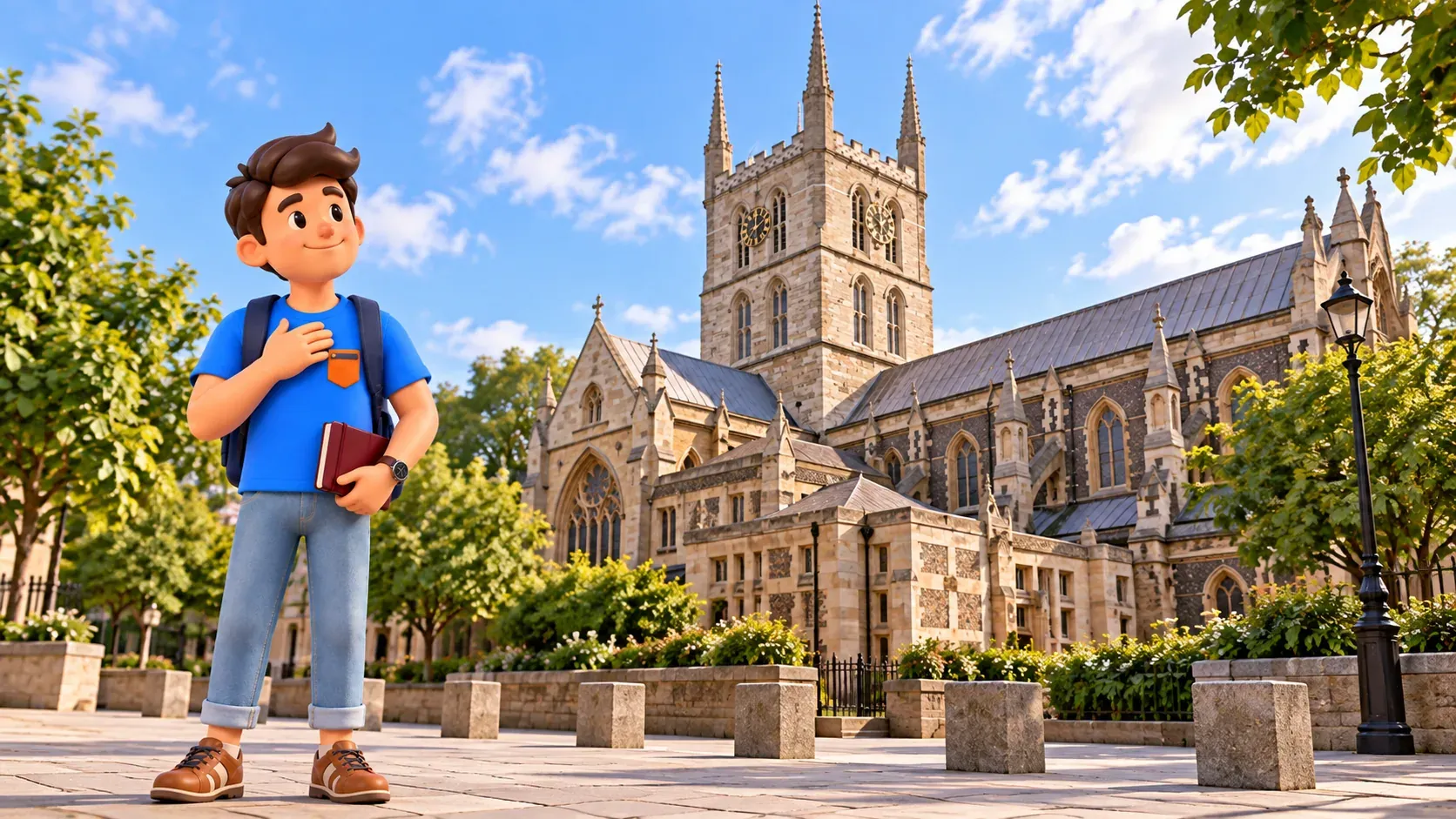
If the current visiting arrangements allow, a brief look inside can add another kind of attention. The cathedral remains a working place of worship, with recommended visiting windows and restrictions during services or events. Check the actual calendar before making an interior visit essential. A full tour needs additional time; an exterior pause still gives this short route its change of rhythm.
Finish eating before entering, put away anything awkward to carry and follow the hosts’ guidance. If worship is taking place, let that determine what is appropriate. You do not have to collect every monument or historic association to appreciate the building. One quiet observation can be enough before returning to the street and the next, very different, part of Southwark’s story.
Meet the Golden Hinde as a reconstruction
Continue towards St Mary Overie Dock and look at the Golden Hinde from the available public space. A ship among streets and modern buildings creates an unexpected change of scale. Notice the hull, rigging and raised parts of the vessel. The dock setting is part of the encounter; this is not a promise of a ship sailing past on the open Thames.
The Golden Hinde here is a full-size reconstruction built in 1973, not Francis Drake’s original Elizabethan ship. It has been moored in Southwark since 1996 and has its own history of voyages. That distinction makes the stop more interesting: you are looking at an attempt to recreate and interpret an earlier vessel, as well as at an object with a later life of its own.
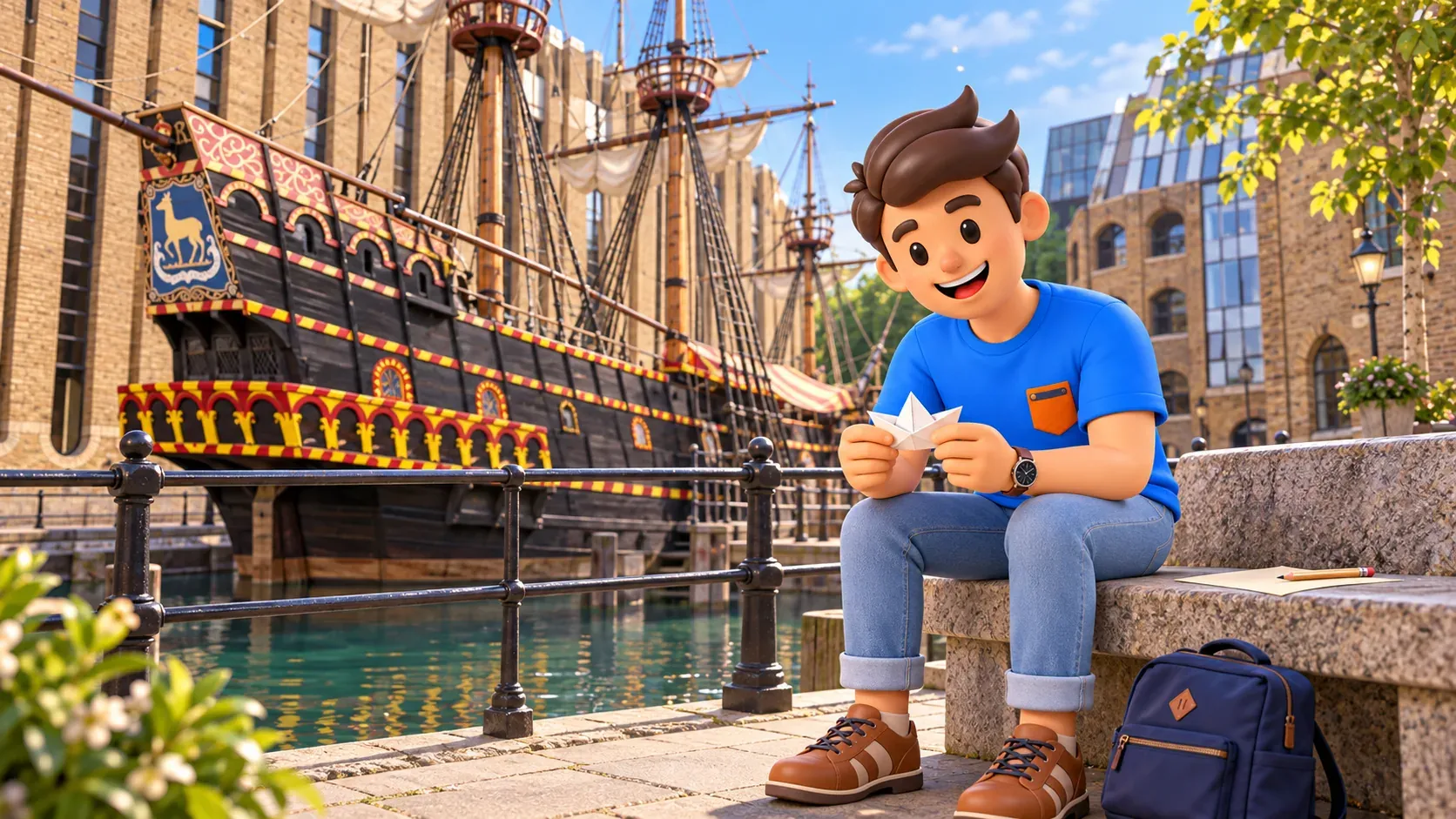
For the two-hour route, keep this as an exterior stop. Boarding is a separate paid visit, and private events can affect admission. The ship has steps at the entrance and steep stairs or ladders between levels, with no step-free access aboard. If going inside matters, check the current arrangements and your group’s needs before giving it a larger place in the day.
A useful question from the street is simply how much living and working space the vessel appears to offer. You need not turn that impression into a claim about exactly how every sailor lived. Let the shape prompt curiosity, then move on while the walk still feels light. The next stop is another fragment that asks you to imagine more than is physically present.
Find a palace in the surviving wall on Clink Street
Follow Clink Street west to Winchester Palace. You are looking for surviving masonry and the rose window in the former Great Hall wall, rather than an intact palace entrance. The remains are visible from the public pavement. There is no access to the interior, so this stop is about looking from the street, not walking into the garden or exploring behind the walls.
The palace was built in the early thirteenth century for the Bishops of Winchester and was largely destroyed by fire in 1814. What remains suggests a much larger building. The circular window is a useful focus: compare the surviving shape with the surrounding streets and later buildings. A small piece of architecture can tell you that the area once held a very different kind of residence.
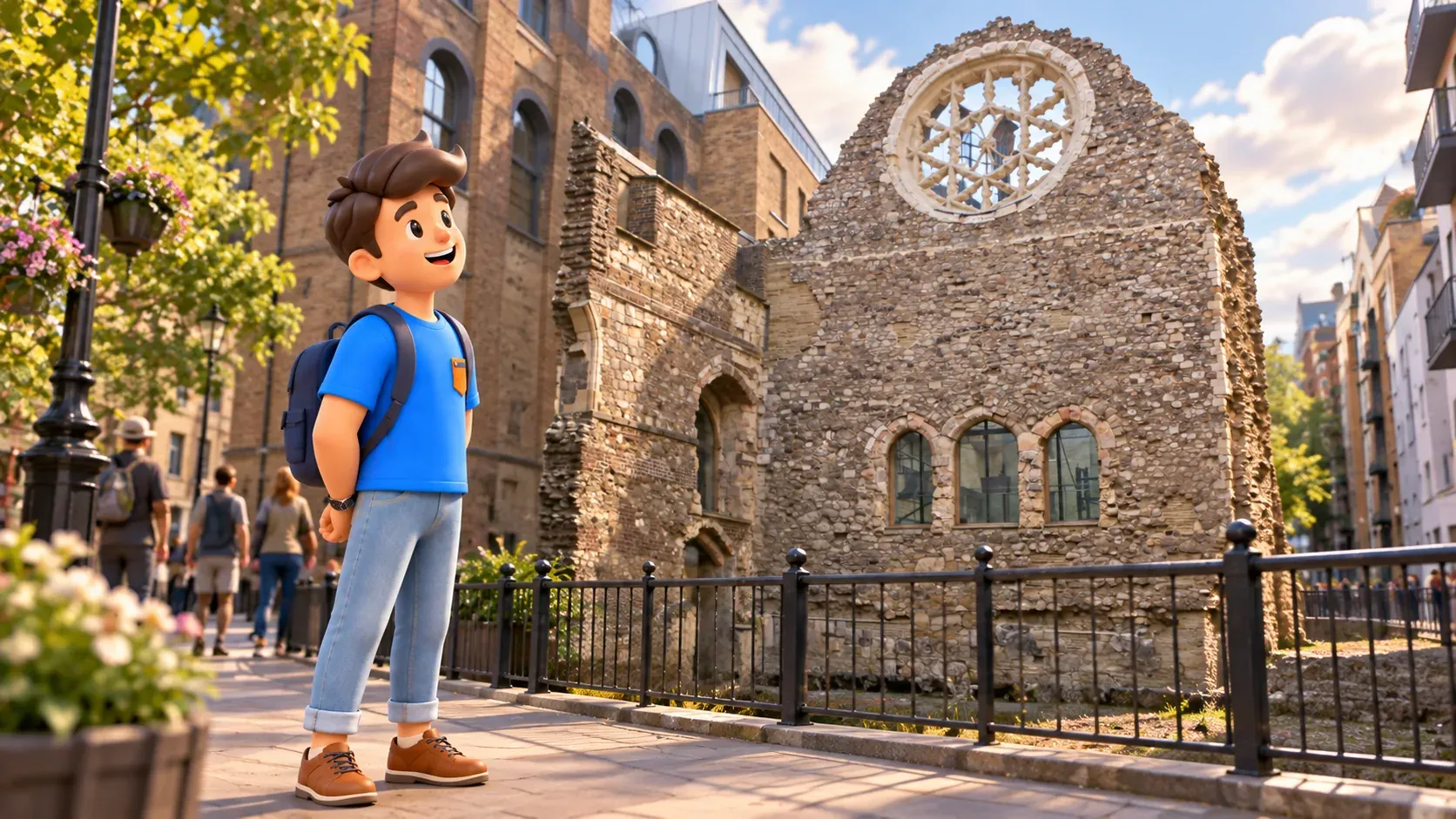
There is no admission charge to view the ruins from the pavement. Leave room for other people to pass, and do not treat the historic fabric as something to climb or handle. This is a brief stop, but it gives the walk a fitting final contrast. A market, a living church, a reconstructed ship and a ruined palace show four different ways a city keeps its past present.
Try RoadMe to develop a complete personal trip plan that gives your favourite subjects more time, whether that is food, architecture or maritime history. Planning in the app makes it easier to decide where a longer visit belongs and which short walks fit naturally around it.
You can finish here and check the connection from your actual location, or allow additional time for a longer riverside outing. Our Tower Bridge walk from both banks gives another stretch of the Thames its own attention on a different occasion. For today, old Southwark has already offered a complete change of scene within a remarkably small area.


